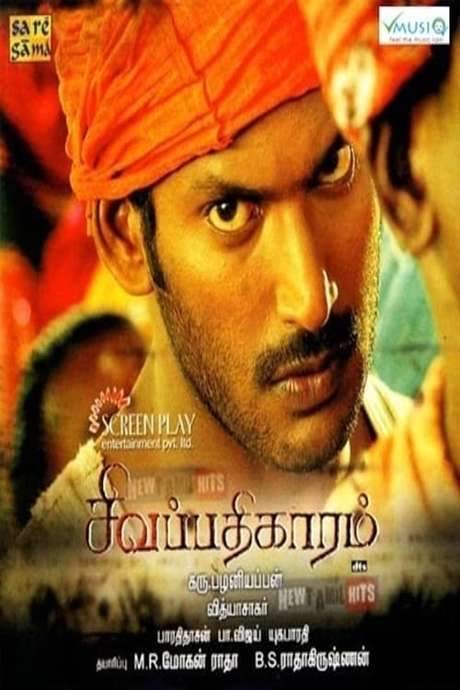
Former IAS officer and professor Dr. Elango Raghuvaran returns to his native village near Theni with his college-going daughter Charulatha Mamta Mohandas. He has taken voluntary retirement from a college in Chennai and has come to live in his ancestral house, hoping to devote himself to the study of folk songs and publish a book that preserves their cultural heritage. His former student Sathya Vishal Krishna visits to assist him in this quiet, scholarly project. Charu quickly gravitates toward Sathya, drawn by his intellect, warmth, and social consciousness, and their budding bond becomes a quiet thread running through the unfolding upheavals around them.
Meanwhile, the political landscape shakes as general elections are announced for the state legislature. Parties rush to nominate their candidates, and as nominations are filed, a string of murders undermines the process. The chilling violence leaves many candidates dead and others fearful, forcing several to withdraw from the race. The election commission responds by postponing the polls, trying to hold back the sense of chaos that has gripped the electorate. In the midst of this, the police tighten their chase for the killer, following a trail that eventually points toward Sathya, and it is discovered that Elango aided him in the bloodshed. The authorities move quickly, and Elango is arrested, setting off a chain reaction that shakes the village and its corridors of power. During these tense developments, Charu opens up to Sathya about her feelings as they travel to Hyderabad, and Sathya reveals truths about his undercover actions, deepening the mystery surrounding their identities and motives.
To understand the darker currents at work, the film rewinds to three years earlier, when Sathya was a final-year management student in Elango's class. Sathya’s widowed father worked in the college canteen, and the pair, along with Sathya’s friends, engaged in a field project: conducting an opinion poll of the upcoming Chennai-Central by-elections. Their bold forecast—announcing that the opposition’s candidate would win—precisely foreshadows the electoral outcome. The ruling party’s candidate, furious at the apparent miscalculation, plots revenge with the complicity of the home minister. On the day of Sathya’s convocation, a police raid targets the college on a drug-bust pretext. During the confrontation, Sathya’s father and about thirty students shelter in the canteen. In a horrific act of calculated malice, the ruling candidate leaks cooking gas into the enclosed space and ignites it, trapping everyone inside. The tragedy is recorded by the administration as a “freak accident,” but the deliberate links between political power, police action, and mass death become impossible to ignore. These events push Sathya and Elango toward a radical mission: to cleanse the political landscape of the dangerous, dehumanizing, and selfish leaders who threaten the electorate during elections.
The story then moves forward again, showing Sathya slipping away from the net and launching a renewed confrontation with the Home Minister in Madurai. Whether his audacious plan succeeds and whether he can truly communicate his message to the people forms the gripping remainder of the narrative, a tense exploration of conscience, courage, and the price of taking a stand in a system built on power and fear.