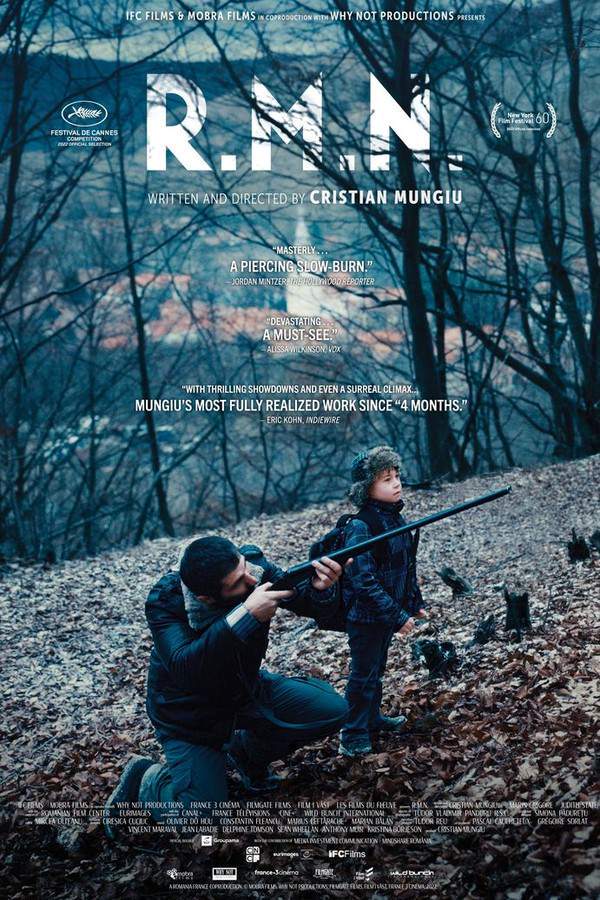
The film unfolds as a story within a story, opening in the present with a small team of journalists who venture to an isolated, abandoned town to search for answers about a cluster of unusual, unexplained events. They soon discover that the town holds only a few remnants of life: a group of elderly women and the town’s sole male resident, the mayor. It is the mayor who becomes their guide into a past that refuses to stay buried, and he begins to tell a strange tale set decades earlier.
The tale centers on a village preparing for the wedding of a young couple, Iancu Alexandru Potocean and Mara Meda Andreea Victor. As the day approaches, history intrudes in an abrupt and chilling way: the news of Joseph Stalin’s death is announced, and a mandatory seven-day period of national mourning is declared. Officially, all celebrations must be paused, yet the villagers face a practical dilemma—the wedding has already been planned, the food is prepared, and the guests have gathered. In a show of stubborn resolve and communal solidarity, they decide to press ahead with what they call a silent wedding, choosing to celebrate inside a house with the windows boarded up to keep noise contained.
What begins as a discreet ceremony gradually slips into a more jubilant atmosphere. The atmosphere shifts from restraint to revelry as the vow of silence dissolves, and the celebration blooms into a full-fledged party filled with music, laughter, and movement. The shift is dramatic, turning a quiet observance into a raucous celebration that fills the room with life, even as the outside world imposes its rigid rules.
The moment of upheaval arrives suddenly: a turret of a Soviet tank intrudes into the house, shattering the revelry and bringing the ruse of quiet to a brutal halt. In the chaos that follows, the men of the village are deported, leaving behind a landscape scarred by the abrupt reversal of their attempt at celebration.
Through the frame of the present-day visit and the unfolding memory of the 1953 wedding, the film weaves themes of memory, fear, and human resilience. It juxtaposes the impulse to celebrate with the coercive power of political authority, showing how a community’s most intimate moments can become entangled with the march of history. The result is a textured, slow-burning meditation on how stories from the past linger in places long after their events, echoing in the present as the journalists confront a town that time almost forgot.