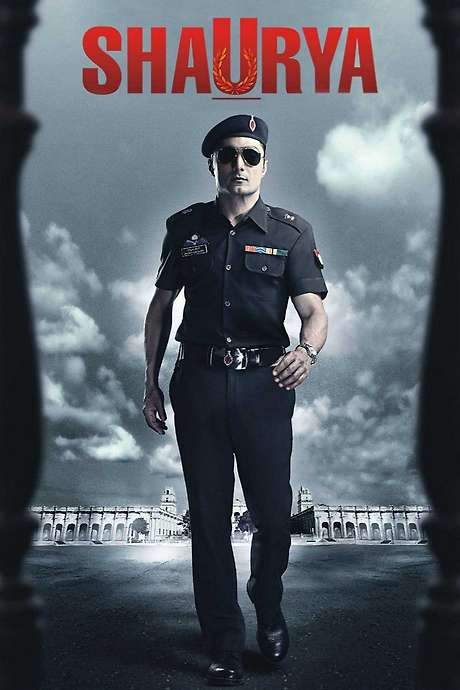
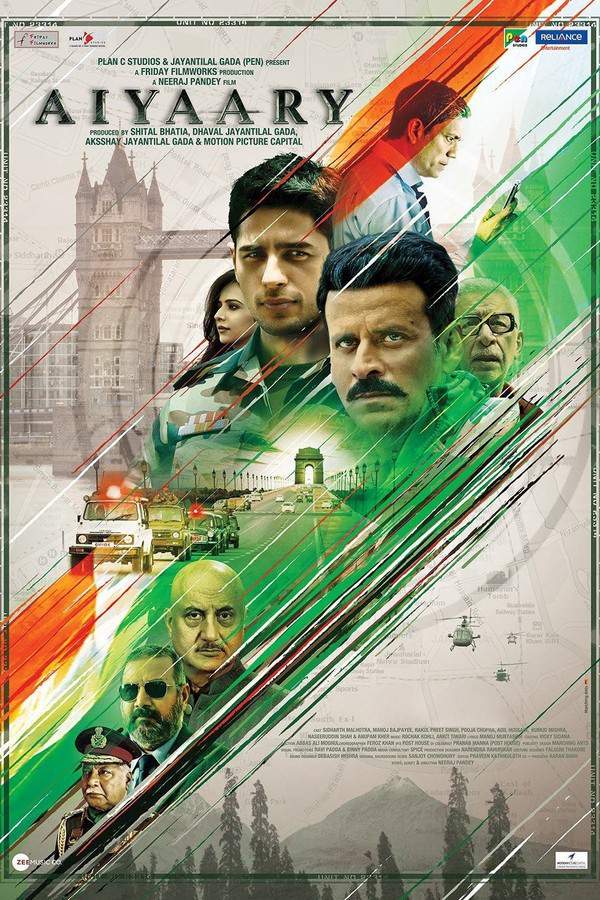
Brigadier P. P. V. Nair, Denzil Smith, looms large in the opening sequence as a group of Indian Army soldiers cordons off a village in the Punj area near Pulwama, Kashmir. The operation quickly turns tense, with a fierce chase under the watchful eyes of senior officers, and culminates in a shocking moment: an army officer is shot by a colleague, and instead of escaping, the offending officer surrenders, is detained, and the scene sets the tone for a story about duty, loyalty, and moral complexity.
From this volatile start, the film shifts to New Delhi and follows two close friends who also happen to be army lawyers. Major Siddhant Kumar Chaudhary, Rahul Bose, is sunny and carefree, almost reckless at times, while Major Akash Kapoor, Javed Jaffrey, is meticulous, disciplined, and deeply committed to the law. Siddhant, the son of a famed and decorated officer, feels the pressure of legacy even as he toys with the idea of a life beyond the army. His path to certainty is murky: he has no grand plan for a long military career and is quietly looking for a break that could lead him away from this world.
The mood lightens briefly when Akash announces his marriage to his fiancée Nandini, with Siddhant serving as best man. After the ceremony, the two friends learn that their next postings are linked, as Akash hopes to be stationed in Srinagar and, at least on paper, agrees to request a posting for Siddhant as well. The balance of camaraderie and competition between them becomes a running thread as they prepare for a future that may keep them side by side or pull them apart.
A week before their departure, the atmosphere darkens: Siddhant is told he is slated to become the defence lawyer in a murder case involving two Rashtriya Rifles officers, while Akash is assigned as the prosecuting lawyer. On paper, the case looks straightforward—two officers, a heated counter-insurgency operation, and a fatal shooting—but Siddhant’s youthful optimism clashes with the gravity of the accusation and the realities of a legal system under pressure. The prospect of a tension-free tenure dissolves into a test of nerve and principle.
Into this narrative enters Kavya Shastri, a Srinagar-based journalist eager for a big scoop, Minissha Lamba. Her instincts tell her there is more to the story than the official narrative, and she begins to dig into the details that the Army tries to keep under wraps. Kavya’s pursuit raises tensions between the press, the soldiers, and the institution they serve, especially once she discovers that the case involves Captain Javed Khan Deepak Dobriyal and Major Virendra Rathore Pankaj Tripathi, two officers whose clash ends in Rathore’s death.
Siddhant and Akash arrive in Srinagar after a briefing from their commanding officer. Siddhant’s initial interrogation of Javed Khan is rudimentary and abrasive, leaving Javed silent and unimpressed. The young officer’s discomfort grows as Akash attempts to shield him by suggesting Siddhant plead guilty and letting the prosecution do the heavy lifting. Akash views the case as almost a formality, a “cakewalk,” while Siddhant senses a deeper fault line that could redefine both his career and his identity.
Kavya’s presence complicates things further. Her outspoken reporting and blunt questions spark a clash with Siddhant, who finds himself trying to bluff his way through the case to impress her. Kavya refuses to let Siddhant coast on bravado; she makes sure he understands his responsibilities as a defender, and she provides him with documents that may prove crucial to the defense. Their uneasy alliance begins to take shape as Siddhant starts to see the case from a broader human perspective.
A public rift erupts when Kavya publishes a controversial article naming Siddhant as the source of a sensitive briefing about Brigadier Pratap, a man with a flawless reputation among many in the Army. The piece brings ridicule and official reprimand down on Siddhant, threatening his career and forcing him to confront the consequences of his choices. The encounter also pushes him to seek out Brigadier Rudra Pratap Singh [Kay Kay Menon] at a forward location near the Line of Control, hoping for clarity and perhaps an apology.
The meeting with Pratap is telling. The Brigadier is charismatic yet guarded, and his responses reveal the layers of power, loyalty, and fear that shape this world. Siddhant’s attempt to access the crime scene is approved, and as he investigates, he uncovers a possible misdirection in the case that challenges the prosecution’s straightforward version of events. He reconnects with Javed Khan, who begins to open up and share documents that could prove his innocence. Kavya, meanwhile, travels to Javed’s ancestral village to gather more context, visiting Javed’s mother and uncovering details that could tilt the case toward truth.
As the night wears on, Siddhant’s diligence pays off. He discovers that a powerful network of influence and fear links Brigadier Pratap and Major Rathore, and that human rights abuses and war-time decisions have shadowed their careers. Kavya’s ongoing research is temporarily halted when she is arrested for trespassing, but Siddhant remains steadfast, convinced that a fair, well-argued defense can turn the tide.
A pivotal turn comes when Siddhant learns that Captain R. P. Singh, a crucial witness who had arrested Javed, has vanished. In a dramatic twist, he is revealed to be alive only to reveal a shocking sequence of events: Major Rathore’s brutal actions during the operation, Rathore’s attempt to frame Javed, and Javed’s decision to surrender rather than flee. Rathore’s violence includes torturing villagers, a boy, and a girl, culminating in a deadly confrontation that forces Javed to act to protect the innocent. The confession from the witness, however, never makes it to the court, and the path to justice remains obstructed.
With the witness no longer available, Siddhant proceeds to bring Brigadier Pratap to trial. The courtroom encounter is intense and fraught, with Pratap initially gaining the upper hand. Siddhant pivots toward a dramatic, memory-based reveal, forcing Pratap to confront a deeply personal, devastating act of violence that has nothing to do with the murder in question but speaks to the darker impulses that power such figures. The emotional and moral stakes are raised as Siddhant challenges the Brigadier’s narrative of nationalism and duty.
In the end, the Army Court clears Javed Khan of all charges and restores his rank and honors, while authorities open an inquiry into Brigadier Pratap. The film closes by underscoring the complexities of justice within a system built on hierarchy, secrecy, and the imperfect pursuit of truth.
Throughout, the film blends courtroom drama with battlefield ethics, examining how friendship, duty, and the weight of past loyalties influence every decision. It presents a nuanced portrait of an army where heroes and flaws often sit side by side, and where the search for truth can burn away illusions while leaving painful, unanswered questions in its wake.