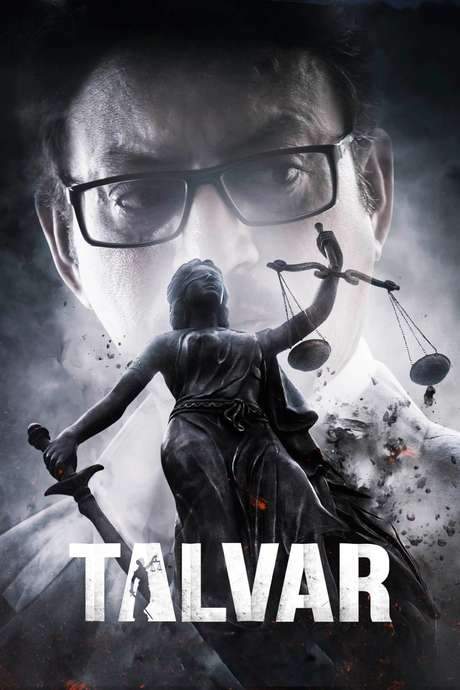
Fourteen-year-old Shruti Tandon, Ayesha Parveen, is found dead at her home in Sameer Vihar, Noida, during the night of 15–16 March 2008. The Tandons’ household is thrown into turmoil as investigators comb through the initial leads, including the missing servant Khempal, whose decomposed body is later found on the building’s terrace. The early whispers center on Khempal’s close friend and the Tandons’ assistant, Kanhaiya, who claims that Khempal may have been involved with Shruti in a sexual relationship. Those claims fuel a narrative that the murders could be an instance of an honour killing, setting the stage for a charged public debate and a scrutinized police inquiry.
On 25 March, the Noida police arrest Ramesh Tandon, Neeraj Kabi, for the killings. In a highly publicized press conference, the police chief attributes Shruti’s death to an honour-motivated crime and frames the father’s response as the motive for violence, a portrayal that triggers widespread victim-blaming and public outrage. The investigation is then handed to a high-level team: Joint Director Ashwin Kumar, Irrfan Khan, of the Central Department of Investigation (CDI), along with ACP Vedant Mishra, Sohum Shah. Kumar openly questions the sloppy first responders and maintains that the parents may be innocent, directing their focus toward the father’s resentful assistant and the possibility of a broader conspiracy. To bolster the case, his team turns to narco tests as a tool to uncover truth behind the suspects’ statements and alibis.
As the weeks turn into months, Kumar’s methodical approach gradually shifts the trajectory of the case. By 22 June 2008, Kumar formally exonerates the parents, and Ramesh is released from custody. The reversal marks a rare moment of vindication for the Tandons, yet it also intensifies the pressure on the CDI to deliver a airtight prosecution. The inquiry faces a pivotal moment when a new CDI chief takes over on the cusp of a retirement, and this leadership change brings a fresh dynamic to how the case will be pursued.
With the promotion-minded Vedant clashing with Kumar, their professional dispute culminates in a public disagreement that leads to Kumar’s suspension. The CDI then assigns the case to a new investigative team led by Paul, Atul Kumar, Kumar’s former superior. Paul’s team advances a starkly different conclusion, arguing that the Tandons themselves were the perpetrators of Shruti’s murder. This shift of direction deepens the rift between the old guard and the new leadership, and the case becomes a battleground of competing theories rather than a single, clear narrative.
Facing dueling interpretations, both investigative factions present their cases to the CDI chief, effectively boxing in the authorities with two opposing hypotheses. The CDI ultimately files a closure report in Ghaziabad court naming the Tandons as prime suspects, yet the evidence is deemed insufficient to prosecute. The Tandons pursue a protest against the CDI’s report, and the judge rejects the closure and questions the insinuations placed upon the parents. The trial finally commences on 8 June 2012, and in the months that follow, the Tandons are convicted of Shruti’s murders, bringing a dramatic and controversial arc to a case that had already unsettled a nation.
Throughout these twists and reversals, the narrative tracks not just the legal maneuvers but the human stakes behind every decision—the fault lines within families, the pressure of public opinion, and the relentless pursuit of truth by investigators who wrestle with limited evidence and shifting political winds. The film closes on a somber note, inviting viewers to reflect on how fear, honor, and social expectations can drive tragedy, while also emphasizing the tireless quest for justice that defines the investigative process.