Plot Explained Spoilers guaranteed!
Plot Explained

Browse by genre

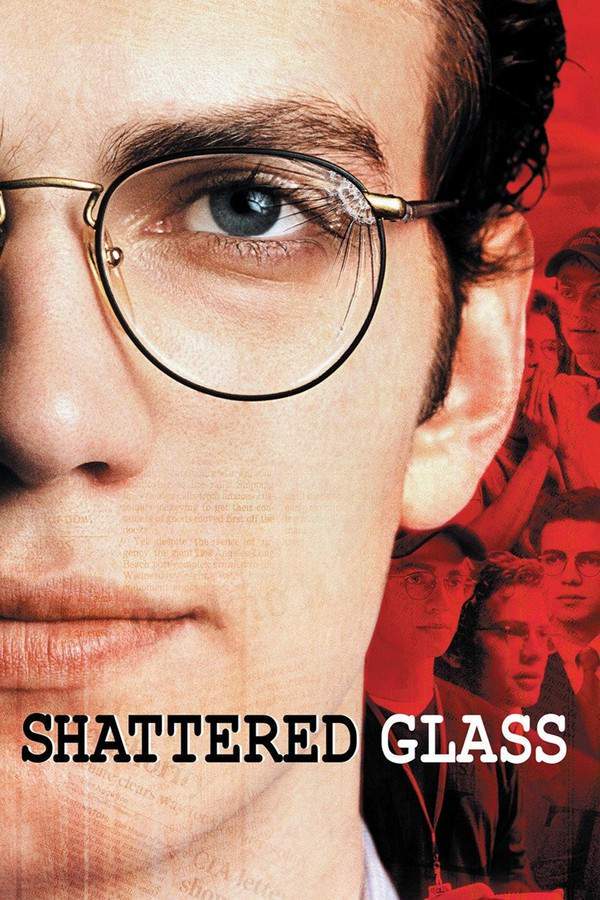
Shattered Glass (2003) movie poster

Timeline

Shattered Glass (2003) Timeline Explained – Every Event in Order

Release, runtime and language
2003 · 94 min · English
Loading streaming availability…
Directed by
Billy Ray
Starring
Chloë Sevigny, Steve Zahn, Hayden Christensen

A young journalist's promising career takes a dark turn when it's revealed he's been fabricating stories for a prestigious magazine. Stephen Glass's inventive tales initially bring him widespread recognition, but a persistent colleague begins to investigate the inconsistencies in his work. As the truth unravels, Glass's reputation and carefully built persona crumble, exposing a complex story of ambition, insecurity, and the consequences of dishonesty.

On this page (6)
  1. 1 Where to watch
  2. 2 Events in order (15)
  3. 3 Timeline questions answered
  4. 4 Movie threads
  5. 5 Movies like Shattered Glass
  6. 6 Every angle
Loading streaming availability…

15 events in order · contains spoilers

Shattered Glass Timeline: Events in Chronological Order

Every key event of Shattered Glass (2003) in order, scene by scene, with when and where it takes place. Use it to untangle flashbacks, time jumps and parallel storylines, to refresh your memory before the sequel or to find the exact scene you are thinking of.

  1. Stephen Glass' Role at The New Republic

    Stephen Glass is introduced as the youngest journalist at The New Republic, a prestigious publication known for its influential readership. The newspaper's reputation is bolstered by its unique privilege of being the only publication allowed aboard the presidential plane, highlighting the esteemed nature of its work.

    Where
    The New Republic office
  2. Editorial Standards at The New Republic

    Michael Kelly, Stephen's supervisor, emphasizes the importance of accuracy in reporting during a team meeting. He insists that all claims must be substantiated through firsthand notes, setting a high standard for journalistic integrity within the office.

    Where
    The New Republic office
  3. The Republican Youth Convention Article

    Stephen authors a controversial article about a Republican youth convention, alleging that attendees were intoxicated and involved with a prostitute. The claims are contested when the hotel manager refutes Stephen's assertions, causing doubt about the accuracy of his reporting.

    Where
    Republican youth convention venue
  4. Stephen's Justification for His Claims

    In defense of his article, Stephen argues that he assumed the presence of mini spirit bottles in hotel rooms indicated a mini-bar. Despite his initial confidence, he expresses remorse for the misunderstanding and offers to resign, but Kelly is not in favor of that.

    Where
    The New Republic office
  5. Caitlin Avey's Mixed Feelings

    Caitlin Avey, a fellow journalist and Stephen's romantic interest, struggles with her emotions regarding Stephen's rising fame. As she grapples with jealousy, she also worries about his decision to pursue law, a career she believes is a less suitable choice for him.

    Where
    The New Republic office
  6. Transition in Editorial Leadership

    The story takes a significant turn when Michael Kelly is dismissed, and Charles 'Chuck' Lane takes over as the new editor. Chuck's arrival signals a shift in the dynamics at The New Republic, particularly in how stories are scrutinized.

    Where
    The New Republic office
  7. Stephen's Sensational Software Story

    Stephen secures a notable success with a gripping story about software companies investing in cybersecurity. His dramatic recounting of a hacker being paid a million dollars to enhance company security captures the attention of his peers and solidifies his reputation temporarily.

    Where
    The New Republic office
  8. Adam Penenberg's Investigation

    Adam Penenberg, a journalist at Forbes, begins to scrutinize Stephen's claims after missing the prominent software story. Driven by a desire for accuracy, Adam’s investigation leads him to uncover inconsistencies in Stephen's reporting.

    Where
    Forbes magazine office
  9. Stephen's Desperate Measures

    Facing mounting pressure from the investigation, Stephen fabricates a website to substantiate his claims. Unfortunately, his attempt backfires when he accidentally restricts access to the site, raising further doubts about his integrity.

  10. Caitlin's Growing Doubts

    As Adam's investigation progresses, Caitlin’s initial loyalty to Stephen begins to waver. She observes troubling signs and starts to recognize the possibility that Stephen may not be as trustworthy as she once believed.

  11. Uncovering the Truth

    Chuck's investigation culminates in the discovery of undeniable evidence proving Stephen's fabrications. The reputation of the publication is at stake as they are forced to confront the dishonest reporting that has tainted their legacy.

    Where
    The New Republic office
  12. Retraction of Stephen's Articles

    In the wake of the revelations, The New Republic issues a public retraction of numerous articles written by Stephen. This acknowledgment of falsehoods marks a significant turning point for the publication and highlights the consequences of journalistic malpractice.

    Where
    The New Republic office
  13. Caitlin's Continued Journey

    Despite the fallout, Caitlin remains dedicated to her career in journalism. She continues to forge her own path, demonstrating resilience in the face of adversity following the controversies surrounding Stephen.

  14. Stephen's Shift to Law School

    In the aftermath of the scandal, Stephen decides to retreat into the world of law school, choosing to focus on a different career path. He moves away from journalism amid the fallout while choosing not to comment on his experiences.

    Where
    Law school
  15. Adam's Breakthrough Recognition

    Following the exposure of Stephen's fabrications, Adam gains recognition for his investigative efforts that shed light on the importance of integrity in journalism. His work sets a new standard for accountability in the rapidly evolving landscape of internet journalism.

    Where
    Forbes magazine office

Last updated: November 04, 2024 at 02:00

Was this helpful?

Timeline questions answered

Shattered Glass Timeline Explained: Your Questions Answered

When does it happen, and why in that order? The questions people ask about the chronology of Shattered Glass (2003): time jumps, flashbacks, cause and effect between scenes and the correct order of events, each answered with spoilers.

Q1

Why did Stephen Glass fabricate his articles?

Stephen Glass fabricated stories because he was driven by a deep-seated need for recognition and approval. As the youngest journalist at The New Republic, he faced immense pressure to prove himself among accomplished colleagues. His inventive tales earned him praise and admiration, which fed his insecurity. Rather than admitting he couldn't find compelling real stories, he invented increasingly sensational characters and situations to maintain his reputation as a rising star in journalism.

Foreshadowing: Early in the film, Stephen's supervisor Michael Kelly emphasizes the importance of substantiating all claims with firsthand notes, setting up the exact standard Stephen would later violate.

  • stephen glass motivation
  • journalism ethics
  • fabricated stories
  • ambition
Q2

How did Adam Penenberg discover Stephen Glass's fabrications?

Adam Penenberg discovered Stephen's fabrications while investigating the sensational software story about a hacker being paid one million dollars. After missing what should have been a major scoop for Forbes, Adam grew suspicious and began cross-referencing Stephen's claims. He traced phone numbers, checked sources, and found they didn't exist. When Stephen desperate created a fake website to validate his story, Adam realized the site was fabricated and had restricted access, proving it was a cover-up rather than legitimate journalism.

Foreshadowing: The film shows Adam facing criticism for missing the story, motivating him to prove he could investigate it properly.

  • adam penenberg investigation
  • forbes
  • expose
  • journalism fraud
Q3

What happened to Stephen Glass after the scandal was exposed?

After his fabrications were exposed, Stephen Glass's journalism career ended immediately. The New Republic retracted numerous articles authored by him, acknowledging the falsehoods within his work. Stephen withdrew from journalism entirely and enrolled in law school, choosing a different career path. He declined to comment on the film or his experiences publicly, effectively disappearing from the professional world that had once celebrated him.

Foreshadowing: Earlier in the film, Stephen mentions his parents pushed law as the most respectable profession, foreshadowing his eventual retreat to law school.

  • stephen glass career
  • law school
  • retraction
  • fall from grace
Q4

Why did Stephen Glass create a fake website to support his story?

Stephen created a fake website because he was desperate to prove the legitimacy of his software hacker story as Adam Penenberg's investigation closed in. Facing mounting evidence that his claims were false, he fabricated a website that would appear to validate his reporting. However, his plan backfired, he accidentally restricted public access to the site, which immediately raised suspicion. The obvious cover-up convinced investigators that something was seriously wrong with his work.

Foreshadowing: This desperate act follows the pattern of Stephen defending the Republican Youth Convention article by claiming he assumed mini spirit bottles indicated a mini-bar, another instance of him making weak excuses rather than admitting the truth.

  • fake website
  • desperation
  • cover-up
  • evidence
Q5

What was the Republican Youth Convention article about?

Stephen's controversial article alleged that attendees at a Republican youth convention were intoxicated and had hired a prostitute. When challenged by the hotel manager who refuted his claims, stating the rooms had no mini-bars and no evidence of the events described, Stephen defended himself by claiming he assumed mini spirit bottles in the rooms indicated the presence of a mini-bar. This story was one of the first that raised questions about his reporting methods.

Foreshadowing: This early controversy demonstrates the pattern of Stephen making questionable reporting decisions that would eventually catch up with him.

  • republican youth convention
  • prostitute
  • hotel
  • article controversy
Q6

Why was Michael Kelly replaced by Chuck Lane at The New Republic?

The film does not explicitly explain Michael Kelly's dismissal, but it occurs before Chuck Lane becomes the new editor. Chuck's arrival signals a major shift in editorial leadership and editorial standards at The New Republic. Unlike Kelly, who had given Stephen the benefit of the doubt during earlier controversies, Chuck takes a much harder line on fact-checking and很快就发现 Stephen's fabrications. The leadership change effectively sets the stage for Stephen's ultimate exposure.

Foreshadowing: The transition in leadership is marked as a significant turning point that changes how stories are scrutinized at the publication.

  • michael kelly
  • chuck lane
  • editor
  • leadership change
Q7

Did Caitlin Avey know about Stephen Glass's fabrications?

Caitlin Avey did not initially know about Stephen's fabrications, though she grew suspicious over time. At first, she remained loyal to him despite her mixed feelings about his rising success and her jealousy. As Adam's investigation progressed, Caitlin began noticing troubling signs that something was wrong. She eventually came to realize that Stephen's charm had clouded her judgment, though the film suggests she was genuinely deceived rather than complicit.

Foreshadowing: Caitlin's early jealousy and worry about Stephen's decision to pursue law hint at her underlying doubts about his character and choices.

  • caitlin avey
  • loyalty
  • suspicion
  • relationship
Q8

What caused Stephen Glass's downfall?

Stephen Glass's downfall was caused by a combination of his own psychological need to fabricate compelling stories and the eventual scrutiny from a determined investigator. His ambition and insecurity drove him to invent increasingly sensational tales that garnered praise. His undoing came when Adam Penenberg, motivated by having missed a major story, systematically fact-checked Stephen's claims. Stephen's desperation, creating a fake website, ultimately provided the concrete evidence needed to expose him.

Foreshadowing: The film builds tension from the early Republican Youth Convention controversy through Adam's investigation, showing how multiple small lies eventually unravel.

  • downfall
  • exposure
  • investigation
  • consequences
Q9

Why did Stephen Glass choose to go to law school after the scandal?

Stephen Glass chose law school for several reasons that the film hints at. Earlier, he tells Caitlin that his parents always pushed law as the most respectable profession, viewing journalism as lesser by comparison. After his journalism career was destroyed, law school offered a path to rebuild his professional life in a field his family had always valued. Additionally, the structured, fact-based nature of legal work represented a stark contrast to the fabrication-heavy world of journalism he was leaving behind.

Foreshadowing: This decision was foreshadowed by Stephen's earlier argument with Caitlin about his parents' views on law versus journalism.

  • law school
  • career change
  • parents
  • ambition
Q10

How many of Stephen Glass's articles were proven fabricated?

The exact number of fabricated articles is not specified in the summary, but The New Republic ultimately retracted numerous articles authored by Stephen Glass. The scandal became one of the most infamous cases of journalistic fraud in American media history. Adam Penenberg's investigation was recognized as the first significant breakthrough for internet journalism, demonstrating how online fact-checking could expose even well-established fabricators.

Foreshadowing: The scale of the retraction underscores the extent of Stephen's deception throughout his tenure at the publication.

  • retraction
  • number of articles
  • fabricated stories
  • the new republic

Movie threads

More Movies Like Shattered Glass, by Mood & Story

Curated lists built around what makes Shattered Glass tick: the same mood, the same kind of story or the same emotional payoff. Each list explains why these movies belong together.

Movies about professional downfall like Shattered Glass

Watch as a career meticulously crumbles under the weight of deception. If you liked watching the methodical unraveling of a career in Shattered Glass, these movies feature similar stories of ambition, deception, and professional ruin. Explore other dramas where a character's carefully built world collapses under scrutiny.

  • tense
  • procedural
  • anxious
  • unsettling
  • methodical
  • career-focused
  • Tone: tense, unsettling
  • Pacing: steady, methodical
Why these movies?

The story pattern: The narrative typically starts with a character at the peak of their professional success, which is revealed to be built on a lie. A steady, investigative process then exposes the truth, leading to a complete professional and personal collapse, often without redemption.

Why they belong together: They share a steady pacing and tense tone, driven by the procedural uncovering of truth. The emotional core is the anxiety of being caught and the sobering fallout of ethical breaches in a professional context.

Investigative suspense movies like Shattered Glass

Stories where patient investigation uncovers a deeply hidden lie. For viewers who enjoyed the investigative tension in Shattered Glass, this list features other movies where a persistent truth-seeker methodically uncovers deception. These films share a steady pace and focus on the intellectual and emotional weight of discovering the truth.

  • suspenseful
  • investigative
  • methodical
  • anxious
  • truth-seeking
  • procedural
  • Tone: suspenseful, anxious
  • Pacing: steady, methodical
Why these movies?

The story pattern: The plot follows an investigator—often an ordinary person in a professional role—as they notice small anomalies that snowball into a major discovery. The journey is linear and procedural, with tension mounting as the investigator gets closer to the undeniable truth, facing resistance along the way.

Why they belong together: They are unified by a specific mood of suspenseful anxiety, created through a steady, methodical pace. The core experience is the intellectual and emotional satisfaction of watching a puzzle being solved, and the tension of confronting a deceiver.

If you liked this

Movies Like Shattered Glass

Similar movies to Shattered Glass: the same genre, themes or kind of story. Each one comes with its own plot summary, timeline and ending explained.

Browse all movie summaries

Every angle

Shattered Glass (2003) Explained: Plot, Timeline & Characters

Everything about Shattered Glass in one place: what happens in the plot summary, the timeline in chronological order, the characters and meaning and a spoiler-free summary. What's After the Movie adds the cast, box office and post-credit scenes.

Coming soon on iOS and Android

The Plot Explained Movie Summary App

Plot summaries, endings explained and timelines on your phone. Catch up on any movie in minutes, save your favorites and never miss a twist again.

Be the first to know when we launch. Your email stays private, always.

Learn more about the app