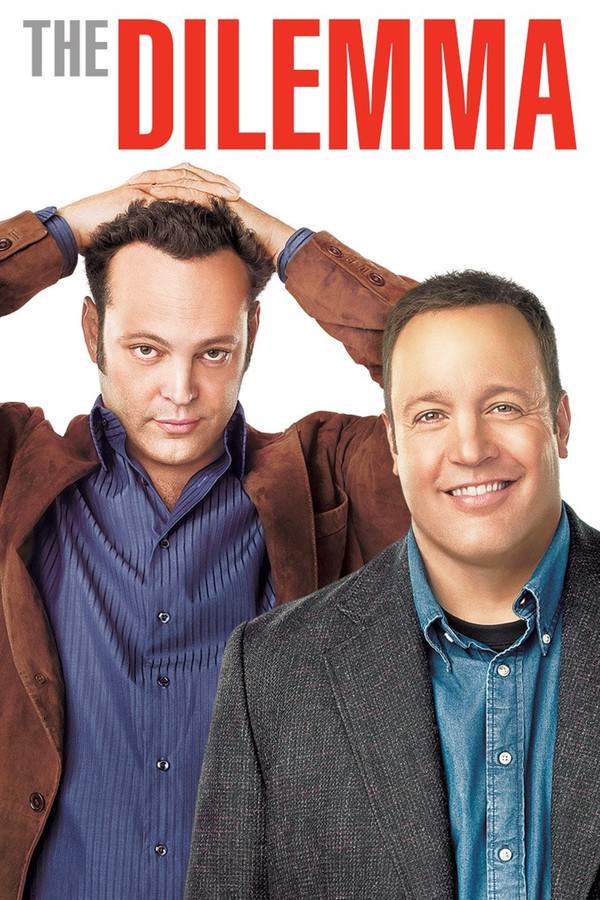
Ronny and Nick are best friends who also run a small auto design firm in Chicago, a pairing that blends creative collaboration with a shared sense of responsibility. Ronny is in a steady relationship with Beth, while Nick is married to Geneva. The two friends have just been handed a pivotal opportunity: they’re invited to pitch an eco-friendly car to Dodge, a project that could elevate their studio beyond its current footprint and test how far they can push their design ambitions together.
The personal drama unfolds against the backdrop of this professional pressure. While Ronny is planning a quiet moment to propose to Beth at a lush botanical garden, he witnesses Geneva kissing another man, Zip. He returns home shaken and, to protect Beth from worry, fabricates a story about stress from work — a lie that gnaws at him because it risks reigniting his old gambling problems. The tension between truth and loyalty begins to tug at the friendships and marriages around him, planting seeds of doubt about what each person is willing to risk for love and career alike.
Ronny struggles with the decision of whether to tell Nick the truth about Geneva’s infidelity. He postpones the disclosure after hearing Nick voice anxiety about their looming project, hoping to shield his friend from another hazard at a moment when every design detail and client meeting seems fraught with importance. He eventually confronts Geneva in public, during a Blackhawks game, where she insists the affair is over and promises she will tell Nick once the big project is finished. Yet Ronny’s suspicions deepen as he discovers Geneva and Zip continuing their relationship, a revelation that tightens the noose around his conscience.
Geneva’s next move is a calculated one: she leverages fear to protect herself, threatening to accuse Ronny of inappropriate advances and to reveal a college fling Ronny had with her. The dynamic shifts from private guilt to public risk as Ronny tails Geneva to Zip’s house, trying to gather proof. He succeeds in photographing the two together but is suddenly trapped on the patio by a group of skateboarders, cutting off any immediate escape. Once the moment passes, Geneva’s secret is still alive, and Ronny finds himself navigating not just a personal trap but a precarious balance of truth and retaliation.
Despite the chaos, Ronny attends Beth’s parents’ 40th wedding anniversary party, where the outside world still sees two friends wrestling with responsibility, trust, and the pressure of ambition. Ronny’s increasingly erratic behavior alarms their circle, and an intervention is staged to address the mounting signs that gambling may be resurfacing. In a tense exchange, Ronny lays bare the underlying reasons for his actions, Geneva admits to the affair, and Ronny acknowledges the college fling. The confrontation is painful, but it clears a path for accountability and healing among the men who have long stood by one another.
In the aftermath, Nick forgives Ronny in a hard-earned moment of reconciliation, while the fallout from Geneva’s betrayal leads to a separation between Nick and Geneva, who remains entangled with Zip. The personal storms begin to settle enough for the next major development: Ronny and Nick see their design project gain acceptance from Dodge, a professional vindication that underscores the pair’s resilience. In the same breath of relief and renewed purpose, Ronny proposes to Beth, signaling a hopeful turn toward rebuilding both a career and a life rooted in trust and shared dreams.
Across its intertwined arcs of friendship, romance, addiction, and professional achievement, the story unfolds with a steady, grounded pace. It threads together the thrill of innovation with the weight of personal choices, showing how loyalty can be tested by deceit, yet how honesty and perseverance can steer a partnership toward a brighter, more intentional future. The result is a film that feels intimate in its emotional scope while ambitious in its ambitions for the future, inviting viewers to consider where to draw the line between ambition and accountability—and how, sometimes, the strongest proposals are the ones that repair what’s been broken.