Plot Explained Spoilers guaranteed!
Plot Explained

Browse by genre

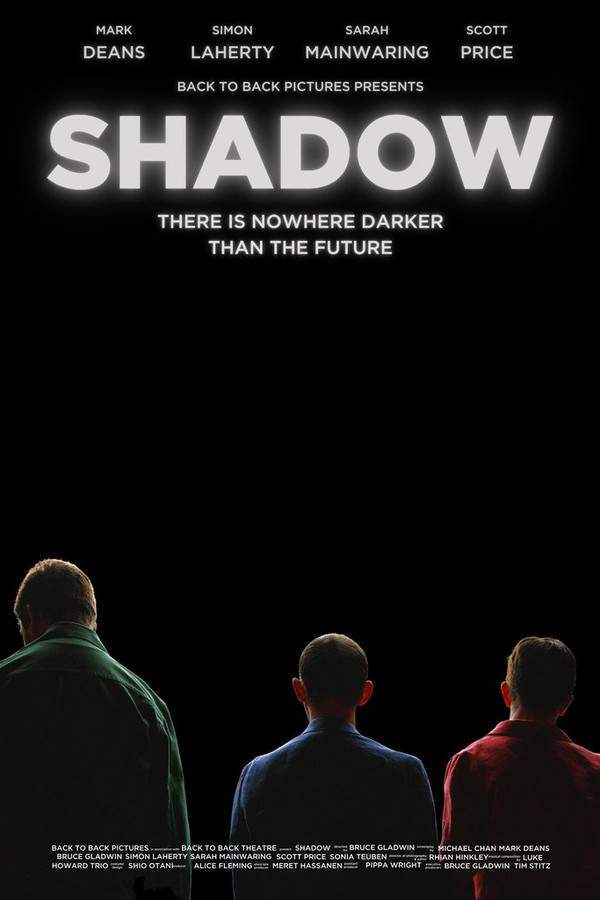
Shadow (2019) movie poster

Plot Summary

Shadow (2019) Plot Summary Explained

Release, runtime and language
2019 · 116 min · English
Echo score 78
Loading streaming availability…
Directed by
Yimou Zhang
Starring
Bai Feng, Betty Sun, Chao Deng, Jun Hu, Kai Zheng, Lei Wu
Budget
$300M

During a town hall meeting focused on the future impacts of artificial intelligence, activists Simon, Scott, and Sarah find themselves embroiled in escalating conflict. Simon's assertive leadership style creates friction, while Scott's increasing ego marginalizes the perspectives of others. As tensions rise and chaos ensues, Sarah, often overlooked, steps forward to try and unite the group. However, they must confront the possibility that their vital message may be drowned out by the surrounding discord.

On this page (6)
  1. 1 Where to watch
  2. 2 What happens: full plot
  3. 3 Plot questions answered
  4. 4 Movie threads
  5. 5 Movies like Shadow
  6. 6 Every angle
Loading streaming availability…

Full plot summary · contains spoilers

What Happens in Shadow: Full Plot Summary

The whole story of Shadow (2019) explained, from the opening scene to the final frame: every key event, every twist and what it all adds up to. Read it as a quick recap before the sequel, to check a scene you missed, or to finally understand what really happened.

Years ago, the kingdom of Pei suffered a significant loss when the vital city of Jingzhou fell into the hands of the kingdom of Yang. This defeat was largely due to the infamous duel between the popular and talented Commander Ziyu and the seemingly unbeatable Yang Cang. Incensed by Ziyu's reckless challenge to Yang Cang for a rematch without his approval, the King of Pei demands that Ziyu and his wife, Xiao Ai, perform on the guzheng, a traditional Chinese plucked string instrument. Rather than give in, Ziyu defiantly cuts off his hair as a sign of his refusal before he is permitted to leave the court.

To secure peace between the two kingdoms, the King decides to betroth his cherished sister, Qingping, to Yang Cang's son, Yang Ping. However, a shocking revelation comes to light: the Commander Ziyu that everyone knows is not the real Ziyu. The real Ziyu lies severely injured from their previous encounter, hidden away in a cave as he recovers. The man in his place, revealed to be Jingzhou, was trained as a "Shadow" by Ziyu's uncle due to his striking resemblance to the Commander. Only Ziyu and Xiao Ai are privy to this life-altering secret, and Jingzhou takes on Ziyu's identity in the aftermath of the duel. Ziyu devises a plan to retake Jingzhou, promising Jingzhou he will return to his home to live with his mother once they succeed.

The King seeks to punish the impersonator "Ziyu," demoting him to the status of a commoner, despite protests from military leaders. In a tense moment before his departure, the King examines the wound that "Ziyu" received from Yang Cang's sword and inquires about its condition. The distinctiveness of the cut suggests it was made recently, to serve as a reminder of his previous defeat. An envoy relays that Yang Ping has reduced the proposal to taking Qingping only as a concubine, much to the court's disgust and the King's acceptance. General Tian publicly denounces the King’s decision as humiliating and resigns in disgrace.

Meanwhile, Jingzhou struggles in training with his unique metal umbrella weapon against Ziyu, who emulates Yang Cang's aggressive techniques. Tensions rise as Ziyu’s frustration leads to harsh critiques, prompting Xiao Ai to suggest that Jingzhou should embrace his weapon's symbolism of femininity to counter Yang Cang's masculine spearplay, rooted in the philosophy of yin and yang. She even showcases the efficacy of this technique herself. To bolster their chances, Jingzhou recruits Tian to lead an army of convicts, whom Ziyu previously enlisted, and introduces him to the strategy involving Jingzhou.

Ziyu unveils his tactical plans to Tian, explaining he intends to utilize Jingzhou to reclaim Jingzhou by keeping Yang Cang distracted for three rounds. On the eve of their duel, Jingzhou confides a secret to Xiao Ai about his unwavering devotion towards her, culminating in an intimate encounter that night—one watched by Ziyu through a discreet peephole.

As the duel approaches, Jingzhou arrives by boat at Jingzhou City Pass, ready for battle on a floating platform. Hidden beneath the surface, Tian and the armed convicts launch a surprise attack. After managing to enter the city unnoticed, Jingzhou engages in the duel, claiming victory in the first round but ultimately succumbing in the subsequent rounds. Yang Cang proposes a draw, but Jingzhou, seeing the Yang banner still standing, challenges Yang Cang to finish to the death.

Tian and the convicts, wielding their innovative umbrella weapons, push back Yang Ping and his forces, though the conflict entails heavy casualties on both sides. Yang Ping confronts Qingping in a brutal duel, mortally wounding her. When he questions her about her motives for fighting, she manages to kill him using the dagger meant for their wedding. In the midst of the chaos, Tian manages to topple the Yang banner, igniting Yang Cang's fury as he proceeds to demolish Jingzhou in combat. Just as Yang Cang prepares to deliver a fatal blow, Jingzhou utilizes his newly learned technique, ultimately finishing Yang with the snapping tip of the weapon.

In a heart-wrenching turn of events, Jingzhou returns to his childhood home only to discover his mother brutally murdered. Just as he is cornered by assassins, a mysterious emissary appears to save him, proclaiming to represent the King. Returning to the capital of Pei, Jingzhou finds himself embroiled in yet another attempt on Ziyu’s life as more assassins infiltrate his former residence.

During a celebratory feast, the King makes a sudden declaration, asking all but Jingzhou and Xiao Ai to leave, indicating he wishes to declare them a genuine couple to reward them both. He announces a pivotal change concerning the command in the kingdom. Suddenly, a masked assassin appears, shockingly bringing forth a box assumed to contain Ziyu's head. When the King opens it only to find it empty, the situation escalates as the assassin unexpectedly stabs the King before revealing himself to be Ziyu. Enraged, Ziyu commands Jingzhou to kill the King, accusing him of orchestrating his mother's murder. In a tense confrontation, Jingzhou manages to tragically wound Ziyu and flips Ziyu's earlier scenario on its head. Ultimately, he uses Ziyu's weapon to slay the King, planting the sword in Ziyu’s hand as a clever ruse.

As Jingzhou exits the hall to faces the stunned officials, he proclaims that the King has been slain and that he was responsible for the assassin's demise. To his surprise, Tian appears unconcerned with his account of events. The film concludes with Xiao Ai racing towards the hall doors, overwhelmed and uncertain as she grapples with whether to reveal Jingzhou's actions or accept the precarious new circumstances.
Last updated: November 16, 2024 at 15:55

Was this helpful?

Plot questions answered

Shadow Plot Explained: Your Questions Answered

The questions people ask most about Shadow (2019): what happens in the confusing scenes, why the characters do what they do, the twists, hidden details and what the ending means. Each answer contains spoilers.

Q1

Why does Ziyu have Jingzhou impersonate him after his defeat?

Ziyu uses Jingzhou as his "Shadow" because Jingzhou bears a striking resemblance to him. After being severely injured in his duel with Yang Cang and losing Jingzhou to Yang, Ziyu needed someone to take his place to maintain his position in Pei and execute his plan to retake the city. Jingzhou agreed to this dangerous deception, with Ziyu promising him freedom to return to his mother once the mission succeeded.

  • ziyu
  • jingzhou
  • shadow
  • impersonation
  • deception
Q2

How does Jingzhou defeat Yang Cang in the final duel?

Jingzhou defeats Yang Cang by using a technique suggested by Xiao Ai - embracing the umbrella's feminine symbolism to counter Yang Cang's masculine spear. When Yang Cang prepares a fatal blow, Jingzhou uses the snapping tip of his weapon to strike through Yang's neck, killing him. This technique transforms what was seen as a weakness into his decisive advantage.

Foreshadowing: Xiao Ai earlier demonstrates the efficacy of the feminine technique against Ziyu during training.

  • jingzhou
  • yang cang
  • duel
  • umbrella weapon
  • technique
Q3

Who actually kills the King at the celebratory feast?

Jingzhou kills the King, not Ziyu. After Ziyu reveals himself as the assassin and demands Jingzhou kill the King, Jingzhou instead wounds Ziyu and uses Ziyu's own weapon to kill the King. He then plants the sword in Ziyu's hand, framing Ziyu for the murder. Jingzhou exits and tells the officials he killed the assassin and saved them from the King.

  • king
  • jingzhou
  • ziyu
  • assassination
  • feast
  • murder
Q4

Why is Jingzhou's mother murdered when he returns home?

Jingzhou's mother is murdered to draw him out and kill him. After the successful mission, someone (implied to be the King or his agents) sends assassins to eliminate the man who knows Ziyu's secret. When Jingzhou returns to his childhood home, he finds his mother killed and is immediately attacked by assassins. A mysterious emissary arrives to "save" him, claiming to represent the King.

  • jingzhou mother
  • murder
  • assassination
  • betrayal
Q5

Why does Qingping kill Yang Ping during the battle?

Qingping kills Yang Ping because she refuses to be reduced to a concubine. When Yang Ping proposes to take her only as a concubine instead of a wife, she fights him during the chaos of the battle. Though mortally wounded by Yang Ping, she uses the dagger intended for their wedding to kill him, choosing death over humiliation.

Foreshadowing: The envoy earlier reports that Yang Ping reduced the marriage proposal to taking Qingping as a concubine.

  • qingping
  • yang ping
  • concubine
  • wedding dagger
  • sacrifice
Q6

Why does Jingzhou decide to kill the King?

Jingzhou decides to kill the King because Ziyu reveals that the King orchestrated his mother's murder. Enraged by this betrayal - after Jingzhou risked his life to reclaim Jingzhou for Pei - he turns against both Ziyu and the King. Additionally, Jingzhou frames Ziyu for the killing, reversing Ziyu's earlier attempt to manipulate him into committing the act.

  • jingzhou
  • king
  • ziyu
  • murder
  • revenge
  • mother
Q7

Why does Tian remain loyal to Jingzhou after the King's death?

Tian remains unconcerned with Jingzhou's account of events because he was already disillusioned with the King. Earlier, Tian publicly resigned in disgrace after denouncing the King's humiliating decision to offer Qingping as a concubine. Tian helped Jingzhou primarily for the kingdom's good, not personal loyalty to the King, and likely understands or accepts the necessity of the King's removal.

Foreshadowing: Tian resigns from his position after publicly condemning the King's decision regarding Qingping.

  • tian
  • king
  • resignation
  • loyalty
  • palace
Q8

What is the significance of the yin and yang technique for Jingzhou's weapon?

Xiao Ai explains that Jingzhou should embrace his umbrella weapon's feminine nature to counter Yang Cang's masculine spear. The umbrella represents yin (feminine, yielding, defensive), while the spear represents yang (masculine, aggressive, offensive). By accepting the umbrella's feminine symbolism rather than fighting against it, Jingzhou can turn his perceived weakness into a strength that defeats Yang Cang's aggressive style.

  • yin yang
  • umbrella weapon
  • technique
  • xiao ai
  • philosophy
Q9

Why does Ziyu return to kill the King at the feast?

Ziyu returns to assassinate the King because he believes the King is responsible for his mother's murder and for betraying him. His plan involves killing the King and framing the impostor Jingzhou for the crime. Ziyu appears masked with a box supposedly containing his own head - a ruse to get close to the King.

  • ziyu
  • king
  • assassin
  • feast
  • return
Q10

What happens to Xiao Ai at the end of the film?

At the end, Xiao Ai races toward the hall doors, overwhelmed and uncertain. She witnessed Jingzhou kill the King and knows the truth - that he murdered the King and framed Ziyu. The film ends without revealing whether she will expose Jingzhou's crime or accept the new, precarious situation they've found themselves in.

  • xiao ai
  • ending
  • jingzhou
  • uncertain fate

Movie threads

More Movies Like Shadow, by Mood & Story

Curated lists built around what makes Shadow tick: the same mood, the same kind of story or the same emotional payoff. Each list explains why these movies belong together.

Political Deception Tragedies like Shadow

Stories where political ambition is built on a foundation of fatal lies. If you liked the intricate conspiracies and tragic sacrifices in Shadow, explore more movies like it. This collection features similar stories of war, political intrigue, and fatal betrayals, where characters navigate a dark world built on lies.

  • betrayal
  • deceptive
  • tragic
  • tense
  • oppressive
  • fatalistic
  • Tone: dark, fatalistic, morally complex
  • Pacing: steady, deliberate
Why these movies?

The story pattern: The narrative pattern follows a protagonist, often a double or a puppet master, who enacts a dangerous plan to secure power. The story unfolds through a steady build of political machinations, leading to climactic confrontations where the line between truth and lie dissolves, resulting in ambiguous or tragic outcomes for all involved.

Why they belong together: These movies are grouped by their shared focus on the high-stakes game of political deception. They feature a dark tone, heavy emotional weight from personal sacrifice, and a morally complex view of power, creating a consistently intense and oppressive viewing experience.

Philosophical Action Epics similar to Shadow

Action films where the physical conflict mirrors a deeper moral or existential struggle. For viewers who appreciated the unique visual style and deep themes of Shadow, this list curates similar philosophical action movies. Discover films that blend stunning, stylistic cinematography with heavy dramas about identity, sacrifice, and fate.

  • stylized
  • melancholic
  • philosophical
  • tense
  • tragic
  • atmospheric
  • Tone: melancholic, tense, tragic
  • Pacing: steady, atmospheric
Why these movies?

The story pattern: The journey is as much internal as external. Characters grapple with profound questions of self, duty, and free will, with their physical battles serving as metaphors for this internal war. The pacing is steady, allowing for philosophical reflection amidst the tension, building towards a climax that is both viscerally thrilling and emotionally resonant.

Why they belong together: These films are connected by a unique combination of a distinct, often minimalist visual aesthetic, high-stakes action, and a narrative that is deeply preoccupied with philosophical concepts. The experience is intense, melancholic, and leaves a heavy emotional impression.

If you liked this

Movies Like Shadow

Similar movies to Shadow: the same genre, themes or kind of story. Each one comes with its own plot summary, timeline and ending explained.

Browse all movie summaries

Every angle

Shadow (2019) Explained: Plot, Timeline & Characters

Everything about Shadow in one place: what happens in the plot summary, the timeline in chronological order, the characters and meaning and a spoiler-free summary. What's After the Movie adds the cast, box office and post-credit scenes.

Coming soon on iOS and Android

The Plot Explained Movie Summary App

Plot summaries, endings explained and timelines on your phone. Catch up on any movie in minutes, save your favorites and never miss a twist again.

Be the first to know when we launch. Your email stays private, always.

Learn more about the app