Plot Explained Spoilers guaranteed!
Plot Explained

Browse by genre

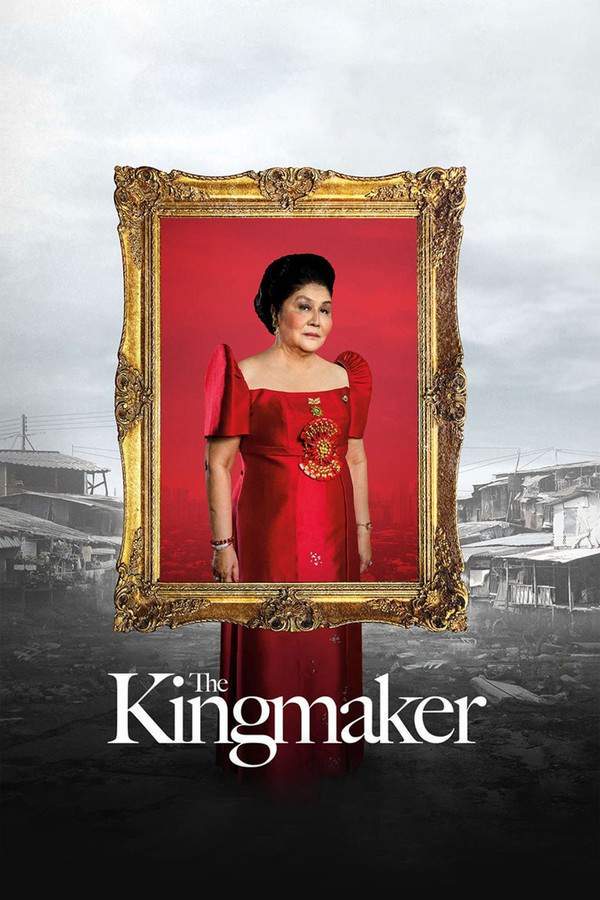
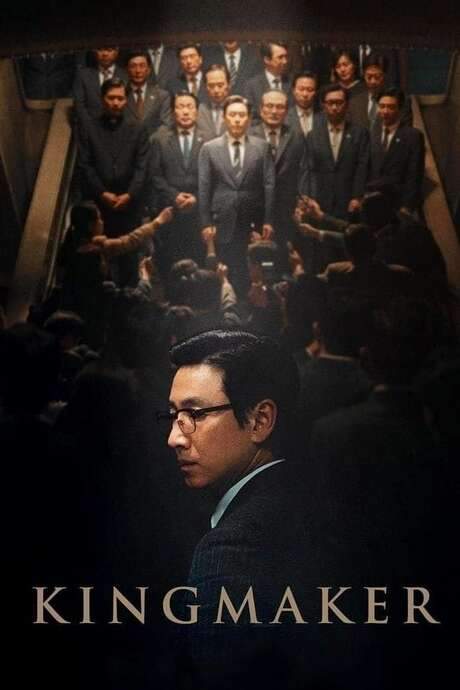
Kingmaker (2022) movie poster

Plot Summary

Kingmaker (2022) Plot Summary & Ending Explained

Release, runtime and language
2022 · 123 mins · Korean
Loading streaming availability…
Directed by
Byun Sung-hyun
Starring
Yoon Kyung-ho, Jeong Woo-hyuk, Sul Kyung-gu, Kwak Ja-hyung, Kim Seung-o, Kim Joo-ryoung

An ambitious political campaign strategist, Seo Chang-dae, finds himself at odds with his current client and faces a difficult choice when presented with a lucrative offer. This proposition tests his loyalty and forces him to confront his own ideals as he navigates the complexities of the political landscape and strives to influence a campaign with far-reaching consequences.

On this page (7)
  1. 1 Where to watch
  2. 2 What happens: full plot
  3. 3 Plot questions answered
  4. 4 How it ends
  5. 5 Movie threads
  6. 6 Movies like Kingmaker
  7. 7 Every angle
Loading streaming availability…

Full plot summary · contains spoilers

What Happens in Kingmaker: Full Plot Summary

The whole story of Kingmaker (2022) explained, from the opening scene to the final frame: every key event, every twist and what it all adds up to. Read it as a quick recap before the sequel, to check a scene you missed, or to finally understand what really happened.

In the 1960s, Seo Chang-dae, a man harboring political aspirations while temporarily managing a pharmacy, captures the attention of the ambitious politician Kim Woon-beom. Recognizing Seo’s drive and inventive mindset, Kim decides to bring him on board as a political aide. Seo quickly establishes himself as a sharp strategist, aiding Kim in securing a National Assembly seat in Mokpo, despite facing significant government interference and bribery efforts. After this victory, government officials approach Seo in an attempt to recruit him, but he firmly declines their offers.

As the New Democratic Party gears up for the forthcoming presidential election, Seo encourages Kim to confront the party establishment and seek the nomination. Kim enters a competitive race against the youthful Kim Young-ho, who champions a movement termed the "40s generation" that opposes party leader Kang In-san. Rather than leaning on established factions, Seo orchestrates an approach whereby Kim's campaign directly engages delegates nationwide. When Kang unites with Kim Young-ho and Lee Han-sang, Seo devises a tactical plan to target Lee, leveraging his political ambitions to fracture their alliance. Eventually, he persuades Lee to support Kim by offering him the coveted position of party chairman. In a dramatic turn, Kim triumphs over Kim Young-ho in the runoff and secures his position as the opposition party's presidential candidate, with Seo joining his campaign team.

During the intense campaign season, Kim faces backlash over his commitment to abolishing the reserve forces. In a bold move, Seo suggests staging a terrorist attack to cultivate public sympathy; however, Kim refrains from this strategy, cautioning that Seo lacks the requisite readiness for the political arena. Shortly thereafter, Kim's home is bombed, leading to Seo's arrest. Despite his eventual release, Kim requests that Seo withdraw from any official campaign activities. The ensuing confrontation reveals Seo's belief that political power is a tool to manipulate the masses, a perspective Kim adamantly opposes, emphasizing that politics should adhere to democratic ideals. When Kim questions Seo about his involvement in the bombing, Seo sorrowfully confesses, leading to the dissolution of their partnership.

With a new path ahead, Seo is recruited by Director Lee, transitioning into government work where he exploits regional differences, particularly historical rivalries between the Silla and Baekje regions, transforming the election into a battle of regional loyalties. As divisiveness escalates within the campaign, Seo becomes increasingly disillusioned by the consequences of his actions. Ultimately, Kim suffers defeat in the presidential election, prompting Seo to exit the political scene. It is later uncovered that Lee orchestrated the bombing of Kim's home to drive a wedge between Kim and Seo, subtly steering Seo toward the government’s agenda, even as he continues to refute involvement.

Years later, fate brings Kim and Seo together once more, allowing them to reflect on their political journeys and the decisions that shaped their careers. Their conversation underscores contrasting views on politics and the methodologies for achieving political change. The film culminates in revealing that South Korea successfully executed its first peaceful transfer of power in 1997, concluding with the poignant reflection that Seo Chang-dae played no part in this pivotal moment.
Last updated: September 24, 2026 at 14:40

Was this helpful?

Plot questions answered

Kingmaker Plot Explained: Your Questions Answered

The questions people ask most about Kingmaker (2022): what happens in the confusing scenes, why the characters do what they do, the twists, hidden details and what the ending means. Each answer contains spoilers.

Q1

Why did Kim Woon-beom and Seo Chang-dae break their political partnership?

Their partnership collapsed after the bombing of Kim's home, when Kim confronted Seo about his role in the attack. A deeper ideological split fueled the fracture: Seo believed political power was a tool to manipulate the masses, while Kim insisted politics must adhere to democratic ideals. When Seo confessed his involvement in the bombing, Kim asked him to withdraw from all official campaign activities, effectively ending their collaboration.

Foreshadowing: Earlier in Kingmaker, Seo's suggestion to stage a terrorist attack already hinted at his willingness to cross moral lines for political gain.

  • seo chang-dae
  • kim woon-beom
  • partnership
  • political ideals
  • breakup
Q2

Did Seo Chang-dae actually bomb Kim Woon-beom's home?

Seo sorrowfully confessed to being involved in the bombing of Kim's home when Kim directly confronted him about it. However, a later revelation in Kingmaker shows that Director Lee, not Seo, was the true mastermind behind the attack. Seo's confession was genuine in terms of participation, but the orchestration came from the government side as a calculated ploy to separate Seo from Kim.

Foreshadowing: Seo's earlier suggestion to stage a terrorist attack foreshadowed his willingness to participate in such an act.

  • seo chang-dae
  • bombing
  • confession
  • kim woon-beom
  • kingmaker
Q3

Who really orchestrated the bombing of Kim Woon-beom's home?

Director Lee, who recruited Seo into government work after the bombing, was revealed to be the true orchestrator of the attack on Kim's home. The bombing was designed to drive a wedge between Seo and Kim, pushing Seo toward the government and steering him into serving Lee's political agenda. Even after the reveal, Director Lee continued to deny his role in the bombing.

Foreshadowing: Director Lee's swift recruitment of Seo immediately after the bombing hinted that he had engineered the entire crisis.

  • director lee
  • bombing
  • manipulation
  • government
  • agenda
Q4

Why did Seo suggest staging a terrorist attack during the campaign?

Seo proposed fabricating a terrorist attack to generate public sympathy for Kim Woon-beom, believing that manufactured tragedy would shift voter sentiment in their favor. This suggestion reflected Seo's cynical view that public opinion could be engineered through strategic manipulation rather than earned through policy. Kim rejected the idea outright, which revealed the growing moral gap between the two strategists.

Foreshadowing: Seo's track record of exploiting every political mechanism foreshadowed his willingness to weaponize terrorism for votes.

  • terrorist attack
  • sympathy
  • manipulation
  • seo
  • campaign strategy
Q5

What was the fundamental difference between Seo Chang-dae's and Kim Woon-beom's political views?

Seo Chang-dae viewed political power as a tool to manipulate the masses, treating voters as instruments to be moved through engineered campaigns and strategic division. Kim Woon-beom, by contrast, believed politics should adhere to democratic ideals, with outcomes determined by principles rather than manipulation. Their confrontation after the bombing crystallized this clash, showing that Seo's pragmatism and Kim's idealism had become irreconcilable.

Foreshadowing: Kim's refusal to engage in the bribing seen in earlier Mokpo races already hinted at his commitment to ethical politics.

  • political philosophy
  • democratic ideals
  • manipulation
  • seo
  • kim
  • ideals
Q6

Why did Seo Chang-dae move from working for Kim to working for the government?

After Kim forced Seo out of the campaign, Director Lee recruited Seo into government work, where he began exploiting regional divisions between the Silla and Baekje regions to influence elections. Seo accepted this transition partly because Lee had engineered the bombing to push Seo toward the government's agenda in the first place. As he deepened these regional tensions, Seo grew increasingly disillusioned with the divisive politics he had helped create.

Foreshadowing: Director Lee's rapid recruitment of Seo right after the bombing hinted that Seo was being steered into a pre-planned role.

  • director lee
  • recruitment
  • government
  • regional politics
  • seo
Q7

How did Seo help Kim secure the opposition presidential nomination in Kingmaker?

Seo orchestrated a grassroots strategy by having Kim personally reach out to delegates nationwide instead of relying on established party factions. When party leader Kang In-san allied with Kim Young-ho and Lee Han-sang to block Kim's candidacy, Seo countered by targeting Lee's personal ambitions, eventually persuading Lee to switch sides in exchange for the promise of party chairmanship. These maneuvers allowed Kim to defeat Kim Young-ho in the runoff and claim the opposition nomination.

Foreshadowing: Seo's successful handling of government interference during the Mokpo election foreshadowed his ability to outmaneuver entrenched party rivals.

  • nomination
  • delegates
  • alliance
  • lee han-sang
  • strategy
  • runoff
Q8

Why was Seo Chang-dae absent from Korea's 1997 peaceful transfer of power?

By the time South Korea achieved its first peaceful transfer of power in 1997, Seo had already exited the political scene and lost faith in the system he once manipulated. His earlier descent into cynical regional politics and his eventual disillusionment left him estranged from the democratic milestones he had once tried to engineer. The ending of Kingmaker frames his absence as the tragic consequence of a brilliant strategist who compromised his ideals beyond repair.

Foreshadowing: Seo's growing disillusionment with his own divisive tactics in the later years foreshadowed his eventual withdrawal from politics.

  • 1997
  • peaceful transfer of power
  • seo chang-dae
  • disillusionment
  • absence
Q9

What was the significance of the Silla and Baekje regional division in the campaign?

When Seo transitioned to government work, he exploited historical rivalries between the Silla and Baekje regions to transform the election landscape into a battle of regional loyalties. By weaponizing long-standing cultural divisions, Seo turned elections into contests of identity rather than policy, deepening social fractures for political gain. In Kingmaker, this regional manipulation is presented as one of Seo's most damaging contributions to South Korean politics.

Foreshadowing: Seo's prior willingness to stage a terrorist attack foreshadowed his readiness to weaponize any division, including historical ones.

  • silla
  • baekje
  • regional division
  • regional rivalry
  • political manipulation
Q10

Why did Kim Woon-beom reject Seo's idea to stage a terrorist attack?

Kim Woon-beom firmly rejected the plan because it violated the democratic principles he believed politics must uphold. He also warned Seo that he lacked the moral readiness required for the political arena, signaling that their ethical gap had become unbridgeable. This rejection was the first clear moment in Kingmaker where their partnership began to fracture beyond repair.

Foreshadowing: Kim's prior insistence on ethical campaigning during the Mokpo race foreshadowed his unwillingness to cross into outright manipulation.

  • terrorist attack
  • rejection
  • democratic principles
  • kim woon-beom
  • kingmaker
Q11

How did Kim Woon-beom lose the presidential election in Kingmaker?

Kim lost the presidential election after the combined effects of the bombing controversy, Seo's departure from his team, and Seo's subsequent exploitation of regional divisions on the government's behalf. The manipulated public sentiment and deepened regional loyalties turned the electorate against Kim's platform. In Kingmaker, the loss represents the final cost of Seo's cynical methods rebounding against the candidate he once served.

Foreshadowing: Seo's earlier warnings that power requires manipulation foreshadowed the consequences Kim would suffer when that manipulation turned against him.

  • presidential election
  • defeat
  • regional divisions
  • consequences
  • kim
Q12

Why did Seo Chang-dae refuse government recruitment offers early in the film?

After helping Kim win a National Assembly seat in Mokpo, Seo was approached by government officials who tried to lure him into their ranks with promises of power and resources. Seo firmly declined because he was committed to Kim's opposition campaign and to the shared political goals they had built together. This early loyalty foreshadowed how painful his eventual recruitment by Director Lee would prove to be.

Foreshadowing: Seo's initial refusal of government offers made his later switch to working for Director Lee feel like a true betrayal rather than a simple career move.

  • government recruitment
  • loyalty
  • seo chang-dae
  • opposition
  • early career
Q13

How did Seo manipulate Lee Han-sang to break the opposition alliance?

Seo recognized that Lee Han-sang harbored personal political ambitions that outweighed his loyalty to the existing alliance with Kang In-san and Kim Young-ho. Seo offered Lee the promise of party chairmanship in exchange for his support of Kim Woon-beom, which satisfied Lee's ambitions while fracturing the opposing coalition. This single tactical move cleared Kim's path to winning the runoff in Kingmaker.

Foreshadowing: Seo's earlier success in outmaneuvering government interference during the Mokpo race foreshadowed his talent for splitting rival blocs.

  • lee han-sang
  • alliance
  • manipulation
  • party chairmanship
  • strategy
Q14

Why did Seo become disillusioned with politics by the end of Kingmaker?

As Seo continued working for the government and deepening regional tensions between the Silla and Baekje regions, he began to recognize the human cost of his own manipulations. The divisiveness he had engineered came to weigh heavily on him, eroding the sense of purpose that had once driven his ambition. Ultimately, Seo walked away from politics altogether, and Kingmaker closes by underscoring that he played no part in Korea's eventual democratic achievement in 1997.

Foreshadowing: Seo's sorrowful confession about the bombing hinted at a conscience that would later be worn down by his own political methods.

  • disillusionment
  • regional tensions
  • seo chang-dae
  • politics
  • kingmaker ending

Ending explained

What Happens at the End of Kingmaker?

How Kingmaker (2022) ends, in short: the final scene, the last twist and what it means for the characters. The full ending explained, with every spoiler, lives on its own page.

Read the full ending explained

In the final act, Seo Chang‑dae’s devotion to politics proves stronger than any personal loyalty. When President‑backed Kim Woon‑beom’s unpopular decision on reserve forces threatens his popularity, Seo, ever the pragmatic strategist, suggests staging an attack to rally support—a tactic that had worked before. The proposal horrifies Kim, who strips Seo of his advisory role and sends him abroad on a diplomatic tour. While Kim is away, a bomb detonates in his Seoul home; the explosion spares lives but becomes a political flashpoint. The Democrats blame the ruling Republicans, but the police soon arrest several senior party figures, including Seo, accusing him of engineering the blast to smear the opposition.

After Seo is released, a furious argument with Kim leads to his expulsion from the Democratic Party. The Republicans, eager to exploit his talent, recruit him to head their campaign. Now the man who once shaped Kim’s victories is orchestrating a ruthless smear against his former mentor, accusing Kim of regional bias and neglect of rival areas. The campaign succeeds: the incumbent President wins re‑election, and Kim’s presidential ambitions are crushed.

Continue reading the ending (1 more paragraphs)

Despite securing the Republican victory, Seo refuses any government post, and he reveals to the public that the bomb was actually planted by the Republicans—not by him—underscoring his continued willingness to manipulate facts for political ends. The film then jumps to 1988, seventeen years later, when Seo and Kim meet by chance in a quiet café. Kim laments the past and wishes he could have acted differently; Seo listens, a faint smile hinting at lingering respect. The camera linger​s on Seo sitting alone, his gaze distant, as the credits roll—leaving the audience to wonder whether the kingmaker’s greatest triumph is the elections he won or the quiet, unresolved bond he never quite abandoned.

Kingmaker ending explained in full

Movie threads

More Movies Like Kingmaker, by Mood & Story

Curated lists built around what makes Kingmaker tick: the same mood, the same kind of story or the same emotional payoff. Each list explains why these movies belong together.

Dark political strategist dramas like Kingmaker

Stories about brilliant but morally hollowed strategists who treat democracy as a chessboard. If you liked Kingmaker and want more movies like it, explore these dark, calculating political dramas featuring charismatic but morally compromised masterminds. These films follow backroom fixers, campaign strategists, and power brokers who manipulate democracy for personal or ideological gain, perfect for viewers craving cynical, high-intensity political thrillers with complex plotting and bleak outcomes.

  • cynical
  • calculating
  • tense
  • oppressive
  • gritty
  • manipulative
  • Tone: dark, calculating, cynical
  • Pacing: steady, deliberate escalation
Why these movies?

The story pattern: These films typically follow a protagonist who is exceptionally gifted at reading people, controlling narratives, and engineering political outcomes. The arc moves from early displays of brilliance and tactical dominance into escalating moral compromise, culminating in the strategist either becoming the very monster they once opposed or being discarded by the system they built. Allies are tools, loyalty is leverage, and revelations come late and painfully.

Why they belong together: The grouping is anchored by a shared fascination with the mechanics of power: long strategic conversations, quiet betrayals, public performances masking private cynicism, and a tone that views democratic processes as contests of manipulation rather than ideals. Movies cluster here when the political game itself is the protagonist and the human cost is felt rather than glossed over.

Bleak historical epics of lost idealism like Kingmaker

Sprawling historical portraits of idealists slowly ground down by the systems they tried to change. Movies like Kingmaker for viewers who love sweeping, decades-spanning historical dramas about idealism collapsing under political reality. These weighty films trace characters through pivotal eras of national history as their beliefs are tested, betrayed, and ultimately abandoned, delivering heavy emotional payoffs, dark tones, and bleak endings that linger long after the credits roll.

  • somber
  • reflective
  • heavy
  • melancholic
  • historical
  • cynical
  • Tone: somber, melancholic, reflective
  • Pacing: steady, decades-spanning
Why these movies?

The story pattern: Narratives in this thread move across broad canvases of time, using historical milestones as chapter markers. A protagonist begins with sincere belief in a cause, movement, or nation, then watches each compromise made in the name of strategy chip away at that belief. The structure accumulates small betrayals into a single crushing realization, ending not with triumph but with an exhausted, complicit survivor walking away from the history they helped shape.

Why they belong together: Films belong here when the emotional core is the slow erosion of conviction rather than a single dramatic turn. Shared traits include ensemble casts woven through years, a somber reflective tone, heavy emotional weight, and endings that feel like quiet defeat rather than catharsis. The pace is patient and the complexity rewards viewers who track shifting alliances and historical context across scenes.

If you liked this

Movies Like Kingmaker

Similar movies to Kingmaker: the same genre, themes or kind of story. Each one comes with its own plot summary, timeline and ending explained.

Browse all movie summaries

Every angle

Kingmaker (2022) Explained: Plot, Ending, Timeline & Characters

Everything about Kingmaker in one place: what happens in the plot summary, the timeline in chronological order, the characters and meaning, the ending explained and a spoiler-free summary. What's After the Movie adds the cast, box office and post-credit scenes.

Coming soon on iOS and Android

The Plot Explained Movie Summary App

Plot summaries, endings explained and timelines on your phone. Catch up on any movie in minutes, save your favorites and never miss a twist again.

Be the first to know when we launch. Your email stays private, always.

Learn more about the app