Plot Explained Spoilers guaranteed!
Plot Explained

Browse by genre

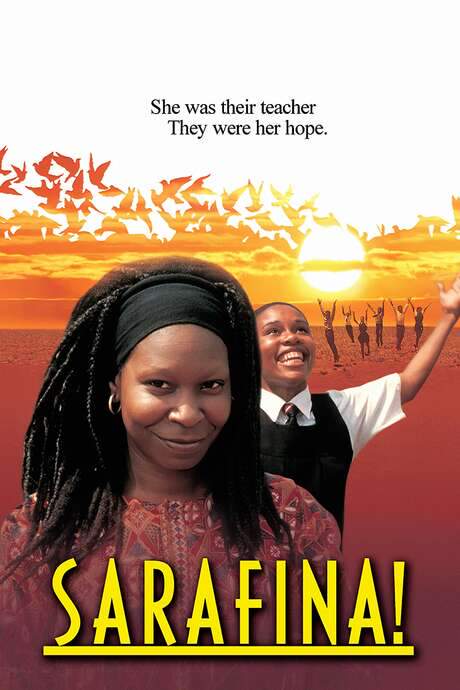
Sarafina! (1992) movie poster

Plot Summary

Sarafina! (1992) Plot Summary Explained

Release, runtime and language
1992 · 117 mins · English
Directed by
Darrell James Roodt
Starring
John Kani, Mary Twala, Whoopi Goldberg, James Whyle, Miriam Makeba, Nicky Rebelo

She teaches hopeful pupils during the 1976 Soweto uprising, protesting Afrikaans as the language of instruction. Through activist Sarafina, police fire on students in a classroom, and teacher Mary Masombuka (Whoopi Goldberg) is imprisoned. Sarafina’s mother (Miriam Makeba) urges resistance, ending with a farewell performance, children leave school.

On this page (6)
  1. 1 Where to watch
  2. 2 What happens: full plot
  3. 3 Plot questions answered
  4. 4 Movie threads
  5. 5 Movies like Sarafina!
  6. 6 Every angle

Where to watch

Where to Watch Sarafina! (1992)

Where can you watch Sarafina!? Stream, rent or buy it in the US, including on Hoopla, Amazon Video and Apple TV Store: current JustWatch availability with up-to-date prices.

Streaming availability powered by JustWatch

Full plot summary · contains spoilers

What Happens in Sarafina!: Full Plot Summary

The whole story of Sarafina! (1992) explained, from the opening scene to the final frame: every key event, every twist and what it all adds up to. Read it as a quick recap before the sequel, to check a scene you missed, or to finally understand what really happened.

Sarafina Leleti Khumalo is a teenage student who idolizes Nelson Mandela, who is currently serving life imprisonment for conspiracy and treason against the apartheid government. She dreams of Mandela leading a free and just South Africa, and she longs to play him in the upcoming school play.

At school, a weary John Kani as the School Principal assigns Mary Masembuko Whoopi Goldberg to lead prayer songs to help keep order and prevent further riots. Meanwhile, the police press the principal to blame the students for the violence, pointing to fires in several schools, a claim the principal does not fully believe. During lunch, staff debate who is really fueling the unrest, with Mary suggesting juvenile delinquency while the students work to hide their activist feelings to avoid punishment from the adults.

During rehearsal, Sarafina envisions a hopeful ending in which Mandela is freed and leads the country toward a brighter future. After school, Crocodile Dumisani Dlamini leads a gang of students in a bid to resist the government’s heavy-handed taxes, but they are forced to scatter when the authorities move in and a riot erupts.

In a white household where her mother works, Sarafina speaks of a craving for freedom, something her activist father always wanted before he died a hero. Her mother, practical and wary, worries that daydreams contradict their place in apartheid. Meanwhile, an injured Crocodile seeks shelter at Sarafina’s home after a brutal encounter with the police.

At Mary’s house, Mary explains to Sarafina that her husband Joe rarely uses his gun to defend their home, underscoring the precarious balance of safety and fear in their lives.

The next day, Mary denies teaching children communism to the police, while Sarafina and Crocodile shame their classmate Guitar Sipho Kunene for betraying them by telling his suspicions to Constable Sabela, a confession that reveals how officials manipulate informants to justify harsh treatments. Word spreads that a new teacher has been introduced to replace the previous one, and this instructor attempts to rewrite history by praising a fictionalized Russian invasion, a move the students reject, expelling him from the classroom. The police respond with warning shots to scatter the crowd, and the celebration of learning quickly turns to tragedy as several students fall.

At the funerals for Crocodile and the others, a priest warns of the price paid for arrogance and for denying the right of the native people to shape their own country. The protests swell into a race riot after the police push back, and the rebellion grows as students build large barricades from old furniture to defend their homeland. The SADF eventually tears down the barricades with tanks and jets, capturing those who remain alive.

During Sarafina’s interrogation, a prison warden reveals that Mary was killed by the police to keep her quiet and warns that the same fate could await Sarafina if she doesn’t conform to the authorized syllabus. With the warden’s approval, the interrogations turn brutal, aiming to break the protesters with physical and psychological torture. In the final act of fear, Sarafina confronts rats in a cage, the warden hoping this terror will crush her resolve; she pleads for mercy for her friends, and the guards release her.

Back home, Sarafina’s mother finally apologizes for a hurtful remark and pledges to support her daughter’s dream of freedom in any way she can. After a discussion about the school play’s venue with Guitar, Sarafina leads the cast as Mandela. The performance becomes a triumph, and Mandela’s real-world release in 1990 marks a turning point that, a few years later, helps bring South Africa back toward a more hopeful future.

Last updated: December 04, 2025 at 15:33

Was this helpful?

Plot questions answered

Sarafina! Plot Explained: Your Questions Answered

The questions people ask most about Sarafina! (1992): what happens in the confusing scenes, why the characters do what they do, the twists, hidden details and what the ending means. Each answer contains spoilers.

Q1

Why was Mary Masombuko killed by the police?

Mary was killed by the police to keep her quiet. During Sarafina's interrogation, the prison warden reveals that Mary was murdered because she posed a threat to the apartheid regime as a teacher who encouraged student activism against the government. Her death was meant to silence her influence and send a warning to other potential protesters.

Foreshadowing: Mary's earlier refusal to deny teaching communism to the police had already marked her as a target.

  • mary masombuko killed
  • police brutality
  • apartheid violence
  • sarafina teacher death
Q2

Why does Sarafina want to play Nelson Mandela in the school play?

Sarafina idolizes Nelson Mandela, who was serving a life sentence for conspiracy and treason against the apartheid government. She sees playing Mandela in the school play as a way to honor him and express her hope for a free, just South Africa. The role represents her dream of freedom and leadership, making the play a powerful symbol of resistance against oppression.

Foreshadowing: Early in the film, Sarafina envisions a hopeful ending where Mandela is freed and leads the country toward a brighter future.

  • sarafina mandela play
  • dream role
  • mandela admiration
  • student hope
Q3

Why does Crocodile lead students in protest against taxation?

Crocodile leads a gang of students in resisting the government's heavy-handed taxes, which were part of the apartheid system's economic oppression. As a young activist, he channels his frustration into direct action against institutional injustice. His leadership demonstrates how students actively participated in the struggle beyond school protests.

Foreshadowing: Crocodile's activist nature was established through his involvement in student resistance activities.

  • crocodile protest
  • student taxation resistance
  • apartheid taxes
  • youth activism
Q4

What happens to Sarafina during her interrogation and why are rats used?

During interrogation, Sarafina is subjected to brutal torture designed to break her spirit. The guards place her in a cage with rats, using this terrifying ordeal as psychological warfare to crush her resolve and force her to conform to the authorized syllabus. The warden hopes this nightmare will make her betray her friends and abandon the protest movement.

Foreshadowing: Earlier, the warden warned Sarafina that Mary was killed for remaining steadfast.

  • sarafina torture
  • rats cage interrogation
  • police brutality
  • sarafina imprisonment
Q5

Why does Guitar betray Sarafina and Crocodile to the police?

Guitar informs Constable Sabela about his classmates' suspicions because he fears the consequences of being associated with activist students. The film reveals how officials manipulate informants, using betrayals to justify harsh treatment of students. Guitar's weakness under pressure exposes how the apartheid regime exploited fear to turn students against each other.

Foreshadowing: The police were actively seeking information to justify cracking down on students.

  • guitar betrayal
  • constable sabela
  • student informant
  • apartheid manipulation
Q6

Why do police fire on students at the school?

The police open fire on students after the students expel a new teacher who tried to impose a censored syllabus praising a fictionalized Russian invasion. When the teacher is removed from the classroom, the authorities use this as justification to respond with warning shots, which escalate into a deadly crackdown. This moment marks a violent turning point where peaceful education is met with lethal force.

Foreshadowing: The tension between the approved curriculum and the students' desire for truthful education had been building.

  • police shooting school
  • student massacre
  • soweto uprising
  • school violence
Q7

Why does Sarafina's mother initially oppose her daughter's dreams?

Sarafina's mother worries that her daughter's dreams of freedom and playing Mandela are dangerous fantasies that could get her killed under apartheid. Having lost her husband, a hero activist, she fears the same fate for Sarafina. Her practical stance reflects the impossible choice many Black South Africans faced between safety and resistance.

Foreshadowing: The mother's warnings about the syllabus and freedom reflect her desire to protect Sarafina from the same fate that befell her father.

  • sarafina mother opposition
  • apartheid fear
  • family sacrifice
  • protective mother
Q8

Why does the school play become important to the resistance?

The school play, with Sarafina portraying Mandela, becomes a powerful symbol of hope and defiance. By dramatizing Mandela's leadership and imagining his release, the students assert their belief in a future without apartheid. The play transforms from a school performance into a statement of political resistance and national aspiration.

Foreshadowing: Sarafina's vision during rehearsal of Mandela being freed establishes the play's symbolic weight.

  • mandela play
  • school performance resistance
  • sarafina mandela
  • Symbolic theater
Q9

What triggers the escalation from protests to full-scale armed rebellion?

The protests escalate into armed rebellion after police kill Crocodile and several other students during the school crackdown. The priest's warning at the funerals about the price of denying freedom galvanizes the surviving students. They build barricades from old furniture to defend their homeland, and the SADF responds with tanks and jets, marking the transition from student protests to open conflict.

Foreshadowing: The funerals and priest's sermon shift the tone from mourning to defiance.

  • soweto uprising escalation
  • student barricades
  • SADF tanks
  • armed rebellion
Q10

Why is Mandela's 1990 release significant to the story's ending?

Mandela's release in 1990 marks the beginning of the end for apartheid, fulfilling the hope that sustained Sarafina throughout the struggle. The film ends with this historical event, showing that the students' resistance was not in vain. Mandela's subsequent election as president in 1994 represents the victory their sacrifice worked toward.

Foreshadowing: Sarafina's play and her dream of Mandela freed wereBuilding toward this historical moment.

  • mandela release 1990
  • apartheid ends
  • democracy south africa
  • mandela president 1994
Q11

Why is Sarafina's activist father significant to her character?

Sarafina's father was an activist who died a hero fighting for freedom. His sacrifice motivates Sarafina's passion for the cause and her desire to honor him by continuing his work. This family history explains why Sarafina is willing to risk danger, as the fight for freedom is inherited from her father.

Foreshadowing: Sarafina's mother references her husband's dreams of freedom when discussing the syllabus.

  • sarafina father death
  • activist father
  • family legacy
  • freedom fight inheritance
Q12

What happens to Crocodile and the other students killed?

Crocodile and several other students are killed during the police crackdown at the school. They die when authorities respond with lethal force after the students expel the censored teacher. Their deaths harden the surviving students' resolve and transform the movement from peaceful protest into armed rebellion.

Foreshadowing: Crocodile was previously injured after a brutal police encounter earlier in the film.

  • crocodile death
  • student killed
  • soweto massacre
  • police crackdown

Movie threads

More Movies Like Sarafina!, by Mood & Story

Curated lists built around what makes Sarafina! tick: the same mood, the same kind of story or the same emotional payoff. Each list explains why these movies belong together.

Youth protest stories like Sarafina!

Young protagonists rise up against injustice, facing brutality with defiant hope. For viewers who admired the defiant spirit in Sarafina!, this list gathers films about young people leading the fight against oppression. Discover similar dramas and historical stories where students and youth activists challenge authority, facing immense danger for a hopeful future.
  • defiant
  • resilient
  • hopeful
  • angry
  • tragic
  • anxious
  • Tone: defiant, tragic, hopeful
  • Pacing: variable, shifting from character moments to explosive action
Why these movies?

The story pattern: The narrative typically follows a young protagonist or group whose political awakening forces them into a dangerous confrontation with authority. The story arc moves from naive idealism to hardened resilience, often marked by significant loss and trauma, but driven by an unyielding hope for change.

Why they belong together: These films are grouped together because they share a core focus on the power of youth in political struggles. They combine the intimate perspective of coming-of-age with the grand scale of historical conflict, creating a specific, potent mix of idealism, tragedy, and resilience.

Historical dramas with bittersweet endings like Sarafina!

Stories where hard-fought progress comes at a profound personal cost. If the ending of Sarafina! resonated with you, explore more movies where historical battles for freedom end on a bittersweet note. These films show that meaningful change often comes with great loss, balancing hope with the heavy emotional weight of the journey.

  • tragic
  • hopeful
  • resilient
  • somber
  • grave
  • cathartic
  • Tone: dark, bittersweet, heavy
  • Pacing: steady, with intense peaks
Why these movies?

The story pattern: These narratives are grounded in real or realistic historical conflicts, following characters through a harrowing struggle. The plot builds towards a significant but partial victory or a moment of hope, which is directly overshadowed by the personal tragedies and sacrifices that made it possible. The emotional journey is one of heavy cost and qualified hope.

Why they belong together: These movies share a specific emotional arc: a relentless, dark journey through injustice that culminates in a victory that feels bittersweet. The similarity lies in the balanced ending feel—acknowledging progress while honoring the immense suffering it required.

If you liked this

Movies Like Sarafina!

Similar movies to Sarafina!: the same genre, themes or kind of story. Each one comes with its own plot summary, timeline and ending explained.

Browse all movie summaries

Every angle

Sarafina! (1992) Explained: Plot, Timeline & Characters

Everything about Sarafina! in one place: what happens in the plot summary, the timeline in chronological order, the characters and meaning and a spoiler-free summary. What's After the Movie adds the cast, box office and post-credit scenes.

Coming soon on iOS and Android

The Plot Explained Movie Summary App

Plot summaries, endings explained and timelines on your phone. Catch up on any movie in minutes, save your favorites and never miss a twist again.

Be the first to know when we launch. Your email stays private, always.

Learn more about the app