Year: 1980
Runtime: 142 mins
Language: Romanian
Director: Gheorghe Vitanidis
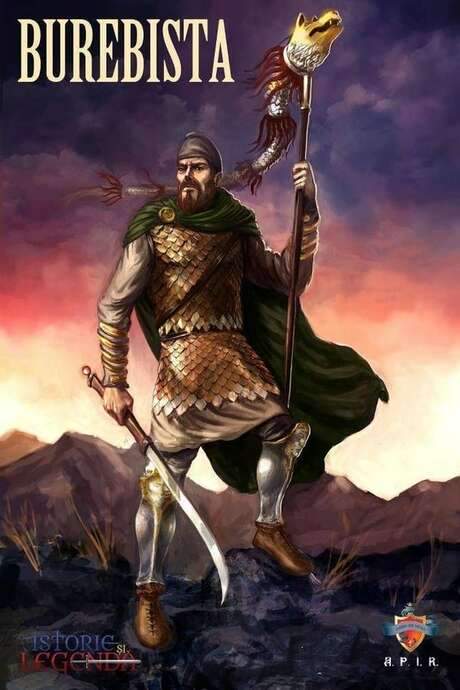
Chronicles the life of Dacian war‑leader Burebista, who reigned from 80 to 44 BC and forged a unified, powerful Dacian kingdom. Despite relentless pressure from neighboring Celtic warlords and the Greek city‑states along the Black Sea coast, he consolidated territories, reinforced defenses, and left a lasting legacy of strength and resistance.
Warning: spoilers below!
Haven’t seen Burebista yet? This summary contains major spoilers. Bookmark the page, watch the movie, and come back for the full breakdown. If you're ready, scroll on and relive the story!
Read the complete plot breakdown of Burebista (1980), including all key story events, major twists, and the ending explained in detail. Discover what really happened—and what it all means.
From the opening shot of a rocky outcrop carved in the shape of a head, the story unfolds over the Carpathians as Rome’s rising power threatens the Dacian realm ruled by the enigmatic George Constantin as Burebista. The film sets its gaze on a pivotal choice: unite Dacia under a single king or let Rome swallow the scattered tribes. At the center, the high priest Deceneu convinces the Dacian lords to pledge loyalty to Burebista, promising to keep Dacia free from Rome while constructing a rigorous, well-drilled army. The crown’s legitimacy hinges on a dream of strength, and the man who will test that dream is introduced through the arrival of refugees, including Ion Dichiseanu as Calopor, a former gladiator who once fought alongside Spartacus.
As Burebista weighs the risks and rewards of unity, Calopor is soon tasked with a delicate assignment: travel to Greece to gauge the threat and, in the process, rekindle a memory of a lost romance. It is there that he encounters Lydia, Anca Szonyi as Lydia, who has been forced into an unhappy marriage with the arrogant Roman aristocrat Hybrida. Hybrida’s desire for showy games pushes Calopor into a gladiatorial arena, where a planned strike against Hybrida becomes a dangerous act of vengeance when Lydia is killed as a tragic farce of power. Calopor’s grief turns to resolve as he rises in a moment of rebellion, and the death of Hybrida becomes a spark that lights a broader insurrection. With Romans in retreat, Burebista’s forces ride out to press the victory, signaling a new balance of power in the region.
Back in Dacia, a festival of triumph mirrors the political quiet before stormy days ahead. A messenger brings news that Mithridates has committed suicide to avoid capture by Pompey, but a letter from the dead king urges continued resistance. Another missive, from Pompey, asks Burebista to help curb Caesar’s ambitions. The king weighs the looming trouble: a widening conflict between Rome’s rising strength and the fragile unity he has forged.
The Celtic threat intensifies when the Boii strike, enslaving villagers with the aid of a Dacian traitor. The capture exposes a flaw: guards were drunk, and George Constantin as Burebista orders the destruction of grapevines in a bid to blunt the Celtic force. He seeks a diplomatic path, offering cooperation between Dacians and Celts to deter Roman conquest, but the Druids, led by Constantin Dinulescu as Breza, refuse to negotiate. War looms, and Burebista confronts the fear that endless fighting could sap the strength of both sides, opening a door for Caesar to strike. The Celts threaten to kill their captives, but the Dacian oracle-like Deceneu signals a celestial sign: a solar eclipse that will reveal the gods’ power. Seizing the moment, Burebista exploits the eclipse to terrify the Celts into surrendering the captives. Breza flees, with Calopor in hot pursuit, and in a brutal confrontation Breza stabs Calopor in the back—only to reveal, in his dying breath, that Calopor is Burebista’s illegitimate son. Breza is captured and executed on the altar pyre of the goddess Epona.
With the Celts brought to heel, Burebista has forged a corridor of power—strong enough to sustain a united Dacia. Yet Rome’s horizon remains a constant shadow. In the larger Roman world, Caesar’s reach expands: Gaul falls under Roman rule, and Pompey’s victory would soon be undone by Caesar himself. The film’s final arc contemplates the future: Caesar’s ascent and eventual fate, and Deceneu’s sober reminder that life is transient, even for kings. Burebista declares that every ruler must die, but the unity he has built could outlive them all. The closing image lingers on a profile that looks out over the mountains, his head fading into the same rock that began the tale, a testament to a kingdom that endures beyond a single reign.
Last Updated: October 09, 2025 at 14:51
Discover curated groups of movies connected by mood, themes, and story style. Browse collections built around emotion, atmosphere, and narrative focus to easily find films that match what you feel like watching right now.
Historical epics about powerful rulers forging nations amid tragedy.Movies like Burebista that explore the heavy price of building a nation. If you were captivated by the grim determination of a leader unifying his people against overwhelming odds, you'll find similar historical epics here featuring powerful rulers, political intrigue, and bittersweet legacies.
These narratives follow a central, powerful figure on a methodical and often grim journey of political and military unification. The plot is driven by external threats, internal betrayals, and the constant pressure of leadership, culminating in an achievement that is undercut by personal tragedy or the looming threat of future collapse. The emotional journey is one of determined resolve shadowed by melancholy.
Movies are grouped here for their shared focus on the epic scale of nation-building, the DARK and SOMBER tone that accompanies power, and the HEAVY emotional weight derived from the leader's personal sacrifices. They share a STEADY, procedural pacing that builds tension around political maneuverings and a BITTERSWEET ending that questions the true cost of greatness.
Stories of cultures defiantly resisting conquest, knowing the odds.If you liked the tense and determined mood of Burebista's struggle against Rome, this section features similar movies about cultures resisting annihilation. Discover stories filled with political tension, the somber reality of conquest, and the heavy emotional weight of fighting a seemingly inevitable fate.
The narrative pattern involves a society under existential threat, typically from a vast, encroaching empire. The plot unfolds with a STEADY buildup of tension through diplomatic crises, skirmishes, and internal political strife. The characters operate with a sense of grim determination, aware their defiance may be more about honor and legacy than ultimate victory. The ending often acknowledges the impermanence of their success, emphasizing the bittersweet nature of their resistance.
These films are united by a specific emotional mix: a DARK and tense atmosphere, a SOMBER and fatalistic mood, and a HEAVY emotional weight. The experience is defined by HIGH intensity stakes and a STEADY pacing that methodically presents the challenges of resistance. The core drive is the theme of defiance against an overwhelming force, resulting in a BITTERSWEET conclusion.
Don't stop at just watching — explore Burebista in full detail. From the complete plot summary and scene-by-scene timeline to character breakdowns, thematic analysis, and a deep dive into the ending — every page helps you truly understand what Burebista is all about. Plus, discover what's next after the movie.
Track the full timeline of Burebista with every major event arranged chronologically. Perfect for decoding non-linear storytelling, flashbacks, or parallel narratives with a clear scene-by-scene breakdown.
Discover the characters, locations, and core themes that shape Burebista. Get insights into symbolic elements, setting significance, and deeper narrative meaning — ideal for thematic analysis and movie breakdowns.
Get a quick, spoiler-free overview of Burebista that covers the main plot points and key details without revealing any major twists or spoilers. Perfect for those who want to know what to expect before diving in.
Visit What's After the Movie to explore more about Burebista: box office results, cast and crew info, production details, post-credit scenes, and external links — all in one place for movie fans and researchers.
Discover movies like Burebista that share similar genres, themes, and storytelling elements. Whether you’re drawn to the atmosphere, character arcs, or plot structure, these curated recommendations will help you explore more films you’ll love.
Burebista (1980) Scene-by-Scene Movie Timeline
Burebista (1980) Movie Characters, Themes & Settings
Burebista (1980) Spoiler-Free Summary & Key Flow
Movies Like Burebista – Similar Titles You’ll Enjoy
Spartacus (1960) Ending Explained & Film Insights
Boudica: Queen of War (2023) Full Movie Breakdown
Baltic Tribes (2018) Full Summary & Key Details
Druids (2001) Ending Explained & Film Insights
Boudica (2003) Complete Plot Breakdown
Boudica: Rise of the Warrior Queen (2019) Story Summary & Characters
Spartacus (1000) Complete Plot Breakdown
Cabiria (1914) Full Summary & Key Details
Boudica (2023) Spoiler-Packed Plot Recap
The Dacians (1967) Complete Plot Breakdown
Sins of Rome (1953) Full Summary & Key Details
79 A.D. (1962) Detailed Story Recap
Spartacus and the Ten Gladiators (1964) Ending Explained & Film Insights
Thunder of Battle (1964) Detailed Story Recap
Brennus, Enemy of Rome (1963) Story Summary & Characters