












Plot Explained Spoilers guaranteed!
Plot Explained

Browse by genre

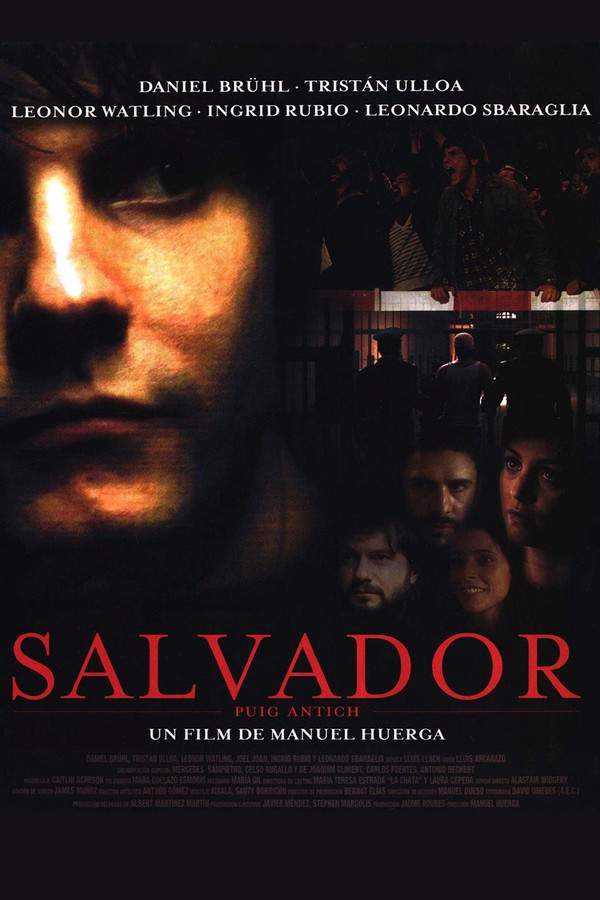
Salvador (1986) movie poster

Timeline

Salvador (1986) Timeline Explained – Every Event in Order

Release, runtime and language
1986 · 122 min · Catalan
JustWatch #7,510 195
Directed by
Oliver Stone
Starring
James Belushi, John Savage, James Woods, Tony Plana, Elpidia Carrillo, Cynthia Gibb
Budget
$4.5M

During the 1970s in Spain, Salvador Puig Antich, a passionate revolutionary, undertakes a dangerous mission against the oppressive Franco regime. Facing political repression and escalating violence, he fights for change while risking his own life and freedom. His unwavering defiance presents a significant challenge to the ruling powers and puts him on a collision course with those determined to silence him.

On this page (6)
  1. 1 Where to watch
  2. 2 Events in order (14)
  3. 3 Timeline questions answered
  4. 4 Movie threads
  5. 5 Movies like Salvador
  6. 6 Every angle

Where to watch

Where to Watch Salvador (1986)

Where can you watch Salvador? Stream, rent or buy it in the US, including on Amazon Prime Video, fuboTV and MGM Plus: current JustWatch availability with up-to-date prices.

Streaming availability powered by JustWatch

14 events in order · contains spoilers

Salvador Timeline: Events in Chronological Order

Every key event of Salvador (1986) in order, scene by scene, with when and where it takes place. Use it to untangle flashbacks, time jumps and parallel storylines, to refresh your memory before the sequel or to find the exact scene you are thinking of.

  1. Richard's Life as a Photojournalist

    Richard Boyle, a veteran photojournalist, has spent more than two decades reporting on global conflicts. However, despite his dedication, his struggles with substance abuse and a battered reputation leave him struggling to find work.

    When
    1980
    Where
    California
  2. The Departure of Richard's Family

    Richard wakes up to the heart-wrenching news that his wife has left him, taking their child with her. This sudden abandonment plunges him into deeper financial and emotional turmoil.

    Where
    California
  3. Teaming Up with Doctor Rock

    In search of a new beginning, Richard teams up with his best friend Doctor Rock, a struggling disc jockey. Together, they decide to travel to El Salvador, believing there might be freelance opportunities amidst the chaos.

    Where
    California
  4. Arrival in El Salvador

    Upon their arrival in El Salvador, Richard and Doctor Rock are immediately confronted with the grim realities of the political turmoil. They witness the execution of a teenage student, a shocking event that starkly reveals the conflict’s brutality.

    Where
    El Salvador
  5. Meeting with the General

    Richard seeks out a general he had met during the Football War, hoping to gain insight into the situation. They are taken to a makeshift army barrack, where Richard learns of U.S. military support for the Salvadoran government.

    Where
    Converted School in El Salvador
  6. Reconnecting with María

    While in El Salvador, Richard reconnects with his former lover, María. This complicated relationship draws him deeper into the humanitarian crisis, as he grapples with his feelings of responsibility towards her and her children.

    Where
    El Salvador
  7. Tragic Mass and Assassination

    Richard and María attend a mass led by Archbishop Oscar Romero, a moment filled with hope that quickly turns to horror. An assassin silences the Archbishop, and chaos erupts as military forces open fire on the fleeing crowd.

    Where
    El Salvador
  8. Plea to the U.S. Ambassador

    Concerned about the human rights violations, Richard seeks to persuade the U.S. ambassador to pull support from the Salvadoran government. His impassioned plea is met with indifference, leaving him disheartened and frustrated.

    Where
    El Salvador
  9. Entanglement with Military Affairs

    In an effort to protect María, Richard becomes increasingly involved with the military. This involvement leads to tragic consequences, including the loss of innocent lives, heightening the stakes of their precarious situation.

    Where
    El Salvador
  10. Tragic Death of John Cassady

    Richard's friend and fellow journalist, John Cassady, is killed during a skirmish with the Salvadoran army. His tragic death serves as a grim reminder of the violent reality facing journalists covering the conflict.

    Where
    El Salvador
  11. Journey to a New Life

    Richard and María embark on a perilous journey through Guatemala and Mexico, hoping to find safety in the United States. Their adventure reflects both hope and desperation as they strive for a new beginning.

    Where
    Guatemala and Mexico
  12. Heart-wrenching Decision

    As they finally reach California, the couple faces immigration officials who halt their journey. In a heartbreaking choice, María decides to be deported with her children, leaving Richard behind to continue his fight.

    Where
    California
  13. Epilogue of Hope

    The film closes with a glimmer of hope; María and her children are rumored to be safe in a Guatemalan refugee camp. Meanwhile, Richard remains in search of them, haunted by memories of the past.

  14. Continuing the Search

    Despite the obstacles, Richard returns to his life, determined to continue seeking out María and her children. The impact of John Cassady's published photographs lingers in his mind, serving as a reminder of the cost of war.

    Where
    California

Last updated: November 02, 2024 at 13:38

Was this helpful?

Timeline questions answered

Salvador Timeline Explained: Your Questions Answered

When does it happen, and why in that order? The questions people ask about the chronology of Salvador (1986): time jumps, flashbacks, cause and effect between scenes and the correct order of events, each answered with spoilers.

Q1

Why does Richard go to El Salvador in the movie?

Richard travels to El Salvador because he is desperate for work after his wife leaves him, taking their child and leaving him in financial ruin. As a veteran photojournalist whose reputation has been damaged by substance abuse issues, he believes he can find freelance opportunities covering the country's political conflict.

  • richard boyle
  • el salvador
  • photojournalist
  • career
Q2

Why does Richard stay in El Salvador after seeing the executions?

Richard decides to stay after reconnecting with his former lover María and learning she has two children, one of which is his own. He cannot bring himself to abandon them in the midst of such danger, feeling responsible for their safety.

Foreshadowing: Earlier in the film, Richard is established as someone struggling with personal responsibility and commitment.

  • maria
  • richard
  • children
  • relationship
Q3

What happens to Archbishop Oscar Romero in Salvador?

Richard and María attend a mass led by Archbishop Oscar Romero, a prominent voice for human rights in El Salvador. During the service, an assassin shoots and kills the Archbishop, after which military forces open fire on the fleeing congregation, turning a moment of hope into a massacre.

  • archbishop romero
  • assassination
  • massacre
  • church
Q4

Why does the U.S. ambassador refuse to help Richard?

The U.S. ambassador dismisses Richard's plea to withdraw American support from the Salvadoran government, explaining that the U.S. views the Salvadoran military as a bulwark against communist influence. The ambassador prioritizes geopolitical interests over human rights concerns.

  • us ambassador
  • politics
  • human rights
  • support
Q5

How does John Cassady die in Salvador?

John Cassady, Richard's fellow journalist and friend, is killed during a skirmish between the Salvadoran army (equipped with American weapons) and left-wing rebels. His death highlights the dangers faced by journalists covering the conflict and the irony of American arms being used against both rebels and civilians.

  • john cassady
  • death
  • journalist
  • killed
Q6

Why does María choose to be deported at the end of Salvador?

When Richard and María finally reach California, immigration officials stop their bus. María, overwhelmed by the trauma of leaving her homeland and feeling she cannot start a new life in a foreign country without resolution, chooses to be deported with her children rather than continue without legal status or peace of mind.

Foreshadowing: Throughout the film, María is shown struggling with the weight of her homeland's suffering and her responsibility to her children.

  • maria
  • deportation
  • immigration
  • ending
Q7

What happens to María and her children at the end of the movie?

The epilogue reveals that María and her children are rumored to be safe in a Guatemalan refugee camp at the time of the film's release. Richard, back in California, continues searching for them, haunted by the memories captured in John Cassady's published photographs.

  • maria
  • children
  • refugee camp
  • guatemala
Q8

Why does Richard get involved with the Salvadoran military?

Richard becomes increasingly entangled with the military in his efforts to protect María and help her escape the country. However, this involvement has tragic consequences, leading to the deaths of innocent people, including those close to both Richard and María.

Foreshadowing: Richard's earlier career as a war correspondent and his ego are setup for his willingness to insert himself into dangerous military affairs.

  • military
  • richard
  • involvement
  • tragedy
Q9

What was the Football War that Richard mentions?

The Football War refers to the 1969 conflict between El Salvador and Honduras that was triggered by violence surrounding a soccer match between the two countries' national teams. Richard mentions meeting a general during this earlier conflict, establishing his prior connections in the region.

  • football war
  • 1969
  • honduras
  • conflict
Q10

Is Salvador based on a true story?

While Salvador is a fictional narrative, it is loosely inspired by real events and the experiences of photojournalists covering the Salvadoran Civil War in the early 1980s. The film incorporates real historical figures like Archbishop Oscar Romero and references actual U.S. involvement in the region.

  • true story
  • real events
  • civil war
  • history

Movie threads

More Movies Like Salvador, by Mood & Story

Curated lists built around what makes Salvador tick: the same mood, the same kind of story or the same emotional payoff. Each list explains why these movies belong together.

Movies about War Journalists like Salvador

Flawed journalists risk everything to document brutal conflicts. If you liked the tense, ground-level perspective of Salvador, explore more movies about reporters in war zones. These films capture the gritty reality of conflict journalism, the blurred lines between observer and participant, and the heavy emotional toll of documenting human suffering.

  • gritty
  • anxious
  • desperate
  • urgent
  • tense
  • unflinching
  • Tone: dark, urgent, morally complex
  • Pacing: steady, journalistic
Why these movies?

The story pattern: The narrative typically follows a journalist, often deeply flawed, who enters a volatile political or war-torn setting. Their initial detachment gives way to personal involvement as they witness atrocities, leading to a crisis of conscience and a desperate struggle to tell the truth while surviving the chaos.

Why they belong together: These films are grouped by their shared focus on the ethics and perils of journalism during crises. They create a specific, anxious vibe by placing viewers directly in the chaotic perspective of the reporter, blending factual horror with personal moral decay.


Bleak Political Thrillers similar to Salvador

Personal stories unravel against a backdrop of escalating state violence. For viewers who appreciated the oppressive atmosphere and political urgency of Salvador, this thread features movies about individuals caught in the machineries of authoritarian states. These films are characterized by their dark tone, heavy violence, and somber endings that reflect the cost of defiance.

  • oppressive
  • somber
  • gritty
  • desperate
  • brutal
  • tense
  • Tone: dark, oppressive, somber
  • Pacing: steady, relentless
Why these movies?

The story pattern: The plot unfolds within a specific, volatile historical moment of political upheaval. A protagonist, driven by ideals or circumstance, challenges an oppressive system. The narrative escalates in violence and desperation, showing the human cost of conflict and often ending in tragedy or profound loss, underscoring the fragility of hope in the face of tyranny.

Why they belong together: This thread connects films through their immersive, oppressive settings and the theme of individual resistance against overwhelming state power. They share a consistently dark and gritty mood, a steady pacing that builds dread, and a focus on the brutal realities of political struggle.

If you liked this

Movies Like Salvador

Similar movies to Salvador: the same genre, themes or kind of story. Each one comes with its own plot summary, timeline and ending explained.

Browse all movie summaries

Every angle

Salvador (1986) Explained: Plot, Timeline & Characters

Everything about Salvador in one place: what happens in the plot summary, the timeline in chronological order, the characters and meaning and a spoiler-free summary. What's After the Movie adds the cast, box office and post-credit scenes.

Coming soon on iOS and Android

The Plot Explained Movie Summary App

Plot summaries, endings explained and timelines on your phone. Catch up on any movie in minutes, save your favorites and never miss a twist again.

Be the first to know when we launch. Your email stays private, always.

Learn more about the app