Plot Explained Spoilers guaranteed!
Plot Explained

Browse by genre

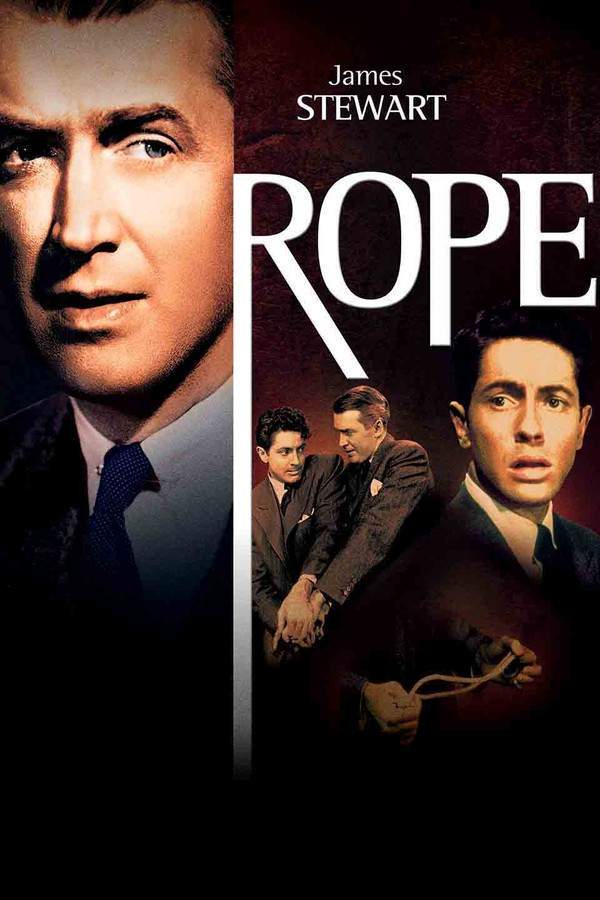
Rope (1948) movie poster

Plot Summary

Rope (1948) Plot Summary Explained

Release, runtime and language
1948 · 80 min · English
JustWatch #3,277 39
Directed by
Alfred Hitchcock
Starring
Edith Evanson, James Stewart, Cedric Hardwicke, Farley Granger, John Dall, Constance Collier

Driven by a warped sense of intellectual superiority, two college friends, Philip and Brandon, commit a shocking murder to test their philosophical beliefs. They conceal the body and invite the victim's acquaintances to a dinner party, intending to prove their actions have no consequence. As the evening progresses, their carefully constructed facade begins to unravel, and the tension mounts as the guests unknowingly gather around a dark secret, threatening to expose the chilling truth behind their twisted experiment.

On this page (7)
  1. 1 Where to watch
  2. 2 What happens: full plot
  3. 3 Plot questions answered
  4. 4 The book behind the movie
  5. 5 Movie threads
  6. 6 Movies like Rope
  7. 7 Every angle

Where to watch

Where to Watch Rope (1948)

Where can you watch Rope? Stream, rent or buy it in the US, including on Philo, YouTube TV and Amazon Video: current JustWatch availability with up-to-date prices.

Streaming availability powered by JustWatch

Full plot summary · contains spoilers

What Happens in Rope: Full Plot Summary

The whole story of Rope (1948) explained, from the opening scene to the final frame: every key event, every twist and what it all adds up to. Read it as a quick recap before the sequel, to check a scene you missed, or to finally understand what really happened.

Note: This entire film unfolds in real time, shot with a single camera to resemble a continuous, unbroken performance akin to a one-act play.

In a chilling exploration of intellectualism taken to dark extremes, two exceptionally clever young men, Brandon Shaw and Phillip Morgan, commit an unspeakable act in their New York City apartment. Having grown restless from their privileged existence, they decide to murder their former Harvard classmate, David Kentley, as a way to enact the "perfect murder" and prove their superiority. The act becomes macabre, as Phillip tightens a rope around David’s neck while Brandon holds him down.

Once the gruesome task is done and David’s body is nestled within a sizable antique wooden chest, the duo prepares for a seemingly innocent dinner party with a stunning view of Manhattan’s skyline. In a twisted display of arrogance, Brandon chooses to repurpose the chest as a buffet table. When their housekeeper, Mrs. Wilson, arrives to assist in the preparations, Brandon chillingly remarks, >“Now the fun begins,” as the first guests make their entrance.

The unsuspecting guests include David’s fiancée, Janet Walker, and her former paramour Kenneth Lawrence, alongside David's distraught father, Mr. Kentley, and his chatty aunt, Mrs. Atwater, with David's mother absent due to illness. Unbeknownst to them, the trio’s malevolent scheme is intricately linked to years of discussions with their former housemaster, Rupert Cadell, who had instilled in them the toxic ideas of Nietzsche's concept of the Übermensch and the art of murder as a form of dominance.

As the evening progresses, Brandon's veiled references to David's absence incite an unsettling conversation around the intricacies of murder itself. Portraying an air of confidence, Brandon appears composed; however, he cannot disguise his increasingly erratic behavior around Rupert, whose mere presence is enough to unsettle Phillip, causing him to indulge in excessive drinking. The tension mounts as David’s absence becomes a focal point of concern for the other guests. Phillip’s unease reaches a peak when Mrs. Atwater, who fancies herself a seer, hints at his hands bringing him "great fame," deepening his paranoia.

As the night unfolds, doubt begins to surface along with questioning from Rupert that draws attention to inconsistencies. Phillip's nervousness about past statements, particularly about strangling animals, adds to the unraveling facade. When David’s father and fiancée express distress over his prolonged absence, Brandon stirs the pot further by playing matchmaker between Janet and Kenneth, only increasing the tension.

Amid the chaos, an urgent call from David's mother creates a sense of palpable fear, prompting more guests to leave. With a twist of fate, Mrs. Wilson inadvertently hands Rupert David’s hat, which heightens his suspicion. Once the party concludes, Brandon and Phillip breathe a sigh of relief, thinking they can dispose of the body unnoticed.

However, Rupert soon returns, claiming he forgot his cigarette case. His inquiries turn into piercing scrutiny of the events of the evening. As the atmosphere grows tenser, Phillip, overwhelmed, lashes out, leading to a struggle for Brandon’s gun. In a chaotic moment, the gun goes off, grazing Rupert, but the grim discovery follows as he uncovers David's corpse hidden within the chest.

Horrified, Rupert confronts the implications of their actions, recognizing the moral implications of his past teachings. He denounces the ideology of superiority he once espoused and, in a moment of desperation, fires several shots out the window to summon the police. As the sounds of sirens grow louder, Rupert takes a seat next to the chest, while Brandon nonchalantly pours himself a drink. In a devastating close, Phillip begins to play the piano one last time, as the screen fades to black, and the end credits roll.
Last updated: November 03, 2024 at 21:28

Was this helpful?

Plot questions answered

Rope Plot Explained: Your Questions Answered

The questions people ask most about Rope (1948): what happens in the confusing scenes, why the characters do what they do, the twists, hidden details and what the ending means. Each answer contains spoilers.

Q1

Why did Brandon and Phillip decide to murder David Kentley?

Brandon and Phillip killed David as a twisted experiment to prove they could commit the 'perfect murder' and demonstrate their intellectual superiority. Having grown restless with their privileged lives, they viewed the murder as a way to test their philosophical beliefs about dominance and transcendence, influenced by their former housemaster Rupert Cadell's teachings on Nietzsche's Übermensch concept.

Foreshadowing: Earlier in their apartment, Brandon and Phillip discuss their desire to prove their superiority through an act that defies conventional morality.

  • brandon shaw
  • phillip morgan
  • david kentley
  • motive
  • perfect murder
  • übermensch
Q2

Why did Brandon use the chest containing David's body as a buffet table?

Brandon repurposed the antique chest as a buffet table to demonstrate his cold arrogance and to literally place their crime in plain sight of their guests. This shocking act was meant to prove their belief that they could commit murder without consequence, using the chest as a macabre centerpiece while serving food directly on top of David's hidden corpse.

Foreshadowing: After concealing the body, Brandon tells Mrs. Wilson 'Now the fun begins,' indicating his intention to treat the murder as entertainment.

  • chest
  • buffet table
  • body concealment
  • arrogance
  • brandon shaw
Q3

Why does Phillip become so nervous around Rupert Cadell?

Phillip's nervousness around Rupert stems from guilt and the fact that Rupert was their former housemaster who planted the dangerous philosophical ideas in their minds. Unlike the composed Brandon, Phillip lacks the psychological detachment needed to face the man who taught them that murder could be an act of superiority. His excessive drinking during the party reveals his crumbling composure.

Foreshadowing: The summary notes that Rupert's 'mere presence is enough to unsettle Phillip,' hinting at the psychological weight of their shared intellectual history.

  • rupert cadell
  • phillip morgan
  • guilt
  • nervousness
  • teacher
Q4

How does Rupert Cadell discover David's body?

After the party ends, Rupert returns to the apartment claiming he forgot his cigarette case. His probing questions about the evening's events have already raised his suspicions. During the subsequent confrontation, a struggle for Brandon's gun results in a shot that grazes Rupert. In the chaos, he discovers David's corpse hidden inside the antique chest that had been used as a buffet table.

Foreshadowing: Mrs. Wilson inadvertently hands Rupert David's hat, which heightens his suspicion about David's absence and the events of the evening.

  • rupert cadell
  • body discovery
  • chest
  • cigarette case
  • gun struggle
Q5

Why does Rupert fire shots out the window at the end?

After discovering the body and confronting the moral implications of his past teachings, Rupert fires shots out the window to summon the police. Overwhelmed by guilt and regret for having instilled the dangerous ideology of superiority in Brandon and Phillip, he takes this desperate action to ensure the authorities arrive and to take responsibility for the monstrous act his teachings helped create.

Foreshadowing: Rupert's growing suspicion throughout the evening and his realization of how his philosophical teachings were twisted.

  • rupert cadell
  • police
  • sirens
  • guilt
  • consequences
Q6

Why does Phillip play the piano in the final scene?

Phillip sits at the piano and plays one last time as the film concludes, representing a chilling final performance that underscores the tragic Events. Despite everything being exposed, Phillip shows no remorse, his playing suggests a macabre sense of closure and the continuation of his twisted intellectual pursuits, even as consequences approach. The piano serves as a haunting reminder that their ideology remains unbroken.

Foreshadowing: The dinner party itself is framed as a 'performance' with Brandon stating 'Now the fun begins,' establishing the theme of theatrical display.

  • phillip morgan
  • piano
  • ending
  • remorse
  • performance
Q7

What is the Übermensch philosophy that influenced Brandon and Phillip?

The Übermensch concept, derived from Nietzsche's philosophy, refers to an idealized superior human who transcends conventional morality. Rupert Cadell taught this idea to Brandon and Phillip during their time as his students, presenting murder as a form of dominance and proof of superiority. The two young men twisted this philosophy into a justification for their crime, believing that intellectually superior people could commit murder without moral consequence.

Foreshadowing: The summary explicitly states their 'malevolent scheme is intricately linked to years of discussions with their former housemaster, Rupert Cadell.'

  • übermensch
  • nietzsche
  • philosophy
  • rupert cadell
  • superiority
Q8

Why does Brandon try to pair Janet with Kenneth during the party?

Brandon plays matchmaker between Janet (David's fiancée) and Kenneth (her former lover) as a manipulative tactic to distract attention from David's prolonged absence. By creating romantic tension and redirecting the guests' concerns toward the potential rekindling of Janet and Kenneth's relationship, Brandon hopes to prevent the guests from focusing too closely on David's whereabouts and the inconsistencies in his story.

Foreshadowing: The summary notes this as one of Brandon's 'subtle manipulations' to steer conversations away from David's absence.

  • brandon shaw
  • janet walker
  • kenneth lawrence
  • manipulation
  • distraction
Q9

What is the significance of Mrs. Atwater telling Phillip his hands will bring him great fame?

Mrs. Atwater, who fancies herself a seer, tells Phillip that his hands will bring him 'great fame' during the party. This comment deeply unsettles Phillip because his hands were literally the instruments used to strangle David to death. The ironic prophecy intensifies his paranoia and contributes to his unraveling composure as the evening progresses, while Mrs. Atwater remains oblivious to the true meaning of her words.

Foreshadowing: Phillip's nervousness reaches a peak specifically when Mrs. Atwater makes this comment, directly connecting his guilt to her ominous prediction.

  • mrs atwater
  • phillip morgan
  • hands
  • fame
  • prophecy
Q10

Why does Brandon remain calm while Phillip becomes increasingly nervous?

Despite both men being equally guilty of the murder, Brandon maintains a facade of confidence and control throughout the evening, while Phillip's anxiety progressively increases. This difference likely stems from their psychological constitutions, Brandon appears to genuinely believe in his intellectual superiority and the justifiability of their actions, giving him a chilling detachment. Phillip, however, seems less able to sustain the psychological pretense, especially when confronted by Rupert, the embodiment of their philosophical influence.

Foreshadowing: The summary describes Brandon as portraying 'an air of confidence' while 'Phillip's unease reaches a peak' as the evening progresses.

  • brandon shaw
  • phillip morgan
  • calm
  • nervous
  • psychology
Q11

Why does David's hat being given to Rupert matter?

Mrs. Wilson inadvertently hands Rupert David's hat, which becomes a crucial clue that heightens his suspicion about David's absence. The hat's presence in the apartment suggests David was there, contradicting the men's claims about his whereabouts. This moment contributes to Rupert's growing doubts and ultimately leads him to return after the party ends to investigate further.

Foreshadowing: The summary specifically notes this as a turning point where Rupert's 'suspicion' is 'heightened.'

  • david kentley
  • hat
  • rupert cadett
  • mrs wilson
  • suspicion
Q12

What is the significance of the phone call from David's mother?

An urgent phone call from David's mother, who is ill and demanding to know her son's whereabouts, creates heightened tension during the party. This call increases the pressure on Brandon and Phillip as David's absence can no longer be easily explained away. The call also prompts some guests to leave, bringing the party closer to its end and forcing Brandon and Phillip to accelerate their charade.

Foreshadowing: The summary describes this as a moment that 'heightens emotions and prompts some guests to leave,' increasing the pressure on the murderers.

  • phone call
  • david's mother
  • absence
  • tension
  • pressure

Movie threads

More Movies Like Rope, by Mood & Story

Curated lists built around what makes Rope tick: the same mood, the same kind of story or the same emotional payoff. Each list explains why these movies belong together.

Real-time suspense thrillers like Rope

Tense, confined stories where the clock is ticking and secrets are at risk. If you liked the relentless tension of Rope, explore more movies that unfold in real time. This collection features similar claustrophobic thrillers and dramas where the continuous timeline creates unbearable suspense, perfect for viewers seeking high-anxiety, single-setting narratives.

  • unbroken timeline
  • confined
  • nerve-wracking
  • high-pressure
  • suspenseful
  • anxious
  • Tone: tense, claustrophobic
  • Pacing: steady, relentless
Why these movies?

The story pattern: Narratives in this thread are defined by their temporal structure, unfolding in a continuous, unbroken flow of time. The plot is often confined to a single location, with tension building steadily as characters attempt to maintain control or conceal a secret while the outside world encroaches.

Why they belong together: Movies are grouped here based on their shared use of real-time storytelling, which creates a distinct, immersive, and pressurized viewing experience. They share a focus on building tension through temporal and spatial constraints.

Cerebral crime dramas with moral tension like Rope

Stories where a philosophically motivated crime leads to psychological collapse. For fans of Rope's exploration of intellectual arrogance and hidden guilt, this list features movies about crimes committed for philosophical reasons. Discover similar psychological thrillers and dramas where brilliant minds are undone by their own twisted experiments and moral blindness.

  • cerebral
  • unsettling
  • philosophical
  • morally complex
  • psychological
  • arrogant
  • Tone: bleak, unsettling
  • Pacing: steady, cerebral
Why these movies?

The story pattern: The narrative pattern follows arrogant, intellectually superior characters who execute a 'perfect' crime to prove a philosophical point. The story then charts their psychological descent as their theoretical worldview clashes with the grim reality of their actions, often during a social gathering that becomes a trap.

Why they belong together: These movies are connected by their central theme of crime as an intellectual exercise and the subsequent moral and psychological unraveling of the perpetrators. They share a heavy emotional weight, a bleak tone, and a cerebral, unsettling mood.

If you liked this

Movies Like Rope

Similar movies to Rope: the same genre, themes or kind of story. Each one comes with its own plot summary, timeline and ending explained.

Browse all movie summaries

Every angle

Rope (1948) Explained: Plot, Timeline & Characters

Everything about Rope in one place: what happens in the plot summary, the timeline in chronological order, the characters and meaning and a spoiler-free summary. What's After the Movie adds the cast, box office and post-credit scenes.

Coming soon on iOS and Android

The Plot Explained Movie Summary App

Plot summaries, endings explained and timelines on your phone. Catch up on any movie in minutes, save your favorites and never miss a twist again.

Be the first to know when we launch. Your email stays private, always.

Learn more about the app