Plot Explained Spoilers guaranteed!
Plot Explained

Browse by genre

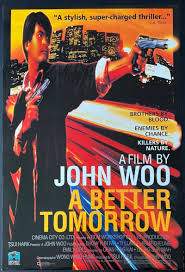
Return to a Better Tomorrow (1994) movie poster

Plot Summary

Return to a Better Tomorrow (1994) Plot Summary Explained

Release, runtime and language
1994 · 103 mins · Cantonese
Loading streaming availability…
Directed by
Wong Jing
Starring
Collin Chou, Michael Wong, Andy Cheng, Paul Chun Pui, Gary Mak Wing-Lun, Lo Meng

In a gritty world of crime, brotherhood serves as the ultimate weapon. The story follows three honourable gangsters as they plunge into the shadowy depths of the underworld, battling the iron grip of their ruthless gang leader in a desperate bid to break free.

On this page (6)
  1. 1 Where to watch
  2. 2 What happens: full plot
  3. 3 Plot questions answered
  4. 4 Movie threads
  5. 5 Movies like Return to a Better Tomorrow
  6. 6 Every angle
Loading streaming availability…

Full plot summary · contains spoilers

What Happens in Return to a Better Tomorrow: Full Plot Summary

The whole story of Return to a Better Tomorrow (1994) explained, from the opening scene to the final frame: every key event, every twist and what it all adds up to. Read it as a quick recap before the sequel, to check a scene you missed, or to finally understand what really happened.

Triad intrigue spirals through this gritty Hong Kong crime saga, beginning with Tong Chun, [Ekin Cheng Yee-Kin], leading a crew as they strike at rival boss Black Ox, [Lo Meng], inside a crowded movie theater. Black Ox uses his girlfriend as a shield and slips away, only to be shot at outside by Big Lobster, [Sean Lau], who loudly boasts about his feat to Tong Chun, though Black Ox immediately replies with a fatal countering shot that downs Big Lobster. Tong Chun then fires the decisive shot that ends Black Ox’s life and hauls Big Lobster to the hospital, where the police press Tong Chun to help with an ongoing case.

Lobster Tsui, [Sean Lau], recovers in the hospital but returns home to a shocking scene: his wife has locked their daughter, Little Lobster, in a cage with the dog and is sleeping with Bill, a fellow Triad member. In a brutal turn of events, Bill accidentally kills Big Lobster’s wife during a fight, only to be pushed out a window by Big Lobster, who then kills Bill himself. The police charge Big Lobster with murder, but Tong Chun turns to Barrister Wong, [James Wong Jim], who defends him deftly at trial and secures his client's release.

Back at their headquarters, Black Ox’s men assault rival gangs in a restaurant, but Tong Chun and Big Lobster fight them off, saving the injured Lui Wei, [Ben Lam Kwok-Bun], in the process. When Tong Chun is later arrested for a mountain of drugs planted at their HQ, Lui Wei dispatches Holland Boy, [Collin Chou], to handle the situation; Holland Boy’s execution of several officers during Tong Chun’s escape only intensifies Tong Chun’s suspicion about the depth of the betrayal.

Lui Wei sends Tong Chun and Chiu, [John Ching Tung], to flee to Mainland China, but Holland Boy kills Chiu and attempts to kill Tong Chun to cover Lui Wei’s drug-smuggling operations. Tong Chun survives and escapes to Vietnam after sending Chili, [Chingmy Yau Suk-Ching], a message that Lui Wei has betrayed them. Chili then tries to kill Lui Wei herself but is caught and disfigured by Holland Boy.

Two years pass, and Tong Chun returns to Hong Kong as a cook, ID-less and scheming anew. His associate Fred Simon’s son, Duke Simon, [Michael Wong], is kidnapped for ransom by thugs working for a swindler triad named Panther, prompting Tong Chun and Fred to seek help from Big Lobster, who has since risen to power in the underworld. Big Lobster’s men manage to rescue Duke and capture a thug who wore a cut ear, but Big Lobster follows his elder brother’s counsel and spares the man’s life. Tong Chun warns Big Lobster that Lui Wei has been grooming him to take the heat for the drug trade later, and a rift forms as Big Lobster confronts Lui Wei about the FBI probe and declares he’s splitting off.

Tong Chun tracks Chili down, only to find her a heroin addict still haunted by her torture at the hands of Holland Boy. Meanwhile, a police raid on Big Lobster’s compound is sparked by a tip from Duke, who is secretly an undercover officer, but the raid yields little of the hoped-for evidence. The pursuit escalates when Holland Boy and his crew raid again, killing Big Lobster and his daughter, Little Lobster, in front of Duke before Duke finally turns the tables and kills Holland Boy himself.

At the station, Lui Wei attempts to dodge blame, and Barrister Wong—already his adversary in court—douses him with coffee as a symbolic rebuke rather than help. Lui Wei heads to the restroom to clean up, only to be shot by Tong Chun. The police cuff Tong Chun, but Lui Wei reveals he wore a bulletproof vest and departs laughing. Duke arrives, his weapon briefly stolen by Tong Chun, who seizes control and holds Duke at gunpoint. In a final pursuit, Tong Chun corners Lui Wei and ends him with Duke’s aid. The closing scene reveals Chili, now sober, has stopped waiting for Tong Chun, signaling a stark ending to a long, murky saga of loyalty, betrayal, and the price of power.

Last updated: October 09, 2025 at 10:52

Was this helpful?

Plot questions answered

Return to a Better Tomorrow Plot Explained: Your Questions Answered

The questions people ask most about Return to a Better Tomorrow (1994): what happens in the confusing scenes, why the characters do what they do, the twists, hidden details and what the ending means. Each answer contains spoilers.

Q1

Why does Big Lobster kill Bill after Bill accidentally kills his wife?

Big Lobster kills Bill in a fit of rage after Bill accidentally shoots and kills his wife during a confrontation at his home. The domestic betrayal, finding his wife with fellow Triad member Bill, combined with the sudden loss of his wife triggers Big Lobster to throw Bill out the window, killing him. This moment marks a crucial turning point where personal heartbreak escalates into violent revenge, deepening the vendetta between the brothers and destabilizing their fragile alliance.

  • big lobster
  • bill
  • wife's death
  • domestic betrayal
  • triad violence
Q2

Why do the police pressure Tong Chun to help with a case at the hospital?

The police pressure Tong Chun to cooperate because they are working with the FBI to build a case against triad leaders. At the hospital after the theater ambush, authorities reveal they are framing Tong Chun as a drug dealer as part of a larger operation to cleanse undesirables ahead of Hong Kong's handover to China. This early encounter establishes that Tong Chun is being targeted by both rival gangs and law enforcement, setting up the larger conspiracy that drives much of the film's conflict.

  • tong chun
  • police
  • fbi
  • frame
  • drug dealer
  • hong kong handover
Q3

Why does Holland Boy kill police officers during Tong Chun's escape?

Holland Boy murders several police officers during Tong Chun's escape because he is acting on orders from Lui Wei, who orchestrated the entire drug-framing scheme. By killing the officers, Holland Boy ensures Tong Chun cannot be questioned and also eliminates witnesses to the conspiracy. However, this act actually deepens Tong Chun's suspicion about the extent of Lui Wei's betrayal, since it demonstrates that Lui Wei is willing to kill law enforcement to protect his own operations rather than simply helping a fellow Triad member.

Foreshadowing: Earlier, Lui Wei dispatches Holland Boy to handle the situation, hinting at his hidden agenda.

  • holland boy
  • police officers
  • tong chun escape
  • lui wei
  • betrayal
  • drug smuggling
Q4

Why does Lui Wei send Tong Chun to Mainland China after the arrest?

Lui Wei sends Tong Chun to Mainland China under the guise of hiding him from the police, but his real intention is to have Holland Boy kill Tong Chun to cover up his drug-smuggling operations. This betrayal represents the culmination of Lui Wei's strategy to eliminate anyone who knows about his criminal activities and use others as scapegoats. Tong Chun's survival and escape to Vietnam after this attempt marks a critical shift in the story as he transitions from hunted to hunter.

  • lui wei
  • mainland china
  • holland boy
  • tong chun
  • drug smuggling
  • betrayal
Q5

Why is Duke (Fred Simon's son) actually an undercover police officer?

Duke Simon is revealed to be an undercover officer embedded in the criminal underworld to gather evidence against triad operations. His secret identity creates a major twist in the narrative, especially when his father Fred and Tong Chun seek his help against Panther's thugs. The police raid on Big Lobster's compound fails because while Duke tips them off, there is insufficient evidence to secure convictions, despite Duke's position, he has not yet gathered enough proof to bring down the criminal networks.

  • duke simon
  • undercover cop
  • fred simon
  • police raid
  • panther
  • triad
Q6

Why does Big Lobster spare the thug who cut his ear during Duke's rescue?

Big Lobster spares the thug who cut his own ear during the escape because he follows his elder brother's counsel about showing mercy in certain situations. Despite the brutal nature of the triads, Big Lobster chooses not to kill an already wounded and defeated opponent. This decision contrasts with the film's relentless violence and demonstrates that even hardened criminals operate by certain codes, though this mercy later proves irrelevant when Holland Boy's raid kills Big Lobster and his daughter regardless.

  • big lobster
  • ear cut
  • duke rescue
  • mercy
  • elder brother
Q7

How does Chili become a heroin addict after being tortured by Holland Boy?

Chili becomes a heroin addict as a direct result of her torture and disfigurement at the hands of Holland Boy. After Tong Chun escapes to Vietnam and sends her a message about Lui Wei's betrayal, Chili attempts to kill Lui Wei herself but is captured by Holland Boy. He tortures and disfigures her, leaving her traumatized and emotionally broken. The heroin addiction develops as a coping mechanism for the physical and psychological trauma she endured, and when Tong Chun tracks her down two years later, he finds her living as a addicted wreck of her former self.

Foreshadowing: Chili's message from Tong Chun about Lui Wei's betrayal triggers her solo attempt on his life.

  • chili
  • holland boy
  • torture
  • disfigurement
  • heroin addiction
  • lui wei betrayal
Q8

Why does Lui Wei survive Tong Chun's initial shooting at the police station?

Lui Wei survives Tong Chun's shooting because he is wearing a bulletproof vest under his clothes. When Tong Chun shoots him at the police station, Lui Wei deliberately falls and pretends to be dead, then reveals he is unharmed and laughs as he leaves. This moment demonstrates Lui Wei's cunning and constant readiness for betrayal, he anticipates attempts on his life and takes precautions, making him a formidable antagonist until Tong Chun finally corners him in the final showdown.

  • lui wei
  • bulletproof vest
  • tong chun
  • police station
  • survival
Q9

Why does Tong Chun pursue and kill Lui Wei despite the police presence?

Tong Chun kills Lui Wei to settle the score for years of betrayal, manipulation, and the deaths of his friends (Chiu) and loved ones (Chili's torture). Although Tong Chun is arrested after shooting Lui Wei, he ultimately corners him with Duke's assistance in a final pursuit through the city streets. The killing represents the culmination of Tong Chun's revenge arc, driven by the accumulated grievances from Lui Wei's conspiracy to frame him, ordering his murder, and destroying everyone close to him.

  • tong chun
  • lui wei
  • revenge
  • final showdown
  • duke
  • betrayal
Q10

Why does Big Lobster decide to split from Lui Wei after learning about the FBI probe?

Big Lobster decides to split from Lui Wei after Tong Chun warns him that Lui Wei has been grooming him to take the heat for the drug trade. When Big Lobster confronts Lui Wei about the FBI case, the tension escalates and he declares his intention to break away from the partnership. This confrontation fractures the alliance between them and sets up the events leading to Big Lobster's eventual death, as his split from Lui Wei leaves him vulnerable to retaliation.

  • big lobster
  • lui wei
  • fbi probe
  • split
  • betrayal
  • drug trade
Q11

Why does Holland Boy raid Big Lobster's compound and kill his daughter Little Lobster?

Holland Boy raiding Big Lobster's compound is an act of retaliation ordered by Lui Wei after Big Lobster splits from him. The raid kills Big Lobster and his daughter Little Lobster right in front of Duke, who witnesses the brutal massacre. This devastating event occurs despite Duke's position as an undercover officer and represents the ultimate price of betrayal in the triad world, Lui Wei eliminates anyone who threatens to expose his operations or challenge his authority, including children.

Foreshadowing: The split between Big Lobster and Lui Wei foreshadows this violent retaliation.

  • holland boy
  • big lobster
  • little lobster
  • raid
  • lui wei
  • betrayal
  • child death
Q12

Why does Chili leave and stop waiting for Tong Chun at the end of the movie?

Chili leaves because she has finally moved on from her traumatic past and the criminal underworld that destroyed her life. After years of waiting for Tong Chun's return, battling her heroin addiction, and healing from the physical and emotional scars inflicted by Holland Boy, she chooses a new path and walks away. Her departure signals a bittersweet resolution, she escapes the cycle of violence and betrayal, but at the cost of her relationship with Tong Chun, leaving him alone in the aftermath of his revenge.

  • chili
  • tong chun
  • ending
  • sobriety
  • moving on
  • underworld

Movie threads

More Movies Like Return to a Better Tomorrow, by Mood & Story

Curated lists built around what makes Return to a Better Tomorrow tick: the same mood, the same kind of story or the same emotional payoff. Each list explains why these movies belong together.

Crime stories of brotherhood and betrayal like Return to a Better Tomorrow

Loyal allies turn into bitter enemies in a ruthless world of crime. If you liked the themes of loyalty and betrayal in Return to a Better Tomorrow, explore these movies. They feature similar gritty crime sagas where bonds between partners or brothers are tested and shattered by the corrosive nature of power and revenge in the underworld.

  • brutal
  • tense
  • vengeful
  • bleak
  • suspenseful
  • paranoid
  • Tone: dark, bleak
  • Pacing: fast, relentless
Why these movies?

The story pattern: These narratives typically follow a tight-knit group of criminals whose unity is their strength. The central conflict arises from within, as ambition, external pressure, or moral decay leads to a pivotal act of betrayal. The story arc charts the painful dissolution of loyalty and the violent consequences that ensue.

Why they belong together: Movies are grouped here because they share a core focus on the theme of brotherhood destroyed by betrayal. They create a heavy emotional weight through the tragedy of shattered loyalties, set against a fast-paced, high-intensity backdrop of criminal action and moral collapse.

Bleak and bittersweet crime movies like Return to a Better Tomorrow

Stories where victory comes at a devastating personal cost. For viewers who appreciated the heavy emotional impact and bittersweet ending of Return to a Better Tomorrow, this collection features similar crime dramas. These films offer high-intensity, dark stories where the resolution leaves characters with tragic losses and a sense of hollow victory.

  • bleak
  • tragic
  • gritty
  • tense
  • brutal
  • suspenseful
  • Tone: dark, bittersweet
  • Pacing: fast, tense
Why these movies?

The story pattern: The narrative pattern involves protagonists striving for a goal—often revenge or freedom—within a corrupt system. Their journey is paved with violence and sacrifice. The ending provides a form of closure, such as defeating an antagonist, but at the cost of everything the characters held dear, leaving them broken and the world unchanged.

Why they belong together: These films are united by their shared emotional trajectory: a dark tone, high intensity, and a conclusion that blends a nominal success with overwhelming tragedy. The focus is on the heavy emotional weight and the specific feeling of a pyrrhic victory, making the viewing experience cathartic yet deeply saddening.

If you liked this

Movies Like Return to a Better Tomorrow

Similar movies to Return to a Better Tomorrow: the same genre, themes or kind of story. Each one comes with its own plot summary, timeline and ending explained.

Browse all movie summaries

Every angle

Return to a Better Tomorrow (1994) Explained: Plot, Timeline & Characters

Everything about Return to a Better Tomorrow in one place: what happens in the plot summary, the timeline in chronological order, the characters and meaning and a spoiler-free summary. What's After the Movie adds the cast, box office and post-credit scenes.

Coming soon on iOS and Android

The Plot Explained Movie Summary App

Plot summaries, endings explained and timelines on your phone. Catch up on any movie in minutes, save your favorites and never miss a twist again.

Be the first to know when we launch. Your email stays private, always.

Learn more about the app