


Plot Explained Spoilers guaranteed!
Plot Explained

Browse by genre

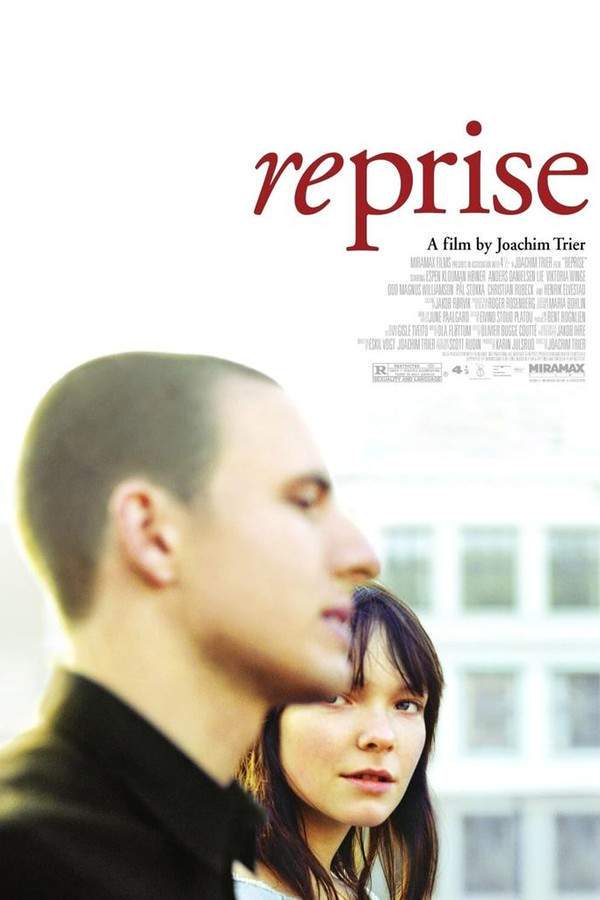
Reprise (2008) movie poster

Timeline

Reprise (2008) Timeline Explained – Every Event in Order

Release, runtime and language
2008 · 105 min · Norwegian
Directed by
Joachim Trier
Starring
Anders Danielsen Lie, Espen Klouman-Høiner, Viktoria Winge

Phillip, an unexpectedly famous musician, and Erik, a writer striving to honor his hero, find themselves at a pivotal moment. Phillip’s sudden rise to stardom proves overwhelming, leading to a personal crisis that forces him to question his path. Meanwhile, Erik remains steadfast in his dedication to preserving his idol’s legacy. The film explores the complexities of fame, ambition, and the struggle to reconcile dreams with the realities of life, as both men confront their uncertain futures and the shifting boundaries of perception.

On this page (7)
  1. 1 Where to watch
  2. 2 Events in order (14)
  3. 3 Timeline questions answered
  4. 4 Movie threads
  5. 5 Movies like Reprise
  6. 6 Categories
  7. 7 Every angle

Where to watch

Where to Watch Reprise (2008)

Where can you watch Reprise? Stream, rent or buy it in the US, including on Amazon Video and Fandango At Home: current JustWatch availability with up-to-date prices.

Streaming availability powered by JustWatch

14 events in order · contains spoilers

Reprise Timeline: Events in Chronological Order

Every key event of Reprise (2008) in order, scene by scene, with when and where it takes place. Use it to untangle flashbacks, time jumps and parallel storylines, to refresh your memory before the sequel or to find the exact scene you are thinking of.

  1. The Ambitious Start

    Phillip and Erik, two vibrant 20-year-olds, stand at a mailbox ready to send out their first novels. They are filled with high hopes and excitement about their future as influential cult authors, dreaming of a life filled with intensity, brilliance, romance, and nightclubbing.

  2. Initial Success and Recognition

    Six months later, Phillip has achieved mini-celebrity status due to the acclaim of his novel. This recognition is a double-edged sword, as it sets him on a path toward fame while simultaneously leading him into the depths of personal turmoil.

  3. Struggles of Mental Health

    As Phillip's fame grows, he faces a harrowing breakdown and ends up in a psychiatric facility. His struggles illuminate the darker side of sudden success, showcasing the thin line between brilliance and madness in the pursuit of creative dreams.

    Where
    Psychiatric Facility
  4. Frustrations of Creativity

    In contrast, Erik continues to struggle with his own aspirations as he attempts to find a publisher for his work. He grapples with self-doubt and insecurity, leading to feelings of inadequacy as he watches his friend’s success from the sidelines.

  5. Chasing Shadows

    Erik becomes increasingly obsessed with a mysterious writing genius, viewing him as a benchmark for his own creative endeavors. This obsession highlights Erik's internal battles as he wrestles with the harsh realities of his own ambitions and failures.

  6. Reconnecting Through Love

    Phillip's relationship with Kari, his girlfriend and muse, deepens as he seeks her support amidst his turmoil. Their connection becomes a source of inspiration, reflecting the complexity of love intertwined with artistic pursuit and personal struggles.

  7. Facing Harsh Realities

    Both young men confront the stark contrasts between their initial dreams and the unforgiving realities of adulthood. The narrative delves into their emotional landscapes as they navigate the aftermath of their youthful exuberance meeting life's challenges.

  8. Philosophical Reflections

    Throughout the film, philosophical insights punctuate the narrative, prompting viewers to reflect on the nature of dreams and the fragility of youth. These moments serve as a reminder of the existential questions that accompany the transition into adulthood.

  9. A Flashback Journey

    The film utilizes rapid editing and whimsical humor to convey a sense of nostalgia and reflection. Flashbacks offer glimpses into the characters' earlier lives, enhancing the emotional depth of their current predicaments.

  10. Critical Acclaim

    Joachim Trier’s directorial debut is recognized for its emotional resonance and storytelling. The collaboration with co-writer Eskil Vogt captivates audiences, resulting in accolades such as Best Picture, Best Director, and Best Screenplay at national film awards in Norway.

    Where
    Norway
  11. Navigating Friendship

    As Phillip and Erik confront their disparate paths, their friendship endures various trials. Their bond serves as a testament to the ways in which relationships can shape and influence creative journeys, even amidst chaos.

  12. The Quest for Inspiration

    Phillip's journey reflects a relentless pursuit for inspiration, battling creative blocks that hinder his artistic flow. The tension between inspiration and despair becomes a central theme as he searches for the spark that once fueled his writing.

  13. Daring to Dream

    Ultimately, *REPRISE* resonates with anyone who has dared to dream, embodying the essence of youthful ambition. The film captures the spirit of striving and the inherent challenges that accompany the journey towards achieving one’s aspirations.

  14. Conclusion of the Journey

    The film culminates in a poignant reflection on the characters' journeys, leaving audiences to ponder the outcomes of their dreams and choices. The powerful narrative weaves a rich tapestry of experiences, highlighting the beauty and pain intertwined in the pursuit of passion.

Last updated: November 04, 2024 at 01:25

Was this helpful?

Timeline questions answered

Reprise Timeline Explained: Your Questions Answered

When does it happen, and why in that order? The questions people ask about the chronology of Reprise (2008): time jumps, flashbacks, cause and effect between scenes and the correct order of events, each answered with spoilers.

Q1

Why did Phillip have a breakdown after becoming famous?

Phillip's breakdown stems from the overwhelming pressure of sudden fame. His novel achieves critical acclaim, propelling him into mini-celebrity status, but this rapid rise exposes his inability to cope with the expectations and scrutiny that come with success. The film suggests that the thin line between brilliance and madness collapsed under the weight of his newfound notoriety.

Foreshadowing: The opening scenes show both friends dreaming of intense, brilliant lives, hinting at the unsustainable expectations they set for themselves.

  • phillip breakdown
  • fame
  • mental health
  • psychiatric facility
  • success pressure
Q2

What happens to Phillip after he leaves the psychiatric facility?

After leaving the psychiatric facility, Phillip attempts to reclaim his life and creative inspiration. He reconnects with Kari, his girlfriend and muse, seeking to rediscover the spark that fueled his writing. However, the film portrays his recovery as ongoing and uncertain rather than completely resolved, reflecting the realistic challenges of mental health recovery.

  • phillip recovery
  • kari
  • inspiration
  • after hospital
Q3

Why does Erik become obsessed with the mysterious writing genius?

Erik becomes obsessed with the mysterious writing genius as a way to cope with his own creative failures and insecurity. While Phillip's novel gets published and gains acclaim, Erik remains unpublished and watches from the sidelines. The writing genius represents the benchmark Erik aspires to reach, serving as both inspiration and a source of unhealthy comparison that intensifies his self-doubt.

  • erik
  • writer
  • obsession
  • inspiration
  • insecurity
  • creative failure
Q4

How does the film use flashbacks in its storytelling?

The film uses rapid editing and flashbacks as a structural device to move non-linearly through time, blending past memories with present circumstances. This stylistic approach allows the viewer to experience the characters' psychological states, showing how their earlier dreams and experiences shape their current predicaments. The flashbacks create a sense of nostalgia while emphasizing the 'what-ifs' and 'why-nots' that haunt the protagonists.

  • flashbacks
  • non-linear narrative
  • editing
  • story structure
Q5

What is the significance of Phillip and Kari's relationship?

Kari serves as Phillip's girlfriend and muse throughout his ordeal, representing both emotional support and his connection to creative inspiration. As Phillip battles his mental health crisis and struggles with creative blocks, their relationship becomes central to his attempt to reclaim his artistic voice. The film explores how love intertwines with artistic pursuit and personal struggle.

Foreshadowing: Early scenes establish Kari as Phillip's muse, setting up her importance during his darkest period.

  • kari
  • phillip
  • girlfriend
  • muse
  • relationship
  • love
Q6

What does the title Reprise mean in context of the film?

The title 'Reprise' suggests a repetition or return - fitting for a story about two friends whose lives take unexpected turns and who must confront their choices again. It reflects the film's thematic exploration of second chances, the non-linear nature of memory, and the way past dreams resurface in the present. The title also hints at the cyclical nature of creative ambition and the challenges of growing up.

  • reprise
  • title meaning
  • repetition
  • themes
Q7

Why does Erik keep writing despite never getting published?

Erik continues pursuing writing because it represents his core identity and childhood dream. Despite receiving no publisher interest in his novel six months after sending it out, he cannot abandon his aspiration to become an influential cult author. His determination highlights the stubbornness of youthful dreams even when faced with harsh reality, though the film presents this persistence as both admirable and potentially self-destructive.

Foreshadowing: The opening scene establishes both friends dreaming of becoming influential authors, showing this was a lifelong ambition.

  • erik
  • writing
  • persistence
  • dreams
  • publishing
  • failure
Q8

What is the film saying about fame and ambition?

Reprise presents a cautionary exploration of fame and ambition, suggesting that rapid success can be as destructive as failure. The film contrasts Phillip's sudden stardom with Erik's struggle for recognition, showing that both paths carry significant costs. Ultimately, it questions whether the intense, brilliant life the friends dreamed of is achievable without sacrificing one's mental health and authentic self.

  • fame
  • ambition
  • success
  • critique
  • youth dreams
Q9

How does Reprise end - what happens to the characters?

The film ends with both Phillip and Erik confronting their uncertain futures, having navigated the collision between youthful dreams and adult reality. Phillip's outcome remains ambiguous as he works through his recovery, while Erik continues chasing his aspirations. The conclusion is described as ambiguous rather than purely hopeful or tragic, leaving viewers to ponder whether either character will find lasting fulfillment.

  • ending
  • conclusion
  • phillip
  • erik
  • future
  • resolution
Q10

How does the film portray mental health and depression?

Reprise directly addresses mental health through Phillip's breakdown and psychiatric hospitalization, portraying depression as a serious consequence of creative pressure and fame. The film avoids romanticizing mental illness, instead showing the real struggle of recovery. The melancholic tone and variable pacing reflect the characters' emotional instability while the 'whimsical humor' provides necessary moments of levity.

  • depression
  • mental health
  • psychiatric
  • breakdown
  • psychosis

Movie threads

More Movies Like Reprise, by Mood & Story

Curated lists built around what makes Reprise tick: the same mood, the same kind of story or the same emotional payoff. Each list explains why these movies belong together.

Movies about artistic struggle like Reprise

Young creators facing the crushing weight of their own dreams and success. Discover a collection of movies like Reprise that explore the intense pressure of creative ambition. If you were captivated by the portrayal of young artists confronting fame and mental health, these similar dramas offer deep, introspective journeys into the soul of the creator.

  • introspective
  • anxious
  • philosophical
  • melancholic
  • reflective
  • dreamlike
  • Tone: melancholic, introspective
  • Pacing: variable, reflective
Why these movies?

The story pattern: The narrative follows a character, often in their youth, whose initial passion for their art is tested by the realities of the creative industry, personal crises, or their own mental health. The story charts their journey from idealism to a more complex, sometimes shattered, understanding of their ambitions, often using non-linear structures to reflect on 'what could have been'.

Why they belong together: Movies in this thread share a focus on the emotional and psychological journey of creating art. They are united by a melancholic tone, heavy emotional weight, and a philosophical inquiry into the nature of success, making the viewing experience both intellectually stimulating and deeply moving.
Melancholic coming-of-age movies like Reprise

Bittersweet stories of friendship and the anxious transition into adult life. If you liked the bittersweet and philosophical tone of Reprise, this list features similar movies about the complexities of young adulthood. Find films that share its melancholic mood, complex characters, and thoughtful exploration of friendship and ambition during life's most uncertain transitions.

  • melancholic
  • nostalgic
  • introspective
  • bittersweet
  • anxious
  • philosophical
  • Tone: melancholic, nostalgic, bittersweet
  • Pacing: variable, thoughtful
Why these movies?

The story pattern: The story centers on a group of friends or a pair of protagonists navigating the uncertain threshold of adulthood. The plot is less about external events and more about the internal emotional shifts, using a reflective and sometimes non-linear structure to contrast youthful optimism with the sobering realities of growing up, leading to an ambiguous yet resonant conclusion.

Why they belong together: These films are grouped by their distinct melancholic and introspective mood, their variable pacing that blends realism with stylistic flourishes, and their heavy focus on the emotional weight of transitioning from youth to adulthood. They create a cohesive vibe of thoughtful, character-driven drama.

If you liked this

Movies Like Reprise

Similar movies to Reprise: the same genre, themes or kind of story. Each one comes with its own plot summary, timeline and ending explained.

Browse all movie summaries

Categories

Movie Lists Featuring Reprise

Reprise appears in these hand-built movie categories. Each one groups movies by a specific mood, theme or story type, with their plot summaries and endings explained.

View all movie categories

Every angle

Reprise (2008) Explained: Plot, Timeline & Characters

Everything about Reprise in one place: what happens in the plot summary, the timeline in chronological order, the characters and meaning and a spoiler-free summary. What's After the Movie adds the cast, box office and post-credit scenes.

Coming soon on iOS and Android

The Plot Explained Movie Summary App

Plot summaries, endings explained and timelines on your phone. Catch up on any movie in minutes, save your favorites and never miss a twist again.

Be the first to know when we launch. Your email stays private, always.

Learn more about the app