Plot Explained Spoilers guaranteed!
Plot Explained

Browse by genre

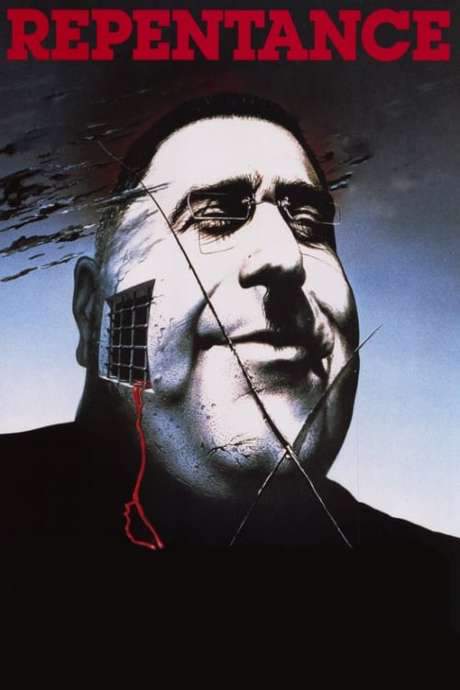
Repentance (1984) movie poster

Timeline

Repentance (1984) Timeline Explained – Every Event in Order

Release, runtime and language
1984 · 153 mins · Georgian
Loading streaming availability…
Directed by
Tengiz Abuladze
Starring
Merab Ninidze, Kakhi Kavsadze, Amiran Amiranashvili, Iya Ninidze, Avtandil Makharadze, Edisher (Davit) Giorgobiani

A masterful, nightmarish political vision by Georgia’s leading modern director. The day after Varlam Aravidze’s funeral, his corpse appears in his son’s garden. Though secretly reburied, the body repeatedly resurfaces until police apprehend a local woman. She says Varlam’s Stalin‑like terror, which destroyed her family, means he never be laid to rest.

On this page (6)
  1. 1 Where to watch
  2. 2 Events in order (11)
  3. 3 Timeline questions answered
  4. 4 Movie threads
  5. 5 Movies like Repentance
  6. 6 Every angle
Loading streaming availability…

11 events in order · contains spoilers

Repentance Timeline: Events in Chronological Order

Every key event of Repentance (1984) in order, scene by scene, with when and where it takes place. Use it to untangle flashbacks, time jumps and parallel storylines, to refresh your memory before the sequel or to find the exact scene you are thinking of.

  1. Death of the mayor and funeral

    The town reels from the sudden death of Mayor Varlam Aravidze and attends his funeral. The opening scene shows a woman baking in a quiet kitchen, a contrast to the political shadow surrounding the town. This start hints at a past that will demand reckoning.

    When
    funeral day
    Where
    Georgian town – funeral site
  2. Corpse appears in the garden

    The mayor's corpse is found in the garden of his son's house the day after the funeral, shocking the neighbors. It is removed and reburied, only to be unearthed again in the same garden. The eerie repetition hints at buried truths resurfacing.

    When
    the day after the funeral
    Where
    Son's garden
  3. Corpse reburied, then reappears

    The corpse is reburied after the initial discovery, but it surfaces again in the garden. The town grows uneasy as the supernatural recurrence collides with a community memory long suppressed. People begin to wonder who is responsible for this haunting absence of closure.

    When
    days after funeral
    Where
    Son's garden
  4. Ketevan Barateli arrested

    A woman named Ketevan Barateli is arrested and accused of digging up the mayor's body. Her arrest shifts the case from rumor to a formal inquiry that will illuminate historical grievances. The town's patience wears thin as it confronts the past.

    When
    shortly after corpse appearance
    Where
    Town jail
  5. Ketevan defends herself in court

    During her defense, Ketevan contends that Varlam did not deserve burial because of his Stalin-like terror and the disappearances he oversaw. She reframes the case as a moral reckoning rather than a mere crime. Her testimony begins to pull back the curtain on a repressed history.

    When
    during trial
    Where
    Courtroom
  6. Trial and flashbacks reveal the regime

    The trial is interwoven with flashbacks that expose the regime's brutal acts and the disappearances tied to Varlam. The courtroom becomes a stage on which the town confronts long buried crimes. The narrative ties personal stories to a broader political history.

    When
    during trial
    Where
    Courtroom and flashback sequences
  7. Abel denies his father's wrongdoings

    Varlam's son Abel testifies that his father did not commit crimes, attempting to shield the family legacy. His defense team challenges Ketevan's credibility, sometimes aiming to portray her as unstable. The clash deepens the moral struggle at the heart of the trial.

    When
    during trial
    Where
    Courtroom
  8. Tornike's shock and despair

    Tornike, Varlam's grandson, listens with growing horror as the past is revealed. The revelations force him to reassess his family and the town they inhabit. The emotional tension heightens the film's sense of impending consequence.

    When
    during testimony
    Where
    Courtroom
  9. Tornike's suicide

    Overwhelmed by the weight of the revelations, Tornike takes his own life. The tragedy underscores the personal cost of unearthing past tyranny. It amplifies the film's meditation on memory and guilt across generations.

    When
    aftermath of revelations
    Where
    Tornike's home
  10. Abel discards the corpse

    Abel moves to sever the burden of the dead tyrant by throwing Varlam's corpse off a cliff on the town's outskirts. The act signals a final attempt to reject the past or to bury it beyond reach. The landscape mirrors the moral precipice the family faces.

    When
    after Tornike's death
    Where
    Cliffs on the town outskirts
  11. Ending: cake scene and road to church

    The narrative returns to the opening cake scene as a quiet ritual of memory and reconciliation. The closing dialogue links the road to moral direction and questions whether the town is truly led toward salvation. The film ends with a stark line that echoes the town's search for meaning: 'What good is a road if it doesn't lead to a church?'

    When
    ending scene
    Where
    Woman's kitchen

Last updated: February 18, 2026 at 23:44

Was this helpful?

Timeline questions answered

Repentance Timeline Explained: Your Questions Answered

When does it happen, and why in that order? The questions people ask about the chronology of Repentance (1984): time jumps, flashbacks, cause and effect between scenes and the correct order of events, each answered with spoilers.

Q1

Why does Varlam's corpse keep reappearing in his son's garden?

The supernatural recurrence of Varlam's body symbolizes how past atrocities refuse to stay buried. Just as the town suppressed memories of his Stalin-like regime, the corpse physically returns to demand acknowledgment. This surreal element represents the community's collective guilt and inability to forget the violence Varlam inflicted, no matter how much they try to move on.

  • corpse resurrection
  • supernatural symbolism
  • buried past
  • unburied dead
Q2

Why does Ketevan dig up Varlam's body?

Ketevan Barateli digs up Varlam's corpse because she believes he doesn't deserve a proper burial after the terror his regime caused. Her family was destroyed by his political purges, parents, friends, and neighbors vanished without explanation. By refusing to let him rest, she seeks a form of moral justice that the legal system failed to provide during his lifetime.

  • ketevan barateli
  • justice
  • revenge
  • stalin-like terror
  • political purge
Q3

What crimes did Varlam Aravidze commit as mayor?

Varlam Aravidze presided over a Stalin-like regime that conducted political purges, sending countless townspeople to their deaths or into forced disappearances. The flashbacks during the trial reveal he was responsible for erasing families, killing parents, friends, and neighbors without explanation. His rule created a atmosphere of fear where people vanished overnight, leaving the community traumatized but silent.

  • political terror
  • mayor
  • disappearances
  • purges
  • stalinism
Q4

Why does Tornike commit suicide?

Tornike, Varlam's grandson, learns during the trial that his grandfather was responsible for brutal political atrocities that destroyed many innocent lives. The revelation shatters his understanding of his family legacy and leaves him overwhelmed by generational guilt. Unable to reconcile his beloved grandfather with the tyrant revealed in testimony, he takes his own life as a devastating consequence of confronting the buried truth.

Foreshadowing: Early in the film, Tornike appears innocent and unaware of his grandfather's true nature, making his later collapse more tragic when the family secrets are exposed.

  • tornike
  • suicide
  • grandson
  • guilt
  • revelation
  • family legacy
Q5

What does the ending mean - the road that doesn't lead to a church?

The closing dialogue asks what good is a road if it doesn't lead to a church, serving as a metaphor for the town's spiritual dead end. Despite the trial, the public reckoning, and the disposal of Varlam's body, no true redemption has occurred. The road named after Varlam (Varlam Street) cannot lead to salvation because the community hasn't genuinely atoned for its complicity in his crimes. The film ends in bleak hopelessness, justice was pursued, but the path to forgiveness remains blocked.

  • ending
  • church
  • road
  • redemption
  • metaphor
  • salvation
  • spiritual death
Q6

Why does Abel throw his father's corpse off a cliff?

After witnessing his son Tornike's suicide, caused by the revelations about Varlam's crimes, Abel attempts to finally bury the past by disposing of the body beyond recovery. By throwing Varlam's corpse off a cliff, he seeks to end the supernatural haunting and remove the physical reminder of his father's tyranny. However, this desperate act represents a refusal to truly confront the past through honest reckoning, instead choosing physical erasure.

  • abel
  • cliff
  • bury past
  • disposal
  • family guilt
Q7

What is the trial about in Repentance?

The trial is nominally about Ketevan digging up Varlam's body, but it becomes a public reckoning with his historical crimes. Ketevan defends herself by arguing that Varlam's regime caused countless deaths and disappearances, making him undeserving of burial. The courtroom becomes a stage where victims' stories emerge through flashbacks, forcing the town to confront the atrocities they previously ignored. The legal case transforms into a moral and historical trial of a tyrant's legacy.

  • trial
  • courtroom
  • ketevan
  • justice
  • accountability
  • historical reckoning
Q8

Who is the woman making cakes in the beginning and end?

The unnamed woman who prepares cakes appears in both the opening and closing scenes, providing a quiet counterpoint to the political violence. She represents ordinary life continuing despite the town's trauma. In the ending, she explains to an old woman that Varlam Street will not lead to the church, implying she understands the community's moral failure. Her presence frames the story as a cyclical ritual of memory, emphasizing that life goes on even when justice remains elusive.

  • cake
  • woman
  • opening scene
  • ending
  • ordinary life
  • continuity
Q9

What does the corpse refuse to stay buried mean symbolically?

The surreal element of the corpse returning again and again functions as a physical manifestation of suppressed history. Just as the townspeople buried their memories of Varlam's crimes, the body refuses to stay buried, insisting that the past cannot be simply interred. This supernatural horror element transforms political allegory into existential warning, those who commit atrocities without accountability will continue to haunt the living.

  • surrealism
  • symbolism
  • horror
  • buried history
  • supernatural
Q10

Why does Abel defend his father's crimes during the trial?

Abel Aravidze testifies that his father committed no wrongdoings, attempting to protect the family legacy despite knowing the truth. His defense reflects both genuine family loyalty and the town's complicity, many citizens participated in or benefited from Varlam's regime. By denying his father's crimes, Abel represents how communities whitewash tyrannical pasts to preserve their own reputation, even while knowing the moral cost.

  • abel
  • denial
  • family legacy
  • complicity
  • testimony

Movie threads

More Movies Like Repentance, by Mood & Story

Curated lists built around what makes Repentance tick: the same mood, the same kind of story or the same emotional payoff. Each list explains why these movies belong together.

Political allegories about unburied trauma like Repentance

When the sins of history refuse to stay buried, forcing a confrontation. If you were captivated by the way Repentance unearths a political nightmare, you'll find similar power in these movies. This list gathers films where a buried past, whether personal or national, violently returns to haunt the present.

  • disturbing
  • thought-provoking
  • somber
  • tense
  • allegorical
  • psychological
  • Tone: dark, oppressive, thought-provoking
  • Pacing: steady, methodical
Why these movies?

The story pattern: The narrative typically begins with a seemingly settled past that is violently disrupted by its return—a corpse, a secret, or a witness. The story follows the characters as they are forced to investigate and acknowledge the full horror of what happened, leading to a bleak realization of its ongoing legacy.

Why they belong together: These films are grouped by their shared focus on a past that becomes an active, malevolent force in the present. They share a high emotional weight, a dark tone, and a complex structure that weaves between timelines to reveal the full scope of the tragedy.
Surreal political nightmares with a bleak tone like Repentance

Surreal and somber visions of totalitarianism and its lasting scars. For viewers seeking the unique, oppressive vibe of Repentance, this list features movies that blend surreal imagery with serious political commentary. These are thought-provoking films that use a dark, steady pace to explore the trauma of totalitarianism.

  • oppressive
  • surreal
  • nightmarish
  • political
  • thought-provoking
  • disturbing
  • Tone: dark, nightmarish, somber
  • Pacing: steady, deliberate
Why these movies?

The story pattern: Stories unfold in a world where logic is distorted by power, often using dreamlike sequences and religious or political symbolism. The narrative is less about a simple plot and more about creating a visceral feeling of dread and an intellectual critique of a system, culminating in a bleak conclusion that offers no easy redemption.

Why they belong together: They share a potent mix of high intensity, a dark tone, and a steady, deliberate pacing that allows the weight of the themes to sink in. The use of surrealism and allegory to explore heavy political and philosophical ideas is the core connective tissue.

If you liked this

Movies Like Repentance

Similar movies to Repentance: the same genre, themes or kind of story. Each one comes with its own plot summary, timeline and ending explained.

Browse all movie summaries

Every angle

Repentance (1984) Explained: Plot, Timeline & Characters

Everything about Repentance in one place: what happens in the plot summary, the timeline in chronological order, the characters and meaning and a spoiler-free summary. What's After the Movie adds the cast, box office and post-credit scenes.

Coming soon on iOS and Android

The Plot Explained Movie Summary App

Plot summaries, endings explained and timelines on your phone. Catch up on any movie in minutes, save your favorites and never miss a twist again.

Be the first to know when we launch. Your email stays private, always.

Learn more about the app