Plot Explained Spoilers guaranteed!
Plot Explained

Browse by genre

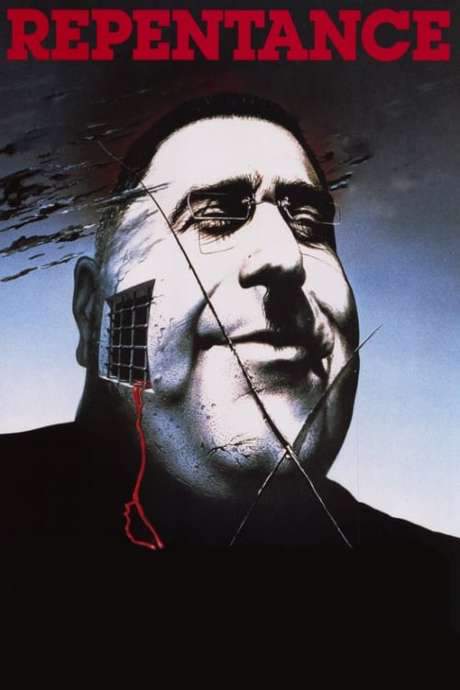
Repentance (1984) movie poster

Characters & Themes

Repentance (1984) Characters, Setting & Themes Explained

Release, runtime and language
1984 · 153 mins · Georgian
Loading streaming availability…
Directed by
Tengiz Abuladze
Starring
Merab Ninidze, Kakhi Kavsadze, Amiran Amiranashvili, Iya Ninidze, Avtandil Makharadze, Edisher (Davit) Giorgobiani

A masterful, nightmarish political vision by Georgia’s leading modern director. The day after Varlam Aravidze’s funeral, his corpse appears in his son’s garden. Though secretly reburied, the body repeatedly resurfaces until police apprehend a local woman. She says Varlam’s Stalin‑like terror, which destroyed her family, means he never be laid to rest.

On this page (8)
  1. 1 Where to watch
  2. 2 Characters explained (4)
  3. 3 Where & when it takes place
  4. 4 Themes & meaning (3)
  5. 5 Character & meaning questions
  6. 6 Movie threads
  7. 7 Movies like Repentance
  8. 8 Every angle
Loading streaming availability…

4 main characters · contains spoilers

Repentance Characters Explained: Who Is Who

The main characters of Repentance (1984), heroes and villains: what drives them, how they change over the course of the story and what each of them reveals about the film's bigger ideas.

  • Tornike Aravidze (Merab Ninidze)

    Varlam’s grandson, Tornike is shocked by revelations about his grandfather’s crimes. He embodies the new generation’s struggle to reckon with inherited guilt and the weight of a family legacy. His path is marked by inner conflict and, ultimately, tragedy as he confronts the depth of the past.

    • 👪 Family
    • 💔 Trauma
    • 🕯️ Grief
  • Varlam Aravidze (Avtandil Makharadze)

    The town’s mayor, a figure of power who presided over a Stalin-like regime of terror. His authority casts a long shadow over the present, shaping investigations and the community’s complicity. Although dead by the time of the main events, his legacy drives the court’s accusations and the town’s moral reckoning.

    • 🔨 Tyranny
    • 🏛️ Power
  • Ketevan Barateli (Zeinab Botsvadze)

    A woman accused of digging up the mayor’s corpse who insists he does not deserve burial due to his crimes. She becomes a voice of memory and courage, recounting the regime’s terror through testimony and flashbacks. Her steadfast stand highlights the cost of speaking truth in a town ruled by fear.

    • 🗨️ Courage
    • ⚖️ Truth
  • Abel Aravidze (Avtandil Makharadze)

    Varlam’s son, who denies any wrongdoing and seeks to protect his father, even as the truth emerges. His attempts to block accusations show loyalty woven with denial and self-preservation. He plays a pivotal role in the moral tension of the story, culminating in a drastic act at the end.

    • 💼 Dual loyalties
    • 💔 Guilt
    • 🗡️ Betrayal

Last updated: February 18, 2026 at 23:14

Was this helpful?

Setting

Where and When Does Repentance Take Place?

The setting of Repentance (1984): the year and time period, the places and locations, and how they shape the characters, the mood and the tension of the story.

Time period

Late Soviet era

The present timeline sits in the waning years of the Soviet period, while the narrative repeatedly shifts into flashbacks of a Stalin-like regime. Disappearances and state violence are recalled as the trial exposes past crimes. The juxtaposition highlights how time both erases and preserves memory of oppression.

Location

Georgian town

The story unfolds in a quiet Georgian town where close-knit streets hide a brutal political history. The town's social life revolves around its powerful mayor’s legacy, shaping how communities respond to crime and punishment. The setting underscores how ordinary life continues while memory of oppression lingers in every conversation and rumor.

  • 🏛️ Georgian town
  • 📜 Small-town politics
  • 🕰️ Repression legacy

Last updated: February 18, 2026 at 23:14

Was this helpful?

3 major themes

Repentance Meaning: Themes & Message Explained

What is Repentance (1984) really about? The emotional, social and philosophical themes the film keeps returning to, its symbolism and the message beneath the surface.

  • Memory

    The film builds its narrative around memory as both witness and judge, forcing characters to confront buried truths. Flashbacks reveal how past actions shape present guilt and communal responsibility. Memory becomes a mechanism for accountability, even when it fractures families and communities.

  • Oppression

    A Stalin-like regime casts a long shadow over the town, with disappearances and fear turning ordinary life into a test of loyalty. The narrative shows how power can be exercised through control of information, through silence, and through public rituals that mask cruelty. The tension between authority and moral truth drives the drama.

  • Justice

    The trial becomes a crucible where truth collides with family loyalty and political convenience. Characters wrestle with whether confession, punishment, or silence can heal the wounds of tyranny. The film questions whether justice can emerge from a system built on repression, and what that means for those who survive.

Last updated: February 18, 2026 at 23:14

Was this helpful?

Character & theme questions

Repentance Characters & Meaning: Your Questions Answered

The questions people ask about Repentance (1984): who the characters really are, their relationships, what the symbols mean, where it takes place and what the movie is really about. Each answer contains spoilers.

Q1

What is the setting of Repentance?

The film takes place in a quiet Georgian town during the late Soviet era. The setting is characterized by close-knit streets that hide a brutal political history, where ordinary life continues while memory of past oppression lingers in every conversation. The town's social dynamics are shaped by the legacy of its powerful former mayor, creating a community still haunted by terror.

  • georgian town
  • soviet setting
  • small-town politics
  • repression legacy
Q2

When does Repentance take place?

The film is set in the late Soviet era, with the present-day narrative unfolding in this period. However, the story frequently shifts into flashbacks depicting a Stalin-like regime, showing how past atrocities continue to shape the present. This time structure highlights how memory of oppression both erases and preserves the truth of historical violence.

  • late soviet era
  • stalin regime
  • flashbacks
  • historical context
Q3

Who is Varlam Aravidze?

Varlam Aravidze is the town's former mayor, a figure who presided over a Stalin-like regime of terror that destroyed families and silences opposition. Though dead by the time of the main events, his legacy casts a long shadow over the present, shaping investigations and the community's response to his crimes. He represents the lasting impact of political violence on a community.

  • varlam aravidze
  • mayor
  • stalin-like figure
  • oppression
Q4

Who is Ketevan Barateli and what is her role?

Ketevan Barateli is a woman who is accused of digging up the mayor's corpse. She becomes a voice of memory and courage, insisting that Varlam does not deserve burial due to his crimes. Through her testimony and flashbacks, she recounts the regime's terror, highlighting the cost of speaking truth in a town ruled by fear.

  • ketevan barateli
  • testimony
  • truth
  • courage
  • memory
Q5

Who is Tornike Aravidze?

Tornike Aravidze is Varlam's grandson, portrayed by Merab Ninidze. He represents the new generation struggling to reckon with inherited guilt and the weight of a family legacy built on terror. He is shocked by revelations about his grandfather's crimes and embodies the inner conflict between family loyalty and moral truth.

  • tornike aravidze
  • grandson
  • inherited guilt
  • family legacy
Q6

What role does memory play in Repentance?

Memory serves as both witness and judge in the film, forcing characters to confront buried truths about past actions. Flashbacks reveal how the regime's crimes shape present guilt and communal responsibility. The film shows memory as a mechanism for accountability, even when it fractures families and communities.

  • memory
  • accountability
  • flashbacks
  • truth
  • past crimes
Q7

How does Repentance depict political oppression?

The film depicts a Stalin-like regime that casts a long shadow over the town, with disappearances and fear turning ordinary life into a test of loyalty. The narrative shows how power operates through control of information, silence, and public rituals that mask cruelty. The tension between authority and moral truth drives the entire drama.

  • oppression
  • stalin regime
  • fear
  • authority
  • political violence
Q8

What does Repentance say about justice?

The trial becomes a crucible where truth collides with family loyalty and political convenience. Characters wrestle with whether confession, punishment, or silence can heal the wounds of tyranny. The film questions whether justice can emerge from a system built on repression, and what survival means for those who live under such regimes.

  • justice
  • trial
  • truth
  • repression
  • accountability
Q9

Why does Varlam's corpse keep reappearing?

The corpse repeatedly resurfacing in the town functions as a powerful metaphor for unburied past crimes. The body cannot rest because Varlam's Stalin-like terror destroyed families and remains unacknowledged. This surreal element underscores the film's central theme: that memory of oppression will not stay buried until truth is acknowledged.

  • corpse
  • burial
  • metaphor
  • unburied past
  • memory
Q10

How does the film address inherited guilt?

Through Tornike's character, the film explores how the younger generation inherits not just a family name but also the burden of past crimes. Tornike's tragedy represents the personal cost of confronting a family's complicity in oppression, showing how inherited guilt can become unbearable for those who cannot reconcile their lineage with moral truth.

  • inherited guilt
  • family legacy
  • generational trauma
  • accountability

Movie threads

More Movies Like Repentance, by Mood & Story

Curated lists built around what makes Repentance tick: the same mood, the same kind of story or the same emotional payoff. Each list explains why these movies belong together.

Political allegories about unburied trauma like Repentance

When the sins of history refuse to stay buried, forcing a confrontation. If you were captivated by the way Repentance unearths a political nightmare, you'll find similar power in these movies. This list gathers films where a buried past, whether personal or national, violently returns to haunt the present.

  • disturbing
  • thought-provoking
  • somber
  • tense
  • allegorical
  • psychological
  • Tone: dark, oppressive, thought-provoking
  • Pacing: steady, methodical
Why these movies?

The story pattern: The narrative typically begins with a seemingly settled past that is violently disrupted by its return—a corpse, a secret, or a witness. The story follows the characters as they are forced to investigate and acknowledge the full horror of what happened, leading to a bleak realization of its ongoing legacy.

Why they belong together: These films are grouped by their shared focus on a past that becomes an active, malevolent force in the present. They share a high emotional weight, a dark tone, and a complex structure that weaves between timelines to reveal the full scope of the tragedy.
Surreal political nightmares with a bleak tone like Repentance

Surreal and somber visions of totalitarianism and its lasting scars. For viewers seeking the unique, oppressive vibe of Repentance, this list features movies that blend surreal imagery with serious political commentary. These are thought-provoking films that use a dark, steady pace to explore the trauma of totalitarianism.

  • oppressive
  • surreal
  • nightmarish
  • political
  • thought-provoking
  • disturbing
  • Tone: dark, nightmarish, somber
  • Pacing: steady, deliberate
Why these movies?

The story pattern: Stories unfold in a world where logic is distorted by power, often using dreamlike sequences and religious or political symbolism. The narrative is less about a simple plot and more about creating a visceral feeling of dread and an intellectual critique of a system, culminating in a bleak conclusion that offers no easy redemption.

Why they belong together: They share a potent mix of high intensity, a dark tone, and a steady, deliberate pacing that allows the weight of the themes to sink in. The use of surrealism and allegory to explore heavy political and philosophical ideas is the core connective tissue.

If you liked this

Movies Like Repentance

Similar movies to Repentance: the same genre, themes or kind of story. Each one comes with its own plot summary, timeline and ending explained.

Browse all movie summaries

Every angle

Repentance (1984) Explained: Plot, Timeline & Characters

Everything about Repentance in one place: what happens in the plot summary, the timeline in chronological order, the characters and meaning and a spoiler-free summary. What's After the Movie adds the cast, box office and post-credit scenes.

Coming soon on iOS and Android

The Plot Explained Movie Summary App

Plot summaries, endings explained and timelines on your phone. Catch up on any movie in minutes, save your favorites and never miss a twist again.

Be the first to know when we launch. Your email stays private, always.

Learn more about the app