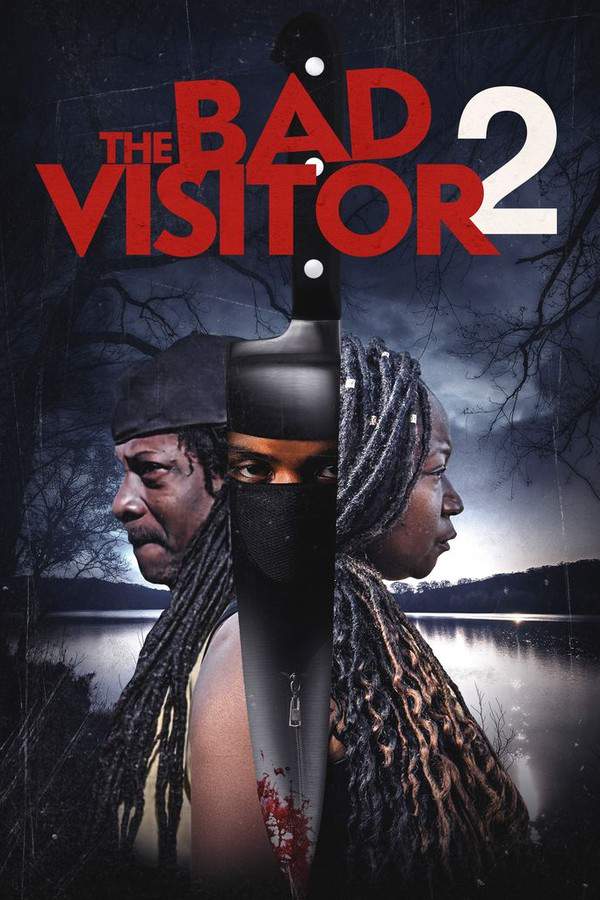
Plot Explained Spoilers guaranteed!
Plot Explained

Browse by genre

The Visitor (2024) movie poster

Plot Summary

The Visitor (2024) Plot Summary & Ending Explained

Release, runtime and language
2024 · 1 h 41 m · English
Echo score 67
Directed by
Bruce La Bruce
Starring
Bishop Black, Macklin Kowal, Amy Kingsmill, Ray Filar, Kurtis Lincoln, Luca Federici
Budget
$14K

Living in London, a mysterious refugee, one of many who resemble him, finds unexpected kindness from a wealthy family's maid. Posing as a homeless man, he develops deep relationships with each member of the household, subtly influencing their personal growth and spiritual journeys.

On this page (6)
  1. 1 What happens: full plot
  2. 2 Plot questions answered
  3. 3 How it ends
  4. 4 Movie threads
  5. 5 Movies like The Visitor
  6. 6 Every angle

Full plot summary · contains spoilers

What Happens in The Visitor: Full Plot Summary

The whole story of The Visitor (2024) explained, from the opening scene to the final frame: every key event, every twist and what it all adds up to. Read it as a quick recap before the sequel, to check a scene you missed, or to finally understand what really happened.

Robert and his wife, Maia, have just inherited her father's massive estate, and they are thrilled about moving in. Shortly after their arrival, Maia uncovers a secret compartment in the floor that houses an eerie doll. Seeking normalcy, they visit a local bar where they meet Judy, the bartender. The townsfolk are overjoyed to welcome Maia back, showering the couple with drinks. However, Robert overindulges and soon finds himself passed out drunk.

In the dead of night, Robert is stirred by the sound of crying from the attic. Confronted by a very old blind woman who cryptically states, “You’re home,” before unleashing a menacing roar, he realizes it's just a nightmare. The couple soon discusses their shared grief over losing their baby to a miscarriage, with Maia feeling that Robert unjustly holds her responsible.

As Robert explores the attic further, he discovers a painting that bears an uncanny resemblance to him. Though Maia insists it isn't a true likeness, the artwork is titled “The Visitor Accepts,” leaving her puzzled about its origin. They learn of Robert's past battles with anxiety and his reliance on medication, suggesting a man haunted by his own mind.

Visiting a hardware store, Robert is approached by the clerk who insists, “We need to talk, Robert.” However, their conversation is cut short when another customer arrives, prompting her to hurriedly pass him a note that reads: “Art is a lie that makes us realize the truth.” This note leads them to Delacroix Art & Antiques—an establishment that might hold the key to their discovery.

During her father's memorial service, the pastor delivers an emotional speech about his absence, further intensifying Robert's discomfort. Meanwhile, the townspeople exhibit an overwhelming friendliness towards Robert, which feels disconcerting. Robert later visits the antique shop the hardware clerk mentioned, where he encounters another painting that features his likeness. Titled “The Visitor Watches it Burn,” the shopkeeper claims it was on display when she purchased the store. She dissuades him from seeking answers, suggesting he return to London “as fast as your legs can carry you!”

Later, upon returning home, Maia humorously hangs the first painting in their living room, believing it to be a light-hearted joke. Robert begins to speculate that the stress is affecting his judgment. In a startling turn of events, the antique shop owner is visited by an uncanny swarm of locusts, resulting in her demise.

The next morning unveils even more shocking news: Maia informs Robert of her pregnancy. Months fly by, and a conversation with the pastor reveals the dichotomy of Robert's beliefs. The pastor predicts, “You will be... when you see for yourself, you won’t be able to deny it.” He possesses a painting titled “The Visitor Stakes His Claim,” featuring Alistair Edgar, the historic savior of their town. However, the couple faces a bizarre situation when they return home to find their living room teeming with frogs.

Suddenly, Robert receives a disquieting phone call from Maxwell Braun, another art dealer who has been investigating the series of Visitor paintings and photographs. He possesses artworks featuring historical figures like Hitler and Saddam Hussein, revealing how Robert—or the Visitor—has appeared in countless moments throughout history, particularly ones we wish to forget. Maxwell warns Robert that the decision to remain could mean a dark transformation as the Visitor.

Determined not to remain in the town, Robert shares his plan to return to London with Maia, who reacts violently to this news. Afterward, Robert receives a chilling call from Maxwell to meet him in the woods, where he discovers Maxwell's lifeless body bound to a tree. When he returns home, he finds yet another portrait of himself that Maia reveals is of her father—digging deeper into a shocking family secret: Robert was actually kidnapped as a baby, and his life in London was engineered to break a sinister cycle.

In a dramatic revelation, Maia confesses to Robert that he is the one committing murders under the influence of a greater, dark power. This pattern has been occurring since Alistair's pact with the devil in the 1700s. She explains that even their miscarriage had a purpose; Maia is destined to bear a boy to ensure the continuation of the "Robert" lineage. As the intense weight of the truth overwhelms Robert, he loses consciousness, prompting Maia to declare that this is his chance to finally fulfill his predestined role.

Flashing back to their initial meeting in London juxtaposed with Maia giving birth, the atmosphere turns ominous. Townsfolk clad in robes and masks encircle them as the baby is born. Robert, now transformed back into the Visitor, ultimately takes his rightful place on the throne. In the aftermath, Maia fades into blindness, mirroring her mother, and Robert drives triumphantly through the town, celebrating his resurgence with the townspeople.

Last updated: October 24, 2024 at 08:13

Was this helpful?

Plot questions answered

The Visitor Plot Explained: Your Questions Answered

The questions people ask most about The Visitor (2024): what happens in the confusing scenes, why the characters do what they do, the twists, hidden details and what the ending means. Each answer contains spoilers.

Q1

Why do the paintings in town look like Robert?

The paintings depict "The Visitor" - a demonic entity that has appeared throughout history in moments of atrocity, including alongside Hitler and Saddam Hussein. Robert is the latest incarnation of this being, having been kidnapped as a baby and raised in London as part of a centuries-old cycle. The townspeople have been waiting for his return.

Foreshadowing: The antique shop owner warns Robert to leave town "as fast as your legs can carry you," hinting at the sinister history.

  • visitor paintings
  • robert doppelganger
  • demonic paintings
  • historical figures
Q2

Why does Robert blame Maia for the miscarriage?

Robert has been influenced by the dark power surrounding The Visitor cycle. While the exact psychological mechanism isn't detailed, his blame represents one of the ways the demonic influence has warped his judgment and emotions, creating rifts in his relationship that serve the cycle's needs.

Foreshadowing: The couple's grief over their lost baby is the first major strain revealed early in the film.

  • miscarriage
  • robert Maia relationship
  • baby loss
Q3

Why is Maia's pregnancy important to the story?

Maia is pregnant with a boy to continue the "Robert" bloodline. This is the ultimate goal of the cycle - ensuring the demonic lineage perpetuates through successive generations. The Visitor needs a male heir to pass down his essence, making this pregnancy essential to the dark pact made by Alistair Edgar.

Foreshadowing: The pastor's prophecy about Robert "seeing for himself" ties to this predestined role.

  • maia pregnancy
  • robert lineage
  • demonic heir
  • continuation cycle
Q4

What was Alistair Edgar's pact with the devil?

In the 1700s, Alistair Edgar - the historic savior of the town - made a demonic pact to protect the town. This created the Visitor cycle, where a designated "Robert" is born, raised away from the town, and eventually returns to become the demonic figure. The pact ensures evil's continued presence through generations of carefully orchestrated reproduction.

Foreshadowing: The painting titled "The Visitor Stakes His Claim" depicts Alistair Edgar fulfilling this dark destiny.

  • alistair edgar
  • demon pact
  • 1700s
  • town savior
  • visitor cycle
Q5

Was Robert's life in London real or engineered?

Robert's entire life in London was engineered to break him away from the cycle temporarily, making his eventual return more impactful. He was kidnapped as a baby and placed with adoptive parents, creating the illusion of a normal life. When Maia's father brought him back to the estate, the cycle resumed.

Foreshadowing: The hardware store clerk's cryptic warning and note about art representing truth hint at this manufactured reality.

  • robert kidnapped
  • london life engineered
  • adopted parents
  • cycle break
Q6

Why does Maia react violently when Robert wants to leave?

Maia has been complicit in the cycle all along. She knows Robert must stay to complete the transformation and continue the bloodline. Her violent reaction isn't just emotional - she's protecting the predetermined fate that requires Robert to become The Visitor and father an heir.

Foreshadowing: Maia hanging the painting in their living room shows her acceptance and participation in the sinister plan.

  • maia violence
  • robert leaving
  • cycle completion
  • maia complicity
Q7

What do the locusts and frogs represent in the film?

These are supernatural plagues serving as manifestations of The Visitor's dark power. The locusts kill the antique shop owner when she tries to warn Robert away from the truth. The frogs filling the living room represent the escalating influence of evil as Robert gets closer to accepting his role.

Foreshadowing: The old blind woman's ominous presence in Robert's nightmare establishes the supernatural elements early.

  • locusts plague
  • frogs plague
  • supernatural events
  • visitor power
Q8

Who is Maxwell Braun and what does he discover?

Maxwell Braun is another art dealer who has been investigating The Visitor paintings across history. He discovers that Robert has appeared in numerous historical photographs and paintings during key moments of atrocity - proving that The Visitor isn't a new entity but an ancient demonic presence that has manipulated human tragedy throughout history.

Foreshadowing: Maxwell's warning that remaining in town means "a dark transformation" foreshadows Robert's ultimate fate.

  • maxwell braun
  • visitor paintings
  • historical atrocities
  • hitler saddam
Q9

Where is Maia's father and why is he absent?

Maia's father has died, which is why Robert and Maia inherit the estate. However, he was complicit in the cycle - he brought Robert back to town to resume the demonic lineage. His absence from the memorial service and the pastor's speech about loss adds to the mysterious atmosphere surrounding the family's connection to The Visitor.

Foreshadowing: The secret compartment and eerie doll Maia finds suggest the house itself holds dark family secrets.

  • maia father death
  • estate inheritance
  • family secret
Q10

What is The Visitor and what does it want?

The Visitor is a demonic entity that has existed for centuries, appearing throughout history during moments of human suffering and atrocity. It wants to perpetuate its existence through a bloodline, using the town as a cyclical breeding ground. Each "Robert" is possessed or transformed to become The Visitor, ensuring evil's continued dominance.

Foreshadowing: The three painting titles - "Accepts," "Watches it Burn," "Stakes His Claim" - chronicle the Visitor's progression toward full manifestation.

  • visitor demon
  • visitor identity
  • demonic entity
  • evil cycle
Q11

Did Robert commit the murders without knowing?

Yes. Under the influence of the dark power, Robert has been committing murders throughout his time in the town without any memory or conscious awareness. This is part of The Visitor's nature - the demonic aspect acts through him, using his body to carry out evil deeds while his conscious mind remains unaware.

Foreshadowing: The mounting tension and Robert's growing paranoia hint at something darker controlling his actions.

  • robert murders
  • subconscious
  • demonic possession
  • visitor actions
Q12

Why does Maia become blind at the end?

Maia undergoes the same ritual fate as her mother before her - she is blinded as part of the ceremonial process that completes The Visitor's transformation. This appears to be the cost of serving the demonic cycle, sacrificing one's sight to bring forth the dark power. Her mother was also blinded in this same manner, making Maia the latest victim in a long line of sacrificial women.

Foreshadowing: The old blind woman in Robert's nightmare foreshadows this fate for Maia.

  • maia blindness
  • ritual sacrifice
  • maia mother fate

Ending explained

What Happens at the End of The Visitor?

How The Visitor (2024) ends, in short: the final scene, the last twist and what it means for the characters. The full ending explained, with every spoiler, lives on its own page.

Read the full ending explained

The ending of "The Visitor" reveals a complex web of historical evil and familial darkness passing through generations. Throughout the film, Robert learns that the man in the painting called "The Visitor" is his own father, Edgar Eden, who turns out to be a descendant of a sinister lineage dating back to the 1700s. This lineage is linked to Alistair Edgar, an ancestor who seemingly engaged in satanic practices and cursed the bloodline with evil. The townspeople's reverence for Edgar and the repeated appearances of paintings resembling Robert indicate that Robert himself is caught in this cursed lineage, destined to continue the cycle.

As Robert delves deeper, it becomes clear that the town, the paintings, and the mysterious visitor are symbols of this dark heritage, which is tied to a satanic cult established by Alistair Edgar. The visitor’s painting, showing a figure with an ominous presence, symbolizes the dark forces at work, and its resemblance to Robert suggests that he is both a product and a pawn of this ancient evil. The film hints that Alistair Edgar might have been a satanist or a demonic figure, whose influence persists through his descendants. The ritualistic activities, the inverted crosses, and the demonic ceremonies point towards a satanic cult inspired by Edgar's evil.

Continue reading the ending (1 more paragraphs)

By the conclusion, Robert fully transforms into his ancestral figure during a ritual, driven by herbs and the demonic power embedded in his bloodline. He kills those who threaten the cult—such as Kathy, Delacroix, and Maxwell—and ultimately prepares to carry forward the evil legacy by showcasing his father's portrait, symbolically passing the curse to a new location or generation. The film suggests that the evil chain is unbreakable, and Robert’s attempt to escape or start anew only perpetuates the cycle of darkness and destruction. In the end, Robert leaves the town with the portrait of Edgar Eden, hinting he may continue the demonic tradition elsewhere, thereby ensuring that the cycle of evil persists into the future. The story leaves open the possibility that this dark lineage is a universal force, embodying both destruction and the balance of good and evil within human history.

The Visitor ending explained in full

Movie threads

More Movies Like The Visitor, by Mood & Story

Curated lists built around what makes The Visitor tick: the same mood, the same kind of story or the same emotional payoff. Each list explains why these movies belong together.

Identity horror movies like The Visitor

Stories where a character's sense of self is systematically dismantled by cosmic forces. If you liked The Visitor's themes of a fabricated life and a sinister destiny, you'll find similar dread in these movies about unraveling identity. Discover other films where characters discover their existence is a lie, leading to psychological terror and bleak revelations.

  • unsettling
  • fatalistic
  • sinister
  • psychological
  • claustrophobic
  • anxious
  • Tone: dark, bleak, unsettling
  • Pacing: steady, methodical
Why these movies?

The story pattern: The narrative typically follows a protagonist who uncovers clues that their life is a carefully constructed illusion. As they investigate, they find their past is a lie, their relationships are manipulated, and their ultimate purpose is something horrifying and pre-ordained, often resulting in a complete loss of self.

Why they belong together: Movies are grouped here for their shared focus on the psychological terror of identity erosion. They feature a steady, methodical pacing that builds dread, a dark and bleak tone, and a high-intensity emotional journey centered on the fundamental question of who we are.

Gothic family curse stories like The Visitor

Atmospheric tales where a dark family secret or ancient pact brings inevitable doom. Fans of The Visitor's gothic mood and themes of a familial curse will appreciate these similarly ominous films. Explore more stories about small towns with dark secrets, ancient pacts, and doomed bloodlines, all delivered with a steady, unsettling pace.

  • gothic
  • ominous
  • claustrophobic
  • fatalistic
  • sinister
  • anxious
  • Tone: ominous, gothic, fatalistic
  • Pacing: steady, slow burn
Why these movies?

The story pattern: The story is often set in an isolated location like a manor or small town, where a newcomer or family member gradually uncovers a dark secret buried in the past. The curse or pact manifests through strange events, symbolic omens, and a growing sense of claustrophobia, leading to an inescapable, bleak conclusion.

Why they belong together: These films share a specific gothic mood—ominous, claustrophobic, and fatalistic. They are united by a steady pacing that allows dread to seep in, a high complexity involving layered mysteries, and a core theme of destiny versus free will, usually with evil triumphing.

If you liked this

Movies Like The Visitor

Similar movies to The Visitor: the same genre, themes or kind of story. Each one comes with its own plot summary, timeline and ending explained.

Browse all movie summaries

Every angle

The Visitor (2024) Explained: Plot, Ending, Timeline & Characters

Everything about The Visitor in one place: what happens in the plot summary, the timeline in chronological order, the characters and meaning, the ending explained and a spoiler-free summary. What's After the Movie adds the cast, box office and post-credit scenes.

Coming soon on iOS and Android

The Plot Explained Movie Summary App

Plot summaries, endings explained and timelines on your phone. Catch up on any movie in minutes, save your favorites and never miss a twist again.

Be the first to know when we launch. Your email stays private, always.

Learn more about the app