






Plot Explained Spoilers guaranteed!
Plot Explained

Browse by genre

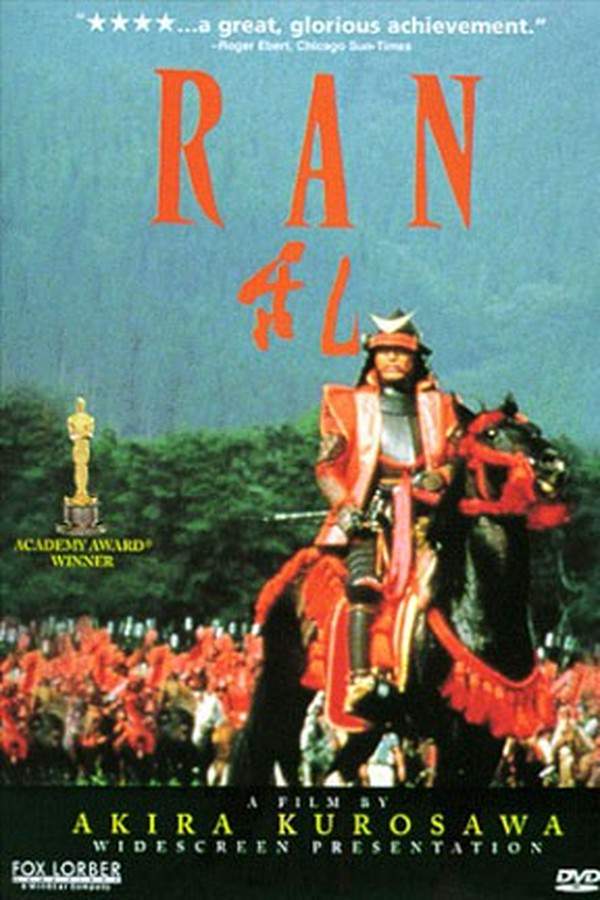
Ran (1985) movie poster

Timeline

Ran (1985) Timeline Explained – Every Event in Order

Release, runtime and language
1985 · 162 min · Japanese
JustWatch #2,349 8
Directed by
Akira Kurosawa
Starring
Akira Terao, Daisuke Ryû, Jinpachi Nezu, Tatsuya Nakadai
Budget
$11.5M

As the aging Lord Hidetora Ichimonji prepares to retire, he divides his realm among his three sons, Taro, Jiro, and Saburo. However, when Saburo challenges the established order, he is banished, triggering a devastating conflict for control of the land. The ensuing power struggle ignites a bloody war, testing the bonds of family and ultimately leading to a tragic and violent resolution as only one heir will survive.

On this page (7)
  1. 1 Where to watch
  2. 2 Events in order (15)
  3. 3 Timeline questions answered
  4. 4 The book behind the movie
  5. 5 Movie threads
  6. 6 Movies like Ran
  7. 7 Every angle

Where to watch

Where to Watch Ran (1985)

Where can you watch Ran? Stream, rent or buy it in the US, including on Kanopy, Plex and Tubi TV: current JustWatch availability with up-to-date prices.

Streaming availability powered by JustWatch

15 events in order · contains spoilers

Ran Timeline: Events in Chronological Order

Every key event of Ran (1985) in order, scene by scene, with when and where it takes place. Use it to untangle flashbacks, time jumps and parallel storylines, to refresh your memory before the sequel or to find the exact scene you are thinking of.

  1. Division of the Ichimonji lands

    Hidetora Ichimonji announces that his kingdom will be divided among his three sons: Taro will hold the First Castle, Jiro the Second, and Saburo the Third, while Hidetora remains Great Lord. Saburo speaks out against the plan, and he and Tango are exiled for defending him. The decision seeds long-lasting resentment that drives the later betrayals.

    When
    shortly after division
    Where
    Ichimonji lands
  2. Kaede's plan to seize control

    Lady Kaede, bitter over Hidetora's destruction of her family and lands, begins a vindictive plot to consolidate power under Taro. She urges him to use the division to seize absolute control of the Ichimonji clan. Her machinations plant the seeds for later betrayals and tragedies.

    When
    after division
    Where
    First Castle
  3. Hidetora travels to Jiro's castle and is treated as a figurehead

    Hidetora leaves the Great Lord's seat and travels to Jiro's castle seeking alliance and counsel. Jiro treats him as a ceremonial pawn rather than a partner, using the old king to legitimize his own ambitions. Tango tries to warn him about the danger posed by the new decree against aiding his father.

    When
    after division
    Where
    Road to Jiro's Castle / Jiro's Castle
  4. Refuge in the Third Castle

    Hidetora and his retinue seek shelter in the Third Castle, which Saburo’s forces had followed them into exile and where Ogura has taken over. The castle is emptied of its original defenders, but danger looms as Taro and Jiro prepare their ambush. The group debates how long they can hold out in a place now under threat from within.

    When
    during exile
    Where
    Third Castle
  5. The ambush at the Third Castle

    Taro and Jiro coordinate a ruse, abandoning the Third Castle to lure Hidetora into a false sense of security. In the ensuing assault, Taro is killed by a bullet fired by Kurogane, and Hidetora's remaining retinue are killed or compelled to perform ritual suicides. Hidetora barely survives the massacre and begins a descent into madness.

    When
    during attack
    Where
    Third Castle
  6. Madness and loyalty persist

    Hidetora survives the brutal ambush but descends into madness as he wanders the ruin. Kyoami, the loyal court fool, and Tango stay with him, offering some companionship and help amid the horror. The once-mighty warlord becomes a haunted shell, tormented by visions of those he has killed.

    When
    immediately after ambush
    Where
    Third Castle ruins
  7. Revelations at the peasant house

    Hidetora's wanderings intersect with Tsurumaru, Sue's brother, and they take shelter in a peasant's home. Tsurumaru has suffered greatly from Hidetora's siege, including the gouging of his eyes, leaving him impoverished. The encounter reveals the personal cost of Hidetora's campaigns and deepens everyone's grief.

    When
    after refuge
    Where
    Peasant's house
  8. Jiro rises as Great Lord; Kaede's manipulation deepens

    With Taro dead, Jiro proclaims himself Great Lord and moves into the First Castle. Kaede escalates her manipulation, pressing for an affair with Jiro and urging him to kill Lady Sue to remove a rival. Kurogane is ordered to carry out the deed but refuses, warning Sue and Tsurumaru to flee.

    When
    after Taro's death
    Where
    First Castle
  9. Tango warns Saburo of Jiro's plans

    Tango encounters former spies and learns that Jiro may unleash assassins against Hidetora. He rides off to inform Saburo, hoping to warn him of the danger. The warning underscores the widening rift within the Ichimonji clan and the escalating threats.

    When
    as Kaede's plots unfold
    Where
    Various
  10. Hidetora flees to the volcanic plain

    As his madness deepens, Hidetora runs from the pursuing armies and into a desolate volcanic plain. He wanders alone, tormented by visions of those he has harmed. The once-powerful lord becomes a symbol of ruin and tragedy.

    When
    mid-late
    Where
    Volcanic plain
  11. Saburo confronts Jiro's expansion and siege preparations

    Saburo's army crosses into Jiro's territory to locate Hidetora, while Jiro mobilizes his own forces. After a tense truce, Saburo learns of Hidetora's possible location and departs, and Jiro launches attacks on Saburo's smaller forces as another army threatens the First Castle.

    When
    after Saburo's arrival
    Where
    Jiro's territory / First Castle region
  12. Father and son reunite, then tragedy strikes

    Saburo locates his father and the two briefly reconcile, but Saburo is killed by a Jiro sniper, sending Hidetora into a deeper despair. Hidetora dies soon after, crushed by grief and the collapse of his ambitions. The clan's legacy spirals into ruin.

    When
    after reconciliation
    Where
    Near Jiro's territory
  13. Tsurumaru and Sue at the ruins

    Tsurumaru and Sue reach the ruins of a castle. Sue had given him a Amida Buddha image for protection, and she also tries to retrieve a flute she had given him earlier. In the chaos, she never returns, leaving Tsurumaru to face the ruin alone.

    When
    late in the siege
    Where
    Ruins of a castle
  14. The siege of the First Castle and Kaede's confession

    As the First Castle is besieged, Kurogane learns of Sue's death and confronts Kaede, who confesses that her plot was revenge against the entire Ichimonji clan. Kaede is killed by Kurogane, ending her schemes. The siege drags on with heavy losses on Jiro's side.

    When
    siege
    Where
    First Castle
  15. Final casualties and funeral

    Jiro, Kurogane, and all of Jiro's men die in battle, closing the line of succession. A funeral procession is held for Saburo and Hidetora, marking the end of the Ichimonji clan’s power. Tsurumaru wanders the ruins, dropping the Amida Buddha image Sue had given him as the story closes.

    When
    aftermath
    Where
    Ruins / First Castle

Last updated: October 09, 2025 at 15:48

Was this helpful?

Timeline questions answered

Ran Timeline Explained: Your Questions Answered

When does it happen, and why in that order? The questions people ask about the chronology of Ran (1985): time jumps, flashbacks, cause and effect between scenes and the correct order of events, each answered with spoilers.

Q1

Why did Hidetora decide to divide his kingdom among his three sons?

Hidetora, an aging warlord, decided to retire and divide his realm among his three sons, Taro, Jiro, and Saburo, to maintain stability. He planned to keep the title of Great Lord while having his elder sons support Taro's leadership. However, this decision ultimately triggered the conflict, as Saburo openly criticized the plan, leading to his exile and setting in motion the betrayal and war that destroyed the Ichimonji clan.

Foreshadowing: The opening division itself foreshadows the eventual collapse, as the act of splitting power creates the very rivalries Hidetora sought to prevent.

  • Hidetora
  • kingdom division
  • sons
  • succession
  • Ichimonji clan
Q2

Why was Saburo banished from the Ichimonji clan?

Saburo was banished because he openly challenged his father Hidetora's plan to divide the kingdom. He spoke out against the arrangement, arguing that it would weaken the clan and invite conflict. When Saburo refused to back down, Hidetora ordered his exile, and Tango, the loyal retainer who defended Saburo, was banished as well.

Foreshadowing: Saburo's exile sets the stage for his later return with his own army, which becomes a pivotal turning point in the story.

  • Saburo
  • exile
  • banishment
  • opposition
  • Hidetora
Q3

What is Lady Kaede's motivation against the Ichimonji clan?

Lady Kaede seeks revenge against the Ichimonji clan because Hidetora destroyed her family and seized their lands during his conquests. Her hatred runs deep enough that she manipulates both Taro and later Jiro, urging them to seize power and plotting to eliminate anyone who stands in her way. Her ultimate goal is the complete destruction of the Ichimonji line.

Foreshadowing: Kaede's vendetta is established early, and her scheming directly triggers the betrayals that lead to the clan's downfall.

  • Lady Kaede
  • revenge
  • manipulation
  • Ichimonji clan
  • vendetta
Q4

How did Taro die in the ambush at the Third Castle?

Taro was killed during the coordinated ambush at the Third Castle. His own brother Jiro had orchestrated the trap alongside Taro, and in the chaos, Taro was struck by a bullet fired by Kurogane, one of Jiro's generals. The attack was designed to eliminate Hidetora, but Taro became a casualty of the betrayal between brothers.

Foreshadowing: The ambush was foreshadowed by the uneasy peace after the division and the mounting tensions between the sons.

  • Taro
  • death
  • ambush
  • Third Castle
  • Kurogane
Q5

Why did Jiro betray his father Hidetora?

Jiro betrayed his father because he viewed Hidetora only as a ceremonial pawn to legitimize his own power ambitions. When Hidetora sought refuge at Jiro's castle after leaving Taro, Jiro treated him as a figurehead rather than a ruler. Later, Jiro coordinated with Taro to ambush Hidetora at the Third Castle, motivated by his desire to seize complete control of the Ichimonji lands.

Foreshadowing: Jiro's shallow loyalty was evident early when he treated his father as a ceremonial presence rather than honoring their familial bond.

  • Jiro
  • betrayal
  • Hidetora
  • power
  • ambition
Q6

Why did Lady Kaede want Lady Sue killed?

Lady Kaede wanted Lady Sue killed because Sue represented a rival for influence over Jiro. Kaede manipulated Jiro into an affair and then urged him to murder Sue so that Kaede could take her place. However, Kurogane, Jiro's general, recognized Kaede's true malicious intent and refused to carry out the deed, warning Sue and Tsurumaru to flee instead.

Foreshadowing: Kaede's pattern of manipulating sons to destroy the family is evident in her earlier work against Taro.

  • Lady Sue
  • Kaede
  • killing
  • manipulation
  • Jiro
Q7

Why did Saburo return to face his brothers despite knowing the danger?

Saburo returned to the Ichimonji lands to find and rescue his father Hidetora, who had been wandering in madness after the ambush. Despite knowing that Taro had issued a decree calling for Hidetora's death and that Jiro posed a serious threat, Saburo brought his army into Jiro's territory motivated by filial loyalty and the hope of reconciliation with his father.

Foreshadowing: Saburo's return was foreshadowed by his earlier exile and his principled opposition to the division plan.

  • Saburo
  • return
  • rescue
  • Hidetora
  • reconciliation
Q8

What caused Hidetora's descent into madness?

Hidetora's madness was triggered by the brutal ambush at the Third Castle, where he witnessed his entire retinue being killed or forced to commit seppuku. The psychological trauma of this betrayal by his own sons, combined with the guilt from the many lives he had taken in his past conquests, caused him to hallucinate and see the faces of those he had slain, driving him to madness.

Foreshadowing: The psychological toll of Hidetora's violent past is hinted at through the revelations about his earlier conquests and their consequences.

  • Hidetora
  • madness
  • trauma
  • betrayal
  • ambush
Q9

Why did Kurogane kill Lady Kaede?

Kurogane killed Lady Kaede after she confessed that her entire scheme was revenge against the entire Ichimonji clan. Having learned that Kaede had manipulated both Taro and Jiro, causing the deaths of multiple family members, Kurogane recognized the depth of her vendetta and ended her life to stop her from causing further destruction to the remaining clan.

Foreshadowing: Kurogane's earlier refusal to kill Sue showed his awareness of Kaede's true malicious nature.

  • Kurogane
  • Lady Kaede
  • death
  • revenge
  • confession
Q10

Why did all three of Hidetora's sons die?

All three sons died as a result of the power struggle triggered by Hidetora's division of the kingdom. Taro was killed in the ambush at the Third Castle. Saburo was fatally wounded by a sniper's shot while reconciling with Hidetora. Jiro died in the final battle defending the First Castle against Saburo's forces. Their deaths fulfilled the tragic prophecy that only one heir would survive.

Foreshadowing: The division of the kingdom itself planted the seeds for this inevitable outcome.

  • sons death
  • Taro
  • Saburo
  • Jiro
  • Ichimonji clan
  • destruction
Q11

What happened to Tsurumaru at the end of Ran?

Tsurumaru, the blind brother of Lady Sue, was left alone in the ruins of the castle after the final battle. He had been given an Amida Buddha image by Sue for protection, but in the chaos and destruction, he dropped it while stumbling through the wreckage. Sue had departed to find a flute she had given him earlier and never returned, leaving Tsurumaru to wander the ruins alone.

Foreshadowing: Tsurumaru's earlier suffering from Hidetora's siege, including the gouging of his eyes, establishes the personal cost of Hidetora's wars.

  • Tsurumaru
  • Amida Buddha
  • ruins
  • blind
  • Sue
Q12

Why did Hidetora die after Saburo's death?

Hidetora died from grief and despair shortly after witnessing Saburo's death. After the brief reconciliation with his youngest son, Hidetora watched helplessly as Saburo was killed by a sniper's shot from Jiro's forces. The loss of his last hope and the collapse of his family's future proved too much for the aging warlord, and he died with his heart broken.

Foreshadowing: The reconciliation between father and son had offered Hidetora a final chance at redemption before tragedy struck.

  • Hidetora
  • death
  • grief
  • Saburo
  • despair

Movie threads

More Movies Like Ran, by Mood & Story

Curated lists built around what makes Ran tick: the same mood, the same kind of story or the same emotional payoff. Each list explains why these movies belong together.

Epic tragedies of hubris and downfall like Ran

Stories where ambition and pride lead to devastating, large-scale ruin. If you enjoyed the grand scale and tragic inevitability of Ran, explore more movies like it. These films feature powerful figures whose pride leads to devastating consequences, blending historical or epic settings with heavy emotional drama and bleak, thought-provoking conclusions.

  • epic
  • tragic
  • somber
  • despairing
  • nihilistic
  • operatic
  • Tone: bleak, tragic, somber
  • Pacing: steady, deliberate escalation
Why these movies?

The story pattern: Narratives in this thread typically follow a powerful individual or dynasty whose overconfidence or flawed decision triggers a catastrophic fall. The plot escalates logically from political intrigue to open conflict, ultimately resulting in the complete destruction of the protagonist's world. The focus is on the brutal consequences of power and the inability to escape one's fate.

Why they belong together: Movies are grouped here because they share a core narrative structure of a great fall from power, a consistently bleak and somber tone, and an epic scope that makes the tragedy feel immense and consequential. The emotional journey is one of watching a meticulously built world crumble.

Bleak stories of familial betrayal like Ran

Stories where family bonds are shattered by ambition, leading to utter ruin. For viewers who appreciated the deep exploration of family treachery in Ran, this section collects similar movies about sibling rivalry and paternal legacy. These films are characterized by their heavy emotional weight, themes of loyalty tested to destruction, and narratives that find no redemption in betrayal.

  • betrayal
  • oppressive
  • maddening
  • despairing
  • tragic
  • familial conflict
  • Tone: bleak, despairing, oppressive
  • Pacing: steady, character-driven escalation
Why these movies?

The story pattern: The narrative pattern involves a patriarch's decision about succession that ignites a latent conflict among heirs. Alliances form and shatter based on ambition rather than love, driving characters to madness and violence. The story unfolds with a sense of dreadful inevitability, showcasing how the pursuit of power systematically destroys every familial bond.

Why they belong together: These films are grouped together because they prioritize the emotional devastation of familial betrayal above all else. They share a bleak worldview, a high level of dramatic intensity, and a focus on the psychological unraveling of characters as they turn on each other. The experience is one of witnessing a personal apocalypse.

If you liked this

Movies Like Ran

Similar movies to Ran: the same genre, themes or kind of story. Each one comes with its own plot summary, timeline and ending explained.

Browse all movie summaries

Every angle

Ran (1985) Explained: Plot, Timeline & Characters

Everything about Ran in one place: what happens in the plot summary, the timeline in chronological order, the characters and meaning and a spoiler-free summary. What's After the Movie adds the cast, box office and post-credit scenes.

Coming soon on iOS and Android

The Plot Explained Movie Summary App

Plot summaries, endings explained and timelines on your phone. Catch up on any movie in minutes, save your favorites and never miss a twist again.

Be the first to know when we launch. Your email stays private, always.

Learn more about the app