Plot Explained Spoilers guaranteed!
Plot Explained

Browse by genre

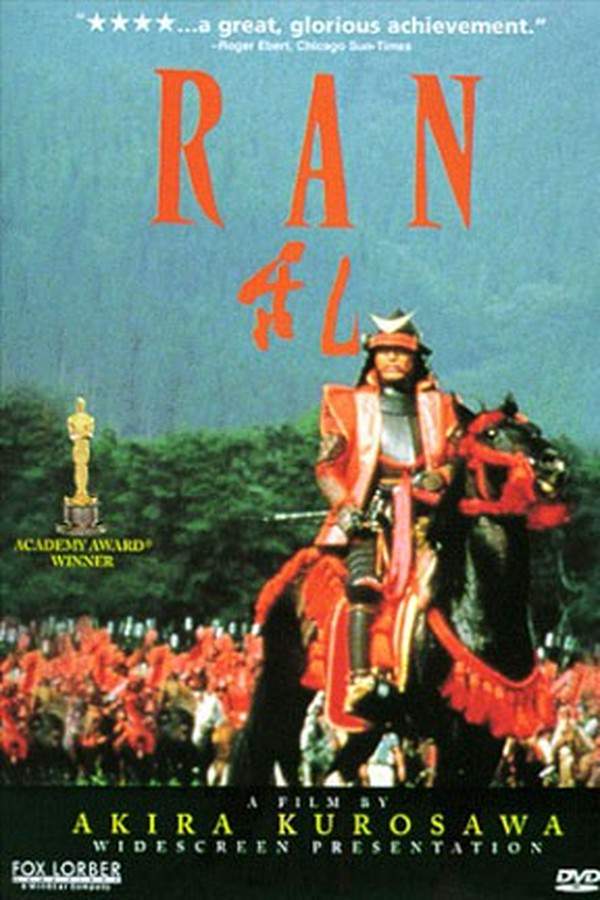
Ran (1985) movie poster

Characters & Themes

Ran (1985) Characters, Setting & Themes Explained

Release, runtime and language
1985 · 162 min · Japanese
Loading streaming availability…
Directed by
Akira Kurosawa
Starring
Akira Terao, Daisuke Ryû, Jinpachi Nezu, Tatsuya Nakadai
Budget
$11.5M

As the aging Lord Hidetora Ichimonji prepares to retire, he divides his realm among his three sons, Taro, Jiro, and Saburo. However, when Saburo challenges the established order, he is banished, triggering a devastating conflict for control of the land. The ensuing power struggle ignites a bloody war, testing the bonds of family and ultimately leading to a tragic and violent resolution as only one heir will survive.

On this page (9)
  1. 1 Where to watch
  2. 2 Characters explained (4)
  3. 3 Where & when it takes place
  4. 4 Themes & meaning (3)
  5. 5 Character & meaning questions
  6. 6 The book behind the movie
  7. 7 Movie threads
  8. 8 Movies like Ran
  9. 9 Every angle
Loading streaming availability…

4 main characters · contains spoilers

Ran Characters Explained: Who Is Who

The main characters of Ran (1985), heroes and villains: what drives them, how they change over the course of the story and what each of them reveals about the film's bigger ideas.

  • Hidetora Ichimonji (Tatsuya Nakadai)

    An aging warlord whose pride and vision for a unified realm set the tragedy in motion. He commands with force but struggles to adapt to a changed world, spiraling into confusion and rage as betrayals multiply. His relationship with his sons dissolves as ambition corrupts loyalty, leading to a ruinous downfall.

    • 👑 Leadership
    • ⚔️ Warlord
    • 🌀 Madness
    • 🗺️ Father-son dynamics
  • Taro Ichimonji (Akira Terao)

    The eldest son who seeks to consolidate power and rule the clan for himself. He manipulates outcomes and resents his father's authority, embodying ruthless ambition. His actions and calls for absolute control contribute to the kingdom's fragmentation.

    • 👑 Ambition
    • ⚔️ Power grab
    • 🗡️ Betrayal
    • 🏯 Family
  • Jiro Ichimonji (Daisuke Ryû)

    The more calculating son who uses his father's weakness to further his own position. He treats the old lord as a tool rather than a parent, embodying political cunning and fatal pragmatism. His maneuvering accelerates the war's cruelty.

    • 🎭 Manipulation
    • 🗺️ Strategy
    • ⚔️ War
    • 🗡️ Treachery
  • Saburo Ichimonji (Jinpachi Nezu)

    The youngest son who dares to speak truth and criticizes the division of lands, leading to his exile. His presence catalyzes the conflict and his fate is a counterpoint to his father's tragedy. His loyalty to honesty contrasts with his brothers' cunning.

    • 💬 Honesty
    • 🗡️ Rebellion
    • 🛡️ Family
    • 🗺️ Fate

Last updated: October 04, 2025 at 08:02

Was this helpful?

Setting

Where and When Does Ran Take Place?

The setting of Ran (1985): the year and time period, the places and locations, and how they shape the characters, the mood and the tension of the story.

Time period

Set in a brutal era of clan warfare in feudal Japan, where loyalty is tested by ambition and political intrigue, and where grand feasts quickly become scenes of betrayal and bloodshed.

Location

Ichimonji clan lands, First Castle, Second Castle, Third Castle, feudal Japan

The story unfolds within the Ichimonji clan's domain, moving between its central First Castle and the surrounding fortresses as loyalties shift. The landscapes range from grand castle interiors to war-torn ruins, reflecting a society built on honor, vengeance, and strategic siege. It is a setting where lords command retinues and rivals circle like vultures, ready to seize power.

  • 🏯 Castle politics
  • ⚔️ War and betrayal
  • 👑 Power struggles
  • 🗺️ Feudal Japan

Last updated: October 04, 2025 at 08:02

Was this helpful?

3 major themes

Ran Meaning: Themes & Message Explained

What is Ran (1985) really about? The emotional, social and philosophical themes the film keeps returning to, its symbolism and the message beneath the surface.

  • Power

    The film examines how power corrupts and corrupts relationships, turning family into faction and turning a kingly father into a target of plot and war. The division of lands triggers a cascade of loyalties, betrayals, and brutal sieges. The pursuit of dominance drives actions that lead to downfall and tragedy.

  • Betrayal

    Betrayal threads through the story as kin and retainers switch sides to advance personal agendas. Kaede's manipulation and Saburo's exile illustrate how trust is weaponized. The characters pay a heavy price as alliances crumble under ambition.

  • Madness

    Hidetora's gradual descent into madness drives much of the drama, with visions of past victims haunting his mind. The once mighty ruler loses grip on reality as battlefield horrors mirror his inner collapse. The film uses madness to expose the fragility of power and the cost of brutality.

Last updated: October 04, 2025 at 08:02

Was this helpful?

Character & theme questions

Ran Characters & Meaning: Your Questions Answered

The questions people ask about Ran (1985): who the characters really are, their relationships, what the symbols mean, where it takes place and what the movie is really about. Each answer contains spoilers.

Q1

Where is Ran set?

Ran takes place in feudal Japan within the Ichimonji clan's domain. The story moves between the clan's central First Castle and surrounding fortresses as loyalties shift throughout the film. The setting features grand castle interiors, war-torn ruins, and a society built on honor, vengeance, and strategic siege warfare.

  • feudal japan
  • ichimonji clan
  • first castle
  • setting
  • castle politics
Q2

When does Ran take place?

Ran is set in a brutal era of clan warfare in feudal Japan, though no specific year is given. The time period reflects an age when loyalty was constantly tested by ambition and political intrigue, where grand feasts could quickly turn into scenes of betrayal and bloodshed.

  • feudal japan
  • era
  • time period
  • medieval japan
  • clan warfare
Q3

What are the main themes of Ran?

The main themes of Ran include Power, Betrayal, and Madness. The film explores how power corrupts relationships and turns family into faction, how trust is weaponized as kin and retainers switch sides for personal gain, and how the aging lord Hidetora descends into madness as his world collapses around him.

  • themes
  • power
  • betrayal
  • madness
  • corruption
Q4

Who is Hidetora Ichimonji?

Hidetora Ichimonji is the aging warlord and patriarch of the Ichimonji clan who decides to retire and divide his realm among his three sons. His pride and vision for a unified realm set the tragedy in motion. As betrayals multiply, he spirals into confusion and rage, with his relationship with his sons dissolving as ambition corrupts loyalty, leading to his ruinous downfall.

  • hidetora ichimonji
  • warlord
  • lord
  • aging ruler
  • patriarch
Q5

Who are Hidetora's three sons in Ran?

Hidetora's three sons are Taro, Jiro, and Saburo. Taro is the eldest, seeking to consolidate power and rule the clan for himself through ruthless ambition. Jiro is the calculating middle son who uses his father's weakness to further his own position with political cunning. Saburo is the youngest, who speaks truth and criticizes the division of lands, leading to his exile.

  • taro
  • jiro
  • saburo
  • sons
  • heirs
  • ichimonji family
Q6

What does Ran say about power?

Ran examines how power corrupts and destroys relationships, turning family into faction and turning a kingly father into a target of plot and war. The division of lands triggers a cascade of loyalties, betrayals, and brutal sieges. The pursuit of dominance drives actions that lead directly to downfall and tragedy for all involved.

  • power
  • corruption
  • ambition
  • rule
  • dominance
Q7

Why is Saburo important to the story?

Saburo is important because he is the youngest son who dares to speak truth and challenges the established order by criticizing his father's division of lands. This leads to his banishment, but his exile triggers the devastating conflict for control of the realm. His fate serves as a counterpoint to his father's tragedy, with his loyalty to honesty contrasting sharply against his brothers' cunning.

  • saburo
  • exile
  • truth
  • banishment
  • youngest son
Q8

How does betrayal shape the story of Ran?

Betrayal threads through Ran as kin and retainers switch sides to advance personal agendas. Characters like Kaede manipulate situations while Saburo's exile illustrates how trust is weaponized. The characters pay a heavy price as alliances crumble under ambition, with virtually every relationship deteriorating as the power struggle intensifies.

  • betrayal
  • loyalty
  • alliances
  • treachery
  • trust
Q9

What causes Hidetora's madness in Ran?

Hidetora's madness is driven by the cumulative trauma of betrayal, loss, and the collapse of his world. As his sons turn against him and battlefield horrors mount, he begins seeing visions of past victims. The once mighty ruler loses his grip on reality, and the film uses his madness to expose the fragility of power and the brutal cost of his past violence.

  • madness
  • mental breakdown
  • visions
  • hidetora
  • psychological
Q10

What castles appear in Ran?

The Ichimonji clan controls three main castles: the First Castle as the central seat of power, the Second Castle, and the Third Castle. These locations become stages for political intrigue and warfare as the story progresses, with the shifting control of these fortresses reflecting the changing loyalties and escalating conflict between the brothers.

  • first castle
  • second castle
  • third castle
  • fortresses
  • ichimonji
Q11

Is Ran based on a Shakespeare play?

While Ran is not a direct adaptation, it draws heavily from Shakespeare's King Lear. Like the Shakespearean tragedy, Ran follows a clear, tragic arc where an aging ruler's decision to divide his kingdom among his children leads to betrayal, madness, and ultimate destruction. The narrative complexity is moderate, with multiple characters and schemes following this classic pattern.

  • shakespeare
  • king lear
  • adaptation
  • influence
  • tragedy
Q12

What is the tone of Ran?

Ran has a predominantly bleak tone, characterized by relentless, violent power struggle and psychological torment. The film features virtually no humor or romance, maintaining a devastating atmosphere throughout. The emotional weight is heavy, with the near-total destruction of the family and the triumph of treachery over loyalty creating a consistently dark viewing experience.

  • tone
  • atmosphere
  • bleak
  • dark
  • emotional weight
  • tragedy

Movie threads

More Movies Like Ran, by Mood & Story

Curated lists built around what makes Ran tick: the same mood, the same kind of story or the same emotional payoff. Each list explains why these movies belong together.

Epic tragedies of hubris and downfall like Ran

Stories where ambition and pride lead to devastating, large-scale ruin. If you enjoyed the grand scale and tragic inevitability of Ran, explore more movies like it. These films feature powerful figures whose pride leads to devastating consequences, blending historical or epic settings with heavy emotional drama and bleak, thought-provoking conclusions.

  • epic
  • tragic
  • somber
  • despairing
  • nihilistic
  • operatic
  • Tone: bleak, tragic, somber
  • Pacing: steady, deliberate escalation
Why these movies?

The story pattern: Narratives in this thread typically follow a powerful individual or dynasty whose overconfidence or flawed decision triggers a catastrophic fall. The plot escalates logically from political intrigue to open conflict, ultimately resulting in the complete destruction of the protagonist's world. The focus is on the brutal consequences of power and the inability to escape one's fate.

Why they belong together: Movies are grouped here because they share a core narrative structure of a great fall from power, a consistently bleak and somber tone, and an epic scope that makes the tragedy feel immense and consequential. The emotional journey is one of watching a meticulously built world crumble.

Bleak stories of familial betrayal like Ran

Stories where family bonds are shattered by ambition, leading to utter ruin. For viewers who appreciated the deep exploration of family treachery in Ran, this section collects similar movies about sibling rivalry and paternal legacy. These films are characterized by their heavy emotional weight, themes of loyalty tested to destruction, and narratives that find no redemption in betrayal.

  • betrayal
  • oppressive
  • maddening
  • despairing
  • tragic
  • familial conflict
  • Tone: bleak, despairing, oppressive
  • Pacing: steady, character-driven escalation
Why these movies?

The story pattern: The narrative pattern involves a patriarch's decision about succession that ignites a latent conflict among heirs. Alliances form and shatter based on ambition rather than love, driving characters to madness and violence. The story unfolds with a sense of dreadful inevitability, showcasing how the pursuit of power systematically destroys every familial bond.

Why they belong together: These films are grouped together because they prioritize the emotional devastation of familial betrayal above all else. They share a bleak worldview, a high level of dramatic intensity, and a focus on the psychological unraveling of characters as they turn on each other. The experience is one of witnessing a personal apocalypse.

If you liked this

Movies Like Ran

Similar movies to Ran: the same genre, themes or kind of story. Each one comes with its own plot summary, timeline and ending explained.

Browse all movie summaries

Every angle

Ran (1985) Explained: Plot, Timeline & Characters

Everything about Ran in one place: what happens in the plot summary, the timeline in chronological order, the characters and meaning and a spoiler-free summary. What's After the Movie adds the cast, box office and post-credit scenes.

Coming soon on iOS and Android

The Plot Explained Movie Summary App

Plot summaries, endings explained and timelines on your phone. Catch up on any movie in minutes, save your favorites and never miss a twist again.

Be the first to know when we launch. Your email stays private, always.

Learn more about the app