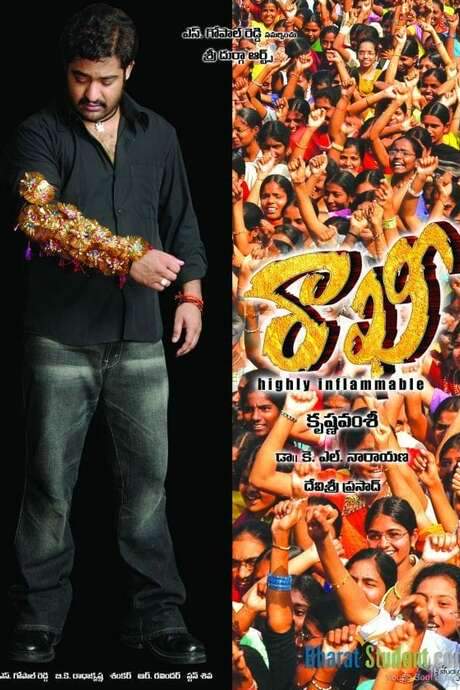
Rakhi, a young man named Ramakrishna, dreams of following in his father’s footsteps and becoming a railway stationmaster. His life centers on his close bond with his sister and on supporting a fearless journalist who fights for women’s rights. His world is brightened by the presence of Tripura Sundari, a bold reporter who uses her TV channel to expose atrocities against women, shaping Rakhi’s sense of justice. For Rakhi, Gayathri, his sister, means everything, and her future weighs heavily on his heart. Gayathri is married to a software professional who plans to move to the USA, but a looming, corrupt dowry scheme threatens to derail their lives.
A greedy uncle brings in a proposal that would net 1 crore as a dowry, and the family’s attempt to navigate this pressure only skews toward tragedy. At first, the in-laws try to rid themselves of Gayathri by forcing Rakhi to hand over more dowry, but Gayathri overhears their plan and is burned alive along with the unborn child she carries. The shock of her death drives Rakhi to pursue justice, yet the legal system appears rigged: a corrupt lawyer [Sachidanandam], a police officer [Meenakshi Iyer], and a doctor manipulate the narrative, claiming Gayathri was mentally disturbed and had committed suicide. Rakhi, crushed by the false report, cannot accept the verdict. During this turbulent time, Tripura reaches out to Rakhi’s family and helps keep the case alive, even as she records developments for the public.
In a graveyard scene that sears the memory of Gayathri into his mind, Rakhi experiences a brutal vision—his sister’s screams and the sense that every woman who could suffer like Gayathri is vulnerable in a world run by cruel men. This vision hardens into a resolve: he decides to act, burning the in-laws and those who distorted the truth in front of the court, then publicly marking each site with a rakhi. The public begins to see him as a protector, while the police, led by Meenakshi Iyer, face a moral dilemma as many women signal support for Rakhi and fear for their own safety. The case becomes a national conversation as the police announce a bounty and the minister’s name crops up in the carnage.
Rakhi’s crusade continues as he explains his motives to the people, including Meenakshi and her team, arguing that the law often shields abusers instead of protecting victims. Tripura is forced to confront the complexities of reporting on violence while witnessing Rakhi’s unorthodox justice. Meanwhile, Madhukar emerges as a pivotal figure—the man who killed Gayathri’s friend Srilatha after she refused his advances—making Rakhi’s mission feel even more personal and urgent. The fight intensifies when the state minister’s son becomes a target, and the minister himself responds with violence, culminating in a bomb attack outside Rakhi’s jail that claims many lives, including Gowri, the devoted daughter of a grieving family. Gowri, a bright light in Rakhi’s circle, is among those who fall.
In a dramatic turn, the minister is killed by Rakhi, and the courtroom scene shifts as the judge faces an existential choice. The judge, recognizing that Rakhi’s actions stem from a genuine pursuit of justice, resigns and offers to defend him, signaling a new, if controversial, path within the legal system. With the court’s doors opening to a broader discussion about accountability, Rakhi’s voice resonates as he motivates the crowd of women outside the courthouse to stand up for themselves and demand real justice.
As the dust settles, the film closes on Rakhi’s unwavering message: true justice isn’t merely about punishment; it’s about protecting every woman from harm and ensuring that those who exploit others face consequences. The story blends personal grief, a determined quest for accountability, and a bold reimagining of how society responds to violence against women, leaving audiences with a provocative reflection on law, power, and gender equality. The final image lingers on a crowd choosing solidarity over fear, with Rakhi standing as a vigilante of compassion and consequence.