Plot Explained Spoilers guaranteed!
Plot Explained

Browse by genre

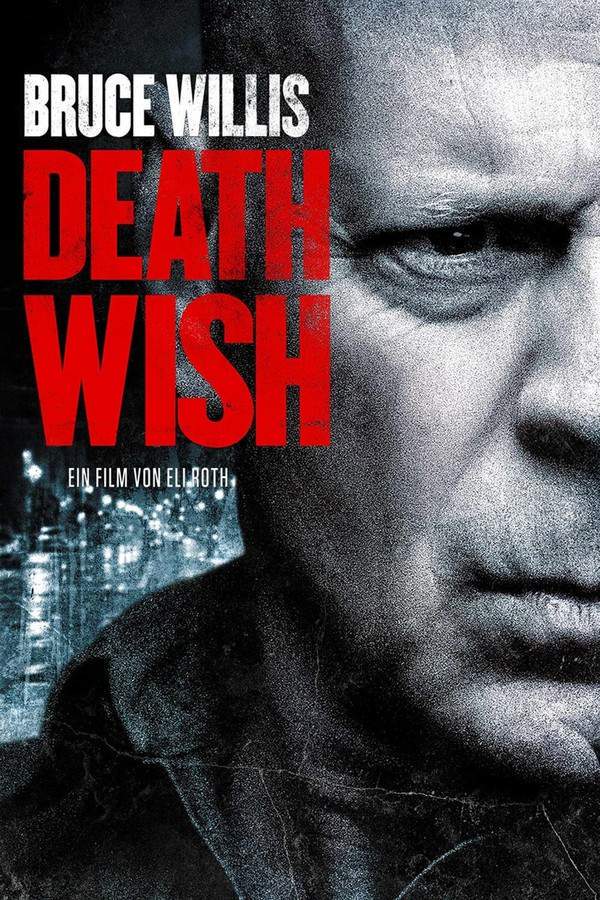
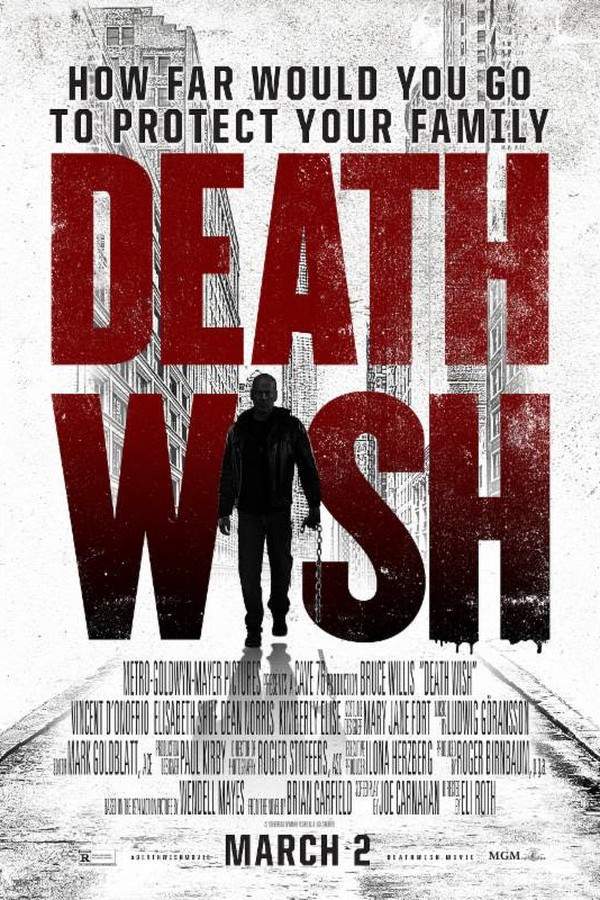
Death Wish (1974) movie poster

Plot Summary

Death Wish (1974) Plot Summary Explained

Release, runtime and language
1974 · 93 min · English
Directed by
Michael Winner
Starring
Charles Bronson, Hope Lange

After a devastating home invasion claims his wife's life and shatters his world, a New York City architect descends into vigilantism. Consumed by grief and rage, he embarks on a campaign of calculated revenge against the criminals who took everything from him. By night, he stalks and eliminates those who prey on the city’s vulnerable, seeking retribution and a twisted form of justice.

On this page (6)
  1. 1 Where to watch
  2. 2 What happens: full plot
  3. 3 Plot questions answered
  4. 4 Movie threads
  5. 5 Movies like Death Wish
  6. 6 Every angle

Where to watch

Where to Watch Death Wish (1974)

Where can you watch Death Wish? Stream, rent or buy it in the US, including on Kanopy, YouTube Free and Amazon Video: current JustWatch availability with up-to-date prices.

Streaming availability powered by JustWatch

Full plot summary · contains spoilers

What Happens in Death Wish: Full Plot Summary

The whole story of Death Wish (1974) explained, from the opening scene to the final frame: every key event, every twist and what it all adds up to. Read it as a quick recap before the sequel, to check a scene you missed, or to finally understand what really happened.

Paul Kersey, portrayed by Charles Bronson, and his wife Joanna, played by Hope Lange, embark on a vacation in the paradise of Hawaii. Their journey takes a dark turn when they return to New York City, where Paul leads a life as an architect. During a routine grocery shopping trip at D'Agostino's, a harrowing incident unfolds as a trio of hooligans, one of whom is played by Jeff Goldblum, cause chaos in the supermarket. The situation escalates when these delinquents follow Joanna to their apartment, breaking in and wreaking havoc, searching for money but only finding a meager $7. Tragically, they assault both Joanna and their daughter, Carol Anne.

Paul's world shatters when he receives a call from his son-in-law, Jack Toby, informing him that Joanna and Carol are in the hospital. After a torturous wait, Paul learns from a doctor that although Carol is physically unharmed, having been sedated, Joanna has succumbed to her injuries. The police inform the devastated Paul that the chances of catching the criminals are slim, especially since Joanna is gone and Carol remains in a traumatized state, unable to recount what happened to her.

One night, filled with frustration and sorrow, Paul takes a walk and narrowly escapes a robbery when a mugger attempts to hold him up. Armed only with a sock filled with quarters, he manages to evade danger. The following day, his boss sends him on an extended business trip to Tucson, Arizona, where he meets Ames Jainchill, portrayed by Stuart Margolin, who shows him the ropes. Paul witnesses a mock gunfight at Old Tucson and impresses Ames with his shooting skills, after which Ames discreetly gifts him a nickel-plated .32 Colt Police Positive revolver.

Returning to New York, Paul confronts the reality of his daughter’s condition and the weight of his wife’s death. When he opens the suitcase with the revolver inside, he feels an unexpected pull towards vigilantism. That night, while out for a walk, he encounters a mugger named Thomas Leroy Marston and, in a moment of primal instinct, shoots him, marking the beginning of his transformation into a vigilante.

As his quest for justice continues, Paul targets anyone he believes threatens the innocent, leading to a spree of violent confrontations. His reputation as a vigilante grows, drawing the attention of police Lt. Frank Ochoa, played by Vincent Gardenia. Ochoa’s investigation leads him closer to Paul, but the public supports the mysterious figure cleaning up the city.

Compelled by loss and rage, Paul ultimately commits to his new life's mission, while his personal life deteriorates as he places Carol in a mental institution, unable to bear her catatonic state. The ongoing conflict between Paul and law enforcement escalates, culminating in a confrontation that requires Paul to leave New York to avoid arrest.

In the film's thrilling conclusion, after a week’s respite, Paul arrives at Chicago Union Station, only to find himself embroiled in chaos once again as he intervenes to rescue a woman from a group of hoodlums. With a smile and a pointed finger mimicking a gun, he signals that his fight for justice will undoubtedly continue, leaving viewers to ponder the complexities of vengeance and morality.

Last updated: October 28, 2024 at 17:25

Was this helpful?

Plot questions answered

Death Wish Plot Explained: Your Questions Answered

The questions people ask most about Death Wish (1974): what happens in the confusing scenes, why the characters do what they do, the twists, hidden details and what the ending means. Each answer contains spoilers.

Q1

Why does Paul Kersey become a vigilante after his wife's death?

Paul transforms into a vigilante because the brutal murder of his wife Joanna and the assault of his daughter leave him feeling powerless. When the police tell him the chances of catching the criminals are slim, and his daughter remains traumatized and unable to identify the attackers, Paul succumbs to grief and rage. His first act of vigilantism occurs when he nearly gets mugged one night and defends himself, then later shoots a mugger named Thomas Leroy Marston, marking the beginning of his violent campaign against crime.

  • vigilante
  • paul kersey
  • revenge
  • wife death
  • motivation
Q2

How does Paul Kersey obtain the gun?

Paul receives the revolver during a business trip to Tucson, Arizona. While visiting Old Tucson, he participates in a mock gunfight and demonstrates impressive shooting skills. His colleague Ames Jainchill, impressed by his abilities, secretly gifts him a nickel-plated .32 Colt Police Positive revolver. Paul initially feels conflicted about the weapon, but when he returns to New York and opens the suitcase containing the revolver, he feels a powerful pull toward vigilantism.

Foreshadowing: Paul's hidden talent for shooting at Old Tucson foreshadows his later efficiency as a vigilante.

  • revolver
  • gun
  • tucson
  • ames jainchill
  • weapon
Q3

Why do the attackers follow Paul and Joanna from the supermarket?

The three hooligans, including one played by Jeff Goldblum, cause chaos inside D'Agostino's supermarket, terrorizing shoppers and staff. They notice Joanna and apparently follow her back to the apartment building. Their primary motivation is robbery, they're searching for money, but they find only $7. Their rampage becomes violent, resulting in the assault of Joanna and their daughter Carol Anne.

  • attackers
  • supermarket
  • home invasion
  • robbery
  • d'agostino
Q4

What happens to Carol Anne after the home invasion?

Carol Anne survives the attack but suffers severe psychological trauma. She is sedated at the hospital and remains in a catatonic state, unable to recount what happened to her. Her inability to identify the attackers contributes to Paul's sense of helplessness. Later, unable to bear witness to her traumatized condition, Paul places Carol in a mental institution, a decision that reflects both his inability to help her and his deteriorating mental state.

  • carol anne
  • daughter
  • trauma
  • mental institution
  • hospital
Q5

Why does Paul Kersey put his daughter in a mental institution?

Paul places Carol in a mental institution because her catatonic state becomes unbearable for him to witness. After returning from Tucson and confronting the reality of his wife's death, Paul finds himself unable to cope with watching his daughter remain in a traumatized, unresponsive condition. The decision also reflects his psychological deterioration as he descends deeper into vigilantism and withdraws from his personal life.

  • carol anne
  • mental institution
  • daughter
  • trauma
  • family
Q6

Who is Lt. Frank Ochoa and what role does he play in the story?

Lt. Frank Ochoa is the police detective investigating Paul's vigilante activities. Played by Vincent Gardenia, Ochoa becomes increasingly focused on identifying the mysterious figure who's been shooting muggers and cleaning up the streets. As Paul's vigilante campaign escalates, Ochoa gets closer to discovering Paul's identity, creating mounting tension between the vigilante and law enforcement. Despite his investigation, the public supports the vigilante, complicating Ochoa's efforts.

  • frank Ochoa
  • detective
  • police investigation
  • vigilante
Q7

Why does Paul leave New York at the end of the movie?

Paul is forced to flee New York because the police investigation led by Lt. Ochoa intensifies and he faces imminent arrest. As the hunt for the vigilante grows closer to uncovering his identity, Paul realizes he must escape the city to avoid capture. His departure represents the culmination of his transformation from law-abiding architect to fugitive, choosing a life on the run over facing justice for his crimes.

  • new york
  • escape
  • police
  • flee
  • arrest
Q8

What happens at Chicago Union Station in the final scene?

After a week's respite following his departure from New York, Paul arrives at Chicago Union Station. Almost immediately, he encounters a group of hoodlums threatening a woman. Paul intervenes to rescue her, using his vigilante skills. With a smile and a pointed finger mimicking a gun, he signals that his campaign of vigilante justice will continue in this new city. The ambiguous ending suggests an endless cycle of violence rather than any resolution.

  • chicago
  • union station
  • ending
  • continue
  • vigilante
Q9

Why doesn't the police catch Paul despite his visible vigilante activities?

Despite Paul openly shooting muggers throughout New York, the police struggle to catch him for several reasons. The public generally supports the vigilante because he's targeting criminals who prey on innocent people, making witnesses reluctant to come forward. Additionally, Paul's attacks occur in different locations across the city, making it difficult to establish a pattern. Lt. Ochoa's investigation does narrow in on Paul, but not quickly enough to prevent his escape.

  • police
  • catch
  • investigation
  • witnesses
  • public support
Q10

Why does Ames Jainchill give Paul the revolver as a gift?

Ames Jainchill gives Paul the revolver because he's impressed by Paul's shooting abilities during the mock gunfight at Old Tucson. After witnessing Paul demonstrate remarkable precision and composure, Ames sees potential in him and decides to gift him the nickel-plated .32 Colt Police Positive revolver. This gift is meant as a keepsake of their business relationship, but it becomes the instrument that enables Paul's transformation into a vigilante.

Foreshadowing: Ames's gift of a gun to a grieving man he barely knows plants the seeds for tragedy.

  • ames jainchill
  • gift
  • revolver
  • shooting
  • tucson
Q11

What drives Paul's transformation from architect to violent vigilante?

Paul's transformation is driven by a combination of devastating loss, feelings of powerlessness, and rage. The murder of his wife and the trauma inflicted on his daughter leave him with an unquenchable desire for justice that the legal system cannot provide. When the police indicate catching the attackers is unlikely, and his daughter cannot identify them, Paul channels his grief into violent retribution. The revolver from Tucson becomes the tool for his personal war on crime.

  • transformation
  • architect
  • vigilante
  • motivation
  • grief
  • rage
Q12

How does Joanna's death change Paul Kersey's character?

Joanna's murder fundamentally shatters Paul's identity as a peaceful architect and family man. Before the tragedy, Paul lives a normal life in New York, focused on his career and family. After her death, he becomes consumed by vengeance, willing to kill anyone he perceives as a threat to the innocent. His personal life deteriorates as he places his daughter in an institution and ultimately becomes a fugitive. The loss transforms him into someone unrecognizable from the man who once walked the streets without fear.

  • joanna
  • death
  • wife
  • transformation
  • loss
  • family

Movie threads

More Movies Like Death Wish, by Mood & Story

Curated lists built around what makes Death Wish tick: the same mood, the same kind of story or the same emotional payoff. Each list explains why these movies belong together.

Movies about vigilante justice like Death Wish

Ordinary individuals pushed to extreme measures in pursuit of their own justice. If you liked the vigilante journey in 'Death Wish', explore other movies where individuals take the law into their own hands. This collection features similar action, crime, and drama stories focused on revenge, urban decay, and the moral cost of one person's quest for justice.

  • vengeful
  • angry
  • tense
  • grim
  • desperate
  • brutal
  • Tone: dark, cynical, grim
  • Pacing: steady, methodical
Why these movies?

The story pattern: This narrative pattern begins with a devastating inciting incident that shatters the protagonist's world, typically a violent crime against a loved one. The story then follows their methodical transformation from a law-abiding citizen into a calculated vigilante, exploring the psychological toll and moral ambiguity of their actions, often culminating in an ambiguous or cynical resolution.

Why they belong together: Movies are grouped here based on a shared core plot structure of revenge-fueled vigilantism and a strong thematic focus on trauma, moral collapse, and the failure of societal systems. They share a dark, intense tone and heavy emotional weight centered on grief and rage.

Gritty urban crime dramas with dark themes like Death Wish

Stories of individuals drowning in the violence and desperation of a corrupt city. For viewers who appreciated the gritty New York setting and dark themes of 'Death Wish', this section features similar movies about urban decay, crime, and trauma. Discover other tense, heavy dramas that explore moral collapse and desperate actions within a corrupt cityscape.

  • tense
  • grim
  • cynical
  • brutal
  • desperate
  • gritty
  • Tone: dark, tense, grim
  • Pacing: steady, atmospheric build
Why these movies?

The story pattern: The narrative unfolds within a city portrayed as a character of decay and danger. The protagonist, often traumatized or disillusioned, navigates this hostile environment, and their personal journey mirrors the city's corruption. The plot revolves around crime, survival, and a descent into a darker, more cynical worldview, driven by the oppressive atmosphere.

Why they belong together: These films are united by a shared atmospheric vibe defined by a gritty, dangerous urban setting that directly influences the plot and characters. They possess a dark, tense tone, steady pacing that builds dread, and a heavy emotional focus on themes like trauma and moral decay.

If you liked this

Movies Like Death Wish

Similar movies to Death Wish: the same genre, themes or kind of story. Each one comes with its own plot summary, timeline and ending explained.

Browse all movie summaries

Every angle

Death Wish (1974) Explained: Plot, Timeline & Characters

Everything about Death Wish in one place: what happens in the plot summary, the timeline in chronological order, the characters and meaning and a spoiler-free summary. What's After the Movie adds the cast, box office and post-credit scenes.

Coming soon on iOS and Android

The Plot Explained Movie Summary App

Plot summaries, endings explained and timelines on your phone. Catch up on any movie in minutes, save your favorites and never miss a twist again.

Be the first to know when we launch. Your email stays private, always.

Learn more about the app