Plot Explained Spoilers guaranteed!
Plot Explained

Browse by genre

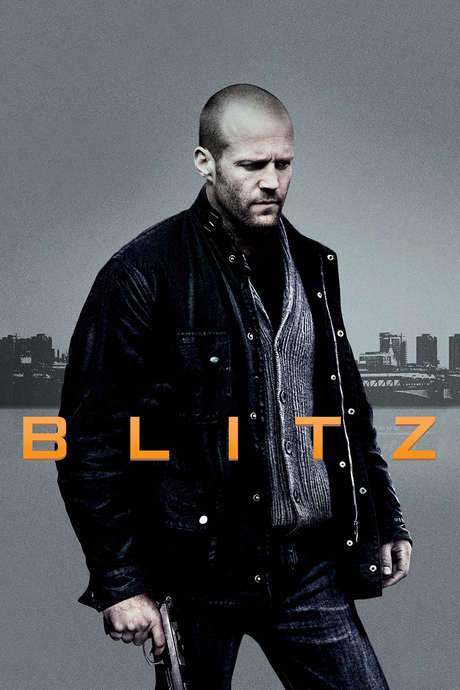
Blitz (2011) movie poster

Plot Summary

Blitz (2011) Plot Summary Explained

Release, runtime and language
2011 · 97 mins · English
JustWatch #8,365 22
Directed by
Elliott Lester
Starring
Jason Statham, Luke Evans, Mark Rylance, Paddy Considine, Aidan Gillen, Zawe Ashton

It’s cop-killer vs. killer-cop A tough cop is dispatched to take down a serial killer who has been targeting police officers.

On this page (6)
  1. 1 Where to watch
  2. 2 What happens: full plot
  3. 3 Plot questions answered
  4. 4 The book behind the movie
  5. 5 Movie threads
  6. 6 Every angle

Where to watch

Where to Watch Blitz (2011)

Where can you watch Blitz? Stream, rent or buy it in the US, including on Amazon Prime Video, fuboTV and IndieFlix: current JustWatch availability with up-to-date prices.

Streaming availability powered by JustWatch

Full plot summary · contains spoilers

What Happens in Blitz: Full Plot Summary

The whole story of Blitz (2011) explained, from the opening scene to the final frame: every key event, every twist and what it all adds up to. Read it as a quick recap before the sequel, to check a scene you missed, or to finally understand what really happened.

Detective Sergeant Tom Brant is a hot-headed police officer based at a turbulent South East London station. In a brutal early moment, he uses a hurley to subdue three would-be car thieves, setting a tone for a man whose impulses often pull him toward the edge. When Elizabeth Falls asks for help with her Sergeant’s exam, Brant advises patience, noting that she recently left rehab after a self-destructive stretch undercover with the drugs squad. His concern for her is sharply tempered by caution from his superior, a warning that hints at the danger of Brant’s volatile style—an issue a police psychologist later flags as a possible burn-out fault line, recounting earlier incidents of bugging the Superintendent’s office, a billiards hall altercation, and the earlier assault on the three youths.

The thread pulls tight when Brant attends the funeral of Chief Inspector Roberts and, on the same night, PC Sandra Bates is shot by an unseen killer. The station’s mood shifts as Porter Nash is reassigned from West London to act as Inspector in Roberts’s absence. A troubled young boy seeks Falls’s help, convinced he’s killed someone in a gang attack, and she turns to Brant for a favor, steering him toward information about DI Craig Stokes. The shooter—Barry Weiss—reaches out to journalist Harold Dunlop, laying out a chilling challenge: he will kill a certain number of cops, choosing eight, to mark his trail. In the street, Weiss shoots PC Theo Nelson from a car, throwing the station into chaos.

As the investigation dives into Weiss’s footprint, Brant meets informant Radnor, who once boasted about harming a police dog and now points to Weiss as its target. The detectives grapple with Brant’s recurring blackouts, while Nash reveals his own hard-won lessons from past personal violence against a paedophile in his home, a confession that underscores the toll the job takes on anyone chasing justice. The lead lands Brant in a direct line with Weiss, who is recognized as a dangerous figure who once tangled with him in a billiards hall.

Weiss’s crime spree escalates as he kills [Roberts] in a brutal confrontation, pulverizing the chief inspector’s head with a hammer, stealing his police uniform and badge, and burning Roberts’s flat. He calls Dunlop to report the murder and adopts the alias “Blitz.” The police begin to weave a net around Weiss, but Radnor’s growing pressure—seeking a £50,000 payoff in exchange for Weiss’s identity—threatens to unravel the fragile case. Falls’s personal loyalties pull her toward Stokes, who asks her out after she pleads to bury the boy’s name, while Weiss’s shadow looms over the entire precinct.

Dunlop and Brant race to locate the parked car where Radnor describes evidence, but Weiss has already cleaned the scene as the CCTV footage proves unreliable. Falls and Stokes share a drink, all while Weiss watches from a distance, and a rift forms between Falls and Brant as the killer closes in on Falls herself. When Weiss continues his assault on the force, the tension spikes as Falls suffers a relapse, succumbing to drugs while the police scramble to protect her.

Weiss’s release from surveillance leads him back to Roberts’s funeral and, at Roberts’s old domain, to Brant. The stolen uniform and badge become a potent symbol of the killer’s control, and Weiss follows Brant to a parking garage where the evidence from the earlier scene is supposed to be kept. In a tense rooftop confrontation, Weiss aims his pistol at Brant, but the moment twists when Nash appears, and Brant takes the chance to strike. Brant executes a grim, calculated plan: there is no solid evidence tying Weiss to the killings, because Weiss was cleared, and the true target, Brant implies, is anyone in uniform. The final stand ends with Brant shooting Weiss in the head, a moment that seals the killer’s fate in a grim play of perception and power.

With Weiss defeated, Brant and Nash walk away from the rooftop, the danger momentarily contained. The film closes with a stark, unsettling note as Brant unleashes two police dogs on Harold Dunlop, leaving the audience with a chilling reminder that justice in this world can blur the line between order and vengeance, and that in Brant’s city, the hunt for truth can leave a heavy toll on everyone involved.
Last updated: October 01, 2025 at 12:51

Was this helpful?

Plot questions answered

Blitz Plot Explained: Your Questions Answered

The questions people ask most about Blitz (2011): what happens in the confusing scenes, why the characters do what they do, the twists, hidden details and what the ending means. Each answer contains spoilers.

Q1

Why does Tom Brant kill Barry Weiss at the end instead of arresting him?

Brant executes Weiss on the rooftop because there is no solid evidence tying Weiss to the killings, Weiss was cleared by surveillance. Brant implies the real target was anyone in uniform, suggesting he believes Weiss will continue killing officers regardless of proof. The grim reality is that Brant chooses extrajudicial execution over risking more police deaths, reflecting the film's theme that the justice system has failed.
Foreshadowing: Weiss's earlier challenge to kill eight cops and his ability to evade surveillance foreshadows his unstoppable nature.

  • Tom Brant
  • Barry Weiss
  • rooftop killing
  • no evidence
  • police corruption
Q2

Why does Tom Brant set police dogs on journalist Harold Dunlop at the end?

After killing Weiss, Brant releases two police dogs on Dunlop, who had been helping the investigation. This brutal act underscores the film's bleak theme that justice has been corrupted, Brant, the supposed hero, turns his rage on a civilian journalist, demonstrating that the toll of the hunt for truth leaves permanent damage. It also suggests Brant views Dunlop as complicit in Weiss's game.

Foreshadowing: Dunlop's role in publishing Weiss's threats and facilitating the killer's notoriety plants the seed for Brant's vengeful act.

  • Tom Brant
  • Harold Dunlop
  • police dogs
  • ending
  • revenge
Q3

Why does Barry Weiss steal Chief Inspector Roberts's uniform and badge?

After killing Roberts, Weiss takes his police uniform and badge to project authority and混入警方调查. By wearing the stolen uniform, Weiss can move freely among officers, access restricted areas, and create misdirection, the police are chasing a phantom wearing a badge. This act symbolizes the killer's control and the inversion of law enforcement.

Foreshadowing: Weiss's earlier threat to kill eight cops and his media challenge foreshadow his boldness in impersonating an officer.

  • Barry Weiss
  • stolen uniform
  • badge
  • Chief Inspector Roberts
  • disguise
Q4

Why does Barry Weiss adopt the alias Blitz?

Weiss calls Harold Dunlop to report Roberts's murder and adopts the name 'Blitz,' drawing from the WWII bombing term. The alias reflects his campaign of terror against police, a blitzkrieg against law enforcement. It also serves as his media brand, taunting the police publicly and elevating his killing spree into a notorious identity.

Foreshadowing: Weiss's initial challenge to kill eight cops establishes his need for a public persona.

  • Barry Weiss
  • Blitz alias
  • serial killer
  • media taunt
Q5

Why does Elizabeth Falls relapse into drugs during the investigation?

Falls succumbs to drugs while the police scramble to protect her from Weiss's targeting. Her relapse is triggered by the extreme stress of being hunted, combined with her fragile recovery from her previous undercover work with the drugs squad. The pressure of the case and personal trauma overwhelm her support system, leading her back to substance abuse.

Foreshadowing: Brant's earlier warning about her recent rehab and the psychologist's notes on burnout hint at her vulnerability.

  • Elizabeth Falls
  • relapse
  • drugs
  • addiction
  • stress
Q6

What causes Tom Brant's recurring blackouts?

Brant suffers from recurring blackouts that become a liability in the investigation. While the exact cause isn't explicitly detailed, the police psychologist flags him as a burnout risk, recounting past incidents of violent behavior. The blackouts suggest psychological trauma from the job, though the film leaves the precise medical explanation ambiguous, emphasizing instead the toll of his volatile lifestyle.

Foreshadowing: The psychologist's report lists past incidents, bugging the Superintendent's office, a billiards hall altercation, and assaulting youths, establishing a pattern of instability.

  • Tom Brant
  • blackouts
  • burnout
  • psychologist
  • trauma
Q7

Why does Barry Weiss specifically target police officers?

Weiss targets police officers as part of a personal campaign to punish or provoke law enforcement. He contacts journalist Harold Dunlop to lay out his challenge: he will kill a certain number of cops, eight, to mark his trail. His motivation appears to be a vendetta against the police force itself, though the exact reason is rooted in his dangerous past, including a prior confrontation with Brant at a billiards hall.

Foreshadowing: Weiss's challenge to kill eight cops and his prior interaction with Brant establish his focused animosity toward police.

  • Barry Weiss
  • police officers
  • serial killer
  • target
  • motive
Q8

Why is Porter Nash reassigned from West London to replace Chief Inspector Roberts?

Porter Nash is reassigned from West London to act as Inspector following Roberts's death, filling the leadership vacuum. Nash brings his own history of personal violence, he previously attacked a paedophile in his home, and his hard-won lessons about the toll of the job. His reassignment adds pressure to the already tense station dynamic.

Foreshadowing: Nash's confession about past violence foreshadows his understanding of Brant's methods and his arrival at the rooftop.

  • Porter Nash
  • West London
  • reassigned
  • Roberts
  • inspector
Q9

Why does Barry Weiss kill Chief Inspector Roberts?

Weiss kills Roberts in a brutal confrontation, pulverizing his head with a hammer, then steals his uniform, badge, and sets fire to his flat. Roberts represents authority, and killing him allows Weiss to steal the symbolic tools of law enforcement. His murder serves as the turning point where the killer escalates from shooting officers to executing a senior figure and impersonating police.

Foreshadowing: Weiss's earlier street killings and public challenge set the stage for his direct attack on leadership.

  • Barry Weiss
  • Chief Inspector Roberts
  • murder
  • hammer
  • uniform
Q10

Why does Tom Brant use a hurley to subdue car thieves at the start of the film?

In the opening scene, Brant uses a hurley, a traditional Irish stick, to brutally subdue three would-be car thieves. This violent, impulsive act sets the tone for his character: a hot-headed officer whose impulses often border on excessive force. It establishes his volatile nature and foreshadows the psychologist's concerns about his burnout and disciplinary issues.

Foreshadowing: The psychologist later recounts this assault among a string of past incidents flagging Brant as a liability.

  • Tom Brant
  • hurley
  • car thieves
  • South East London
  • violence
Q11

Why does Elizabeth Falls ask Brant for a favor about DI Stokes?

Falls asks Brant for information about DI Craig Stokes after a troubled boy seeks her help, convinced he killed someone in a gang attack. She pleads with Brant to bury the boy's name, using her connection to Stokes to navigate the situation. This favor strains her relationship with Brant and reveals her growing loyalty to Stokes, who later asks her out.

Foreshadowing: Falls and Stokes's shared drink and her plea to bury the boy's name foreshadow a rift between her and Brant.

  • Elizabeth Falls
  • DI Stokes
  • favor
  • troubled boy
  • loyalty
Q12

Why does Barry Weiss contact journalist Harold Dunlop?

Weiss reaches out to journalist Harold Dunlop to issue his public challenge, he will kill eight cops to mark his trail. By contacting the media, Weiss transforms his killing spree into a public spectacle, taunting police and generating notoriety. Dunlop becomes an unwitting conduit for the killer's propaganda, which ultimately draws Brant's wrath.

Foreshadowing: Weiss's media challenge establishes the public nature of his campaign and his need for a spotlight.

  • Harold Dunlop
  • journalist
  • Barry Weiss
  • threats
  • media

Movie threads

More Movies Like Blitz, by Mood & Story

Curated lists built around what makes Blitz tick: the same mood, the same kind of story or the same emotional payoff. Each list explains why these movies belong together.

Gritty Cop vs Killer Thrillers like Blitz

Where a relentless hunter and a monstrous prey drive a grim investigation. If you liked the relentless cat-and-mouse chase in Blitz, explore more movies like it. These similar crime thrillers feature intense investigations, volatile detectives, and bleak narratives where the hunt for a serial killer reveals deep-seated corruption and moral decay.

  • tense
  • gritty
  • brutal
  • relentless
  • oppressive
  • grim
  • Tone: dark, tense, bleak
  • Pacing: fast, relentless
Why these movies?

The story pattern: Stories in this thread typically follow a linear investigative structure where a series of brutal murders forces a confrontation between a cop, often as damaged as the criminal, and a cunning antagonist. The climax rarely offers clean justice, instead presenting a pyrrhic victory that questions the very system the hero represents.

Why they belong together: These movies are grouped by their shared core conflict—a high-stakes hunt—and their consistent dark tone, fast pacing, and heavy emotional weight. They create a cohesive experience of grim urban realism and psychological tension.

Movies with Volatile Antiheroes like in Blitz

Stories where the line between hero and villain is dangerously blurred. For viewers who appreciated the complex, unhinged detective in Blitz, this collection highlights similar movies with morally gray protagonists. These films explore themes of police corruption, vigilante justice, and the heavy psychological toll of taking the law into one's own hands.

  • grim
  • brutal
  • tense
  • unhinged
  • oppressive
  • volatile
  • Tone: dark, grim, morally ambiguous
  • Pacing: fast, driven
Why these movies?

The story pattern: The narrative follows a character whose personal demons and rage make them uniquely effective yet dangerously unstable. Their journey is not towards redemption but often towards a deeper moral collapse, as their methods become indistinguishable from the criminals they hunt, leading to a cathartic but destructive conclusion.

Why they belong together: These films are united by their central character archetype—the unstable antihero—and the exploration of vigilante justice. They share a dark, gritty tone and a heavy emotional weight derived from the protagonist's internal and external conflict.

Every angle

Blitz (2011) Explained: Plot, Timeline & Characters

Everything about Blitz in one place: what happens in the plot summary, the timeline in chronological order, the characters and meaning and a spoiler-free summary. What's After the Movie adds the cast, box office and post-credit scenes.

Coming soon on iOS and Android

The Plot Explained Movie Summary App

Plot summaries, endings explained and timelines on your phone. Catch up on any movie in minutes, save your favorites and never miss a twist again.

Be the first to know when we launch. Your email stays private, always.

Learn more about the app