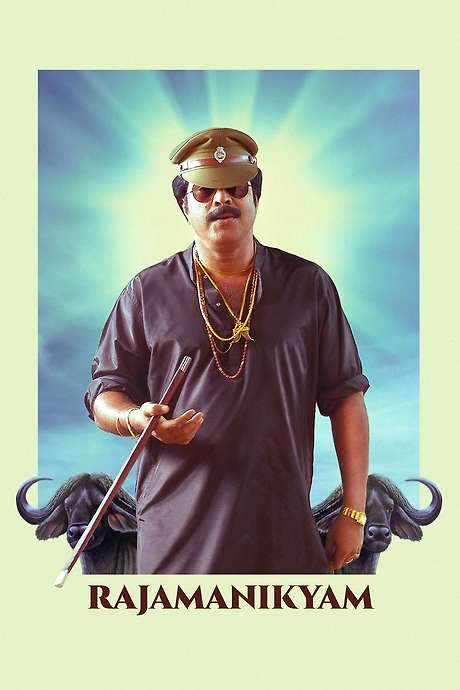
In a village in southern Kerala near the Tamil Nadu border, Raja Rathnam Pillai is a wealthy and respected businessman who has built a life of influence around his family and his enterprises. After the death of his first wife, he marries Muthu Lakshmi so that Selvam, the child from his first marriage, will grow up with a mother’s care. But the arrangement is complicated by a hidden truth: Muthu Lakshmi already has a son, whom she calls Muthu, and the night of the wedding brings this secret into the light.
When Muthu arrives at the house seeking his mother, Raja Rathnam Pillai is touched by the boy’s plea and decides to adopt him, giving him a new name, Rajamanikyam. This act of kindness binds the two generations together in a bond that will shape the rest of the story. Rajamanikyam's presence redefines family loyalties and responsibilities, and he repays the trust with quiet strength, keeping the household together even as the layers of kinship grow more complex.
Years pass, and Raja Rathnam’s two grown children, Selvam and Rani Rathnam, find themselves clashing over wealth and power. Selvam, aided by his longtime ally, Simon Nadar, hatches a plan to control the inheritance by engineering trouble around his father. The plot thickens as Raja Rathnam is implicated in a political murder, and the truth behind the crime becomes a focal point of intrigue and conflict. A tense confrontation unfolds on the way to the prison, where a riot erupts between supporters and political adversaries, and Raja Rathnam suffers a fatal heart attack inside a police van.
When the estate’s will is finally read, the family discovers a staggering twist: control of all assets has been transferred to a Bellary-based cattle dealer, known publicly as Bellari Raja. In a dramatic reveal, this Bellari Raja is none other than Rajamanikyam, the son who was supposed to have a modest future but who has risen to become the master of the family’s legacy. The revelation redefines the line between rightful heir and adoptive son, and it forces the siblings to reckon with a new reality that their father’s wealth has a different guardian than they imagined.
To maintain the stability of the family’s wealth, Rajamanikyam relies on his own network, including his trusted manager Raju and a cadre of loyal allies. Selvam’s attempts to undermine the estate are met with careful counter-moves that emphasize loyalty, discipline, and the welfare of the family as a whole rather than individual ambition. The narrative highlights Rajamanikyam’s leadership as he preserves the assets and prevents them from slipping into the hands of those who would misuse them, all while quietly resolving old wounds within the clan.
As the plot thickens, a rift opens between Selvam and Simon, who agrees to betray Selvam in a bid to satisfy a harsh Tamil moneylender, Perumal, who demands repayment as a condition for Selvam’s release. Rani Rathnam is caught in the crossfire, miscasting blame on Rajamanikyam as old grievances rise anew. In a pivotal moment, Rajamanikyam’s adoptive brothers and his loyal allies rally to support him as he steps forward to defend the family’s honor and its future from those who would tear it apart.
The story intensifies as Rajamanikyam’s true identity becomes a turning point. With the truth exposed, he uses his influence to secure the family’s future and restore a sense of unity among siblings who had grown estranged. A climactic confrontation ensues, in which Simon and his gang are confronted and repelled by Rajamanikyam, Raju, and their trusted associates. The battle is both physical and moral, a test of who deserves to oversee the family’s wealth and how forgiveness can heal long-standing rifts.
Yet the tension isn’t limited to wealth alone. The narrative also threads in the debts and demands of outsiders who intersect with the family’s fortunes. The boorish Tamil moneylender Perumal resurfaces as a symbol of those outside pressures that threaten to pull the family apart. In response, Rajamanikyam demonstrates leadership that blends strength with compassion, paying off debts and choosing to protect rather than punish those who have faltered in loyalty. This act of steadfastness helps to mend fragile alliances and rebuild trust within the family.
As the dust settles, Rajamanikyam’s mastery of the situation is clear: he has orchestrated a balance between authority and kinship, ensuring that the estate remains in capable hands and that the family’s bonds endure beyond the turmoil. The final image emphasizes a sense of vision and clarity that had eluded the family for years. Despite his past trials and the toll they took, the man known as Rajamanikyam declares, with quiet certainty, that he now sees clearly. > Now I have both eyes.