




Plot Explained Spoilers guaranteed!
Plot Explained

Browse by genre

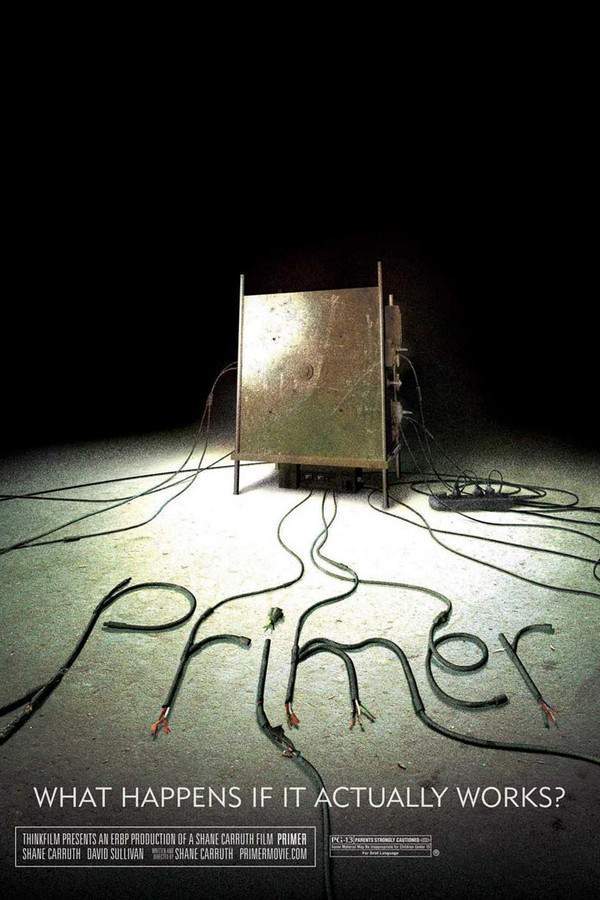
Primer (2004) movie poster

Timeline

Primer (2004) Timeline Explained – Every Event in Order

Release, runtime and language
2004 · 77 min · English
Starring
Shane Carruth, David Sullivan, Anand Upadhyaya, Casey Gooden
Budget
$7K

Two engineers, Aaron and Abe, invent a device for error resolution that unexpectedly leads to the creation of a time machine. Driven by curiosity, they begin experimenting with the technology, but their actions have unforeseen and increasingly complex consequences. As they manipulate time, they struggle to understand and control the ramifications of their discoveries, leading to a mind-bending exploration of causality and the potential dangers of unchecked scientific ambition.

On this page (6)
  1. 1 Where to watch
  2. 2 Events in order (15)
  3. 3 Timeline questions answered
  4. 4 Movie threads
  5. 5 Movies like Primer
  6. 6 Every angle

Where to watch

Where to Watch Primer (2004)

Where can you watch Primer? Stream, rent or buy it in the US, including on Amazon Video, Apple TV Store and Google Play Movies: current JustWatch availability with up-to-date prices.

Streaming availability powered by JustWatch

15 events in order · contains spoilers

Primer Timeline: Events in Chronological Order

Every key event of Primer (2004) in order, scene by scene, with when and where it takes place. Use it to untangle flashbacks, time jumps and parallel storylines, to refresh your memory before the sequel or to find the exact scene you are thinking of.

  1. Daytime Jobs

    Four engineers, Aaron, Abe, Robert, and Phillip, lead a dual life by working for a large corporation during the day. At night, they shift gears to run their side business from Aaron's garage, focusing on crafting and selling JTAG cards.

    Where
    Aaron's garage
  2. Pet Science Projects Funded

    The earnings from their side venture are invested into pet science projects with the ambition of catching the interest of venture capitalists. This endeavor reflects their dreams of innovation and funding.

  3. Conflict Over Projects

    Tensions arise in the group as they struggle to agree on the next project to pursue. This discord leads Aaron and Abe to separate their efforts, focusing on reducing an object's weight with the hope of groundbreaking results.

  4. Discovery of Time-Travel Potential

    Their invention yields unexpected results, dramatically increasing the time reading of a clock left inside the device by approximately 1,300 times. This revelation prompts Abe to conclude that they may have accidentally created a time machine.

  5. Building a Prototype

    Abe secretly constructs a prototype for a larger time machine capable of transporting a person. After testing it by traveling back to earlier that day, he shares his findings with Aaron, sparking further collaboration.

    When
    Earlier that day
  6. Excluding the Others

    As they develop their time-travel technology, Aaron and Abe choose to exclude Robert and Phillip from their plans. They fabricate a story about needing to fumigate the garage to keep their secrets under wraps.

    Where
    Aaron's garage
  7. Profiting from Time Travel

    Using their time machines, Aaron and Abe start to make bold stock market investments, profiting from their manipulation of time. Their excitement grows as they explore the potential of their invention.

  8. Comatose Incident

    The unexpected arrival of Thomas Granger, Abe's girlfriend's father, introduces complications as they seek his financial support. An incident renders Granger comatose, raising serious concerns over the disruption caused by their time travel.

  9. Abe's Failsafe Plan

    Disturbed by the consequences of their actions, Abe constructs a failsafe machine in secret, intending to go back in time to prevent their initial foray into time travel. This plan showcases his anxiety about the repercussions.

  10. Returning to Four Days Earlier

    Abe successfully travels back four days, but upon arrival, he collapses from the strain. Once recovered, he discovers Aaron has taken control of the timeline, manipulating events to assert dominance over their time travel project.

    When
    Four days earlier
  11. Manipulating Past Events

    In a bid to gain the upper hand, Aaron proposes to recreate past events, particularly a party where an incident involving a crasher aimed at Rachel occurs. He convinces Abe to help change the outcome, complicating their friendship.

  12. Friendship Deterioration

    Their continued experiments with time travel lead to a breakdown in communication and trust between Aaron and Abe. The strain becomes evident as their health deteriorates under the pressures of their actions.

  13. Health Decline

    Aaron begins to suffer from severe health issues, displaying symptoms that resemble a stroke. His struggles with basic tasks further isolate him from Abe, leading to a breakdown in their collaborative efforts.

  14. Abe's Intentions

    As tensions escalate, Aaron confronts Abe regarding his possible ulterior motives. In a drastic decision, Abe chooses to remain in the current timeline, aiming to influence his past self and Aaron to abandon their venture.

  15. Eerie Closure

    In the film's closing moments, the earlier version of Aaron is depicted in a phone call indicating financial distress. The film ends on an unsettling note, revealing a situation where one version of Aaron oversees a group starting to construct a massive box.

Last updated: November 03, 2024 at 11:16

Was this helpful?

Timeline questions answered

Primer Timeline Explained: Your Questions Answered

When does it happen, and why in that order? The questions people ask about the chronology of Primer (2004): time jumps, flashbacks, cause and effect between scenes and the correct order of events, each answered with spoilers.

Q1

How does the time machine in Primer work?

The machine works by exponentially increasing time within its chamber. When Aaron and Abe test their weight-reduction device with a clock inside, they discover the clock registers approximately 1,300 times the activation duration, revealing the device creates a time dilation field. This allows them to travel forward in time by entering the box and waiting, though they can also travel backward by using the machine to send objects or themselves to earlier points in the timeline.

Foreshadowing: The time multiplier is first observed when they test the machine with a clock, establishing the core mechanic that drives the entire film.

  • time machine
  • box
  • time dilation
  • clock device
  • Aaron Abe
Q2

Why does Abe build the failsafe machine and travel back?

Abe builds the failsafe after Thomas Granger becomes comatose due to their time travel experiments. Disturbed by the consequences of their actions and concerned about how Granger discovered the box, Abe decides the situation has become too dangerous. He constructs a separate machine to travel back four days to before his initial time travel venture, attempting to prevent the chain of events from unfolding.

Foreshadowing: Abe's unease about Granger's arrival and the comatose incident directly triggers his decision to build the failsafe.

  • failsafe
  • time travel
  • Abe
  • Thomas Granger
  • comatose
Q3

What happens to Thomas Granger in Primer?

Thomas Granger, the father of Abe's girlfriend Rachel, arrives unexpectedly at their garage seeking financial backing. During their time travel manipulations, an incident occurs that renders Granger comatose. The film never explicitly shows exactly what happened, but the event severely disturbs Abe and contributes to his decision to try reversing their timeline with the failsafe.

Foreshadowing: Granger's sudden arrival interrupts their time travel profit-making, introducing the first major consequence of their actions.

  • Thomas Granger
  • Rachel
  • comatose
  • father
  • incident
Q4

Why do Aaron and Abe's friendship fall apart?

Their friendship deteriorates due to competing timelines and mutual distrust. When Abe returns four days earlier using the failsafe, he discovers Aaron has already manipulated events to seize control of the time travel operation. Aaron uses recorded conversations from previous timelines to convince his past self to follow his plan, and both men attempt to outmaneuver each other. As they continue manipulating time, communication breaks down, Aaron's health declines, and they grow suspicious of each other's hidden motives.

Foreshadowing: The garage exclusion of Robert and Phillip foreshadows how secrecy and exclusion will eventually define Aaron and Abe's relationship.

  • Aaron
  • Abe
  • friendship
  • trust
  • timeline manipulation
  • conflict
Q5

What does the ending of Primer mean?

The ending shows one of the multiple Aaron versions (the one who traveled back with the failsafe to create recordings) on a phone call indicating financial debt. Meanwhile, another Aaron oversees French-speaking workers beginning construction on a massive box structure. This suggests the time travel cycle may be repeating or expanding, the larger box implies they've built an even more significant time machine, and the debt reference hints at the financial desperation that originally drove their experiments.

Foreshadowing: Earlier scenes establish Aaron's financial concerns and their habit of building machines in the garage, setting up this cyclical conclusion.

  • ending
  • box
  • construction
  • French workers
  • debt
  • cycle
Q6

Why does Abe decide to stay in the current timeline?

After Aaron confronts Abe about his potential ulterior motives regarding his family, Abe makes a drastic decision to remain in the current timeline. Rather than returning to his own time, he chooses to stay and manipulate the original versions of himself and Aaron, hoping to convince them to abandon their time travel experiments. He wants them to view the entire venture as a failure so the dangerous cycle stops.

Foreshadowing: Abe's secret construction of the failsafe and his growing fear of consequences foreshadow his willingness to take extreme action.

  • Abe
  • timeline
  • stay
  • manipulate
  • past self
  • decision
Q7

How does Aaron gain control of the timeline?

When Abe travels back four days using the failsafe, he arrives to find that Aaron has already discovered and used the failsafe box. Aaron recorded conversations from previous timeline iterations and used them to manipulate his earlier self, convincing him to abandon Abe's original plan. By having multiple versions of himself operating in different timeline segments, Aaron orchestrates events to maintain control over the time travel operation.

Foreshadowing: The scenes showing Aaron recording conversations and taking notes establish his methodical approach to documenting timeline information.

  • Aaron
  • control
  • timeline
  • recordings
  • manipulation
  • failsafe
Q8

Why does Aaron experience health problems?

Aaron begins experiencing stroke-like symptoms, bleeding from his ears, difficulty with handwriting, and struggles with reading, likely due to the physical and psychological strain of repeated time travel. The film suggests these symptoms worsen with each journey through time, indicating there may be biological consequences to temporal displacement. His declining health coincides with the breakdown of his relationship with Abe.

Foreshadowing: The earlier scenes of Aaron taking notes and working extensively with the machines hint at the cognitive load that eventually becomes overwhelming.

  • Aaron
  • health
  • stroke
  • bleeding
  • time travel effects
  • decline
Q9

Why do Aaron and Abe exclude Robert and Phillip from the time travel project?

Aaron and Abe decide to keep the time travel technology secret from Robert and Phillip, fabricating a story about needing to fumigate the garage to explain their exclusion. Their decision appears driven by greed and the desire to maintain sole control over the technology's profits and possibilities. This exclusion sets a precedent for their growing secrecy and eventual betrayal of each other.

Foreshadowing: The conflict over which project to pursue earlier establishes the competitive dynamic among the four engineers.

  • Robert
  • Phillip
  • exclusion
  • garage
  • fumigate
  • secrecy
Q10

What is the party incident Aaron tries to prevent?

Aaron proposes using the time machines to recreate and alter the outcome of a party where a crasher attempted to shoot Rachel, Abe's girlfriend. Aaron's plan involves traveling back to that moment to intervene and become a hero. It's unclear exactly how many timeline iterations it took to achieve this, but Abe eventually agrees to help. This manipulation represents one of their attempts to actively change past events beyond mere financial gain.

Foreshadowing: Rachel's vulnerability is established early when Granger arrives seeking her, hinting at danger surrounding her.

  • party
  • Rachel
  • shooter
  • crasher
  • Aaron
  • hero
  • intervention
Q11

What is the failsafe box and why is it important?

The failsafe is a separate time machine Abe builds in secret after the Thomas Granger incident. Unlike the main box, it allows Abe to travel backward to a specific point, four days before his first time travel journey. The failsafe represents Abe's attempt at undoing their experiments, functioning as a reset mechanism. However, when he arrives in the past, he discovers Aaron has already used it, fundamentally altering the timeline's outcome.

Foreshadowing: Abe's growing anxiety about Granger's discovery foreshadows his desperate need for a reset button.

  • failsafe
  • box
  • reset
  • four days
  • secret
  • Abe

Movie threads

More Movies Like Primer, by Mood & Story

Curated lists built around what makes Primer tick: the same mood, the same kind of story or the same emotional payoff. Each list explains why these movies belong together.

Intelligent Science Thrillers Like Primer

Brilliant minds discover a terrible truth and lose control of their creation. Explore movies like Primer, where high-concept scientific ideas lead to psychological dread and moral collapse. These films are for viewers who enjoy complex, thought-provoking stories about geniuses undone by their own ambition and the chilling, unintended consequences of their discoveries.

  • cerebral
  • paranoid
  • mind-bending
  • claustrophobic
  • unsettling
  • fatalistic
  • Tone: tense, cerebral, bleak
  • Pacing: variable, methodical beginnings accelerating into chaos
Why these movies?

The story pattern: Narratives in this thread typically follow a slow-burn descent. It begins with a thrilling scientific breakthrough but swiftly pivots to a cautionary tale. The plot structure often becomes intentionally complex or nonlinear, mirroring the characters' growing confusion and loss of control as they confront paradoxes and consequences they cannot undo.

Why they belong together: These films are grouped by their shared foundation in realistic, speculative science that serves as a catalyst for intense psychological drama. They prioritize intellectual rigor over spectacle, creating a claustrophobic and cerebral vibe where the real horror is the erosion of the human mind, not external monsters.


Mind-Bending Puzzle Movies Like Primer

Stories where reality itself becomes a trap, demanding your full attention. Find more movies like Primer that challenge your perception of reality and narrative. These films are complex, often nonlinear puzzle boxes designed to be unraveled. They create an intense, claustrophobic feeling and typically feature ambiguous endings that stick with you long after the credits roll.

  • mind-bending
  • unsettling
  • cerebral
  • paranoid
  • anxious
  • puzzle
  • Tone: tense, unsettling, ambiguous
  • Pacing: variable, building deliberately to confusion
Why these movies?

The story pattern: The narrative pattern here is one of deliberate obfuscation and layered reality. Timelines may be fractured, perspectives unreliable, and key information withheld. The journey is less about reaching a clear resolution and more about the immersive, often stressful, process of piecing together a fractured truth alongside the confused protagonists.

Why they belong together: These movies are united by their commitment to a specific, demanding viewing experience. They share a high degree of narrative complexity, a tense and paranoid tone, and an emotionally heavy impact. The goal is to make the audience feel the same cerebral strain and unsettling uncertainty as the characters on screen.

If you liked this

Movies Like Primer

Similar movies to Primer: the same genre, themes or kind of story. Each one comes with its own plot summary, timeline and ending explained.

Browse all movie summaries

Every angle

Primer (2004) Explained: Plot, Timeline & Characters

Everything about Primer in one place: what happens in the plot summary, the timeline in chronological order, the characters and meaning and a spoiler-free summary. What's After the Movie adds the cast, box office and post-credit scenes.

Coming soon on iOS and Android

The Plot Explained Movie Summary App

Plot summaries, endings explained and timelines on your phone. Catch up on any movie in minutes, save your favorites and never miss a twist again.

Be the first to know when we launch. Your email stays private, always.

Learn more about the app