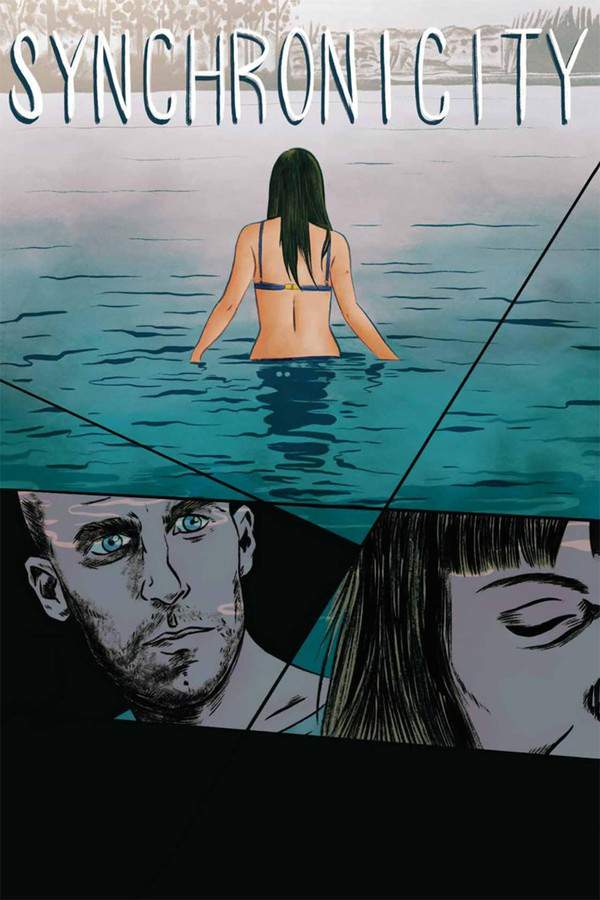
Physicist Jim Beale finds himself in a desperate race against corporate forces, compelled to prove the capabilities of his invention that bends space and time. He embarks on a thrilling adventure when a mysterious woman named Dahlia arrives from the future. As Jim investigates, he uncovers dangerous alliances, perplexing secrets about Abby, the woman holding a significant flower, and questions about his own destiny, all while grappling with the true purpose behind his groundbreaking discovery.
Find where to stream, rent, or buy Synchronicity (2016) in the US with current JustWatch availability, up-to-date pricing, and platform listings for subscription, rental, and digital purchase options.
Warning: spoilers below!
Haven’t seen Synchronicity yet? This summary contains major spoilers. Bookmark the page, watch the movie, and come back for the full breakdown. If you're ready, scroll on and relive the story!
Read the complete plot breakdown of Synchronicity (2016), including all key story events, major twists, and the ending explained in detail. Discover what really happened, and what it all means.
Physicist Jim Beale, in partnership with his colleagues Chuck and Matty, has made a groundbreaking leap in the field of time travel by designing a machine that can manipulate time itself. This revolutionary process relies on the creation of a wormhole, formed over two significant runs: the first creates one half of the tunnel, while the second run completes it. However, this endeavor comes with a host of dangers and steep costs, primarily involving radioactive materials sourced from KMC, a company owned by ambitious venture capitalist Klaus Meisner.
The stakes are incredibly high; any mismanagement of the radioactive materials could lead to a catastrophic explosion. During the initial test, Beale receives a peculiar gift from the wormhole: a genetically enhanced Dahlia flower. Though he regards it as proof of his success, he lacks the necessary radioactive materials for a crucial second test, which Meisner is reluctant to relinquish without claiming a significant share of ownership. In a tense negotiation, Meisner demands 50% ownership of the venture, but ultimately, he only walks away with 49%.
After the first round of testing, Beale crosses paths with Abby Ross, who engages him in conversation that feels oddly intimate, hinting at her deeper knowledge of his research. Despite his growing attraction to her, Beale's instincts trigger a sense of unease regarding her true motives. His concerns escalate when Chuck calls Beale, urgently warning him that Abby cannot be trusted and that the results of the initial test were far more extraordinary than they appeared. Beale quickly retreats from Abby, only to find that Chuck is frustratingly tight-lipped about the situation.
As Beale's relationship with Abby develops, he increasingly ignores his warnings, becoming entwined in her life. The fragile fabric of their connection unravels when Chuck's suspicions are confirmed; Abby reveals her true allegiance to Meisner, leveraging her knowledge of the Dahlia to extract further ownership from Beale, leaving him with just a meager 1%.
Facing a dire situation, Beale embarks on a reckless journey during the second test, propelling himself through the machine and into the wormhole. With a defiant declaration—> "You may own the Dahlia, but you don't own me."—he stakes his claim on something that belongs solely to him as he is hurled back one week into the past, right to the moment of the first test. As he navigates this "second run" alongside Meisner and Abby, Beale becomes convinced that he can outsmart them and protect his work from slipping away.
Ironically, Abby has genuinely developed feelings for Beale, concocting a fictionalized account of him in her journal after discovering an article about his research. This realization alters his perspective, serving as a stark reminder of the thin line that separates reality from illusion. However, complications intensify as Beale begins to suffer physical ailments, feeling increasingly unwell whenever he is near his double, Jim Prime—the original version of himself who existed before the wormhole.
Desperate and determined, Beale discloses his situation to Chuck and Matty, imploring them to help keep Jim Prime unaware of his presence. Together they devise a plan to shield Beale from Jim Prime, attributing the strange interactions of the prior week to Meisner's manipulations. Yet, Beale's condition deteriorates, sparking a surge of jealousy as he witnesses Jim Prime's unwavering doubts about Abby, who is perpetually unrepentant.
As Beale explores Abby's journal, now in Matty's possession, he discovers perplexing discrepancies that confirm his suspicions: he has not merely jumped back in time but has instead traversed into a parallel universe, slightly shifted from his original timeline. The reality sinks in that two versions of Beale cannot coexist in the same universe. Thus, the "second run" Beale is set on a tragic collision course, destined to vanish while Jim Prime remains.
With the immovable date of the second test on the horizon, Beale stumbles upon a timeline that features a dormant Jim, cast adrift in the uncertainty of life and death. Undaunted, he returns to the Grand Hotel where the shocking truth emerges: Abby's betrayal was not born of malice, but rather a calculated move to secure more radioactive materials, ultimately sacrificing Beale’s life in the process. The second test unfolds with an eerie sense of déjà vu, sealing Beale’s fate irreparably.
In the wake of the experiment, the absence of Beale leaves an unoccupied chair at the Grand Hotel as a haunting reminder of his loss. Meanwhile, Abby waits alone in a cozy café only to be approached by a stranger who bears an uncanny resemblance to her muse, John Bain—who is now, rather intriguingly, Jim Prime. Their meeting stirs a subtle attraction, hinting at a new beginning that is intertwined with the complications of their converging timelines.
Last updated: November 21, 2024 at 09:07
Explore frequently asked questions about Synchronicity (2016) with spoiler-rich answers covering the full plot summary, major story beats, character motivations, hidden details, and ending meaning. This movie summary FAQ helps explain confusing scenes, plot twists, and narrative decisions in clear, searchable detail.
The machine creates a wormhole by running twice. The first test creates one half of the tunnel, and the second test completes it. The process requires radioactive materials from KMC, and any mismanagement could cause a catastrophic explosion. During the first run, a genetically enhanced Dahlia flower came through the wormhole as proof of success.
The first test's gift of the Dahlia hints at the successful creation of the wormhole opening.
Abby initially approached Jim as part of a scheme to help Klaus Meisner gain control of the time travel project. She used her knowledge of the Dahlia flower to leverage more ownership from Jim, eventually reducing his share to just 1%. However, as she spent time with him, she genuinely developed feelings for him, which complicates her betrayal.
Chuck's warning that Abby cannot be trusted hints at her ulterior motives early in their relationship.
Jim Prime is the original version of Jim Beale from the original timeline. When Jim goes through the wormhole during the second test, he doesn't just travel back in time, he enters a parallel universe. The second run Jim is a duplicate that coexists with Jim Prime in this shifted reality. Both versions cannot exist in the same universe without consequences.
The discovery of discrepancies in Abby's journal confirms Jim has crossed into a parallel universe, not just time.
Jim experiences physical ailments whenever he's near Jim Prime because two versions of the same person cannot coexist in the same universe. The parallel universe cannot sustain both versions simultaneously, causing the second run Jim to deteriorate when in proximity to his original self.
The increasing physical ailments directly correlate with Jim's attempts to stay near Jim Prime.
During the second test, Jim is hurled back one week into the past to the moment of the first test. However, he has actually entered a parallel universe. The second test seals his tragic fate, he vanishes while Jim Prime remains. The empty chair at the Grand Hotel serves as a haunting reminder of his loss.
Jim's defiant declaration 'You may own the Dahlia, but you don't own me' foreshadows his desperate attempt to reclaim control.
The Dahlia flower is a genetically enhanced flower that came through the wormhole during the first test. It serves as proof that the time travel experiment worked. The flower becomes the center of the corporate dispute, Klaus Meisner wants ownership of it, and Abby uses her knowledge of the flower to manipulate Jim into giving up ownership of the project.
The Dahlia appears as a gift from the wormhole, establishing its importance early in the film.
At the end, Abby encounters a stranger in the café who resembles Jim Prime, her former muse. This suggests a new beginning and hints that the repercussions of time travel continue to ripple through the parallel universes. The encounter implies that timelines are intertwining again, offering a bittersweet glimmer of hope amid the loss of Jim.
The empty chair at the Grand Hotel symbolizes Jim's absence, while the stranger's appearance suggests fate is creating new connections.
When Jim examines Abby's journal, he discovers perplexing discrepancies that confirm he hasn't simply traveled back in time, he's traversed into a parallel universe. The journal contains a fictionalized account of him, which Abby created after discovering an article about his research. This discovery is crucial in helping Jim understand the nature of his situation.
Abby's intimate knowledge of Jim before meeting him hints at her research into his work prior to their encounter.
Klaus Meisner owns KMC, the company that supplies the radioactive materials necessary for the time travel machine. He wants a significant share of ownership because the project is incredibly valuable and potentially revolutionary. During negotiations, he demands 50% ownership but settles for 49%. His pursuit of control drives much of the corporate conflict in the film.
Meisner's control over the radioactive materials gives him leverage in negotiations from the beginning.
Abby's betrayal was not born of malice but was a calculated move to secure more radioactive materials for the time travel experiment. She sacrificed Jim's life in the process to obtain what was needed for the second test. However, she genuinely developed feelings for him, making her betrayal both strategic and emotionally complex.
The revelation at the Grand Hotel connects Abby's actions to her ultimate goal of obtaining materials for the experiment.
Discover curated groups of movies connected by mood, themes, and story style. Browse collections built around emotion, atmosphere, and narrative focus to easily find films that match what you feel like watching right now.
High-stakes scientific discoveries and temporal paradoxes create tense, cerebral thrillers.Movies like Synchronicity that combine high-concept science fiction with thriller pacing. If you enjoyed the tense race against corporate forces and the complex time-travel paradoxes, you'll find similar intellectually demanding and fast-paced stories here.
Stories often follow a scientist or inventor in a desperate race against time and powerful adversaries to control or undo the effects of a groundbreaking discovery. The plot is propelled by a series of revelations and betrayals, leading to a complex web of cause-and-effect that challenges the protagonist's understanding of reality.
They share a specific mix of high intellectual complexity, fast-paced plotting, and a tense, paranoid tone. The experience is defined by high-stakes scientific ethics, mind-bending concepts, and a heavy emotional weight stemming from the personal cost of ambition and knowledge.
A poignant love story intertwines with a high-stakes, world-altering scientific crisis.If you were moved by the melancholic romantic thread in Synchronicity amidst the time-travel chaos, explore similar movies where love and fate collide in scientifically complex worlds. These stories blend heavy emotional weight with mind-bending concepts.
The narrative pattern involves a protagonist whose personal quest for connection becomes entangled with a larger, dangerous scientific event. The love story is often complicated by themes of fate, alternate realities, or sacrifice, leading to a bittersweet resolution where the relationship survives in an altered or emotionally costly form.
They are grouped by their unique emotional blend: a heavy, melancholic romance set within a complex, high-intensity sci-fi plot. The viewing experience balances intellectual thrill with a deep, poignant emotional core, resulting in a powerfully bittersweet feeling.
Don't stop at just watching - explore Synchronicity in full detail. From the complete plot summary and scene-by-scene timeline to character breakdowns, thematic analysis, and a deep dive into the ending - every page helps you truly understand what Synchronicity is all about. Plus, discover what's next after the movie.
Track the full timeline of Synchronicity with every major event arranged chronologically. Perfect for decoding non-linear storytelling, flashbacks, or parallel narratives with a clear scene-by-scene breakdown.
Discover the characters, locations, and core themes that shape Synchronicity. Get insights into symbolic elements, setting significance, and deeper narrative meaning - ideal for thematic analysis and movie breakdowns.
Discover movies like Synchronicity that share similar genres, themes, and storytelling elements. Whether you’re drawn to the atmosphere, character arcs, or plot structure, these curated recommendations will help you explore more films you’ll love.
Synchronicity (2016) Scene-by-Scene Movie Timeline
Synchronicity (2016) Movie Characters, Themes & Settings
Synchronicity (2016) Spoiler-Free Summary & Key Flow
Movies Like Synchronicity – Similar Titles You’ll Enjoy
Timecrimes (2008) Full Movie Breakdown
Transcendence (2014) Complete Plot Breakdown
Slipstream (2007) Movie Recap & Themes
Time After Time (1979) Complete Plot Breakdown
The Butterfly Effect (2004) Detailed Story Recap
Curvature (2018) Ending Explained & Film Insights
Speed of Life (2020) Full Summary & Key Details
Altered States of Plaine (2014) Plot Summary & Ending Explained
57 Seconds (2023) Detailed Story Recap
Mirage (2018) Plot Summary & Ending Explained
The I Inside (2004) Movie Recap & Themes
Temporal (2022) Film Overview & Timeline
Timeslip (1955) Spoiler-Packed Plot Recap
The Time Shifters (1999) Full Movie Breakdown
Baffled! (1972) Detailed Story Recap