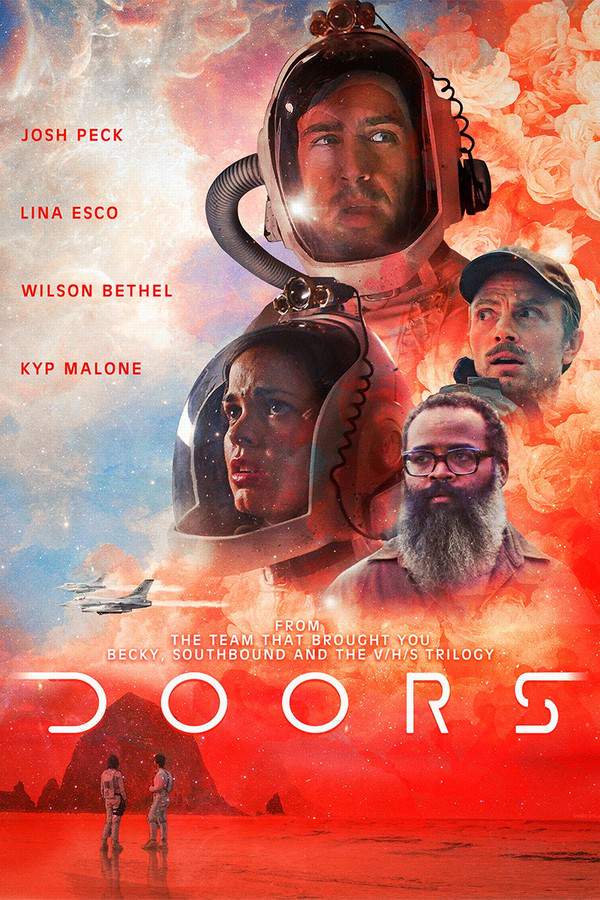
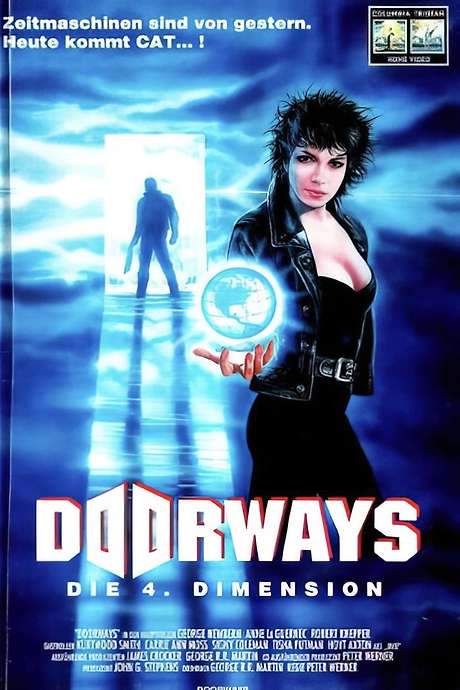
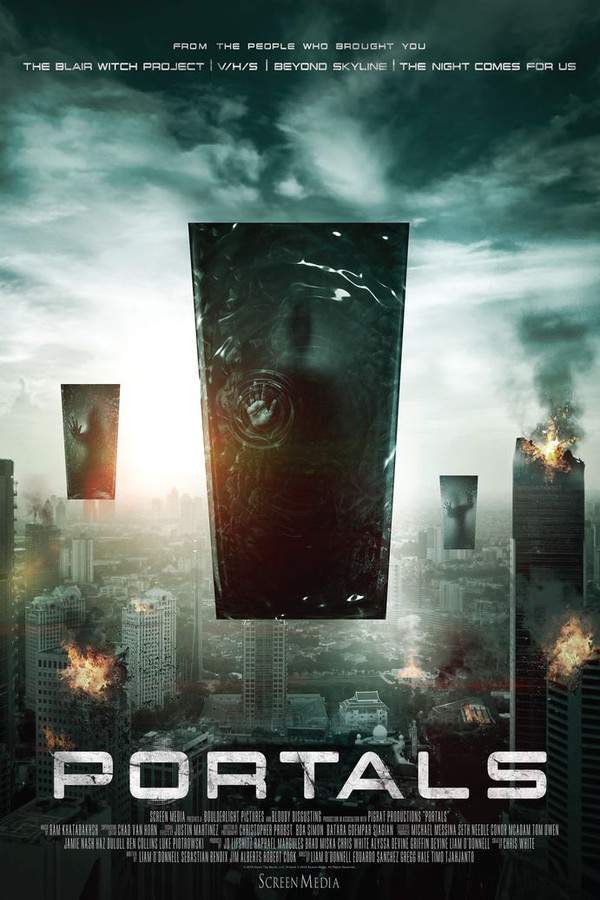
A mysterious network of alien portals, nicknamed doors, suddenly appear across the globe, silently rewriting life as we know it. The film opens with a man wandering through a forest, disoriented and alone, a reminder that the doors are real and unpredictable. News broadcasts and radio chatter quickly establish a pattern: the doors are tied to mass disappearances, uncanny disturbances, and a fundamental shift in how society operates now that these gateways exist. The world watches and waits as everyday life adjusts to a threat that is at once distant and intimate.
In the first stitched-together story, Lockdown, the doors hit on the day they arrive. A detention room becomes ground zero as a school-wide lockdown locks students inside while a teacher investigates a strange sound outside and never returns. When the hallway reveals a portal shimmering just beyond the doorway, fear and curiosity collide. Inside the tense mix of adolescents, a girl named Ash begins to hear voices and see visions, signaling the door’s strange pull. The tension tightens as Ash’s crush, Lizzie Julianne Collins, and Lizzie’s boyfriend, Jake Aric Floyd, navigate evolving loyalties and rivalries. The group’s dynamics fracture as the portal’s allure grows stronger, and several students vanish into the surface, swallowed by the unknown on the other side.
Two weeks later, the narrative shifts to Knockers, a harsh reminder of humanity’s attempt to study the phenomenon rather than simply flee from it. Elite volunteer teams—Vince [Josh Peck], Becky [Lina Esco], and Patrick—are sent through doors on carefully timed missions to prevent “door psychosis.” One door drops them onto a house suspended in an alien space above a secluded site, only to reveal a distorted copy of the same dwelling. On the far side, each explorer faces a personalized labyrinth of fears and guilt: Becky's fear of an unplanned pregnancy surfaces in haunting visions, while Patrick confronts a ghost of a past relationship. The door challenges their identities and the boundaries between self and mirror-self, and as the clock ticks down, the environment grows more unstable. The question of who—or what—has truly returned from the other side grows increasingly murky, fragmenting trust and memory within the team.
The third narrative strand, Lamaj, drops in roughly one hundred days after the doors’ appearance. Jamal, a reclusive scientist living in a forest cabin, has established devices that allow him to communicate with the entity linked to his door. The voice on the other side identifies itself as Lamaj, a reversed form of Jamal’s own name, hinting at a mirrored, almost conscious, reflection of human thought. Jamal invites a former colleague, Kathy, to witness the breakthrough, but she comes with her skeptical boyfriend, Leo, who would rather call the authorities. As Jamal’s exchanges with the door become more intimate and abstract, the relationship among the three humans grows tense, culminating in violence and underscoring a chilling truth: the doors can influence—and even erase—those who threaten their purpose.
Throughout the film, interludes of abandoned cities, eerie footage, and an online talk show hosted by Martin Midnight weave a broader speculative thread. The show examines theories about the doors, hinting that this alien mechanism is observing, reshaping, or even assimilating humanity on a planetary scale. As the chapters unfold, Martin himself begins to fall under the same inexplicable influence, suggesting that the doors are not just about physical passage but about a transformation of consciousness that reaches beyond immediate danger to reshape what it means to be human. The film’s structure—three linked segments punctuated by haunting visuals and speculative broadcasts—invites viewers to consider how fear, identity, and collective life adapt when any doorway might be the beginning of a new reality.