Plot Explained Spoilers guaranteed!
Plot Explained

Browse by genre

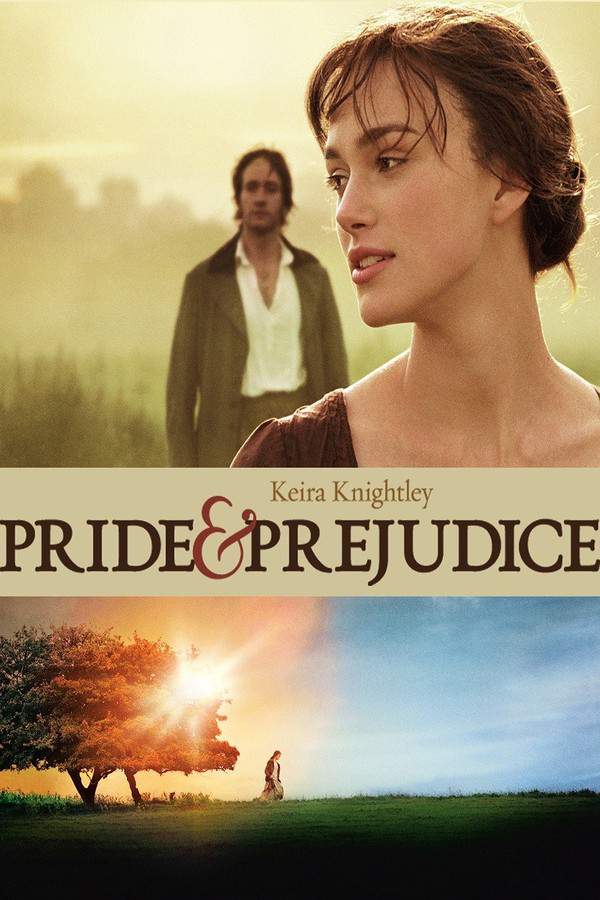
Pride & Prejudice (2005) movie poster

Plot Summary

Pride & Prejudice (2005) Plot Summary Explained

Release, runtime and language
2005 · 127 min · English
JustWatch #102 11
Directed by
Joe Wright
Starring
Keira Knightley, Donald Sutherland, Brenda Blethyn, Matthew Macfadyen

This adaptation of Jane Austen's beloved novel follows Elizabeth Bennet, a spirited and independent young woman, as she navigates love and societal expectations in 19th-century England. Her encounters with the proud and aloof Mr. Darcy lead to a complex and passionate romance. Despite their initial dislike and misunderstandings, Elizabeth and Darcy must overcome their own pride and prejudices to find happiness together, challenging the conventions of their time.

On this page (7)
  1. 1 Where to watch
  2. 2 What happens: full plot
  3. 3 Plot questions answered
  4. 4 The book behind the movie
  5. 5 Movie threads
  6. 6 Movies like Pride & Prejudice
  7. 7 Every angle

Where to watch

Where to Watch Pride & Prejudice (2005)

Where can you watch Pride & Prejudice? Stream, rent or buy it in the US, including on BYUtv, Amazon Video and Apple TV Store: current JustWatch availability with up-to-date prices.

Streaming availability powered by JustWatch

Full plot summary · contains spoilers

What Happens in Pride & Prejudice: Full Plot Summary

The whole story of Pride & Prejudice (2005) explained, from the opening scene to the final frame: every key event, every twist and what it all adds up to. Read it as a quick recap before the sequel, to check a scene you missed, or to finally understand what really happened.

This film unfolds the captivating tale of the Bennet family, a middle-class household in England during the early 19th century. The narrative revolves around the spirited Mrs. Bennet, a mother with an almost obsessive determination to secure financially stable marriages for her daughters. In contrast, Mr. Bennet (Donald Sutherland) remains relaxed and easygoing, often amused by the fervent antics of his family members.

Among the Bennet daughters, Jane is the eldest, characterized by her serious yet shy demeanor, often lost in thought. Meanwhile, the story's focal point, Elizabeth (or Lizzie, portrayed by Keira Knightley), captures our attention as she navigates the complexities of social expectations with her sharp wit and wisdom. Not one to stifle her voice, Lizzie thrives in engaging in verbal fencing with those around her. The other sisters, Mary and Katherine (known as Kitty), each add to the family dynamic; Mary is more interested in books and music than in courting, while Kitty, along with her rebellious sister Lydia (Jena Malone), is preoccupied with the thrill of dances and flirtations.

When Charles Bingley (Simon Woods), a prosperous gentleman from London, relocates to the area, it sends ripples of excitement through the Bennet household. His wealthy friend, Fitzwilliam Darcy (Matthew Macfadyen), accompanies him from the North, and immediately stirs intrigue and disdain among the Bennet girls. The family's precarious financial future hinges on marrying off their daughters, not least because their estate is entailed to their pompous cousin, William Collins.

The story drifts into action as Lizzie overhears news of Mr. Bingley's arrival, a development that excites her family. During a ball, Bingley makes a beeline for Jane, while Darcy's haughty manner rubs Lizzie the wrong way, prompting a series of spirited exchanges. As Caroline Bingley, Bingley's pretentious sister, attempts to manipulate social dynamics to her advantage, obstacles emerge for Jane and Bingley's budding relationship.

In a twist, Lizzie's encounter with Mr. Collins adds further tension; despite his shallow and insufferable demeanor, Mrs. Bennet sees him as a potential suitor for one of her daughters. Even as the drama unfolds, including the arrival of the charming lieutenant Wickham, known for his good looks, the family's fortunes remain interlinked through social engagements and misunderstandings.

As the plot thickens, Charlotte Lucas's shocking engagement to Mr. Collins shocks Lizzie, who finds it hard to believe anyone would settle for someone so insipid. When Lizzie visits Charlotte at her new home, she encounters Lady Catherine de Bourgh, Darcy's condescending aunt, who further complicates her views on class and propriety.

Darcy's unexpected declaration of love for Lizzie catches her off guard, leading to a volatile exchange in which past grievances, namely Wickham's deceit and the societal pressures they face, are brought to light. As Lydia's recklessness spirals out of control, running off with Wickham, Darcy's quiet yet steadfast support emerges as a hidden anchor for the Bennets.

This dramatic crescendo culminates in a sequence of pivotal moments; when Bingley returns to propose to Jane, and Darcy steps forward to clarify his intentions with Lizzie, it becomes a testament to the power of love overcoming societal and familial hurdles. A tense confrontation with Lady de Bourgh forces Lizzie to confront her feelings for Darcy definitively.

Ultimately, the tale closes with Lizzie's acceptance of Darcy’s second proposal amidst the warm glow of dawn, a symbol of newfound hope and understanding between them, leaving a sense of resolution for both the Bennets and the audience. Mr. Bennet, witnessing his daughters' rapid transitions into adulthood, humorously remarks on the matchmaking dynamics still at play, ensuring laughter amidst the closing chords of this heartfelt narrative.
Last updated: January 02, 2025 at 17:54

Was this helpful?

Plot questions answered

Pride & Prejudice Plot Explained: Your Questions Answered

The questions people ask most about Pride & Prejudice (2005): what happens in the confusing scenes, why the characters do what they do, the twists, hidden details and what the ending means. Each answer contains spoilers.

Q1

Why was Mr. Darcy so cold and arrogant at the ball?

Darcy's cold demeanor stemmed from his social awkwardness and pride, not genuine disdain. Though he found Elizabeth attractive, his reserved nature and high social standing made him come across as aloof. When asked to dance, he dismissed her as "tolerable, but not handsome enough to tempt me," which Elizabeth overheard, cementing her negative impression of him.

  • mr darcy
  • first ball
  • pride
  • social class
  • first impression
Q2

Why did Elizabeth refuse Mr. Collins' proposal?

Elizabeth rejected Collins because she found him insipid, pompous, and devoid of any qualities she valued in a partner. His servile manner toward Lady Catherine de Bourgh and his awkward courtship convinced her she could never respect or love him, regardless of the financial security he offered.

  • elizabeth
  • mr collins
  • proposal
  • rejection
  • marriage
Q3

Why did Charlotte Lucas agree to marry Mr. Collins?

Charlotte accepted Collins because at 27, she faced limited prospects and needed financial security. She explicitly told Elizabeth that she was not romantic about marriage but wanted a comfortable home. Her practical decision reflected the harsh reality women faced without independent means.

  • charlotte lucas
  • mr collins
  • marriage
  • security
  • social pressure
Q4

Why did Elizabeth reject Darcy's first proposal?

Elizabeth rejected Darcy because she believed he had actively separated Jane and Bingley, and she thought he had treated Wickham unjustly. Her pride in her own judgment made her confident these accusations were true. Darcy's proud delivery only reinforced her negative view, causing her to refuse him firmly.

  • darcy proposal
  • first proposal
  • rejection
  • wickham
  • jane bingley
Q5

How did Darcy help the Bennet family after Lydia's elopement?

Darcy secretly tracked down Lydia and Wickham in London and arranged their marriage, paying off Wickham's debts and securing his commission in the army. He did this to protect Elizabeth's family honor and his own feelings for her, asking for nothing in return. This act revealed his true character to Elizabeth.

  • lydia
  • wickham
  • elopement
  • darcy help
  • scandal
  • marriage
Q6

Why did Mr. Bingley leave suddenly and then return to propose to Jane?

Bingley left abruptly due to pressure from his sister Caroline and Mr. Darcy, who believed Jane's feelings were not serious. Darcy convinced him that Jane was indifferent to protect his friend from a potentially mismatched alliance. Later, Darcy encouraged Bingley to return after seeing Jane's true affection during his visit.

  • bingley
  • jane
  • leaving
  • return
  • proposal
  • darcy influence
Q7

Why did Elizabeth accept Darcy's second proposal?

Elizabeth accepted because her understanding of Darcy had transformed. His letter explained the truth about Wickham, and she witnessed his generous actions during Lydia's scandal. Additionally, Lady Catherine's confrontational visit revealed Darcy's continued devotion. By the time of his second proposal, Elizabeth had overcome her prejudice and recognized his genuine worth.

  • elizabeth
  • darcy
  • second proposal
  • acceptance
  • love
  • growth
Q8

Why was the entailment such a concern for the Bennet family?

The entailment meant the Bennet estate would pass to their pompous cousin William Collins upon Mr. Bennet's death, leaving the five daughters without inheritance. This forced Mrs. Bennet's desperate push for advantageous marriages, as the daughters had no financial security of their own.

  • entailment
  • inheritance
  • mr collins
  • bennet family
  • financial security
Q9

Why did Lady Catherine de Bourgh confront Elizabeth about Darcy?

Lady Catherine visited to demand Elizabeth promise never to marry Darcy, as she expected her daughter to become his wife. This confrontation had the opposite effect: it revealed to Elizabeth that Darcy's aunt feared losing control over him, confirming that Darcy's feelings were serious and strengthening Elizabeth's resolve.

  • lady catherine
  • darcy
  • confrontation
  • marriage
  • elizabeth
Q10

Why did Darcy try to separate Bingley and Jane?

Darcy believed Jane's feelings for Bingley were not sincere, thinking she was merely attracted to his wealth. His sister Caroline reinforced this view by pointing out that Jane showed no outward passion. Darcy acted to protect his friend from a marriage that seemed advantageous rather than romantic.

  • darcy
  • bingley
  • jane
  • separation
  • influence

Movie threads

More Movies Like Pride & Prejudice, by Mood & Story

Curated lists built around what makes Pride & Prejudice tick: the same mood, the same kind of story or the same emotional payoff. Each list explains why these movies belong together.

Slow-Burn Romance Movies Like Pride & Prejudice

Where passionate love blossoms slowly amidst the rigid rules of society. If you enjoyed the slow-burn romance and social commentary of Pride & Prejudice, you'll love these movies. This collection features passionate love stories that develop gradually against a backdrop of strict societal expectations, exploring themes of class, duty, and personal growth.

  • romantic
  • witty
  • elegant
  • socially observant
  • passionate
  • hopeful
  • Tone: hopeful, witty, passionate
  • Pacing: steady, character-driven
Why these movies?

The story pattern: These stories typically unfold through a series of social encounters, misunderstandings, and witty verbal sparring. The central conflict is often internal (pride, prejudice) as much as external (family pressure, social standing), leading to a climax of self-realization before a deeply satisfying romantic resolution.

Why they belong together: They are grouped by their shared focus on a intellectually and emotionally charged romance that develops at a steady pace, their elegant tone, and their exploration of how love challenges and ultimately transcends societal norms.

Witty Social Dramas Similar to Pride & Prejudice

Sharp observations of society where character flaws drive the plot. Find more movies with the sharp social observation and elegant feel of Pride & Prejudice. These films focus on character interactions, witty repartee, and the dramatic tension that comes from societal expectations and personal misunderstandings.

  • witty
  • dramatic
  • socially observant
  • elegant
  • character-driven
  • romantic
  • Tone: witty, dramatic, hopeful
  • Pacing: steady
Why these movies?

The story pattern: The plot is propelled by social faux pas, familial obligations, and the gradual revelation of true character beneath public facades. The journey is one of personal growth, as protagonists learn to see beyond their initial judgments and navigate their world with greater wisdom.

Why they belong together: They share a core DNA of elegant production, sharp, socially observant writing, a medium emotional weight, and a central focus on how individuals operate within—and sometimes defy—the rules of their community.

If you liked this

Movies Like Pride & Prejudice

Similar movies to Pride & Prejudice: the same genre, themes or kind of story. Each one comes with its own plot summary, timeline and ending explained.

Browse all movie summaries

Every angle

Pride & Prejudice (2005) Explained: Plot, Timeline & Characters

Everything about Pride & Prejudice in one place: what happens in the plot summary, the timeline in chronological order, the characters and meaning and a spoiler-free summary. What's After the Movie adds the cast, box office and post-credit scenes.

Coming soon on iOS and Android

The Plot Explained Movie Summary App

Plot summaries, endings explained and timelines on your phone. Catch up on any movie in minutes, save your favorites and never miss a twist again.

Be the first to know when we launch. Your email stays private, always.

Learn more about the app