Plot Explained Spoilers guaranteed!
Plot Explained

Browse by genre

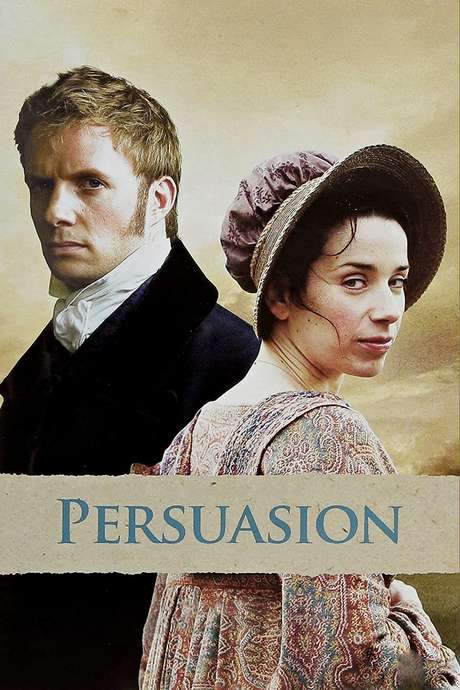
Persuasion (2007) movie poster

Plot Summary

Persuasion (2007) Plot Summary Explained

Release, runtime and language
2007 · 93 mins · English
JustWatch #16,472 5
Directed by
Adrian Shergold
Starring
Julia Davis, Sally Hawkins, Tobias Menzies, Nicholas Farrell, Marion Bailey, Alice Krige

Royal Navy Captain Frederick Wentworth, spurned by Anne Elliot eight years earlier, returns to the seaside estate now leased by his brother‑in‑law Admiral Croft. The financially strained Elliot family plans to move to Bath, but the captain’s reappearance forces Anne to confront the love they once shared. As old passions reignite, pride and circumstance keep them apart, leading both to wonder if they can reclaim a second chance at happiness.

On this page (7)
  1. 1 Where to watch
  2. 2 What happens: full plot
  3. 3 Plot questions answered
  4. 4 The book behind the movie
  5. 5 Movie threads
  6. 6 Movies like Persuasion
  7. 7 Every angle

Where to watch

Where to Watch Persuasion (2007)

Where can you watch Persuasion? Stream, rent or buy it in the US, including on Amazon Prime Video, BritBox and Hulu: current JustWatch availability with up-to-date prices.

Streaming availability powered by JustWatch

Full plot summary · contains spoilers

What Happens in Persuasion: Full Plot Summary

The whole story of Persuasion (2007) explained, from the opening scene to the final frame: every key event, every twist and what it all adds up to. Read it as a quick recap before the sequel, to check a scene you missed, or to finally understand what really happened.

Financial pressures push the Elliot family to a turning point, forcing tough choices about home, status, and love.

Elizabeth Elliot, Julia Davis and her father Sir Walter Elliot face mounting debt as Sir Walter’s imprudent spending strains Kellynch Hall. To shore up the family finances, the plan emerges to lease the estate to Admiral Croft, Peter Wight, providing a much-needed income stream. This prospect unsettles Anne Elliot, Sally Hawkins the middle daughter who has always valued her ordinary life and fears losing the home she grew up in.

Eight years earlier, Anne’s hopes centered on a match with Captain Wentworth, Rupert Penry-Jones, a capable naval officer who begins his career with little fortune but gains rank and prize money along the way. The engagement faced stiff opposition from Sir Walter and Lady Russell, Alice Krige who urged Anne to consider prudence over passion. Wentworth’s later success reawakens old feelings, even as Anne appears to be moving past an age where marriage seems likely, and Wentworth himself is determined to find a wife who can share in his newly earned prosperity.

The situation is complicated by family circles. Admiral Croft is married to Sophie, bringing Wentworth into a network of acquaintances at Kellynch, where he rekindles friendships with the Musgroves—particularly with Louisa Musgrove, Jennifer Higham, and her sister Henrietta, who draw Wentworth’s attention. As Anne observes, Wentworth’s manner toward her is sometimes cool and distant, though his true feelings remain deeply entangled with the past.

A seaside journey to Lyme introduces new pressures. The Musgroves accompany Wentworth as he travels to visit comrades Captain Harville and Captain Benwick, with Finlay Robertson portraying Benwick. Benwick, grieving the death of his fiancée, leans on poetry for solace, and Anne offers him steady counsel shaped by loss and disappointment. The trip becomes a slow test of patience and resolve, especially as Louisa’s spirit and charm spark renewed attention from Wentworth, leading to a dangerous moment along the Cobb that leaves Louisa unconscious and in need of care at Harville’s home. Wentworth escorts Anne and Henrietta back to Uppercross, and the pair exchange a farewell that feels almost final, even as his feelings remain unresolved.

Back in Bath, William Elliot, Tobias Menzies arrives as the heir presumptive and pursues Anne with apparent charm. Anne senses something off in his demeanor as he courts her while also courting the possibility of residing at Kellynch after their marriage. The sense of danger grows when Wentworth learns of the social maneuvering around the estate, and Admiral Croft signals that a lease could be canceled if Anne and William choose to stay together. Yet Anne stands firm in her conviction that she has not consented to such a match, and Wentworth writes a private note confessing his long-held love and his wish to marry her.

The revelation of William’s true intentions comes through trusted friendship. Mrs. Smith reveals that William intends to secure the baronetcy by marrying Anne while arranging for Mrs. Clay to become his mistress, thereby preventing a son from challenging the family’s line and the estate. This deceit crystallizes Anne’s resolve, and she seeks out Wentworth to understand his feelings and to confirm his devotion.

In the end, Anne confronts the truth with a steadiness born of experience, and Wentworth’s heartfelt note finds its mark. Anne decides with unwavering determination that she will marry him, responding to his question about her certainty with a decisive, intimate kiss that seals their renewed bond and their commitment to a future together. The story closes on a quiet, hopeful note as two people who have weathered distance, pride, and manipulation choose each other once more.
Last updated: October 09, 2025 at 15:10

Was this helpful?

Plot questions answered

Persuasion Plot Explained: Your Questions Answered

The questions people ask most about Persuasion (2007): what happens in the confusing scenes, why the characters do what they do, the twists, hidden details and what the ending means. Each answer contains spoilers.

Q1

Why was Anne persuaded to break her engagement to Wentworth?

Eight years before the story begins, Lady Russell convinced Anne to break off the engagement because Captain Wentworth had no fortune and little prospects. Sir Walter Elliot, obsessed with status and wealth, refused to sanction the match, and Lady Russell, acting as Anne's surrogate mother, urged her to consider prudence over passion. Anne reluctantly agreed, a decision she deeply regretted.

Foreshadowing: The original breakup plants the seeds of the story's central tension, as Anne's past concession directly leads to her present unhappiness.

  • lady russell
  • engagement broken
  • captain wentworth
  • fortune
  • prudence
Q2

Why does Wentworth act cold and distant toward Anne?

Wentworth remains bitter about Anne breaking their engagement. Although he has since gained wealth and rank through naval prizes, he still resents that she chose to listen to Lady Russell rather than stand by him. His cool demeanor is a defense mechanism, he wants to appear unaffected even though his feelings for her remain strong.

Foreshadowing: His initial coldness masks the deep emotional turmoil that later surfaces in his heartfelt note.

  • captain wentworth
  • cold behavior
  • resentment
  • pride
  • feelings
Q3

What happens to Louisa Musgrove at Lyme?

During a visit to Lyme with the Musgrove family and Wentworth, Louisa jumps from the Cobb seawall to demonstrate her boldness. She slips on the cobblestones, falls, and strikes her head, becoming unconscious. She requires care at Captain Harville's home, and the incident creates tension between her and Wentworth as he realizes her recklessness might not suit him.

Foreshadowing: The accident serves as a turning point, prompting Wentworth to reconsider his options and ultimately redirect his attention toward Anne.

  • louisa musgrove
  • lyme
  • cobb
  • accident
  • injury
Q4

Why does Louisa Musgrove end up marrying Captain Benwick?

After Louisa recovers from her head injury, she and Captain Benwick develop a connection over their shared love of poetry and literature. Benwick, who was mourning his deceased fiancée, finds comfort in Louisa's company. When Wentworth realizes Louisa is genuinely interested in Benwick, he accepts that she is unavailable and turns his attention back to Anne.

Foreshadowing: This engagement frees Wentworth from his temporary attraction to Louisa, allowing him to pursue his true feelings for Anne.

  • louisa musgrove
  • captain benwick
  • engagement
  • poetry
  • marriage
Q5

Why does William Elliot want to marry Anne?

William Elliot's courtship is motivated by self-interest rather than genuine affection. As the heir presumptive to the Elliot baronetcy, he wants to secure his position by marrying Anne, which would give him control of Kellynch Hall. His plan involves eventually making Mrs. Clay his mistress after marriage, ensuring he produces no legitimate heir who could challenge his claim to the title and estate.

Foreshadowing: Mrs. Smith's revelation exposes William's manipulative scheme, strengthening Anne's resolve to reject him.

  • william elliot
  • heir
  • kellynch
  • estate
  • deceit
  • mrs clay
Q6

What does Wentworth's private note to Anne say?

Wentworth writes Anne a heartfelt note confessing his enduring love despite the years of separation and resentment. He declares his wish to marry her, expressing that his feelings have never truly faded. The note is interrupted before they can speak privately, but it ultimately reaches Anne and becomes the catalyst for their reconciliation.

Foreshadowing: The note represents Wentworth's vulnerability and breaks through the barrier of pride that has kept them apart.

  • letter
  • love confession
  • proposal
  • bath
  • romantic note
Q7

Why does Admiral Croft say he would cancel the lease if Anne marries William?

Admiral Croft informs Wentworth that if Anne and William marry and reside at Kellynch Hall, he would cancel the lease of the estate. This is a strategic move because William, as the heir, could override the current lease arrangement. The threat is meant to discourage the match and protect Admiral Croft's tenancy, but it also serves to clarify Anne's position regarding William.

Foreshadowing: The lease issue heightens the stakes and reveals the material interests intertwined with the romantic rivalry.

  • admiral croft
  • lease
  • kellynch hall
  • marriage
  • estate
Q8

Why does Anne finally accept Wentworth's proposal?

Anne accepts Wentworth after Mrs. Smith reveals William Elliot's true plan to use her for the estate while keeping Mrs. Clay as his mistress. This betrayal crystallizes Anne's feelings, she realizes Wentworth's genuine love, expressed in his private note, is the only sincere attachment available to her. Her past regrets and the present truth combine to give her the resolve to choose love over prudence.

Foreshadowing: The revelation about William removes the last obstacle to Anne's honest acknowledgment of her feelings.

  • acceptance
  • proposal
  • certainty
  • love
  • mrs smith
  • truth
Q9

Why does Lady Russell approve of William Elliot over Wentworth?

Lady Russell, who persuaded Anne to break the original engagement, supports William Elliot because he represents the stability and wealth that she believed Wentworth lacked. Having learned from her past mistake of encouraging Anne to abandon Wentworth, she is now cautious about interfering again, though she remains suspicious of William's sudden attention to Anne.

Foreshadowing: Lady Russell's evolving stance reflects her own growth and recognition of the damage caused by her earlier meddling.

  • lady russell
  • approval
  • william elliot
  • judgment
  • prudence
Q10

What role does Mrs. Smith play in the story?

Mrs. Smith is an old acquaintance of Anne's in Bath who provides crucial information about William Elliot's true character. Despite being ill and of reduced circumstances, she befriends Anne and ultimately reveals William's scheme to marry her for the estate while planning to make Mrs. Clay his mistress. This revelation is pivotal in helping Anne distinguish between genuine love and manipulative self-interest.

Foreshadowing: Mrs. Smith's friendship and truth-telling empower Anne to make the final choice toward happiness.

  • mrs smith
  • revelation
  • william deceit
  • truth
  • friendship
  • bath

Movie threads

More Movies Like Persuasion, by Mood & Story

Curated lists built around what makes Persuasion tick: the same mood, the same kind of story or the same emotional payoff. Each list explains why these movies belong together.

Movies with Second Chance Romance like Persuasion

Stories where love gets a second opportunity, tinged with regret and hope. Explore movies like Persuasion that delve into the poignant themes of regret and renewed affection. If you enjoyed the slow reconnection between Anne and Captain Wentworth, you'll find similar stories here about love getting a second opportunity, often set against a backdrop of societal expectations and personal growth.

  • romantic
  • melancholic
  • hopeful
  • reflective
  • patient
  • yearning
  • Tone: hopeful, melancholic
  • Pacing: steady, reflective
Why these movies?

The story pattern: These stories typically begin with a separation caused by pride, misunderstanding, or external pressure. Years later, a chance reunion forces the characters to confront their buried feelings. The journey involves navigating lingering hurt, societal or personal obstacles, and ultimately deciding if their matured love is strong enough to overcome the past.

Why they belong together: Movies are grouped here for their shared focus on the deeply emotional and hopeful narrative of rediscovering lost love. They share a tone that balances melancholy with optimism, a character-driven pace, and a central theme that true love can endure time and regret.

Movies with Restrained Social Drama like Persuasion

Elegant stories where societal rules and subtle interactions dictate the plot. Find more movies like Persuasion that capture the intricate dance of societal manners in a historical setting. These films focus on the tension between personal feelings and public duty, often featuring strong-willed characters navigating the constraints of their time with emotional restraint and deep satisfaction.

  • restrained
  • societal
  • elegant
  • character-driven
  • nuanced
  • historical
  • Tone: reflective, restrained
  • Pacing: steady, methodical
Why these movies?

The story pattern: The plot is propelled by the characters' need to navigate a rigid social hierarchy. Central conflicts involve financial instability, family reputation, and the subtle power plays within high society. Romance or personal ambition must be pursued with extreme discretion, leading to a slow build of tension that resolves through a triumph of character or a clever social maneuver.

Why they belong together: These films are united by their specific mood and world-building. They create a cohesive experience through a steady, deliberate pace, a medium emotional intensity derived from internal and societal conflicts, and a setting where every action is governed by unspoken rules.

If you liked this

Movies Like Persuasion

Similar movies to Persuasion: the same genre, themes or kind of story. Each one comes with its own plot summary, timeline and ending explained.

Browse all movie summaries

Every angle

Persuasion (2007) Explained: Plot, Timeline & Characters

Everything about Persuasion in one place: what happens in the plot summary, the timeline in chronological order, the characters and meaning and a spoiler-free summary. What's After the Movie adds the cast, box office and post-credit scenes.

Coming soon on iOS and Android

The Plot Explained Movie Summary App

Plot summaries, endings explained and timelines on your phone. Catch up on any movie in minutes, save your favorites and never miss a twist again.

Be the first to know when we launch. Your email stays private, always.

Learn more about the app