







Plot Explained Spoilers guaranteed!
Plot Explained

Browse by genre

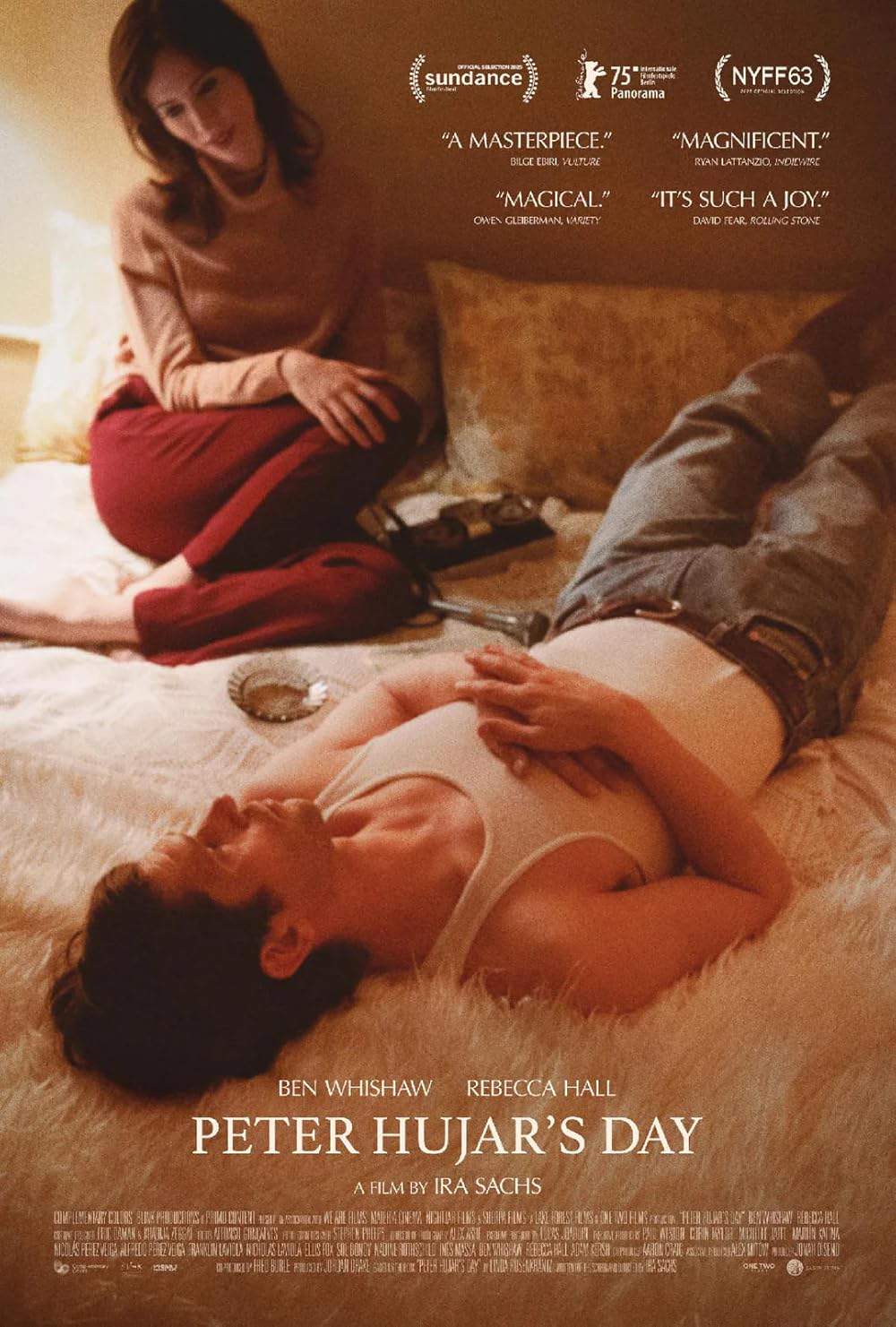
Peter Hujar's Day (2025) movie poster

Ending Explained

Peter Hujar's Day (2025) Ending Explained – Final Scene & Meaning

Release, runtime and language
2025 · 1 h 16 m
Echo score 71
JustWatch #2,922 25
Directed by
Ira Sachs
Starring
Ben Whishaw, Rebecca Hall

The newly uncovered 1974 audio dialogue between photographer Peter Hujar and his friend Linda Rosenkrantz provides a rare, candid look at New York’s downtown art world. Their conversation weaves together the cultural pulse of the era with Hujar’s personal struggles, artistic epiphanies, and the intimate dynamics that shape an artist’s life.

On this page (8)
  1. 1 Where to watch
  2. 2 What happens at the end
  3. 3 Final events in order
  4. 4 Ending questions answered
  5. 5 Movie threads
  6. 6 Movies like Peter Hujar's Day
  7. 7 Categories
  8. 8 Every angle

Where to watch

Where to Watch Peter Hujar's Day (2025)

Where can you watch Peter Hujar's Day? Stream, rent or buy it in the US, including on Kanopy, Amazon Video and Apple TV Store: current JustWatch availability with up-to-date prices.

Streaming availability powered by JustWatch

Ending explained · contains spoilers

What Happens at the End of Peter Hujar's Day?

How Peter Hujar's Day (2025) ends, what the final scene means, which earlier moments set it up and how to read the ending if the film leaves it open. The full ending explained, with every spoiler.

The film closes with Peter finally winding down after a day that has stretched from early‑morning phone calls to a late‑night watch over the street below his building. He and Linda sit on the rooftop, the city humming in the background, and Peter admits that his eyes are no longer as sharp as they once were, a fact that makes the act of printing his photographs feel both fragile and precious. He confides that the pictures he took of Allen Ginsberg turned out disappointingly flat, wondering whether a different chemistry—perhaps attraction—might have changed the result. His thoughts drift to a book he wants to assemble, “Portraits in Life and Death,” and he jokes about which of his friends—Susan Sontag, Vince Atletti, or Fran Lebowitz—should pen the introduction; ultimately, he imagines Sontag doing it.

Linda points out his almost total lack of vegetables and his endless smoking, and Peter acknowledges the habit as a “smoker’s hangover” that lingers all day. He promises he’d like to quit, yet the addiction feels as ingrained as the rhythm of his work. Their conversation turns to the idea that a person can look completely different from one photograph to the next, a transformation that rests on the final print. Peter leans his head onto Linda’s shoulder, a quiet gesture that underscores how, despite the surrounding fame and constant interruptions, his true intimacy lies in these simple, unglamorous moments.

The day finally ends with Peter brushing his teeth, playing Bach on a harpsichord, and slipping into sleep—only to be roused by the muffled sounds of sex workers fixing makeup in a van downstairs. He watches them through the window, a stray observation that hints at the perpetual undercurrent of the city’s gritty reality. In these last minutes, the film leaves us with a portrait of an artist balancing exhaustion, desire, and the relentless pursuit of a perfect print; a life that may feel routine on the surface, but is, in fact, a delicate act of preserving his vision long after the lights go out.

Last updated: February 10, 2026 at 08:03

Was this helpful?

The last 4 events

How Peter Hujar's Day Ends: The Final Events in Order

The last events of Peter Hujar's Day (2025) in chronological order, the run-up to the ending explained above. The complete timeline has all 14 events, scene by scene.

Open the full timeline
  1. Evening routine: dinner and notes

    Back at his apartment, Peter eats a simple meal, lies to a caller to avoid socializing, and Linda reminds him to write down everything he did that day. He starts developing his film in the darkroom and keeps notes as the conversation with Linda continues. The routine blends work with memory and reflection.

    When
    evening
    Where
    Peter's apartment
  2. Visitors arrive: O’Brien, Aletti, and Lebowitz

    Glenn O’Brien, Vince Aletti, and Fran Lebowitz visit, and they discuss the Ginsberg session and Peter's feeling that he spends days working without real progress. The guests bring energy and different perspectives on photography and art. The mood deepens as the night wears on.

    When
    evening
    Where
    Peter's apartment
  3. Vince's hot-water visit and takeout

    Vince stops by because there is no hot water, and they share Chinese takeout while continuing their talk about the day’s events. The conversation touches on Peter’s sense of constant work and occasional frustration with his own ambitions. The casual meal reinforces the day’s intimate, lived-in atmosphere.

    When
    night
    Where
    Peter's apartment
  4. Night work, aging, and the closing to sleep

    Peter spends the rest of the night printing restaurant commissions, retouching his negatives, and reflecting on aging and the death of a fellow photographer. He practices a Bach piece on his harpsichord, brushes his teeth, and goes to bed, exhausted from work and smoking. Outside, sex workers talk near a parked detention-center truck as the film ends with Peter and Linda looking out at the river.

    When
    late night
    Where
    Peter's apartment

Ending questions answered

Peter Hujar's Day Ending: Your Questions Answered

The questions people ask most about the ending of Peter Hujar's Day (2025): what the final scene means, how the twist works, what happens to each character and how to read the ending. Each answer contains spoilers.

Q1

Why does the film end with Peter watching the sex workers from his window?

The closing image of Peter watching the women fixing makeup in a van from his window reinforces his identity as a perpetual observer. Throughout Peter Hujar's Day, he frames the city through his camera, and this final quiet surveillance shows that the artist's gaze never fully shuts off, even as the day ends. It also underscores the gritty reality of 1970s New York that hums beneath the art world conversations. The moment captures the tension between the mundane and the poetic that defines the movie's contemplative close.

Foreshadowing: Peter's habit of watching the street from his building recurs across the recording, hinting at how observation itself is his art.

  • final scene
  • sex workers
  • window
  • observation
  • photographer's gaze
  • New York City
Q2

What does Peter's failing eyesight symbolize in the ending?

Peter's admission that his vision is no longer as sharp as it once was carries the weight of mortality and the fragility of his artistic gift. For a photographer whose entire practice depends on seeing and printing images, fading eyesight represents the slow erosion of his identity. The ending of Peter Hujar's Day uses this detail to frame his work as urgent and precious. It also foreshadows the vulnerability of a life devoted to capturing others before time erodes his own ability to do so.

Foreshadowing: Earlier darkroom talk about printing the perfect image already signals how much his practice depends on his eyes.

  • failing eyesight
  • mortality
  • aging
  • photographic vision
  • darkroom
Q3

Why does Peter Hujar's Day end on such a quiet, ordinary note?

The docudrama ends without dramatic resolution because it is built from an actual 1974 audio recording, and the filmmakers honor the recording's unforced rhythm. Peter Hujar's Day chooses to mirror that authenticity rather than impose an artificial climax, letting the day simply wind down. This quiet close reflects the film's belief that an artist's inner life is found in unglamorous routines rather than headline moments. The ordinariness itself becomes the point, sealing the portrait of a man defined by attention rather than spectacle.

Foreshadowing: The pacing of every prior scene, with phone calls, errands, and darkroom work, already telegraphs that the day will simply wind down rather than climax.

  • quiet ending
  • ordinary day
  • audio recording
  • contemplative
  • pacing
Q4

What does the final line about preserving his vision mean?

The closing line of Peter Hujar's Day about preserving his vision long after the lights go out reframes photography as a form of immortality. While Peter's eyes may weaken and his body may tire, the printed photograph outlives the moment of capture. The ending suggests that an artist's true legacy is the image itself, which continues to see long after the photographer closes his own eyes. It is a meditation on how art preserves what biology cannot.

Foreshadowing: Peter's earlier comments about how a person can look entirely different from one print to the next already frame the print as something that outlives its source.

  • preserving vision
  • artistic legacy
  • photography
  • immortality
  • final line
Q5

Why does Peter describe his Allen Ginsberg photographs as flat?

Peter reflects that his portraits of Allen Ginsberg turned out disappointingly flat and wonders if a different chemistry, perhaps attraction, might have produced stronger images. In Peter Hujar's Day, this confession reveals his belief that a great portrait depends on an unspoken tension between subject and photographer. The flat result troubles him because it suggests something was missing in the exchange, not in the technique. It is an artist's honest reckoning with the limits of craft when emotional resonance fails to ignite.

Foreshadowing: Peter's walk with Ginsberg earlier in the day already shows a reserved dynamic between photographer and subject.

  • Allen Ginsberg
  • flat portraits
  • attraction
  • chemistry
  • portraiture
Q6

Why does Peter imagine Susan Sontag writing the introduction to his book?

Peter jokingly considers Susan Sontag, Vince Aletti, or Fran Lebowitz for the introduction before settling on Sontag in his imagination. The choice reflects his genuine intellectual and personal connection with Sontag, who was one of the few cultural figures who understood both photography and writing. In Peter Hujar's Day, naming Sontag is also a quiet expression of how seriously he takes his own project. It signals that the imagined book, Portraits in Life and Death, belongs to a serious artistic conversation rather than a casual album.

Foreshadowing: References to Sontag's writing about photography surface earlier in the recording, establishing her as his most literate interlocutor.

  • Susan Sontag
  • introduction
  • Portraits in Life and Death
  • literary connection
Q7

What is the book 'Portraits in Life and Death' Peter wants to assemble?

Portraits in Life and Death is a collection Peter Hujar had been developing, gathering portraits of living subjects alongside memento mori imagery. The project reflects his fascination with how photography holds both presence and absence in a single frame. In the film, his talk of assembling the book near the end signals how the day's reflections tie into his larger artistic ambitions. It also foreshadows the eventual posthumous publication of his work after his death.

Foreshadowing: Peter's remarks about death and dying friends earlier in the conversation already prefigure the memento mori side of the project.

  • Portraits in Life and Death
  • book project
  • memento mori
  • posthumous publication
Q8

What does Peter leaning his head on Linda's shoulder symbolize?

The small gesture of Peter resting his head on Linda Rosenkrantz's shoulder captures the kind of intimacy that the film treats as the day's real treasure. Surrounded by fame, calls, and constant interruptions, Peter Hujar's Day suggests that his truest connection is the quiet comfort of a trusted friend. The act is unglamorous, almost childlike, and precisely because of that it carries emotional weight. It is the film's quiet thesis that an artist's deepest moments are the ones no camera is pointed at.

Foreshadowing: The unhurried warmth between Peter and Linda throughout the recording makes the gesture feel like the natural endpoint of a day spent in close conversation.

  • Linda Rosenkrantz
  • intimacy
  • friendship
  • shoulder gesture
  • trusted friend
Q9

What does Bach on the harpsichord reveal about Peter at the end?

Peter playing Bach on a harpsichord before sleep reveals a side of him that the rest of the day, full of errands and darkroom work, leaves no room to express. The detail in Peter Hujar's Day signals his deep cultivation beyond photography, his immersion in older European traditions. It also acts as a kind of evening ritual, a way of bringing order and beauty into the final minutes of a long day. The music quietly underscores that Peter's artistry is not limited to the camera but extends to every careful gesture of his life.

  • Bach
  • harpsichord
  • evening ritual
  • artistic cultivation
  • classical music
Q10

What does the ending reveal about Peter's artistic legacy?

The closing of Peter Hujar's Day frames legacy not as fame or recognition but as the quiet continuation of his vision through prints, friends, and unfinished projects. Peter's talk of his book, his reflections on aging, and his watch over the city all suggest an artist aware that his work will outlast his active years. The film's meditative close implies that legacy is built from small, faithful acts rather than grand gestures. It is a portrait of an artist who understands that time will do what the present cannot.

Foreshadowing: Peter's recurring worry about whether his photographs will matter already establishes legacy as a quiet preoccupation of the day.

  • artistic legacy
  • posthumous recognition
  • prints
  • memory
  • artistic ambition
Q11

Why does the ending emphasize the contrast between Peter's unhealthy habits and his art?

Linda points out Peter's lack of vegetables and his chain smoking, and he admits it as a smoker's hangover that lingers throughout his day. Peter Hujar's Day lingers on this contrast to highlight the tension between an artist's discipline in work and carelessness in life. The acknowledgment that he would like to quit yet cannot reveals how addiction is woven into the rhythm of his creativity. It is a quiet, honest admission that artistic devotion often comes at the cost of the body that houses it.

Foreshadowing: Smoke and coffee recur through the recording, already threading the smoker's ritual into the texture of his working day.

  • smoking
  • unhealthy habits
  • addiction
  • self-destruction
  • artist's discipline

Movie threads

More Movies Like Peter Hujar's Day, by Mood & Story

Curated lists built around what makes Peter Hujar's Day tick: the same mood, the same kind of story or the same emotional payoff. Each list explains why these movies belong together.

Conversational day portraits like Peter Hujar's Day

Films that turn a single unremarkable day into an intimate, unhurried revelation. Looking for movies like Peter Hujar's Day? This thread gathers slow, low intensity films that follow a single uneventful day through conversation, observation, and quiet intimacy. Perfect if you enjoyed the documentary-like rhythm, the unhurried pace, and the feeling of simply listening in on an artist's life.

  • conversational
  • intimate
  • quiet
  • documentary-like
  • observational
  • reflective
  • Tone: melancholic, intimate, conversational
  • Pacing: slow, unhurried, observational
Why these movies?

The story pattern: Stories in this thread follow a compressed timeframe, often a single afternoon, evening, or day, unfolding largely through dialogue and ambient detail rather than plot mechanics. Characters move through ordinary routines, phone calls, walks, and shared silences while inner lives, creative anxieties, and relationships surface through what is said and left unsaid. There is little conventional conflict; the drama lives in attention itself, in the texture of a voice, a pause, or a passing thought. The structure tends to be linear and cyclical, closing where it opened, sealing the day in a reflective mood.

Why they belong together: Films are grouped here because they share a documentary-like intimacy and a willingness to trust the audience with stillness. The pacing is deliberately slow, the intensity low, and the emotional register contemplative. What unites them is the commitment to treating a small slice of time as worthy of close attention, and the sense that revelation can come from the most mundane exchanges when you listen carefully enough.

Melancholic artist portraits like Peter Hujar's Day

Bittersweet portraits of creators reckoning with time, vision, and recognition. If you liked Peter Hujar's Day, these movies like it share its bittersweet, low intensity approach to creative ambition, memory, and mortality. Expect quiet biographies and character studies that linger on the texture of an artist's day, the weight of aging, and the small epiphanies that make a creative life worth documenting.

  • melancholic
  • bittersweet
  • introspective
  • nostalgic
  • artistic
  • contemplative
  • Tone: melancholic, bittersweet, reflective
  • Pacing: slow, steady, meditative
Why these movies?

The story pattern: Stories in this thread center on a single creative figure or a tight circle of makers, tracing the textures of their working day and inner monologue. External plot is minimal, but thematic pressure is constant: time passing, bodies failing, peers disappearing, ambitions unmet or quietly fulfilled. Characters oscillate between self-doubt and stubborn devotion to their craft, and the narrative often drifts through memories, phone calls, and small commissions rather than rising to a conventional climax. Endings are typically bittersweet and contemplative, leaving the artist mid-process rather than triumphant or defeated.

Why they belong together: These films are grouped because they share a melancholic but loving gaze on creative lives lived away from mainstream success. They tend to be slow, low intensity, and emotionally weighted by themes of aging, mortality, and artistic integrity, often set in specific artistic communities or eras. The viewer experience is meditative rather than thrilling, prioritizing atmosphere, conversation, and the dignity of small, sustained work.

If you liked this

Movies Like Peter Hujar's Day

Similar movies to Peter Hujar's Day: the same genre, themes or kind of story. Each one comes with its own plot summary, timeline and ending explained.

Browse all movie summaries

Categories

Movie Lists Featuring Peter Hujar's Day

Peter Hujar's Day appears in these hand-built movie categories. Each one groups movies by a specific mood, theme or story type, with their plot summaries and endings explained.

View all movie categories

Every angle

Peter Hujar's Day (2025) Explained: Plot, Ending, Timeline & Characters

Everything about Peter Hujar's Day in one place: what happens in the plot summary, the timeline in chronological order, the characters and meaning, the ending explained and a spoiler-free summary. What's After the Movie adds the cast, box office and post-credit scenes.

Coming soon on iOS and Android

The Plot Explained Movie Summary App

Plot summaries, endings explained and timelines on your phone. Catch up on any movie in minutes, save your favorites and never miss a twist again.

Be the first to know when we launch. Your email stays private, always.

Learn more about the app