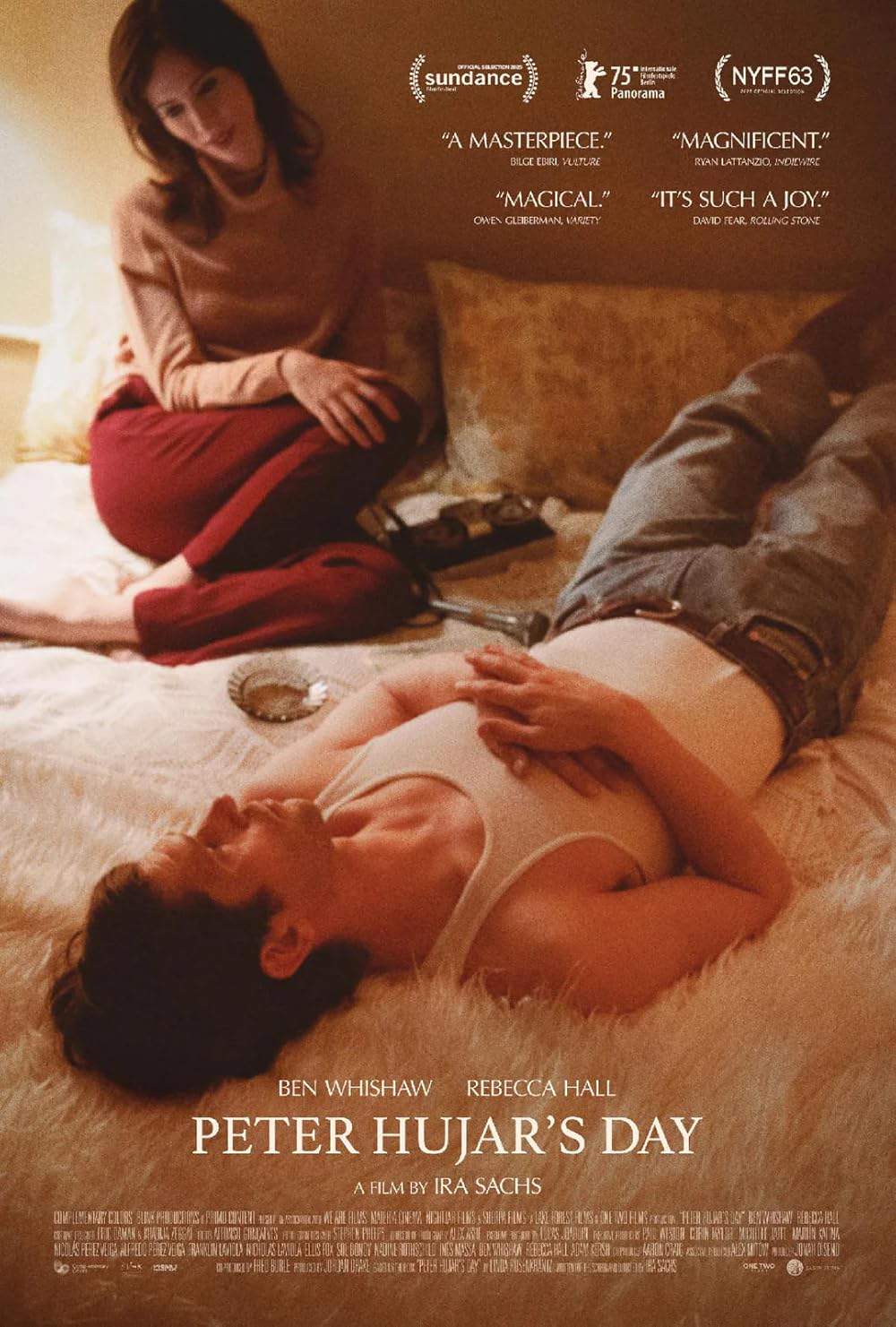
On December 19, 1974, Ben Whishaw embodies Peter Hujar as he sits with writer Linda Rosenkrantz, Rebecca Hall recording the day for her book project about ordinary days in the lives of artists. The scene unfolds in her SoHo apartment, where Peter’s account unfolds like a conversation with the tape rolling, Linda interjecting now and then to prompt details, clarify memory, and coax out moments that might seem trivial but collectively sketch the texture of a day lived by a photographer who is always at work.
Peter starts by retracing the night and morning: he slept through his 8:30 a.m. alarm and wakes to a phone call from Jacqueline de Mornay, an Elle editor, who is on the way to collect his photographs of Lauren Hutton. While he waits, Susan Sontag calls, asking for directions to a gallery show before heading to Paris, and a small web of phone calls and deals begins to form around the day. Linda’s questions nudge Peter to admit a few half-truths—an old name-drop here, a hinted-forgotten detail there—as he recounts the moment when Jacqueline arrives, praises the photographs, but cannot name the payment, leaving Peter to puzzle over the money he’s owed. He flits from one ring to the next—neighbors, artists, editors—venting about one lengthy conversation before slipping back into bed for another hour.
The day clearly travels through errands and encounters. After waking again, Peter buys cigarettes, then phones Allen Ginsberg to arrange a portrait for The New York Times. He travels to the poet’s Lower East Side home, where Peter Orlovsky and others drift through the apartment as Ginsberg finishes calls and prepares to go outdoors. The initial resistance to a conventional indoor shoot softens as Ginsberg, wary at first, is coaxed into a session inside the apartment. Their walk through the neighborhood becomes a meditation—Ginsberg prefers outdoor spaces, wandering through abandoned blocks and even the burned-out Peace Eye Book Store while chanting and meditating. Peter explains the practical limits of the project to him, insisting that this is a real commission for The New York Times rather than a purely artistic favor, and gradually Ginsberg agrees to stay indoors for the portraits. A stop at a vegetable stand for persimmons punctuates the walk, a small detail that lands as part of the memory rather than a separate event. They talk of William S. Burroughs as a note for the following day’s shoot, and part on cordial terms, even as Peter confides that the Ginsberg session, in his own view, never fully connected and the resulting photo set feels more documentary than a true portrait.
Back at Peter’s apartment, the rhythm shifts to quieter, domestic work. He eats a simple meal and spends the evening developing film in the darkroom, carefully avoiding social calls by answering in a way that keeps others at bay. Linda’s reminder to write everything down finally lands on the page as he jots notes and then returns to the negatives. Calls come in from Glenn O’Brien, Vince Aletti, and later Fran Lebowitz, as the two move around the apartment—making tea, smoking, listening to records, sharing a brief, spontaneous dance—while the tape captures their ongoing conversation. The day’s guests arrive because the apartment lacks hot water, and Chinese takeout is shared as they reflect on the Ginsberg session and Peter’s sense that he spends his days in constant labor without a corresponding sense of achievement.
Even as friends come and go, Peter’s mind hovers over issues of artistic ambition. He prints for a restaurant commission and for other clients, initially disappointed by the Ginsberg contact sheets but gradually warming to them as he contemplates the possibility that photography can exist independently of the fame of its subjects. He struggles with fading eyesight while retouching prints, and the conversation with Linda turns to aging, physical decline, and the death of a fellow photographer. The night fades into routine: finishing prints for the next day, practicing a Bach piece on the harpsichord, brushing his teeth, and going to bed exhausted from work and cigarettes. Linda scolds him for smoking, and he admits a wish to quit, even as outside the window sex workers move about, one woman applying makeup in the reflection of a parked detention-center truck.
As the interview draws to a close, Peter reconstructs every significant and trivial moment of the day with a meticulous clarity that only a photographer could offer. The two of them look out at the river, sharing a quiet, reflective silence that seals the day’s memories. It’s a portrait of a life spent documenting others, of a man who measures worth not by grand gestures but by the accumulation of small, truthful fragments—moments of work, conversation, and ordinary life that together illuminate the strange, stubborn beauty of artistic pursuit.