Plot Explained Spoilers guaranteed!
Plot Explained

Browse by genre

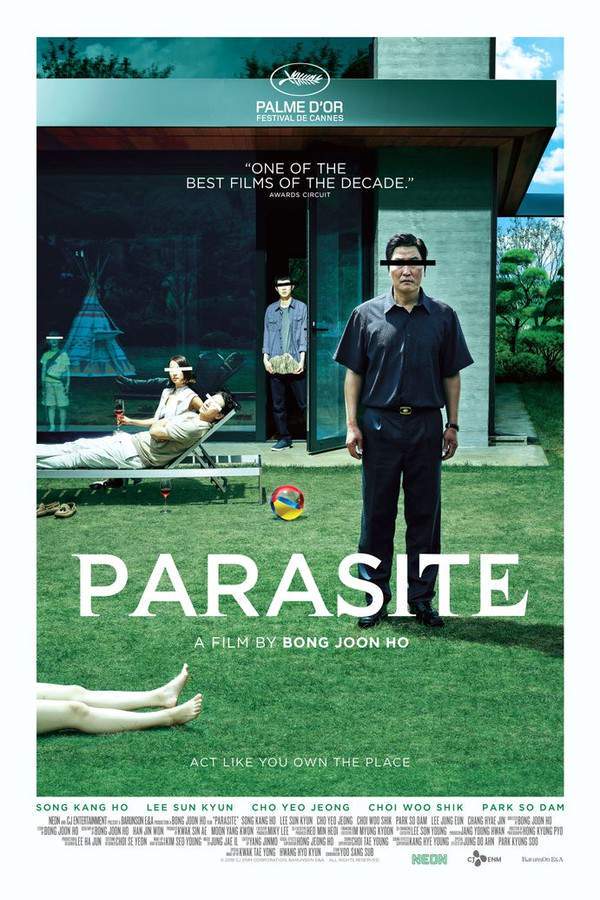
Parasite (2019) movie poster

Plot Summary

Parasite (2019) Plot Summary & Ending Explained

Release, runtime and language
2019 · 132 min · Korean
Echo score 93
JustWatch #298 71
Directed by
Joon-ho Bong
Starring
Kang-ho Song, Jeong Esuz, Andreas Fronk, Hyae Jin Chang, Hye-jin Jang, Hyun Seung-min
Budget
$11.4M

A poor family, the Kims, schemes to infiltrate the home of a wealthy, but naive, family, the Parks. Through clever manipulation, they gradually secure employment within the Park household, exploiting their vulnerabilities. As the Kims’ carefully constructed facade is threatened by the discovery of a startling secret, tensions escalate, leading to unexpected and darkly comedic consequences that challenge notions of class and morality.

On this page (7)
  1. 1 Where to watch
  2. 2 What happens: full plot
  3. 3 Plot questions answered
  4. 4 How it ends
  5. 5 Movie threads
  6. 6 Movies like Parasite
  7. 7 Every angle

Where to watch

Where to Watch Parasite (2019)

Where can you watch Parasite? Stream, rent or buy it in the US, including on fuboTV, Paramount Plus Essential and Paramount Plus Premium: current JustWatch availability with up-to-date prices.

Streaming availability powered by JustWatch

Full plot summary · contains spoilers

What Happens in Parasite: Full Plot Summary

The whole story of Parasite (2019) explained, from the opening scene to the final frame: every key event, every twist and what it all adds up to. Read it as a quick recap before the sequel, to check a scene you missed, or to finally understand what really happened.

Kim Ki-Taek, played by Song Kang-Ho, is an unemployed driver struggling to make ends meet with his family, which includes his wife Choong-Sook, portrayed by Jang Hye-Jin, son Ki-Woo, played by Choi Woo-Sik, and daughter Ki-Jeong, represented by Park So-Dam. They live in a cramped semi-basement apartment, relying on meager jobs, such as folding pizza boxes, to survive.

The family's fortunes take a surprising turn when Ki-Woo's friend Min-Hyuk, played by Park Seo-Joon, visits them before leaving to study abroad, gifting them a sizeable rock said to bring wealth. Encouraged by Min-Hyuk’s suggestion, Ki-Woo takes up a job as an English tutor for the wealthy Park family's youngest daughter, Da-Hye, portrayed by Jung Ji-So. There, Ki-Woo impresses Mrs. Park, played by Cho Yeo-Jeong, during an interview, despite all his qualifications being forged by his sister, Ki-Jeong.

When Ki-Woo learns that Mrs. Park is searching for an art teacher for her son, Da-Song, he quickly recommends Ki-Jeong under the alias "Jessica." They further infiltrate the Park family’s lives by having the current driver fired through Ki-Jeong’s cunning plan. Shortly after, they manage to get housekeeper Moon-Kwang, played by Lee Jung-Eun, dismissed under dubious circumstances, effectively positioning the entire Kim family in the employ of the Parks.

As the Kims settle into this new life, Ki-Woo begins to develop feelings for Da-Hye, leading to a steamy kiss between the two. However, the facade of their newfound security shatters during an unexpected incident when the Parks decide to cut their camping trip short due to heavy rain, forcing the Kims to hide the chaos in their lives.

During a raucous party that the Kims throw while the Parks are away, tensions escalate when Moon-Kwang arrives seeking something from the basement, unleashing a series of events that culminates in shocking violence. The hidden presence of Moon-Kwang’s husband, Geun-Sae, adds further complication to the Kims' charade, leading to tragic outcomes that ripple through both families.

After a series of life-threatening revelations and emotional confrontations, the once happy facade of the Kims leads to their unraveling as the violence culminates in a shocking climax. Each member of the family is faced with dire consequences, with Ki-Woo reflecting on the aftermath: his sister Ki-Jeong succumbs to her injuries, and he himself endures a traumatic brain surgery, imagining a reunion with his father, Ki-Taek, whom he believes has survived.

In a gut-wrenching conclusion, Ki-Woo resolves that he will one day reclaim the luxurious life they lost, promising to save his father from the grasp of their tragic reality. As he gazes at the Park's mansion, he catches sight of a flickering light conveying a Morse code message — a silent testament to the lingering hope of reunion amidst their chaotic lives. The film ends with a poignant reminder of the disparities between social classes and the lengths to which individuals will go to seek a better life, all while functioning within the unpredictable world they inhabit.
Last updated: November 15, 2024 at 20:06

Was this helpful?

Plot questions answered

Parasite Plot Explained: Your Questions Answered

The questions people ask most about Parasite (2019): what happens in the confusing scenes, why the characters do what they do, the twists, hidden details and what the ending means. Each answer contains spoilers.

Q1

Why does Ki-Taek kill Mr. Park?

Ki-Taek kills Mr. Park in a moment of extreme emotional distress. After Geun-Sae stabs Ki-Jeong, Ki-Taek sees Mr. Park calmly asking for car keys while his daughter lies bleeding on the ground. The final trigger is Mr. Park's disgusted reaction to the smell of Ki-Taek, who is covered in blood - the same smell Mr. Park had complained about before. This combination of grief, humiliation, and class resentment causes Ki-Taek to stab Mr. Park unexpectedly.

  • ki-taek
  • mr park
  • kill
  • murder
  • class
  • smell
Q2

Who is Geun-Sae and why is he living in the basement?

Geun-Sae is Moon-Kwang's husband, who has been secretly living in the Parks' basement for four years. He was an industrial financier who went bankrupt and was unable to pay his debts, forcing him to hide. Moon-Kwang continued working for the Parks to support him, and she kept him hidden beneath the house, bringing him food through a secret basement entrance. His presence represents another layer of poverty and desperation hidden beneath the wealthy family's facade.

Foreshadowing: Earlier scenes show Moon-Kwang acting strangely and making unusual late-night visits to the basement, hinting at something hidden in the house.

  • geun-sae
  • basement
  • moon-kwang
  • hidden
  • husband
Q3

Why does Moon-Kwang return to the Park house during the party?

Moon-Kwang returns because she needs to retrieve her money and belongings that she believes are still hidden in the basement. She had been abruptly fired by the Kims using false accusations, and she had not been able to collect her things. When she arrives at the party, she discovers the Kims have taken over her position and that her husband has been secretly living in the basement, which leads to the violent confrontation.

  • moon-kwang
  • return
  • party
  • basement
  • husband
Q4

What is the significance of the rock that Min-Hyuk gives Ki-Woo?

The rock is said to bring wealth and is a symbol of hope for the struggling Kim family. Min-Hyuk gives it to Ki-Woo as a good luck charm before leaving to study abroad. Throughout the film, Ki-Woo becomes obsessed with the rock, seeing it as a symbol of his potential upward mobility. However, the rock ultimately becomes a weapon during the violent climax, and Ki-Woo's hallucination of the rock crushing him in the flooding basement suggests it represents the burden of his aspirations and guilt.

  • rock
  • min-hyuk
  • gift
  • wealth
  • symbol
Q5

What is the smell that Mr. Park complains about?

Mr. Park repeatedly mentions a foul odor coming from Ki-Taek, which he associates with the smell of someone who lives in a basement. This reference to Ki-Taek's lower-class background is deeply humiliating. When Ki-Taek is covered in blood after the violence, Mr. Park still recoils from the smell, saying it reminds him of the smell from the basement - the same social indicator of poverty that Mr. Park despises. This final insult triggers Ki-Taek's violent response.

  • smell
  • mr park
  • ki-taek
  • class
  • basement
Q6

What happens to Ki-Taek at the end of the movie?

After stabbing Mr. Park, Ki-Taek escapes into the Park mansion's basement, where he discovers Geun-Sae's hidden living space. He spends his days hiding in the basement, watching television and living in secret, while the police search for him. In the final scenes, Ki-Woo imagines seeing Morse code signals from the basement light, indicating his father is still alive and trapped in that basement - repeating the cycle of poverty and imprisonment that the family sought to escape.

  • ki-taek
  • end
  • basement
  • escape
  • police
Q7

What is the Morse code message at the end of the film?

The flickering light from the Park mansion is signaling in Morse code. The message reads "HELP ME," which Ki-Taek is sending from the basement where he is hiding. This haunting image shows that Ki-Taek is still alive but trapped, mirroring the film's opening where the Kim family lived in their semi-basement. The message represents Ki-Taek's desperate plea for rescue, contrasting with Ki-Woo's dream of eventually saving his father.

  • morse code
  • light
  • message
  • help
  • basement
Q8

Why does Ki-Jeong die?

Ki-Jeong is killed during the violent confrontation at the party. When Geun-Sae attacks the Kim family with a knife after discovering their deception, he stabs Ki-Jeong in the chaos. She dies from her injuries after the violence subsides. Her death is a tragic consequence of the Kims' elaborate scheme to infiltrate the Park family - a scheme that ultimately leads to their exposure and destruction.

  • ki-jeong
  • death
  • die
  • stabbed
  • geun-sae
Q9

How does the Kim family manage to get all their members employed by the Parks?

The Kims systematically infiltrate the Park family by exploiting their vulnerabilities. Ki-Woo becomes Da-Hye's English tutor by forging credentials through his sister Ki-Jeong. Then, when Mrs. Park seeks an art teacher for Da-Song, Ki-Woo recommends Ki-Jeong under the alias "Jessica." They then have the driver fired by having Ki-Jeong stage a sexual encounter in the car, allowing Ki-Taek to replace him. Finally, they get Moon-Kwang fired by having Ki-Jeong pretend to have tuberculosis, allowing Choong-Sook to take her place as housekeeper.

  • infiltration
  • plan
  • employed
  • deception
  • parks
Q10

Why is the movie called Parasite?

The title refers to the Kim family, who metaphorically parasitize the wealthy Park family. Like parasites, they feed off their host without providing anything in return, gradually taking over the household while living off the Parks' wealth and generosity. The title also reflects how the Parks themselves are somewhat parasitical, benefiting from the labor of the lower class while remaining oblivious to their exploitation. The underground basement dwellers (Geun-Sae and later Ki-Taek) represent another layer of this parasitic relationship.

  • title
  • parasite
  • meaning
  • symbolism
  • class
Q11

Why do the Parks cut their camping trip short?

The Parks cut their camping trip short because heavy rain is forecast for the area. Mr. Park decides they should return home early rather than risk being caught in a storm. This unexpected return forces the Kims to scramble and hide their belongings and each other throughout the house, as they had been using the Park home as if it were their own during the family's absence.

  • rain
  • camping
  • return
  • early
  • weather
Q12

Why does Ki-Woo need brain surgery?

Ki-Woo undergoes brain surgery after being struck in the head with the rock during the violent confrontation at the party. Geun-Sae attacks the Kim family with the same stone Ki-Woo had brought to the house, hitting Ki-Woo in the head and leaving him critically injured. The surgery represents both the physical trauma of the film's climax and the psychological damage that haunts Ki-Woo throughout the aftermath.

  • ki-woo
  • surgery
  • brain
  • injury
  • rock
Q13

What does the Kim family lose at the end of Parasite?

The Kim family loses nearly everything. Ki-Jeong dies from her stab wounds. Ki-Taek goes into hiding in the Park's basement after killing Mr. Park. Ki-Woo survives but requires brain surgery and is left with psychological trauma. Only Ki-Taek's wife Choong-Sook survives without major injury, though she is left to care for her injured son while her husband remains a fugitive. Their dream of upward mobility ends in tragedy, leaving them worse off than before.

  • family
  • lose
  • death
  • end
  • tragedy

Ending explained

What Happens at the End of Parasite?

How Parasite (2019) ends, in short: the final scene, the last twist and what it means for the characters. The full ending explained, with every spoiler, lives on its own page.

Read the full ending explained

The film’s sudden shift from dark comedy to tragedy culminates during the Parks' garden party, where the disparate threads of class warfare violently collide. The immediate catalyst is Geun-sae, the man hiding in the bunker, who escapes to exact revenge for his wife's death. However, the true turning point arrives when Mr. Park recoils in disgust at the "smell" of the attacker—the same distinct odor he has previously attributed to the lower class and specifically mocked Ki-taek for. This moment of dehumanization snaps something inside Ki-taek. Recognizing that he and his family will never be seen as equals despite their service, he kills Mr. Park in a moment of sheer rage and flees, leaving his surviving family members behind.

In the aftermath, the title Parasite reveals its full, multifaceted meaning. While the Kims and the hidden couple leeched off the Parks' wealth, the Parks are revealed to be the ultimate parasites, sustaining their lifestyle on the labor of the working class while remaining willfully ignorant of their struggles. Following the tragedy, Ki-woo discovers his father is now living in the mansion's secret bunker, communicating via Morse code. Ki-woo vows to work hard, buy the house, and reunite the family, offering a glimmer of hope. Yet, the film’s final moments strip this hope away, revealing that Ki-woo’s plan is nothing more than a daydream. We see him back in the same semi-basement, confirming that his brain injury and lack of resources make his plan an impossibility. The film concludes on a somber note, suggesting that in a deeply stratified society, the dream of escaping one's class is a fantasy that rarely survives the light of day.

Parasite ending explained in full

Movie threads

More Movies Like Parasite, by Mood & Story

Curated lists built around what makes Parasite tick: the same mood, the same kind of story or the same emotional payoff. Each list explains why these movies belong together.

Darkly comic social thrillers like Parasite

Movies that use sharp wit and escalating tension to critique societal structures. Movies like Parasite that masterfully blend biting social satire with nail-biting thriller mechanics. If you enjoyed the clever deception and class commentary, you'll find similar tension and dark humor in these stories of characters challenging the status quo.

  • satirical
  • suspenseful
  • darkly comedic
  • anxious
  • gripping
  • social commentary
  • Tone: dark, satirical, tense
  • Pacing: variable, building to frantic
Why these movies?

The story pattern: Stories in this thread typically follow a clever, underdog protagonist or group who devises an intricate plan to infiltrate a privileged world. Their initial successes are punctuated by darkly humorous observations, but the facade becomes increasingly precarious, escalating towards a chaotic and often brutal climax that lays bare the fundamental conflicts of the society it portrays.

Why they belong together: These movies are grouped by their shared tone: a potent cocktail of intellectual dark comedy and high-stakes suspense. They share a thematic focus on social inequality and the moral grey areas characters must navigate, often featuring variable pacing that builds to intense, shocking conclusions.

Claustrophobic family dramas like Parasite

Stories where familial bonds are strained by extreme pressure and confined spaces. If you were gripped by the Kim family's desperate struggle in Parasite, explore these similar dramas. They focus on families pushed to their limits, where love and survival instincts collide in tense, often confined, settings with heavy emotional consequences.

  • claustrophobic
  • oppressive
  • desperate
  • gripping
  • anxious
  • family drama
  • Tone: oppressive, heavy, tense
  • Pacing: variable, escalating
Why these movies?

The story pattern: The narrative pattern involves a family unit, typically from a lower socioeconomic background, whose collective survival hinges on a risky, often illicit, scheme. Their ingenuity and loyalty are tested as their plan unravels, exposing secrets and forcing sacrifices. The journey is emotionally heavy, exploring how far people will go for their loved ones when backed into a corner.

Why they belong together: These films share a powerful combination of oppressive mood, high emotional weight, and complex character dynamics driven by desperation. They create a sense of claustrophobia, both physical and psychological, and often end on a bittersweet or tragic note, leaving a lasting impact about the cost of survival.

If you liked this

Movies Like Parasite

Similar movies to Parasite: the same genre, themes or kind of story. Each one comes with its own plot summary, timeline and ending explained.

Browse all movie summaries

Every angle

Parasite (2019) Explained: Plot, Ending, Timeline & Characters

Everything about Parasite in one place: what happens in the plot summary, the timeline in chronological order, the characters and meaning, the ending explained and a spoiler-free summary. What's After the Movie adds the cast, box office and post-credit scenes.

Coming soon on iOS and Android

The Plot Explained Movie Summary App

Plot summaries, endings explained and timelines on your phone. Catch up on any movie in minutes, save your favorites and never miss a twist again.

Be the first to know when we launch. Your email stays private, always.

Learn more about the app