Plot Explained Spoilers guaranteed!
Plot Explained

Browse by genre

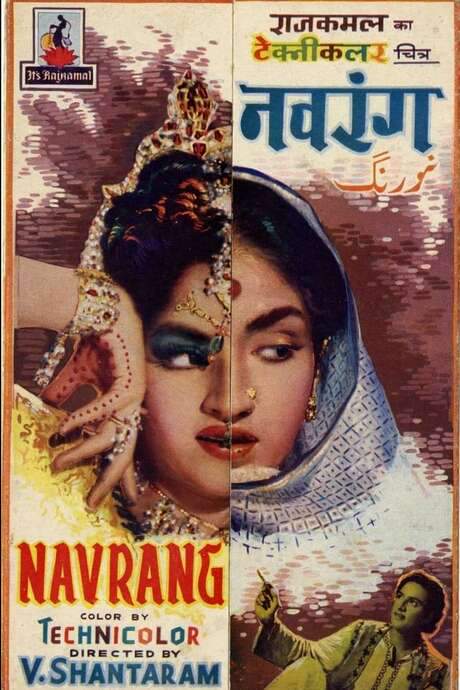
Navrang (1959) movie poster

Plot Summary

Navrang (1959) Plot Summary Explained

Release, runtime and language
1959 · 158 mins · Hindi
Loading streaming availability…
Directed by
Shantaram Rajaram Vankudre
Starring
Jeetendra, Agha, Mahipal, Ulhas, Baburao Pendharkar, Vatsala Deshmukh

Diwakar is a poet deeply devoted to his wife Jamuna, yet she chafes at his drifting into a fantasy world. He creates an idealised woman, Mohini, as his muse, and soon becomes a celebrated poet. Jamuna gives birth to their son, but Diwakar loses his job after penning anti‑British verses, leaving him unable to support his sick father and starving child. Jamuna, outraged by his obsession with Mohini, moves out, and Diwakar’s life unravels. Gradually she realises she cannot live without him and returns, forgiving him as they attempt to rebuild their family.

On this page (6)
  1. 1 Where to watch
  2. 2 What happens: full plot
  3. 3 Plot questions answered
  4. 4 Movie threads
  5. 5 Movies like Navrang
  6. 6 Every angle
Loading streaming availability…

Full plot summary · contains spoilers

What Happens in Navrang: Full Plot Summary

The whole story of Navrang (1959) explained, from the opening scene to the final frame: every key event, every twist and what it all adds up to. Read it as a quick recap before the sequel, to check a scene you missed, or to finally understand what really happened.

Diwakar Mahipal is a poet living in British-ruled India, and he deeply loves his wife Jamuna Sandhya Shantaram. Yet Jamuna views him as irresponsible, believing he retreats into a fantasy rather than facing reality, and she struggles with the way his imagination seems to pull him away from practical life. To cope with this tension, Diwakar creates a muse from his own mind who bears Jamuna’s features and calls her Mohini Sandhya Shantaram. This imagined figure becomes a powerful symbol in his art, fueling his rise as a recognized poet even as it blurs the lines between love, devotion, and obsession.

Joy comes when Jamuna gives birth to a boy, but happiness is short-lived. Diwakar’s vocal criticisms of British rule cost him his job, leaving him unable to provide for his sickly father or his child. The economic strain compounds the strain on his marriage, and his fixation on Mohini continues to pull at the fabric of family life, driving Jamuna to leave their home. In the midst of this hardship, Diwakar’s father passes away, deepening the sense of loss that surrounds him.

On the road, Manjari Vandana Sawant, a courtesan, finds Diwakar in a bleak, desolate state and asks what troubles him. She offers a way to help—she arranges a connection with Jamuna by reaching out at the Thakur Chandrakant Sharan Singh’s birthday celebration, aided by Thakur’s mother. At the celebration, the Thakur orders Diwakar to sing, a demand that forces him to confront whether the flame of his inspiration truly still burns. He initially refuses, claiming that Jamuna’s influence no longer lives in him, but the memory of his wife and the muse compels him to raise his voice in song.

Jamuna, meanwhile, sits in the court, where Thakurain (the Thakur’s mother) speaks to her of fortune and love. Thakurain’s words remind Jamuna of the depth of Diwakar’s talent and the sincerity of his devotion, even amid hardship and misunderstanding. This revelation leads Jamuna to reevaluate her own stance, and she recognizes the real heart of Diwakar’s art and the enduring love that binds them. In a quiet, hopeful turn, she patches up with her husband, and the couple’s bond settles back into place—anchored by the very music that once drew them apart and now promises to bring them together again.

Last updated: February 24, 2026 at 13:47

Was this helpful?

Plot questions answered

Navrang Plot Explained: Your Questions Answered

The questions people ask most about Navrang (1959): what happens in the confusing scenes, why the characters do what they do, the twists, hidden details and what the ending means. Each answer contains spoilers.

Q1

Why does Diwakar create Mohini as his muse?

Diwakar creates Mohini from his imagination because he struggles with the tension between his wife Jamuna viewing him as irresponsible and his need for artistic inspiration. He imagines an idealised woman who bears Jamuna's features but exists purely in his creative world, allowing him to channel his poetry without the practical pressures of real life. This muse becomes the fuel for his rising fame as a poet, though it ultimately complicates his actual marriage.

Foreshadowing: Earlier in the film, Jamuna complains about Diwakar retreating into fantasy rather than facing reality, establishing the creative tension that leads to Mohini's creation.

  • mohini
  • diwakar
  • muse
  • poet
  • inspiration
  • imagination
Q2

Why does Jamuna leave Diwakar?

Jamuna leaves because she can no longer tolerate Diwakar's obsession with Mohini, his imagined muse. The combination of his loss of job due to anti-British verses, the inability to provide for his sick father and their child, and his continued fixation on this fantasy figure while their family suffers becomes unbearable. She seeks stability and space from a marriage that prioritises imagination over practical survival.

Foreshadowing: The strain was visible when Jamuna viewed Diwakar as irresponsible for retreating into fantasy instead of facing their financial hardships.

  • jamuna
  • diwakar
  • leave
  • marriage
  • obsession
  • mohini
Q3

How does Diwakar lose his job in Navrang?

Diwakar loses his job because his poems and songs contain vocal criticisms of British colonial rule. His artistic expression against the British authorities costs him his employment, leaving him unable to provide for his sick father and young son.

Foreshadowing: His poetry was already known for its critical voice, which built toward the inevitable consequences of his outspoken art.

  • job
  • unemployment
  • british
  • poet
  • criticism
  • colonial
Q4

What happens to Diwakar's father in the movie?

Diwakar's father passes away during the period of hardship after Diwakar loses his job. The death occurs while the family is already struggling with poverty and Diwakar's obsession with Mohini, adding to his grief and sense of responsibility for his family's suffering.

Foreshadowing: Diwakar's inability to provide for his sickly father was established earlier, highlighting the desperation of their situation.

  • father
  • death
  • family
  • grief
  • poverty
Q5

Who is Manjari and what role does she play?

Manjari is a courtesan who encounters Diwakar in a despondent state on the road. Upon learning of his troubles, she offers to help reconnect him with Jamuna. She orchestrates the reunion by calling Jamuna to the Thakur's Birthday celebration with assistance from Thakur's mother, serving as the catalyst for the couple's eventual reconciliation.

Foreshadowing: Manjari's appearance on the road marks a turning point, suggesting that help arrives when Diwakar is at his lowest.

  • manjari
  • courtesan
  • reunion
  • thakur
  • celebration
  • helper
Q6

Why does Diwakar initially refuse to sing at the Thakur's celebration?

Diwakar initially refuses because he claims Jamuna's influence no longer lives in him and he cannot write or sing without inspiration. His refusal also stems from defiance, as he faces the threat of arrest for his earlier anti-British writings. He struggles with whether his creative flame still burns after all the hardship and loss.

Foreshadowing: His earlier statement that he cannot create without Jamuna's influence hints at his internal struggle with inspiration and devotion.

  • sing
  • performance
  • refuse
  • inspiration
  • thakur
  • defiance
Q7

How do Jamuna and Diwakar reconcile in the end?

Jamuna and Diwakar reconcile after she witnesses his passionate performance at the Thakur's celebration. Sitting in the court with Thakur's mother, Jamuna hears Diwakar sing and realises the depth of his talent and sincere devotion to her, even through his Mohini obsession. Thakurain reminds her of how lucky she is to have a husband who loves her so deeply, leading Jamuna to forgive him and return to rebuild their family.

Foreshadowing: The reunion at the Thakur's celebration was orchestrated specifically to bring Jamuna back into Diwakar's life, setting the stage for this reconciliation.

  • reconciliation
  • forgiveness
  • love
  • music
  • understanding
  • family
Q8

What does Mohini represent in Navrang?

Mohini represents Diwakar's idealised vision of artistic inspiration and devotion. She is an imagined muse who looks exactly like Jamuna but exists purely in Diwakar's creative mind. While she fuels his poetry and brings him fame, she also symbolises the blurred line between love, obsession, and creativity that threatens his real marriage.

Foreshadowing: The dual focus on the real wife and the idealized muse adds psychological depth throughout the narrative, showing how fantasy can both inspire and destroy.

  • mohini
  • muse
  • symbolism
  • imagination
  • art
  • idealization
Q9

Why does Thakur's mother help Jamuna and Diwakar reunite?

Thakur's mother (Thakurain) helps because she recognises the value of Diwakar's talent and understands the sincerity of his devotion to Jamuna. She speaks to Jamuna about fortune and love, reminding her of Diwakar's genuine artistry. Her compassion and belief in their love drive her to assist Manjari in bringing Jamuna to the celebration where reconciliation becomes possible.

Foreshadowing: Thakurain's earlier conversations about fortune and love establish her role as a sympathetic figure who understands deeper emotional truths.

  • thakurain
  • help
  • mother
  • reunion
  • compassion
  • talent
Q10

What triggers Diwakar to finally sing at the celebration?

Diwakar is triggered to sing when the memory of his wife Jamuna and the muse Mohini compels him to raise his voice in song. Despite the risk of arrest for his earlier defiance and his claim that inspiration had left him, the emotional weight of seeing Jamuna (who is actually present in the court) and the power of their shared love reinvigorates his creative flame.

Foreshadowing: The earlier moment where he refuses to sing, claiming Jamuna's influence is gone, makes this reversal more powerful when inspiration returns.

  • sing
  • inspiration
  • memory
  • love
  • passion
  • performance

Movie threads

More Movies Like Navrang, by Mood & Story

Curated lists built around what makes Navrang tick: the same mood, the same kind of story or the same emotional payoff. Each list explains why these movies belong together.

Movies about artistic obsession and marriage like Navrang

Stories where the pursuit of art tests the bonds of love and family. If you enjoyed the story of a poet's devotion to his muse straining his marriage in Navrang, you'll find similar emotional journeys here. These films explore the conflict between artistic passion and family life, often set against dramatic backdrops.

  • dramatic
  • yearning
  • heartfelt
  • reflective
  • romantic
  • melancholic
  • Tone: bittersweet, dramatic
  • Pacing: steady, character-driven
Why these movies?

The story pattern: These narratives typically follow a creative individual whose intense focus on their art leads to neglect of their partner, causing a rift. The story arc involves a period of separation and struggle, culminating in a realization of what was lost and an attempt to rebuild the relationship, often with a bittersweet but hopeful resolution.

Why they belong together: Movies are grouped here because they share a core theme of artistic obsession creating marital dysfunction, balanced with a tone that is dramatic and heartfelt yet ultimately redemptive. The pacing is steady, focusing on character development and emotional consequences.

Bittersweet historical romance movies like Navrang

Emotional love stories set in the past, where hardship leads to hope. For viewers who liked the blend of romance, historical drama, and emotional redemption in Navrang. These films offer similar stories of love tested by poverty, societal pressures, and personal conflict, ultimately moving toward a hopeful resolution.

  • nostalgic
  • melancholic
  • romantic
  • dramatic
  • yearning
  • hopeful
  • Tone: bittersweet, melancholic, hopeful
  • Pacing: steady, deliberate
Why these movies?

The story pattern: The narrative pattern involves a central romance challenged by significant historical or personal adversity, such as poverty or political turmoil. Characters face separation and despair, but the story arc is ultimately one of forgiveness and rebuilding, leaving the audience with a feeling of hard-won happiness.

Why they belong together: These films are connected by their bittersweet tone, medium emotional weight, and historical settings. They balance serious drama with a fundamentally hopeful core, creating a similarly moving and reflective viewing experience centered on love enduring through trials.

If you liked this

Movies Like Navrang

Similar movies to Navrang: the same genre, themes or kind of story. Each one comes with its own plot summary, timeline and ending explained.

Browse all movie summaries

Every angle

Navrang (1959) Explained: Plot, Timeline & Characters

Everything about Navrang in one place: what happens in the plot summary, the timeline in chronological order, the characters and meaning and a spoiler-free summary. What's After the Movie adds the cast, box office and post-credit scenes.

Coming soon on iOS and Android

The Plot Explained Movie Summary App

Plot summaries, endings explained and timelines on your phone. Catch up on any movie in minutes, save your favorites and never miss a twist again.

Be the first to know when we launch. Your email stays private, always.

Learn more about the app