Plot Explained Spoilers guaranteed!
Plot Explained

Browse by genre

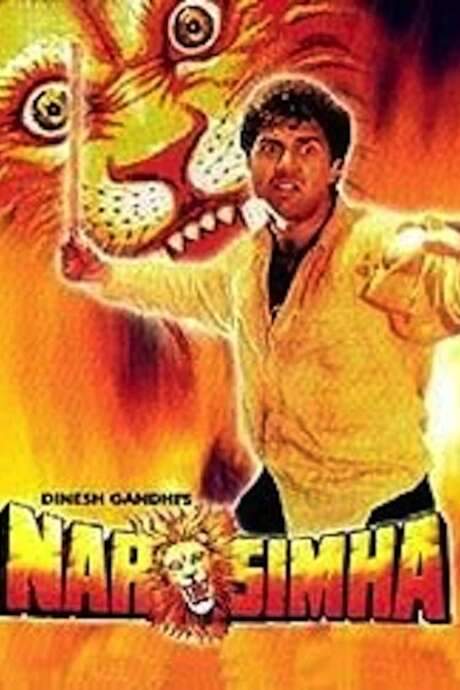
Narsimha (1991) movie poster

Plot Summary

Narsimha (1991) Plot Summary Explained

Release, runtime and language
1991 · 186 mins · Hindi
Directed by
N. Chandra
Starring
Dimple Kapadia, Om Puri, Sunny Deol, Urmila Matondkar, Ravi Behl

Narasimha arranges his sister’s marriage, then returns home to find his family murdered in a neighbourhood feud. Disillusioned, he turns to alcohol and crime, working for Suraj Narayan Singh. When Suraj orders him to kill Ravi Rastogi for loving Meenu, Narasimha refuses, joins Anita, and forces Suraj to approve the marriage, leading to Suraj’s arrest.

On this page (6)
  1. 1 Where to watch
  2. 2 What happens: full plot
  3. 3 Plot questions answered
  4. 4 Movie threads
  5. 5 Movies like Narsimha
  6. 6 Every angle

Where to watch

Where to Watch Narsimha (1991)

Where can you watch Narsimha? Stream, rent or buy it in the US, including on Amazon Video: current JustWatch availability with up-to-date prices.

Streaming availability powered by JustWatch

Full plot summary · contains spoilers

What Happens in Narsimha: Full Plot Summary

The whole story of Narsimha (1991) explained, from the opening scene to the final frame: every key event, every twist and what it all adds up to. Read it as a quick recap before the sequel, to check a scene you missed, or to finally understand what really happened.

Narsimha is a young and capable man, living a middle-class life with his family in a quiet neighborhood. He arranges the marriage of his sister to a suitable young man nearby, hoping for stability and happiness in their small world. On the day of his sister’s delivery, he returns home to a city tense with communal conflict that quickly spirals from the neighborhood to the entire metropolis. He seeks refuge in a nearby dwelling, only to come back and find his whole family murdered. With nothing left to live for, Narsimha falls into crime and alcohol, taking work from Suraj Narayan Singh 'Baapji', a ruthless landlord and power broker who runs the city’s crime, law, and order through wealth and muscle. Baapji sees Narsimha—sharpened by wit and strength—as a weapon to solve his toughest problems, and Narsimha carries out assignments without asking questions, drifting through life in a constant haze of intoxication and dependence on Baapji’s payments.

Yet the thread of humanity remains. Narsimha occasionally helps people in distress, a flicker of conscience in a life consumed by fear and greed. Baapji proclaims to the city that his power makes him invincible, a modern ruler who demands loyalty and obedience, and he expects his subjects to treat him as their lord. When Baapji discovers that his daughter Meenu S. Singh has fallen for her college mate Ravi V. Rastogi, he orders Narsimha to wreck Ravi’s family. Witnessing the courage and honesty of Ravi’s sister, Anita V. Rastogi, Narsimha feels a stir of humanity rekindle within him and vows to protect Anita’s family. As relationships deepen, Anita becomes a catalyst for change, and the trio—Narsimha, Anita, and Ravi—unite to press Baapji to approve Meenu’s marriage to Ravi. The residents of the city begin to rally behind them, chipping away at Baapji’s oppressive rule.

The conflict intensifies as Baapji deploys every trick in the book: goons, muscle, and the threat of lawless force to quell dissent. Narsimha answers with audacity, and in a bold confrontation he defeats Baapji’s famous wrestlers in his private court, a act that signals to the city that Baapji’s grip is not as absolute as he claims. Public pressure swells, and Baapji is eventually arrested on charges tied to his criminal activities, a humiliation he cannot ignore. While in custody, he is pressured by the people and the rising opposition led by Narsimha, Anita, and Ravi, and he is eventually released on bail thanks to his money and top-notch lawyers.

But the tyranny is not over. Baapji forcibly decides to wed Meenu and locks her away, while he captures Narsimha and brings him to his palace. There, Baapji reveals his chilling plan: the riots he orchestrated were meant to imprison the city in fear and keep his control intact. He stabs Narsimha in the abdomen and orders his men to bury the wounded man inside a pillar and plaster it up. The next morning, as Baapji moves to force Meenu into marriage with him, Anita and Ravi arrive with their allies to halt the ceremony. Baapji responds by releasing prisoners and arming the mob, escalating the danger. When Meenu refuses the arranged union and seeks out Ravi, Baapji orders Meenu and Ravi to be plastered alive within the palace walls, a grim scene witnessed by their loyal friends.

In a dramatic turn, Narsimha—wounded but not defeated—breaks free from the pillar, channeling a mythic moment of triumph that echoes the avatar who saved a broken city long ago. He joins forces with his friends and relentless supporters to overthrow Baapji’s enforcers, breaking through the walls to rescue Meenu and Ravi. The palace trembles as the foundation buckles and the structure begins to crumble. Baapji meets his end beneath the falling tower clock, the weight of the city’s revolt finally crushing his reign.

With the tyrant defeated, Ravi and Meenu begin a new chapter together, while Anita and Narsimha find a path to peace, restoring balance to the city. The tale closes on a note of renewed hope, showing how a community can reclaim its life from fear when courage, loyalty, and resilience unite.

Last updated: October 09, 2025 at 14:53

Was this helpful?

Plot questions answered

Narsimha Plot Explained: Your Questions Answered

The questions people ask most about Narsimha (1991): what happens in the confusing scenes, why the characters do what they do, the twists, hidden details and what the ending means. Each answer contains spoilers.

Q1

Who killed Narsimha's family and why did the riots start

Narsimha's family was murdered during communal riots that erupted in the city. The riots were actually orchestrated by Baapji himself, who used the chaos to maintain fear and control over the city. He deliberately stirred up conflict to keep the populace divided and under his thumb, using the disturbances as a tool of oppression.

Foreshadowing: Earlier in the film, Baapji proclaims his power makes him invincible and demands total obedience from the city.

  • family murder
  • riots
  • baapji
  • communal violence
  • oppression
Q2

Why did Narsimha turn to crime after his family was killed

After discovering his murdered family, Narsimha was left with nothing, no family, no purpose, and no means of survival. He fell into alcoholism and took work from Baapji simply to survive. With his whole life destroyed, he had no reason to refuse the dangerous assignments Baapji offered, and he drifted through life in a haze of intoxication, carrying out tasks without question.

Foreshadowing: The film establishes his peaceful middle-class life before the tragedy to show what he lost.

  • crime
  • alcoholism
  • survival
  • grief
  • baapji
Q3

Why did Baapji order Narsimha to destroy Ravi's family

Baapji discovered that his daughter Meenu had fallen in love with her college mate Ravi Rastogi. As a ruthless landlord who demanded obedience, Baapji viewed this forbidden romance as a personal insult and a threat to his authority. He ordered Narsimha to wreck Ravi's family as punishment and to force Meenu into an arranged marriage of his choosing.

Foreshadowing: Baapji earlier declared that the city must treat him as their lord because of his wealth and power.

  • meenu
  • ravi
  • baapji
  • forbidden love
  • arranged marriage
Q4

What made Narsimha turn against Baapji

When Narsimha was sent to destroy Ravi's family, he met Anita, Ravi's sister. Her courage and honest character rekindled the humanity that Narsimha had lost after his family's murder. He realized that destroying an innocent family would make him no better than the man who destroyed his own. He vowed to protect Anita's family instead and joined forces with her and Ravi to oppose Baapji.

Foreshadowing: The film shows Narsimha occasionally helping people in distress even while working for Baapji, showing his conscience was never fully gone.

  • anita
  • transformation
  • humanity
  • rebellion
  • conscience
Q5

What was Baapji's plan with the riots he orchestrated

At the palace, Baapji explicitly reveals that the riots were his tool to keep the city in fear and maintain his control. By orchestrating communal violence, he kept the population divided and dependent on him for protection. This was his way of ensuring no one would challenge his authority, fear kept the city obedient to his ruthless rule.

Foreshadowing: Baapji had earlier proclaimed himself invincible and demanded total loyalty from the city's residents.

  • riots
  • fear
  • control
  • baapji
  • manipulation
Q6

What happened to Narsimha after Baapji captured him

Baapji captured Narsimha and brought him to his palace. There, Baapji stabbed him in the abdomen and ordered his men to bury him alive inside a palace pillar, sealing him in with plaster as punishment for defying him. This was meant to crush Narsimha's resistance permanently and send a message to anyone else who would challenge the tyrant's rule.

Foreshadowing: This scene echoes earlier moments when Baapji used brutal force to eliminate his enemies.

  • buried alive
  • pillar
  • baapji
  • stabbing
  • palace
Q7

How did Narsimha escape from being buried in the pillar

In a dramatic, mythic moment, Narsimha channeled superhuman strength and broke free from inside the pillar. This scene deliberately echoes the Hindu avatar Narasimha, a half-man half-lion deity who emerged to protect the righteous and destroy evil. The film presents Narsimha as a similar savior figure, wounded but not defeated, rising to deliver the city from tyranny.

Foreshadowing: The film's title and the mythic tone around Narsimha's character foreshadow this supernatural-esque escape.

  • escape
  • pillar
  • narasimha avatar
  • mythic
  • superhuman strength
Q8

How did Baapji die in the climax

During the final confrontation, Narsimha, Anita, Ravi, and their supporters fought through Baapji's goons to overthrow his rule. As the palace structure crumbled from the battle, the tower clock fell and crushed Baapji beneath it. This symbolized the end of his tyrannical reign, the very foundation of his power literally collapsed under the weight of the people's uprising.

Foreshadowing: Earlier, Narsimha's public defeat of Baapji's wrestlers had already shown the tyrant could be challenged.

  • baapji death
  • palace
  • tower clock
  • tyranny defeated
  • revolution
Q9

What did Baapji do when he learned about Meenu and Ravi's relationship

When Baapji learned of Meenu's love for Ravi, he forcibly locked her away and decided she would marry him instead. He ordered his men to capture Narsimha and plotted to have Meenu and Ravi plastered alive within the palace walls. His response to the forbidden romance was extreme violence and captivity, treating his daughter's choice as an act of rebellion against his authority.

Foreshadowing: Baapji's earlier reaction to Ravi was to order the destruction of his entire family.

  • meenu
  • ravi
  • forced marriage
  • captivity
  • baapji
Q10

Why did the city's residents support Narsimha against Baapji

The residents had been living under Baapji's oppressive rule for years, his wealth and muscle controlled crime, law, and order in the city. When Narsimha publicly defeated Baapji's wrestlers, it showed the tyrant could be challenged. Inspired by Narsimha's transformation from a feared enforcer to a protector of the innocent, more people joined the cause. The community rallied because they saw an opportunity to reclaim their city from fear.

Foreshadowing: Baapji had proclaimed himself a modern ruler demanding total obedience from his subjects.

  • community uprising
  • rebellion
  • support
  • baapji tyranny
  • city residents
Q11

How did Narsimha and Anita's relationship develop

Narsimha first met Anita when he was sent to destroy her family. Her courage and honest character struck a chord with him, awakening the humanity he had lost. He gradually developed feelings for her as they worked together to oppose Baapji. Anita became the catalyst for his transformation from a aimless criminal back into someone with purpose and moral conviction. By the end, they find peace together, restoring balance to the city.

Foreshadowing: The film shows Narsimha occasionally helping people even while working for Baapji, indicating his conscience was never fully dead.

  • anita
  • narsimha
  • love
  • relationship
  • transformation

Movie threads

More Movies Like Narsimha, by Mood & Story

Curated lists built around what makes Narsimha tick: the same mood, the same kind of story or the same emotional payoff. Each list explains why these movies belong together.

Movies about fallen heroes seeking redemption like Narsimha

A tragic loss pushes a good man into darkness before he fights back for justice. If you liked Narsimha's story of a man's descent into darkness after a tragedy and his ultimate fight for redemption, you'll find similar movies here. These films feature protagonists who overcome personal ruin to achieve a hard-won, triumphant victory against tyranny and injustice.

  • vengeful
  • grim
  • hopeful
  • triumphant
  • sobering
  • redemptive
  • Tone: dark, vengeful, hopeful
  • Pacing: variable, building to a fast climax
Why these movies?

The story pattern: Stories in this thread follow a clear arc: an inciting tragedy destroys the protagonist's world, leading to a period of grief-stricken decline. A catalyst then re-ignites their fighting spirit, prompting a brutal, high-stakes campaign against a powerful antagonist, culminating in a victory that delivers both justice and personal salvation.

Why they belong together: These movies are grouped by their powerful emotional journey from profound loss to righteous vengeance. They share a heavy emotional weight, a dark tone punctuated by hope, and a narrative focus on personal redemption through violent, cathartic conflict.

Movies about violent uprisings against tyranny like Narsimha

A community oppressed by a cruel ruler finds hope in one violent champion. Explore movies similar to Narsimha where a single hero leads a brutal uprising to free a community from a local tyrant. These stories feature high-stakes conflict, political corruption, and communal violence, ending with a cathartic victory for the oppressed.

  • oppressive
  • violent
  • triumphant
  • angry
  • grim
  • hopeful
  • Tone: oppressive, violent, triumphant
  • Pacing: steady build to fast-paced action
Why these movies?

The story pattern: The narrative pattern involves establishing the tyrannical rule and the suffering of the common people. A protagonist, who may initially be aligned with or broken by the oppressor, has a change of heart and decides to fight back. The story builds towards a large-scale, violent confrontation that results in the overthrow of the corrupt power structure.

Why they belong together: This thread connects movies through their core conflict: a grassroots rebellion against a localized, oppressive authority. They share an angry, oppressive mood, high intensity, themes of overthrowing tyranny, and a focus on communal struggle rather than just personal vendetta.

If you liked this

Movies Like Narsimha

Similar movies to Narsimha: the same genre, themes or kind of story. Each one comes with its own plot summary, timeline and ending explained.

Browse all movie summaries

Every angle

Narsimha (1991) Explained: Plot, Timeline & Characters

Everything about Narsimha in one place: what happens in the plot summary, the timeline in chronological order, the characters and meaning and a spoiler-free summary. What's After the Movie adds the cast, box office and post-credit scenes.

Coming soon on iOS and Android

The Plot Explained Movie Summary App

Plot summaries, endings explained and timelines on your phone. Catch up on any movie in minutes, save your favorites and never miss a twist again.

Be the first to know when we launch. Your email stays private, always.

Learn more about the app