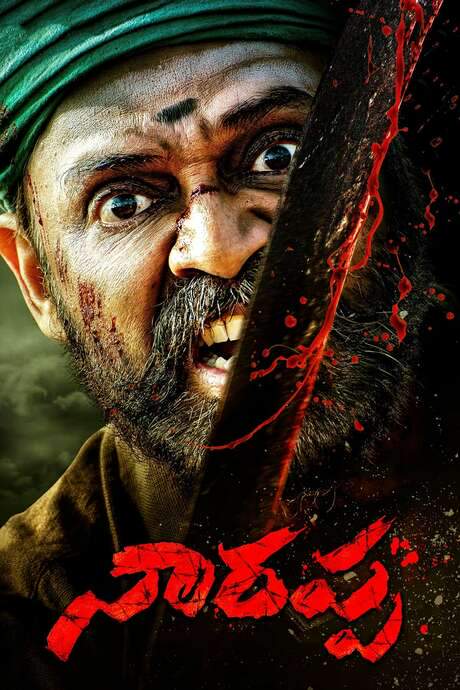
In the Visakhapatnam district, a bitter feud between two neighboring villages sets the stage for a story of duty, vengeance, and uneasy forgiveness. At the heart of the conflict is the peace-loving elder, Raghupati Naidu, K. Viswanath, whose town is repeatedly trampled by his ruthless rival Appala Naidu. To secure control, Raghupati Naidu forms a loyal army and, in a chilling move, decrees that a male child from a family must be sacrificed. This brutal rite designates his younger son Narasimha Naidu, Nandamuri Balakrishna, as the one who will carry a heavy burden of blood and loyalty.
Years advance and Anjali, the pampered daughter of Kuppi Swamy Naidu, Mukesh Rishi, grows up under the shadow of her powerful father’s faction. She catches the eye of Narasimha Naidu, a widower who runs a school supported by a dancer, and she becomes his student, slowly developing real feelings for him. Despite knowing his complexities and the delicate truth of his past, Anjali’s affection deepens, and she stands by him with quiet resolve.
Kuppi Swamy Naidu arranges Anjali’s betrothal to his nephew, the son of Appala Naidu, while Nagamani—their sister—presses to see Narasimha Naidu erased from the picture. Anjali ultimately confesses her love as the two lovers face pursuit by the bridegroom’s henchmen. On a tense train ride, Narasimha Naidu reveals his true identity and his history, forcing a reckoning with the violence that has shaped their families. A long estrangement follows, and after fifteen years Narasimha Naidu has grown into a gallant leader, warning Appala Naidu of the consequences of his aggression.
When Appala Naidu strikes, Narasimha Naidu defeats him, and the cycle of revenge begins to tighten its grip. With his rival defeated, Raghupati Naidu seeks a bride for Narasimha Naidu and selects a compassionate girl, Sravani, Simran, who has a gentle temperament and a fear of violence. The marriage goes ahead, even though Sravani discovers Narasimha Naidu’s lineage and the shadow that follows him. Narasimha Naidu’s three siblings arrive from abroad with mixed feelings—some pride, some neglect—but he welcomes them and tries to mend the rifts, showing his family what true care looks like. They slowly come to see the virtue in his sacrifices and the burden he bears for their safety.
Tragedy punctuates this peace as Kuppi Swamy Naidu’s men launch a hostile attack aimed at Narasimha Naidu’s child, and Sravani is badly wounded in the crossfire. Before her last breath, she pleads for an end to the violence that has haunted their clan, urging Narasimha Naidu to break the cycle of hate. The elder generation—Raghupati Naidu in particular—urges a return to harmony, recognizing that vendettas only breed more pain.
In a dramatic turn, the present-day confrontation erupts when Kuppi Swamy Naidu attacks Raghupati Naidu, only to be confronted by the return of Narasimha Naidu to his homeland. He reconciles with the past by returning Anjali to her family, and the family’s youngest voice breaks through the silence—the child, who, for the first time, calls Anjali his mother. As old rivalries flare again, Narasimha Naidu challenges Kuppi Swamy Naidu, insisting on a future where love and responsibility trump revenge. He confronts the impending wedding with Anjali, and a hospital scene reveals a stark choice: Anjali has undergone a hysterectomy, removing her uterus to prevent more generations from fueling the violence that has defined their lives.
In the end, Narasimha Naidu embraces a hard-won harmony with Anjali, choosing to build a life beyond the blood feud. Their union stands as a testament to restraint, forgiveness, and the possibility of a peaceful future for a family that has weathered the heaviest storms.