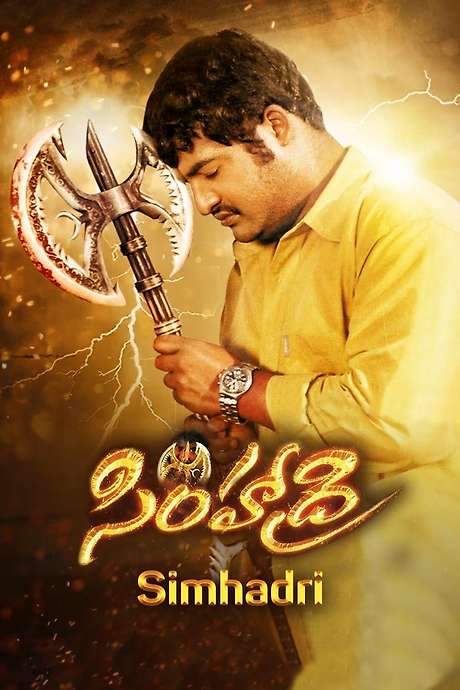
Narasimha Gowda Vishnuvardhan stands as the central pillar of Simhadri, a chieftain who governs 48 villages with the quiet confidence of a seasoned leader. His strength is as imposing as an elephant, and his rule over the region feels as commanding as a lion guarding a vast realm. The people place their trust in his fairness and the clarity of his judgments, turning to him for justice rather than relying on police or formal authorities. In his hands, the balance between order and mercy seeks a steady, durable peace that kinds of power alone cannot guarantee.
The story tests this equilibrium when a grave crime disrupts the calm: Shobraj, a relative of Narasimha Gowda, rapes a girl. In a stark display of Gowda’s code, he is banished from the village for 18 years and is ordered to marry the survivor as part of the sentence. The severity of this verdict underscores a tradition that aims to restore balance within the community while insisting on accountability for transgressions. Yet such a harsh judgment does not go unchallenged, and the moral tensions it stirs ripple through families and the broader village life.
Tragedy follows swiftly when Shobraj’s father kills Narasimha Gowda in retaliation, a fatal blow that unsettles the village’s sense of justice and tests the legitimacy of the ruling authority. The succession then passes to Narasimha Gowda’s elder son, a just and powerful ruler who inherits the mantle of leadership and the responsibility to keep order in a volatile landscape. The new ruler’s presence signals continuity, yet the scars of the past linger, shaping how successors govern and how the people perceive authority.
Time moves on, and after eighteen years the Simhadriya Simha lineage faces a challenge that echoes the earlier crisis. The family finds itself confronted with a difficult decision once more, this time involving Gowda’s brother, Chikka. Gowda must weigh the fate of his kin, and the court decrees that Chikka must leave the village for 10 years. The weight of history presses down, reminding viewers that the line between justice and vengeance is thin and often blurred by loyalties and long-held codes.
As the narrative digs deeper, truth begins to surface when Shobraj’s mother reveals her son’s involvement in falsely implicating Chikka. The revelation exposes a layer of deceit that challenges Gowda to reexamine the judgments passed in the past and the motives that drive those who wield power. The revelation triggers a personal reckoning in Gowda, who realizes his mistake and experiences a collapse of spirit, only to be saved by doctors who revive him. In a poignant coda, a newborn’s recognition of him as doddappa seals a renewed bond between leader and lineage, suggesting that, even after missteps, the community’s future can be rooted in accountability, resilience, and continued hope.