Plot Explained Spoilers guaranteed!
Plot Explained

Browse by genre

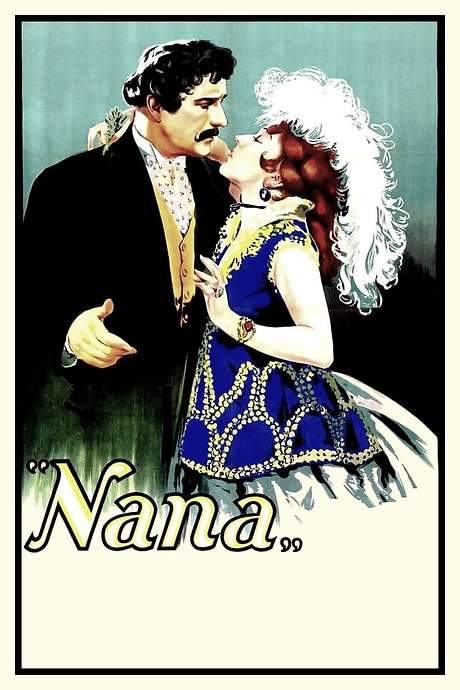
Nana (1934) movie poster

Plot Summary

Nana (1934) Plot Summary Explained

Release, runtime and language
1934 · 90 mins · English
Directed by
Dorothy Arzner
Starring
Mae Clarke, Lionel Atwill, Lucille Ball, Richard Bennett, Reginald Owen, Lawrence Grant

In 1920s Paris, the spirited Nana fends off a drunken military officer in a café, catching the eye of fellow diner Gaston Greiner. He offers her a place in his musical theater, and she quickly becomes a star and the lover of Greiner and two other men. When Greiner learns of her affairs, he fires her, and Nana must struggle to reclaim her singing career while facing new suitors and the fallout of her choices.

On this page (6)
  1. 1 What happens: full plot
  2. 2 Plot questions answered
  3. 3 The book behind the movie
  4. 4 Movie threads
  5. 5 Movies like Nana
  6. 6 Every angle

Full plot summary · contains spoilers

What Happens in Nana: Full Plot Summary

The whole story of Nana (1934) explained, from the opening scene to the final frame: every key event, every twist and what it all adds up to. Read it as a quick recap before the sequel, to check a scene you missed, or to finally understand what really happened.

Nana Anna Sten is a Parisian streetwalker who is discovered by a theatrical impresario and rises to stage fame, stepping into a glittering world where talent meets ambition. Her rise sets the stage for a charged romance with Lieutenant George Muffat Phillips Holmes, a liaison that draws both fascination and protective concern from his older brother, Colonel Muffat Lionel Atwill.

Nana’s circle expands as Satin Mae Clarke, Mimi Muriel Kirkland, and Zoe Jessie Ralph join her in a countryside villa, a move that brings them into close proximity with the Muffat family. The pair’s romance faces stern disapproval from Colonel de Muffat, whose protective stance fuels tension and sets the stage for a calculated intervention. In a bid to drive a wedge between Nana and Georges, the Colonel arranges a overseas assignment, sending Georges on a commission to Algeria with the quiet hope of breaking their bond. Georges, determined not to give up, promises Nana that he will return for her, clinging to a future together.

Time passes and miscommunication festered by distance takes its toll. Nana waits for letters that never arrive, while Satin, Mimi, and Zoe are revealed to have intercepted the correspondence in a calculated bid to pull Nana back into the stage life—and, with it, back toward the wealth she once enjoyed. The ruse momentarily works in the hopes of restoring her former glamour, yet the personal cost grows heavier beneath the gleaming surface of success.

A turning point arrives when an apologetic Colonel de Muffat offers to shepherd Nana toward a fresh theater opportunity, and she accepts the chance to be his mistress. The renewed attention from admirers brings a fresh wave of public adoration, but it deepens Nana’s longing for Georges, and the alcohol-fueled haze that follows hints at a life slipping away from balance and clarity.

Georges finally returns to Paris, seeking the woman he loves and believing she has received his letters while waiting for a sign. He longs to be with Nana, and the couple make plans to run away together, seeking a private refuge away from the encroaching scrutiny of society. But the moment of escape is interrupted when Colonel de Muffat arrives, and the confrontation culminates in a heartbreaking tragedy as Nana’s hopes collapse and she meets a tragic end. In the wake of these events, the film presents a stark portrait of desire, power, and the perilous pull of fame.

Last updated: February 20, 2026 at 12:31

Was this helpful?

Plot questions answered

Nana Plot Explained: Your Questions Answered

The questions people ask most about Nana (1934): what happens in the confusing scenes, why the characters do what they do, the twists, hidden details and what the ending means. Each answer contains spoilers.

Q1

Why does Colonel de Muffat send Georges to Algeria?

Colonel de Muffat deliberately sends Georges to Algeria on a military commission to separate him from Nana. The Colonel strongly disapproves of their relationship due to Nana's background as a streetwalker and stage performer, viewing her as unsuitable for his younger brother. By assigning Georges to an overseas posting, the Colonel hopes the distance will permanently break their bond.

  • colonel muffat
  • georges muffat
  • algeria
  • separation
  • disapproval
Q2

Why do Satin, Mimi, and Zoe intercept Nana's letters from Georges?

Satin, Mimi, and Zoe intercept the correspondence between Nana and Georges specifically to lure Nana back into stage life. They want her to return to the theatrical world where she once enjoyed wealth and status. By creating the illusion that Georges has abandoned her, they hope to convince Nana to abandon her wait and rejoin the stage, restoring their collective access to prosperity.

Foreshadowing: Earlier, the women pooled earnings to buy the villa, showing their shared ambition for financial security.

  • satin
  • mimi
  • zoe
  • letters
  • intercepted
  • stage career
Q3

Why does Nana agree to become Colonel de Muffat's mistress?

Nana accepts the Colonel's offer primarily because he promises to help her return to the theater. After months of waiting for Georges' letters with no word arriving, Nana is vulnerable and desperate for a way back into the life she once knew. The Colonel uses this opportunity to bring her into his orbit while separating her from his brother.

  • colonel muffat
  • mistress
  • theater
  • opportunity
  • desperation
Q4

Why does Nana turn to alcohol after her success returns?

Nana begins drinking heavily because she is overwhelmed by loneliness and longing for Georges. Although her fame and public adoration have returned, she misses him deeply and has no word of his whereabouts. Alcohol becomes her coping mechanism as she waits desperately for a man who appears to have forgotten her, while trapped in an unsatisfying arrangement with the Colonel.

  • alcohol
  • alcoholism
  • loneliness
  • georges
  • coping
Q5

What triggers the final confrontation between Colonel de Muffat and Nana?

The confrontation erupts when Colonel de Muffat discovers that Georges has returned to Paris and the two lovers have planned to run away together. The Colonel arrives at their meeting point, confronting them and shattering their escape plans. This collision between the Colonel's control and the couple's desperate attempt at freedom leads directly to the tragic climax.

  • colonel muffat
  • confrontation
  • escape
  • run away
  • discovery
Q6

Why does Nana take her own life at the end?

Nana commits suicide because she is destroyed by the combined weight of love, betrayal, and social oppression. She has lost Georges (who believed she ignored his letters), become the Colonel's mistress out of desperation, and faces the collapse of any hope for genuine happiness. The final confrontation shatters what little remains of her spirit, leaving her overwhelmed by despair and unable to continue.

  • suicide
  • tragedy
  • despair
  • love
  • betrayal
  • social pressure
Q7

Why does Colonel de Muffat disapprove so strongly of Nana and Georges?

The Colonel views Nana as morally unsuitable for his younger brother because of her profession as a streetwalker turned stage performer. He sees her as a woman of loose morals who will corrupt or harm Georges. Additionally, as Georges' protective elder brother, the Colonel feels responsible for guiding him away from what he considers a destructive relationship that could damage the family name.

  • colonel muffat
  • disapproval
  • class
  • morality
  • family reputation
Q8

Why do Nana and Georges decide to run away together?

Nana and Georges plan to flee together because they want to escape the Colonel's control and societal scrutiny. Georges has returned from Algeria believing Nana received his letters but chose to ignore him, yet he still loves her. Nana, despite her circumstances, holds onto their original promise. Their planned escape represents a final attempt to build a life together away from the forces keeping them apart.

  • escape
  • run away
  • georges
  • freedom
  • love
Q9

How does the intercepted letters situation affect Nana and Georges?

The intercepted letters create a catastrophic miscommunication that poisons their relationship. Nana believes Georges has abandoned her, leading her to accept the Colonel's arrangement. Georges returns believing Nana received his letters and chose to ignore him, which wounds him deeply. This tragic misunderstanding, orchestrated by Satin, Mimi, and Zoe, ultimately prevents the couple from reuniting with clear understanding.

  • miscommunication
  • letters
  • misunderstanding
  • separation
  • betrayal
Q10

Why does Nana agree to return to the stage with the Colonel's help?

Nana agrees to return to the stage because it represents her only path back to the life of fame and financial security she once enjoyed. With Georges gone and no letters arriving, she feels she has no other prospects. The Colonel's offer provides an opportunity to reclaim her status, even though it requires her to become his mistress, a compromise she makes out of desperation rather than desire.

  • stage
  • fame
  • career
  • colonel muffat
  • return
Q11

What is the significance of Nana and her friends buying the countryside villa?

The villa purchase represents the women's collective aspiration for stability and independence away from Paris's streets. By pooling their earnings, they achieve a modest property that brings them closer to the Muffat family. This physical proximity creates the opportunity for the romance between Nana and Georges to deepen while simultaneously placing them under the Colonel's watchful eye.

  • villa
  • countryside
  • satin
  • mimi
  • zoe
  • independence

Movie threads

More Movies Like Nana, by Mood & Story

Curated lists built around what makes Nana tick: the same mood, the same kind of story or the same emotional payoff. Each list explains why these movies belong together.

Tragic melodramas of self-destruction like Nana

Stories centered on a charismatic protagonist's inevitable and bleak downfall. If you were captivated by Nana's tragic arc, explore more movies like it. These films feature charismatic protagonists whose own choices lead to a bleak and inevitable downfall, sharing a somber, fatalistic mood and heavy emotional weight.

  • tragic
  • melancholic
  • fatalistic
  • desperate
  • somber
  • heavy
  • Tone: melancholic, bleak, fatalistic
  • Pacing: steady, character-driven
Why these movies?

The story pattern: The narrative pattern follows a protagonist, often initially full of life or ambition, whose character flaws—such as addiction, unchecked desire, or poor judgment—set them on an inescapable path toward a grim conclusion. The focus is on the psychological and emotional unraveling, with the ending serving as the final, devastating act of their tragedy.

Why they belong together: These films are grouped together because they share a core focus on a tragic character arc, a consistently melancholic and somber tone, and a viewing experience defined by high emotional intensity and a bleak sense of inevitability.

Bleak period dramas with tragic romance like Nana

Historical stories where ambition clashes with harsh social realities. For viewers who enjoyed the 1920s Paris setting and tragic romance of Nana, this list features similar movies. Discover more historical dramas where characters battle social climbing, betrayal, and unrequited love within a visually rich but emotionally harsh world.

  • nostalgic
  • somber
  • tragic romance
  • desperate
  • historical
  • social drama
  • Tone: somber, nostalgic, tragic
  • Pacing: steady, deliberate
Why these movies?

The story pattern: The narrative unfolds within a meticulously recreated historical period, where the protagonist's aspirations for love, fame, or social status are systematically crushed by the era's rigid class structures, moral hypocrisy, or economic pressures. The romantic elements are intense but ultimately serve to highlight the tragedy, culminating in a loss of innocence and a bleak resolution.

Why they belong together: This thread connects films through their shared use of a historical setting to amplify a tragic narrative, a consistently melancholic and nostalgic mood, and a focus on themes like social climbing, betrayal, and the futility of desire within a restrictive society.

If you liked this

Movies Like Nana

Similar movies to Nana: the same genre, themes or kind of story. Each one comes with its own plot summary, timeline and ending explained.

Browse all movie summaries

Every angle

Nana (1934) Explained: Plot, Timeline & Characters

Everything about Nana in one place: what happens in the plot summary, the timeline in chronological order, the characters and meaning and a spoiler-free summary. What's After the Movie adds the cast, box office and post-credit scenes.

Coming soon on iOS and Android

The Plot Explained Movie Summary App

Plot summaries, endings explained and timelines on your phone. Catch up on any movie in minutes, save your favorites and never miss a twist again.

Be the first to know when we launch. Your email stays private, always.

Learn more about the app