Plot Explained Spoilers guaranteed!
Plot Explained

Browse by genre

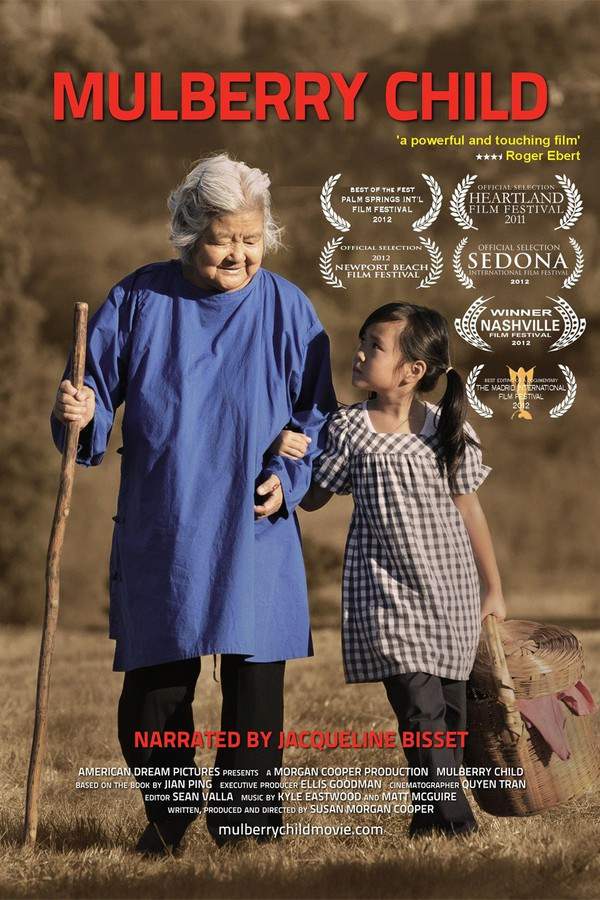
Mulberry Child (2012) movie poster

Timeline

Mulberry Child (2012) Timeline Explained – Every Event in Order

Release, runtime and language
2012 · 85 min · English
Loading streaming availability…
Directed by
Susan Morgan Cooper

A biographical drama portrays Jian Ping's compelling journey, leaving war-torn China for a new life in America. As she shares her turbulent past with her daughter, born in this new world, she grapples with the cultural differences that separate them. Through recounting her experiences, Jian seeks to bridge the emotional distance between mother and daughter, ultimately fostering a sense of belonging and mutual understanding.

On this page (6)
  1. 1 Where to watch
  2. 2 Events in order (13)
  3. 3 Timeline questions answered
  4. 4 Movie threads
  5. 5 Movies like Mulberry Child
  6. 6 Every angle
Loading streaming availability…

13 events in order · contains spoilers

Mulberry Child Timeline: Events in Chronological Order

Every key event of Mulberry Child (2012) in order, scene by scene, with when and where it takes place. Use it to untangle flashbacks, time jumps and parallel storylines, to refresh your memory before the sequel or to find the exact scene you are thinking of.

  1. Birth of Jian Ping

    Jian Ping was born in China in 1960 amidst a devastating famine caused by Mao Zedong's Great Leap Forward. This period marked one of the most tragic times in Chinese history, with tens of millions perishing due to starvation, setting the backdrop for her early life.

    When
    1960
    Where
    China
  2. Childhood Suffering

    As a tiny, premature infant, Jian was often sick and seen as unwanted by her already overburdened mother. This situation led her to be cared for by her grandmother, Nainai, whose nurturing presence was crucial for her survival during these harsh early years.

  3. Parental Loyalty to the Party

    Jian's parents were fervently devoted to the Communist Party, prioritizing duty to Mao over familial ties. Her father, having survived torture during World War II, ultimately rose to become the Deputy Governor of Baicheng, representing the conflicting notions of loyalty and family loyalty.

    Where
    Baicheng, China
  4. Family Betrayal and Arrest

    As societal chaos escalated under Mao's regime, Jian's family faced severe repercussions. Her father was arrested and publicly humiliated, his reputation destroyed as he was labeled a 'Big Traitor,' demonstrating the pervasive atmosphere of fear and suspicion during the Cultural Revolution.

  5. Mother's Resistance

    Jian's mother, a school administrator, was also detained, forced to write self-recriminations while enduring pressure from the Red Guards to denounce her husband. Her refusal to submit to their demands exemplified her strength and determination to protect her family.

  6. Forced Separation

    With escalating danger, Jian and her family faced brutal consequences. Her older siblings were sent away for re-education in the countryside, while Jian and her grandmother were exiled to a primitive mud hut, where they endured harsh living conditions.

  7. Navigating Danger

    At just eight years old, Jian made perilous trips to visit her father in prison. These moments were fraught with danger, as she navigated through hostility and violence directed her way, shaping her understanding of resilience and composure in the face of adversity.

    Where
    Prison
  8. End of the Cultural Revolution

    The Cultural Revolution finally concluded in 1976 with the death of Mao Zedong. This significant event marked a turning point in China’s history and began to shift the narrative, allowing Jian to eventually seek education and a better life.

    When
    1976
    Where
    China
  9. Education and Immigration

    Following the turmoil of her childhood, Jian pursued education, earning an undergraduate degree in English. Her quest for knowledge propelled her to immigrate to the United States, where she achieved two master's degrees, illustrating her determination to build a new life.

    Where
    United States
  10. Family Life in America

    After settling in America, Jian married and had a daughter named Lisa. However, despite her efforts to provide a stable middle-class life, she began to sense a growing disconnection between herself and Lisa, highlighting the complexities of immigrant family dynamics.

  11. Writing the Memoir

    Driven by a need to reconcile her past and connect with her daughter's heritage, Jian embarked on an eight-year journey to write her memoir, 'Mulberry Child.' This work became a critical medium for revealing her experiences under Mao and bridging the gap between generations.

  12. Journey Back to China

    In a poignant family visit, Jian and Lisa returned to China during the 2008 Beijing Olympics. This trip was not just a return to their roots but also a pivotal moment for Lisa, prompting her to begin reading her mother's manuscript and reconsider her understanding of their family history.

    When
    2008
    Where
    China
  13. A Shift in Perspective

    As Lisa engaged with Jian's memoir, her perspective of her mother began to change. Through tracing their family's history, she started to embrace her Chinese heritage, marking a significant emotional connection between mother and daughter that had been previously strained.

Last updated: May 12, 2025 at 07:04

Was this helpful?

Timeline questions answered

Mulberry Child Timeline Explained: Your Questions Answered

When does it happen, and why in that order? The questions people ask about the chronology of Mulberry Child (2012): time jumps, flashbacks, cause and effect between scenes and the correct order of events, each answered with spoilers.

Q1

Why was Jian neglected by her mother during her childhood?

Jian's mother was overwhelmed and neglectful because she already had three other children to care for during an extremely harsh period. Additionally, Jian was born premature and frail, making her seem like a burden in an already struggling family. Most significantly, the Communist regime discouraged expressions of affection, so showing love for any child was actively discouraged and considered politically undesirable.

Foreshadowing: Jian's early neglect foreshadows the emotional distance she later experiences with her own daughter Lisa.

  • jian ping
  • mother
  • neglect
  • cultural revolution
  • childhood
Q2

Why did Jian's parents remain loyal to the Communist Party even after being persecuted?

Jian's father had been tortured by Japanese forces during World War II and was later vindicated, which made him genuinely grateful to the Party for restoring his reputation. He became a true believer in its ideology. Her mother, as a school administrator, was also deeply indoctrinated and prioritized her allegiance to Mao above even the welfare of her own children. Their loyalty was authentic, not performative, which is what made the subsequent betrayal by the Party so devastating.

Foreshadowing: Their unwavering loyalty makes the father's arrest and public humiliation even more tragic and confusing for Jian.

  • communist party
  • loyalty
  • father
  • mother
  • political beliefs
Q3

Why was Jian's father arrested and labeled a 'Big Traitor' despite being a loyal Party member?

During the Cultural Revolution, anyone could be accused and imprisoned without warning. The regime encouraged neighbors to turn against each other, creating an atmosphere of suspicion and false accusations. Jian's father became a victim of these political machinations, possibly due to envy, rivalries, or simply being in the wrong place at the wrong time. The label 'Big Traitor' was arbitrarily applied, and he was publicly humiliated regardless of his actual loyalty.

Foreshadowing: This arbitrary persecution demonstrates the irrational violence of the Cultural Revolution that controlled Jian's entire childhood.

  • father arrest
  • big traitor
  • cultural revolution
  • political persecution
Q4

Why was Lisa not interested in reading her mother's memoir initially?

Lisa was born in America at age five and grew up fully assimilated into American culture. She had no personal connection to China or understanding of her mother's traumatic past. Jian's focus on her difficult history felt irrelevant and burdensome to Lisa, who likely saw it as an uncomfortable reminder of an unfamiliar world. The cultural and generational divide made Lisa view her mother's story as something to escape from rather than embrace.

Foreshadowing: Lisa's initial rejection sets up the central conflict that the memoir and China trip are meant to resolve.

  • lisa
  • memoir
  • rejection
  • cultural divide
  • immigrant family
Q5

What caused Lisa to change her perspective after the 2008 China trip?

The 2008 Beijing Olympics trip gave Lisa tangible, physical connection to her mother's homeland. Visiting China and seeing family made the abstract story become real. When she finally read the manuscript, she could contextualize the trauma within actual places and people, transforming her understanding. Seeing her mother's resilience firsthand, combined with reading the detailed account of their family's suffering, helped Lisa recognize the strength required to survive what her mother endured.

Foreshadowing: This trip is the culmination of the entire narrative's emotional arc.

  • lisa
  • beijing olympics
  • perspective change
  • memoir
  • understanding
Q6

How did Jian's grandmother Nainai contribute to her survival?

Nainai raised Jian during her earliest years when her biological mother was too overwhelmed to care for her. She provided the nurturing and care that kept the frail, premature infant alive during the famine. Nainai remained Jian's protector throughout the Cultural Revolution, staying with her when the family was exiled to the primitive mud hut. Her presence provided emotional stability and physical protection during the most dangerous years of Jian's life.

Foreshadowing: The grandmother's care represents the quiet, persistent love that helped Jian survive when the state and even family failed her.

  • nainai
  • grandmother
  • survival
  • nurturing
  • cultural revolution
Q7

Why did Jian's mother refuse to denounce her husband when pressured by the Red Guards?

Despite her deep loyalty to the Party, Jian's mother demonstrated remarkable personal strength by refusing to renounce her husband. She resisted demands from the Red Guards to write statements against him and refused to let her children grow up without their father. This act showed that her love for her family ultimately exceeded her ideological commitment, a decision that likely saved the family from further destruction and maintained their dignity.

Foreshadowing: The mother's resistance contrasts with the political betrayal the family suffers, showing the complex nature of loyalty during the Cultural Revolution.

  • mother
  • red guards
  • resistance
  • denounce
  • husband
Q8

Why did Jian feel a growing disconnect from her daughter Lisa despite building a stable life in America?

After immigrating to America, Jian worked hard to establish a middle-class life for her family, achieving two master's degrees and providing material stability. However, her traumatic past and Chinese heritage created an invisible barrier. Lisa, raised entirely in American culture, could not relate to Jian's experiences. Jian felt that without sharing her full history, she remained emotionally distant from her daughter, leading her to write the memoir as an attempt to bridge that gap.

Foreshadowing: This disconnection is the driving force behind Jian's decision to write the memoir, which becomes the central project of her adult life.

  • disconnect
  • daughter
  • lisa
  • immigrant family
  • american culture
Q9

What was the significance of the 2008 Beijing Olympics trip for the family?

The 2008 Beijing Olympics trip represented a full-circle journey for Jian and Lisa. It was the first time they returned to China together since Jian had immigrated. The trip provided Lisa with tangible context for her mother's stories, actual places, living relatives, and the atmosphere of a transformed China. This real-world connection made the memoir's narrative concrete for Lisa and broke down the abstract distance that had prevented her from understanding her mother's past.

Foreshadowing: This trip directly enables the resolution of the mother-daughter conflict that has defined their relationship.

  • beijing olympics
  • 2008
  • trip
  • china
  • family reunion
Q10

How did Jian overcome her difficult childhood to become successful in America?

Jian's childhood trauma shaped her into a resilient and determined person. After the Cultural Revolution ended in 1976, she returned to education and earned an undergraduate degree in English. She then immigrated to the United States, where she achieved two master's degrees, exemplifying her drive to build a better life. The hardships taught her to maintain composure, hide vulnerability, and never burden others with her pain, qualities that helped her survive and eventually thrive.

Foreshadowing: Jian's resilience in America is directly rooted in the survival skills she developed during the Cultural Revolution.

  • success
  • education
  • immigration
  • resilience
  • overcome

Movie threads

More Movies Like Mulberry Child, by Mood & Story

Curated lists built around what makes Mulberry Child tick: the same mood, the same kind of story or the same emotional payoff. Each list explains why these movies belong together.

Movies about family reconciliation like Mulberry Child

Generations collide and connect through shared stories of trauma and identity. If you liked Mulberry Child's journey of a mother and daughter connecting through a difficult past, you'll appreciate these movies. They explore similar themes of intergenerational healing, cultural identity, and the power of storytelling to mend family bonds.

  • intergenerational
  • reflective
  • hopeful
  • melancholic
  • resilient
  • emotional
  • Tone: bittersweet, reflective
  • Pacing: steady, character-driven
Why these movies?

The story pattern: These narratives typically move between past and present, using historical trauma or migration stories as a key to unlocking understanding in the present. The central conflict is often emotional distance, resolved not by forgetting the past, but by confronting it together.

Why they belong together: They are grouped by their shared focus on reconciliation, the heavy emotional weight of family history, and a bittersweet tone that balances hardship with hopeful connection. The pacing is often steady and reflective.

Historical survival dramas like Mulberry Child

Personal stories of endurance against the backdrop of political upheaval and famine. Explore movies like Mulberry Child that focus on personal survival during historical turmoil. These biographical dramas share themes of political persecution, resilience against famine, and the heavy emotional journey of enduring and overcoming oppression.

  • oppressive
  • resilient
  • melancholic
  • historical
  • grim
  • hopeful
  • Tone: melancholic, oppressive, ultimately hopeful
  • Pacing: steady, immersive
Why these movies?

The story pattern: The narrative follows a linear or reflective journey through a specific dark period in history, such as war, revolution, or famine. The protagonist's arc is defined by survival against overwhelming odds, often emphasizing the psychological and emotional toll as much as the physical one.

Why they belong together: They share a high intensity focus on severe hardship, a heavy emotional weight, and a tone that finds hope or bittersweet resolution after immense suffering. The pacing is steady, methodically building a portrait of endurance.

If you liked this

Movies Like Mulberry Child

Similar movies to Mulberry Child: the same genre, themes or kind of story. Each one comes with its own plot summary, timeline and ending explained.

Browse all movie summaries

Every angle

Mulberry Child (2012) Explained: Plot, Timeline & Characters

Everything about Mulberry Child in one place: what happens in the plot summary, the timeline in chronological order, the characters and meaning and a spoiler-free summary. What's After the Movie adds the cast, box office and post-credit scenes.

Coming soon on iOS and Android

The Plot Explained Movie Summary App

Plot summaries, endings explained and timelines on your phone. Catch up on any movie in minutes, save your favorites and never miss a twist again.

Be the first to know when we launch. Your email stays private, always.

Learn more about the app