







Plot Explained Spoilers guaranteed!
Plot Explained

Browse by genre

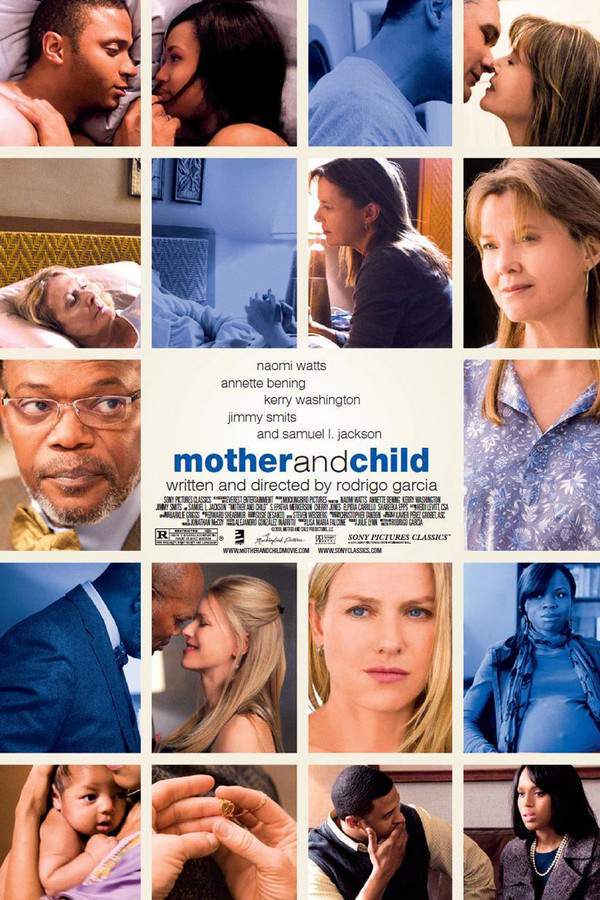
Mother and Child (2010) movie poster

Plot Summary

Mother and Child (2010) Plot Summary Explained

Release, runtime and language
2010 · 125 min · English
JustWatch #15,762 9
Directed by
Rodrigo García
Starring
Kerry Washington, Annette Bening, Naomi Watts
Budget
$7M

The lives of three women intertwine, exploring the emotional complexities of motherhood and adoption. Karen grapples with the memory of a daughter she placed for adoption years ago. Meanwhile, Elizabeth, a successful lawyer, seeks deeper connections despite a reserved nature. Lucy and her husband embark on their own adoption journey, hoping to realize their dream of becoming parents, and their paths unexpectedly converge.

On this page (6)
  1. 1 Where to watch
  2. 2 What happens: full plot
  3. 3 Plot questions answered
  4. 4 Movie threads
  5. 5 Movies like Mother and Child
  6. 6 Every angle

Where to watch

Where to Watch Mother and Child (2010)

Where can you watch Mother and Child? Stream, rent or buy it in the US, including on Amazon Video, Apple TV Store and Fandango At Home: current JustWatch availability with up-to-date prices.

Streaming availability powered by JustWatch

Full plot summary · contains spoilers

What Happens in Mother and Child: Full Plot Summary

The whole story of Mother and Child (2010) explained, from the opening scene to the final frame: every key event, every twist and what it all adds up to. Read it as a quick recap before the sequel, to check a scene you missed, or to finally understand what really happened.

Karen Kerry Washington carries a quiet ache from a decision made when she was fourteen: to give her daughter up for adoption. That choice has haunted her and colors how she forms connections, making intimacy feel fragile and risky.

At work, she meets Paco, a laid-back man whose warmth clashes with her guarded nature. Their initial tension gradually eases as trust grows, and they eventually marry.

Paco persuades Karen to write a letter to her unknown, adult daughter, leaving it at the Catholic adoption agency. The letter is unsigned because Karen never learned the daughter's name, and the clerk who would file it becomes distracted.

Elizabeth [Naomi Watts] grows up solitary, willful, and hardhearted. She becomes an attorney at a prestigious firm led by Paul. The two have an affair, and although Elizabeth had her tubes tied at seventeen, she becomes pregnant. She quits without telling Paul and moves to a new apartment and a new job.

Paul stops by and offers to end his current relationship to become a proper couple, a gesture Elizabeth declines. Yet he convinces her to leave a letter for her biological mother with the adoption agency.

Lucy [Annette Bening] is a baker who longs to be a mother but cannot have children. She and her husband Joseph contact the same agency and, after a protracted interview, meet a young pregnant woman who agrees to give them her baby.

Shortly before birth, Joseph reveals that he wants his own biological child, and the couple separates, but Lucy plans to go ahead with the adoption alone. The birth mother changes her mind just after the birth, leaving Lucy devastated.

Elizabeth dies during childbirth. With no one stepping forward to claim the baby, the agency offers the infant to Lucy, who adopts her. Lucy's early days as a mother are intense, and she leans on her own mother for guidance.

One year later, Karen learns of Elizabeth's death and the misplaced letter that informed her she has a granddaughter named Ella. The agency arranges a meeting, and Karen meets Ella, who lives nearby, along with Lucy in the neighborhood.

Last updated: November 22, 2025 at 15:58

Was this helpful?

Plot questions answered

Mother and Child Plot Explained: Your Questions Answered

The questions people ask most about Mother and Child (2010): what happens in the confusing scenes, why the characters do what they do, the twists, hidden details and what the ending means. Each answer contains spoilers.

Q1

Why did Karen give up her daughter for adoption?

Karen became pregnant at fourteen, and her mother made the decision for her to give the baby up for adoption. This wasn't Karen's choice but rather her mother's, and it has haunted Karen for decades, affecting her ability to form intimate relationships throughout her adult life.

  • karen
  • adoption
  • teenage pregnancy
  • daughter
Q2

What happened to the letter Karen wrote to her daughter?

Karen wrote an unsigned letter to her unknown daughter and left it at the Catholic adoption agency, but the clerk who was supposed to file it became distracted and never processed it. The letter sat unopened for years, only being discovered later when Elizabeth died.

Foreshadowing: Karen's decision to write the letter marks a pivotal emotional moment that eventually connects her to her granddaughter.

  • letter
  • adoption agency
  • catholic agency
  • file
Q3

How did Elizabeth get pregnant despite having her tubes tied?

Elizabeth became pregnant even though she had her tubes tied at seventeen, which was an unexpected medical occurrence. The film presents this as a rare but possible event that fundamentally changed the direction of her life.

  • elizabeth
  • pregnancy
  • tubes tied
  • contraception failure
Q4

Why did Elizabeth quit her job without telling Paul about the pregnancy?

Elizabeth discovered she was pregnant and chose to quit her demanding job at the prestigious law firm. She kept the pregnancy secret from Paul initially because she wanted to maintain independence and control over her life, having always been solitary and self-reliant.

Foreshadowing: Elizabeth's solitary nature and independence were established early in her character development, foreshadowing her decision to handle the pregnancy alone.

  • elizabeth
  • paul
  • pregnancy
  • job
  • law firm
Q5

Why did the birth mother change her mind about giving up her baby?

The young pregnant woman who had agreed to let Lucy and Joseph adopt her baby changed her mind immediately after giving birth. The film shows this as a gut-wrenching but realistic moment where the biological mother couldn't go through with the adoption once she held her child.

  • birth mother
  • adoption changed mind
  • lucy
  • joseph
Q6

How did Lucy end up adopting Elizabeth's baby?

Elizabeth died during childbirth, and with no family stepping forward to claim the baby, the adoption agency offered the newborn to Lucy, who had been seeking to adopt through the same agency. Lucy adopted the baby and named her Ella.

Foreshadowing: The convergence of these storylines, the failed adoption, Elizabeth's death, and Lucy's longing for a child, creates the ironic twist that brings them together.

  • lucy
  • elizabeth
  • ella
  • adoption
  • childbirth death
Q7

Why did Joseph leave Lucy before the baby was born?

Shortly before the birth, Joseph revealed that he wanted his own biological child rather than adopting someone else's. This fundamental difference in desire caused the couple to separate, with Lucy deciding to proceed with the adoption on her own.

  • joseph
  • lucy
  • separation
  • biological child
  • adoption
Q8

How did Karen find out about her granddaughter Ella?

One year after Elizabeth's death, Karen learned about it through the misplaced letter that was eventually found. The letter informed her that she had a granddaughter named Ella, and the agency arranged for Karen to meet Ella, who lived nearby with Lucy.

Foreshadowing: The letter Karen left years earlier, forgotten and unprocessed, becomes the crucial link that reconnects her to the daughter she never knew and the granddaughter she now discovers.

  • karen
  • ella
  • letter
  • granddaughter
  • agency
Q9

Why is Karen so guarded and unable to open up to Paco?

Karen's inability to be vulnerable stems from the trauma of giving up her daughter at fourteen. That experience made her fear that getting close to anyone would lead to more loss and pain, which is why she keeps Paco at a distance initially despite his warmth.

Foreshadowing: Karen's early encounter with Paco shows her hostile demeanor, which gradually thaws as he demonstrates patience and consistent affection.

  • karen
  • Paco
  • trauma
  • intimacy
  • attachment
Q10

What happened to Elizabeth during childbirth?

Elizabeth died during childbirth. The film does not go into medical details but presents her death as a tragic outcome of her pregnancy, leaving the newborn without a mother and creating the circumstances that allow Lucy to adopt the baby.

Foreshadowing: Elizabeth's solitary, self-reliant nature throughout the film makes her decision to carry the pregnancy to term alone feel consistent with her character, even as it leads to this fatal outcome.

  • elizabeth
  • childbirth death
  • pregnancy
  • hospital
Q11

Who is Ella's biological mother?

Ella's biological mother is Elizabeth, who was Karen's daughter that she gave up for adoption decades earlier. Elizabeth died during childbirth, and her baby was adopted by Lucy, making Ella both Karen's granddaughter and Lucy's daughter.

  • ella
  • elizabeth
  • biological mother
  • Karen
  • lucy
Q12

Why did Elizabeth agree to leave a letter for her biological mother?

Paul convinced Elizabeth to leave a letter for her biological mother at the adoption agency, even though she had declined his offer to leave his current relationship and be with her. This gesture represented Elizabeth's attempt to make peace with her origins, however reluctantly.

  • elizabeth
  • paul
  • letter
  • biological mother
  • adoption agency

Movie threads

More Movies Like Mother and Child, by Mood & Story

Curated lists built around what makes Mother and Child tick: the same mood, the same kind of story or the same emotional payoff. Each list explains why these movies belong together.

Movies with Interconnected Stories like Mother and Child

Stories where separate lives intertwine around a central theme. If you appreciated the narrative structure of Mother and Child, you'll find similar depth in these movies. This selection features character-driven dramas where seemingly separate lives converge around themes of family, loss, or connection, creating a powerful, unified emotional impact.

  • interconnected
  • reflective
  • intimate
  • aching
  • yearning
  • melancholic
  • Tone: bittersweet, reflective, intimate
  • Pacing: steady, character-driven
Why these movies?

The story pattern: Stories in this thread typically follow several distinct protagonists, each with their own narrative arc. These parallel journeys gradually reveal thematic or literal connections, often culminating in a moment of convergence that recontextualizes the entire narrative and highlights the characters' shared humanity.

Why they belong together: Movies are grouped here because they share a specific narrative structure built around multiple protagonists whose individual stories are thematically or literally linked. This creates a unique viewing experience focused on the interconnectedness of human experience rather than a single hero's journey.

Movies About the Complexities of Motherhood like Mother and Child

Dramas exploring the profound joys and sorrows of being a mother. For viewers who connected with Mother and Child's deep exploration of maternal bonds, this collection features similar dramas. These films honestly portray the emotional weight of motherhood, including themes of adoption, loss, and the yearning for connection, with a steady, character-focused approach.

  • aching
  • intimate
  • melancholic
  • yearning
  • somber
  • reflective
  • Tone: bittersweet, melancholic, hopeful
  • Pacing: steady, deliberate
Why these movies?

The story pattern: The narrative pattern focuses on a woman's or women's journey through the different facets of motherhood—whether it's longing for a child, grieving a loss, navigating adoption, or reconciling with a strained relationship. The conflict is often internal and emotional, driven by character reflection rather than external action.

Why they belong together: These films are grouped together because they share a central thematic focus on the emotional complexities of motherhood. They resonate through their honest portrayal of maternal joy, grief, sacrifice, and connection, creating a deeply intimate and often bittersweet viewing experience.

If you liked this

Movies Like Mother and Child

Similar movies to Mother and Child: the same genre, themes or kind of story. Each one comes with its own plot summary, timeline and ending explained.

Browse all movie summaries

Every angle

Mother and Child (2010) Explained: Plot, Timeline & Characters

Everything about Mother and Child in one place: what happens in the plot summary, the timeline in chronological order, the characters and meaning and a spoiler-free summary. What's After the Movie adds the cast, box office and post-credit scenes.

Coming soon on iOS and Android

The Plot Explained Movie Summary App

Plot summaries, endings explained and timelines on your phone. Catch up on any movie in minutes, save your favorites and never miss a twist again.

Be the first to know when we launch. Your email stays private, always.

Learn more about the app