Plot Explained Spoilers guaranteed!
Plot Explained

Browse by genre

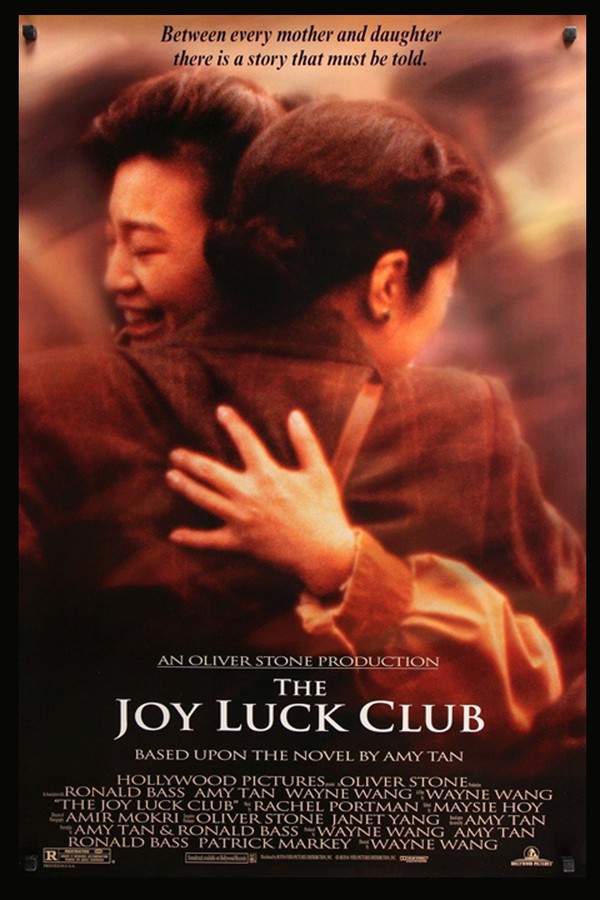
The Joy Luck Club (1993) movie poster

Plot Summary

The Joy Luck Club (1993) Plot Summary Explained

Release, runtime and language
1993 · 139 min · English
Directed by
Wayne Wang
Starring
Rosalind Chao, Tamlyn Tomita

In San Francisco's Chinatown, a group of Chinese matriarchs gather to reminisce about their lives over Mahjong games. The story explores the complicated relationships between these women and their American-born daughters, revealing a history of love, loss, and perseverance across generations and continents. It’s a poignant look at cultural differences, the immigrant experience, and the enduring power of mother-daughter bonds as they search for understanding and identity.

On this page (7)
  1. 1 Where to watch
  2. 2 What happens: full plot
  3. 3 Plot questions answered
  4. 4 The book behind the movie
  5. 5 Movie threads
  6. 6 Movies like The Joy Luck Club
  7. 7 Every angle

Where to watch

Where to Watch The Joy Luck Club (1993)

Where can you watch The Joy Luck Club? Stream, rent or buy it in the US, including on Amazon Video, Apple TV Store and Fandango At Home: current JustWatch availability with up-to-date prices.

Streaming availability powered by JustWatch

Full plot summary · contains spoilers

What Happens in The Joy Luck Club: Full Plot Summary

The whole story of The Joy Luck Club (1993) explained, from the opening scene to the final frame: every key event, every twist and what it all adds up to. Read it as a quick recap before the sequel, to check a scene you missed, or to finally understand what really happened.

The film opens with a poignant narrative from June, highlighting the symbolism of a swan feather during the opening credits, leading into a heartfelt farewell party in San Francisco. This event celebrates June's imminent reunion with her long-lost twin sisters in China. Among the attendees are members of The Joy Luck Club, their daughters, and various relatives and friends. The stories unfold as characters share their life journeys, reflecting on their pasts.

Formed by four remarkable women—Lindo Jong (played by Tsai Chin), Ying-Ying St. Clair (France Nuyen), An-Mei Hsu (Lisa Lu), and Suyuan Woo (Kieu Chinh)—The Joy Luck Club has been a cornerstone for these women in San Francisco. Over the years, they have gathered to play mahjong and share their stories, having immigrated from China and built new lives in America. After the death of Suyuan, her daughter June (Ming-Na Wen) takes her place in the group, carrying the weight of her mother's expectations. The film emphasizes the complex dynamics between the mothers and their daughters, illustrating the struggles faced by the daughters as they navigate anxiety and feelings of inadequacy.

In a gripping backstory, young Lindo (Ying Wu) faces an arranged marriage to Tyan Hu, a boy uninterested in their union. As she endures a childless and abusive marriage, she cleverly orchestrates her escape, ultimately moving to Shanghai. Fast forward to America, Lindo now has a son and a daughter named Waverly (Tamlyn Tomita), who becomes a chess champion by the age of nine. The relationship between Lindo and Waverly is fraught with tension, as each woman grapples with expectations and identity. After experiencing a tumultuous relationship with Rich (Christopher Rich), Waverly finds reconciliation with her mother, showcasing layers of familial bond.

Ying-Ying’s backstory reveals her sorrowful marriage to Lin-Xiao, which leads to trauma and the loss of her child. Her daughter Lena (Lauren Tom) grapples with her own marriage, feeling invisible and resentful beneath her husband Harold (Michael Paul Chan). Airing their grievances leads to Lena's empowerment, inspired by Ying-Ying's struggles, helping her reclaim her voice.

An-Mei’s story is one steeped in tragedy, marked by betrayal and loss, as she navigates her feelings regarding her mother and her own marriage with Ted Jordan (Andrew McCarthy). The narrative deepens as An-Mei implores Rose to stand firm against Ted's infidelities, evolving into a stronger woman who embraces her identity.

The narrative culminates in early World War II as Suyuan flees the Japanese invasion with her twin daughters. In a heartbreaking moment, she abandons them in a tree while seeking refuge, leaving behind a note for their future. Her story is intertwined with June's journey of understanding herself and her heritage. The tension between June and her deceased mother ultimately resolves during her transformative journey to China to meet her sisters, where she makes peace with her past and embraces her Chinese culture, demonstrating the profound bond of motherhood and the enduring impact of the past on the present.

Last updated: November 02, 2024 at 12:35

Was this helpful?

Plot questions answered

The Joy Luck Club Plot Explained: Your Questions Answered

The questions people ask most about The Joy Luck Club (1993): what happens in the confusing scenes, why the characters do what they do, the twists, hidden details and what the ending means. Each answer contains spoilers.

Q1

Why does June take her mother's place in The Joy Luck Club?

After Suyuan dies, June is asked to take her mother's place in the Joy Luck Club. This isn't simply a casual invitation, it carries the weight of inheriting her mother's legacy and responsibilities. June feels the burden of her mother's expectations, as Suyuan had hoped June would achieve the success and identity that Suyuan never could. Taking her mother's place forces June to confront both her grief and her complicated feelings about her Chinese heritage.

Foreshadowing: The farewell party at the opening establishes June's reluctance and emotional conflict about the trip she eventually takes.

  • June
  • Suyuan
  • Joy Luck Club
  • death
  • inheritance
  • expectations
Q2

Why did Lindo leave her arranged marriage to Tyan Hu?

Lindo's arranged marriage to Tyan Hu was deeply unhappy, he showed no interest in her, and she endured years of childlessness and abuse. Rather than accept this life, Lindo cleverly orchestrated her escape by convincing Tyan Hu's family that she was a bad luck omen who should be sent away. This act of resourcefulness allowed her to travel to Shanghai and eventually to America, where she built a new life. Her escape represents the resilience and quiet defiance that defines her character.

Foreshadowing: The film hints at Lindo's determination early in her backstory through her strategic thinking.

  • Lindo
  • arranged marriage
  • Tyan Hu
  • abuse
  • escape
  • Shanghai
Q3

Why is Waverly's relationship with her mother Lindo so tense?

The tension between Waverly and Lindo stems from competing expectations and cultural misunderstandings. When Waverly becomes a chess champion at age nine, Lindo takes excessive credit for her success, boasting to others in a way that embarrasses Waverly. This triggers a rift that extends into Waverly's adult life, including her tumultuous relationship with Rich. Their conflict represents the broader generational and cultural divide between the mothers who sacrificed everything and their American-born daughters who struggle to meet expectations while forging their own identities.

Foreshadowing: The chess championship scene establishes the pattern of Lindo's pride conflicting with Waverly's need for autonomy.

  • Waverly
  • Lindo
  • chess
  • conflict
  • expectations
  • cultural divide
  • mother-daughter
Q4

Why does Lena feel invisible in her marriage to Harold?

Lena feels invisible in her marriage because Harold dismisses her opinions and treats her as subordinate, mirroring the dynamics her mother Ying-Ying experienced in her own marriage to Lin-Xiao. Like her mother, Lena has been conditioned to accept being undervalued. However, when she finally hears her mother's painful story, including the loss of a child, Lena recognizes the pattern and finds the courage to confront Harold about the unequal division of their assets, breaking free from the cycle of submission.

Foreshadowing: Ying-Ying's recounting of her lost child and unhappy marriage foreshadows Lena's realization about her own situation.

  • Lena
  • Ying-Ying
  • Harold
  • marriage
  • invisible
  • empowerment
  • cycle
Q5

Why did Suyuan abandon her twin daughters during WWII?

During the Japanese invasion in early World War II, Suyuan was forced to flee with her twin daughters and faced an impossible choice. Knowing she could not safely carry them with her while seeking refuge, she abandoned them in a tree with a note, believing this gave them a chance at survival. This heartbreaking decision was an act of desperate love, she prioritized their safety over staying together. The twins survived and were eventually found, but Suyuan never recovered them before her death.

Foreshadowing: The film's opening and closing bookend this sacrifice, with June eventually discovering its full significance.

  • Suyuan
  • twin daughters
  • WWII
  • abandonment
  • sacrifice
  • Japan
  • China
Q6

Why do the mothers share their painful past stories with their daughters?

The mothers share their painful stories during Joy Luck Club gatherings because they believe their daughters need to understand the sacrifices and struggles that shaped their family history. By revealing their pasts, including abusive marriages, loss, and displacement, the mothers hope to help their daughters avoid repeating similar mistakes and to appreciate the resilience that runs in their family. These stories are meant to bridge the cultural divide between them, though the daughters often initially resist or fail to understand the lessons.

Foreshadowing: The mahjong table serves as the recurring setting where these confessions occur, emphasizing their ritualistic importance.

  • mothers
  • daughters
  • stories
  • past
  • sacrifice
  • cultural divide
  • lesson
Q7

Why is June's journey to China significant?

June's journey to China to meet her long-lost twin sisters is significant because it represents her first direct connection to her heritage and her mother's legacy. Throughout the film, June feels burdened by her mother's expectations and struggles to understand her identity as a Chinese-American. Meeting her sisters allows her to reconcile with her mother's memory, embrace her Chinese roots, and find peace with her own identity. The journey transforms her from someone carrying her mother's weight to someone who understands and honors her mother's sacrifice.

Foreshadowing: The swan feather symbolism at the opening prefigures June's journey toward understanding and letting go.

  • June
  • China
  • twin sisters
  • journey
  • identity
  • heritage
  • reconciliation
  • Suyuan
Q8

Why does Lindo take credit for Waverly's chess success?

Lindo takes credit for Waverly's chess success because she views her daughter's achievements as a reflection of her own sacrifices and a validation of their family's worth. Having escaped an unhappy marriage in China and building a new life in America, Lindo wanted recognition for the opportunities she created. Her boasting comes from a place of pride, but it overlooks Waverly's individual achievement and autonomy, creating tension that mirrors the broader conflict between immigrant parents and their American-born children who want to be seen as individuals, not extensions of their parents' dreams.

Foreshadowing: This behavior establishes the pattern that leads to Waverly's later estrangement from her mother.

  • Lindo
  • Waverly
  • chess
  • pride
  • achievement
  • immigrant parents
  • identity
Q9

Why does Rose stand up to Ted after An-Mei's advice?

Rose initially accepts Ted Jordan's infidelities because she doubts her own worth and fears losing her marriage. However, when An-Mei shares her own painful story about betrayal and loss, she implores Rose to assert her identity and refuse to be diminished. This conversation gives Rose the strength to stand firm against Ted's affairs, ultimately leading to her transformation into a stronger woman who embraces her identity rather than accepting mistreatment.

Foreshadowing: An-Mei's own history of betrayal and loss provides the emotional foundation for her compelling plea to Rose.

  • Rose
  • Ted
  • An-Mei
  • infidelity
  • assertion
  • identity
  • strength
Q10

Why do the daughters struggle to connect with their mothers?

The daughters struggle to connect with their mothers because of the cultural and generational divide between them. The mothers immigrated from China carrying traumatic pasts and great sacrifices, while their American-born daughters grew up with different values and expectations. The daughters often feel burdened by their mothers' hopes and unable to meet them, while the mothers struggle to understand their daughters' American perspectives. This mutual misunderstanding creates emotional distance, though the film shows that understanding can be achieved when the daughters finally listen to their mothers' stories.

Foreshadowing: The film's structure of interleaving mother-daughter pairings gradually reveals how the divide affects each relationship.

  • daughters
  • mothers
  • cultural divide
  • immigrant
  • generation
  • gap
  • understanding
Q11

What is the significance of the swan feather in the opening?

The swan feather that June describes during the opening credits symbolizes the fragility and beauty of memory, sacrifice, and the connections between generations. Just as a feather can travel far on the wind, the mothers' stories and sacrifices have traveled across oceans and generations to reach their daughters. This image sets the tone for the entire film, a tender, bittersweet reflection on what is left behind and what endures.

Foreshadowing: The feather prefigures June's journey, which literally takes her across the Pacific to reclaim her heritage.

  • swan feather
  • opening
  • symbolism
  • memories
  • sacrifice
  • symbolism
Q12

Why does The Joy Luck Club matter to the mothers?

The Joy Luck Club matters to the mothers because it represents a safe space where they can share their stories, support each other, and maintain connection to their Chinese heritage while living in America. After immigrating and facing isolation, the four women created this community through their weekly mahjong gatherings. The club becomes a place where they can process their past traumas, celebrate their resilience, and pass their wisdom to the next generation. For Suyuan's daughter June, taking her mother's place means inheriting not just a seat at the table, but a legacy of survival and strength.

Foreshadowing: The formation of the club is presented as a pivotal moment that shapes all subsequent generations.

  • Joy Luck Club
  • mahjong
  • community
  • heritage
  • support
  • immigration
  • Chinese

Movie threads

More Movies Like The Joy Luck Club, by Mood & Story

Curated lists built around what makes The Joy Luck Club tick: the same mood, the same kind of story or the same emotional payoff. Each list explains why these movies belong together.

Intergenerational Mother-Daughter Stories like The Joy Luck Club

Stories centered on the complex bonds and shared histories between mothers and daughters. Explore more movies like The Joy Luck Club that feature powerful, multi-generational narratives about mothers and daughters. If you enjoyed the complex family dynamics and exploration of cultural identity, you'll find similar heartfelt dramas here.

  • heartfelt
  • poignant
  • nostalgic
  • reflective
  • strained
  • tender
  • Tone: bittersweet, heartfelt
  • Pacing: steady, reflective
Why these movies?

The story pattern: The narrative often unfolds through a tapestry of memories and flashbacks, weaving together the separate but interconnected stories of different family members. The central conflict revolves around misunderstanding and reconciliation, as characters slowly uncover the truths of their parents' lives to better understand their own.

Why they belong together: These films are grouped together for their profound exploration of family, their focus on female perspectives, and their shared tone of bittersweet reflection. They prioritize emotional depth over plot-driven action, creating a powerful and cathartic viewing experience.

Bittersweet Immigrant Family Dramas like The Joy Luck Club

Emotional stories of families navigating cultural divides and the immigrant experience. Find movies similar to The Joy Luck Club that capture the bittersweet essence of the immigrant experience. These films share themes of cultural identity, generational conflict, and the heavy emotional weight of family secrets and sacrifice.

  • poignant
  • melancholic
  • nostalgic
  • heartfelt
  • reflective
  • strained
  • Tone: bittersweet, poignant
  • Pacing: steady, character-driven
Why these movies?

The story pattern: Stories typically center on a family unit, contrasting the parents' experiences of hardship and adaptation with their children's struggles of assimilation and identity. The plot is driven by emotional revelations and the slow unraveling of secrets from the old country, leading to a climax of understanding, if not complete resolution.

Why they belong together: They are united by their central theme of cultural displacement and identity, their ensemble structures that give voice to multiple perspectives, and their consistent blend of painful history with hopeful reconciliation. The mood is overwhelmingly reflective and poignant.

If you liked this

Movies Like The Joy Luck Club

Similar movies to The Joy Luck Club: the same genre, themes or kind of story. Each one comes with its own plot summary, timeline and ending explained.

Browse all movie summaries

Every angle

The Joy Luck Club (1993) Explained: Plot, Timeline & Characters

Everything about The Joy Luck Club in one place: what happens in the plot summary, the timeline in chronological order, the characters and meaning and a spoiler-free summary. What's After the Movie adds the cast, box office and post-credit scenes.

Coming soon on iOS and Android

The Plot Explained Movie Summary App

Plot summaries, endings explained and timelines on your phone. Catch up on any movie in minutes, save your favorites and never miss a twist again.

Be the first to know when we launch. Your email stays private, always.

Learn more about the app