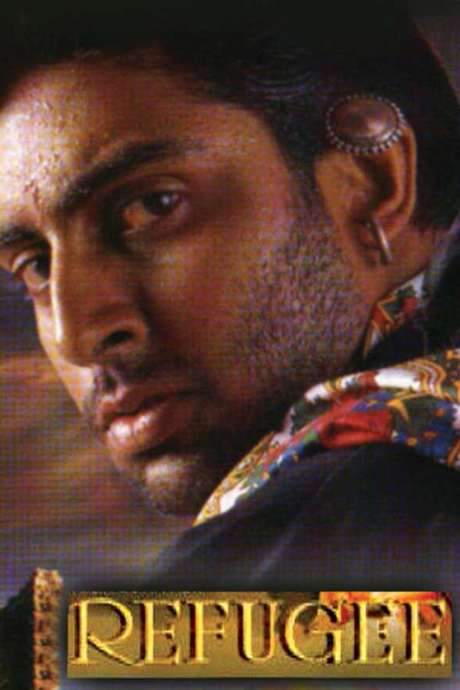
In a story set against the divides of a torn subcontinent, Manzur Ahmad, Anupam Kher and his family migrate from East Pakistan to safety after the 1947 partition, only to face new displacement when the state of Bangladesh is formed in 1971. The family’s trek by land traces a long, perilous corridor: from Dhaka to Guwahati in India, then on to Delhi, Ajmer, Bhuj, and finally toward Haji Peer in Pakistan. Their hope is simple—reach a safer place for a future beyond the borders that have already redrawn their lives.
They reach Bhuj, where an enigmatic guide known only as Refugee Abhishek Bachchan offers a path across the Great Rann of Kutch into Pakistan. Refugee moves with a cool efficiency, treating his clients more as luggage than as people with stories, and he resists emotional involvement with their pain. Yet his detachment begins to thaw the moment Nazneen Ahmed, Nazneen Ahmed, Kareena Kapoor Khan — the daughter of Manzur Ahmad — enters his world, and he finds himself drawn to her despite his professional resolve. The romance blooms in a landscape punctuated by danger, risk, and the looming shadow of a border that never stays still.
Across both sides of the divide, authorities are keenly aware of the traffic of refugees across the frontier. Indian police regularly question Refugee and his elderly father, Jan Muhammad, as the borderlands teem with people who are trying to survive by moving through channels that law enforcement can scarcely control. The tension between survival and legality threads through every step of Refugee’s journey, and it places Nazneen and her family in a precarious position as well.
One day, Refugee helps four men slip into the Indian side of the border, a risky act that sets off a chain of events far beyond a single family’s escape. These men enlist the help of Refugee’s brother to reach Delhi, weaving together personal desperation with the larger, volatile politics of the region. Soon after, a wave of explosions—train derails, bus blasts, and other catastrophic attacks—rocks the Indian capital, underscoring the fear and chaos that ripple through everyday life amid the conflict.
Refugee crosses the border again to visit Nazneen. She pleads with him to take her with him, explaining that her father intends for her to marry Mohammad Ashraf, a Pakistan Rangers Officer, Mohammad Ashraf, Suniel Shetty. The couple’s attempt to flee together across the treacherous Rann is thwarted when Pakistani Rangers capture them. Refugee is beaten and is sent back into Indian hands, brought in on a camel. He is taken to a hospital where Indian authorities inform him that, in unknowingly aiding the movement of militants, he may have helped terrorists cross into India, contributing to the loss of life and security breaches in the country he sought to protect.
The narrative pivots as Refugee, shaken by what he has learned, makes a choice that propels him into a new role. He joins the Indian Border Security Force, turning his experience on the front lines into a direct fight against the terrorists who had laid siege to his village and threatened the fragile lives of everyone he cares about. The transformation is more than a career shift; it is a personal reclamation of purpose in a landscape where loyalty, love, and survival are constantly tested by the border’s vigil and its endless stories of loss.
The film closes on a moment both intimate and symbolic: Nazneen gives birth to Refugee’s child at the border, a living emblem of the tenuous but enduring connection between two nations divided by history and politics. In a final, lightly ironic scene, Indian BSF and Pakistani Rangers personnel discuss the child’s nationality with a hint of humor, a quiet acknowledgment that life persists even as the border remains a line drawn in soil and memory. The journey—rooted in migration, loyalty, love, and the impossible hope of peace—remains with the audience long after the screen fades.