

Plot Explained Spoilers guaranteed!
Plot Explained

Browse by genre

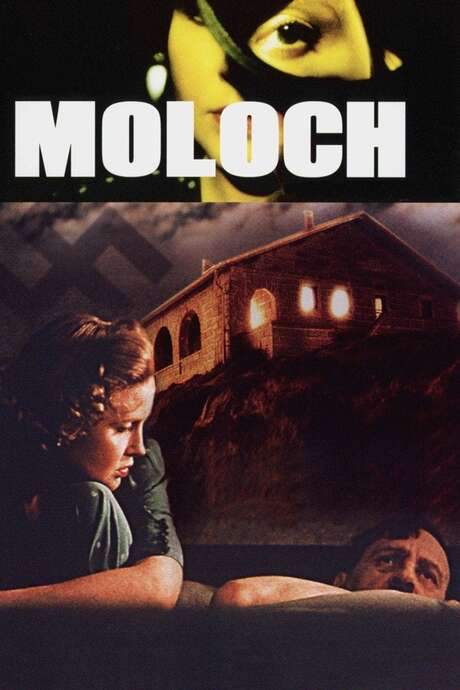
Moloch (1999) movie poster

Timeline

Moloch (1999) Timeline Explained – Every Event in Order

Release, runtime and language
1999 · 108 mins · German
Directed by
Aleksandr Sokurov
Starring
Aleksey Maklakov, Eva Mattes, Maxim Sergeev, Leonid Mozgovoy, Franco Moscon, Lev Eliseev

In 1942 Bavaria, Eva is alone, when Adolf arrives with Josef, his wife Magda, and Martin to spend a couple of days without politics.

On this page (6)
  1. 1 Where to watch
  2. 2 Events in order (15)
  3. 3 Timeline questions answered
  4. 4 Movie threads
  5. 5 Movies like Moloch
  6. 6 Every angle

Where to watch

Where to Watch Moloch (1999)

Where can you watch Moloch? Stream, rent or buy it in the US, including on Kanopy: current JustWatch availability with up-to-date prices.

Streaming availability powered by JustWatch

15 events in order · contains spoilers

Moloch Timeline: Events in Chronological Order

Every key event of Moloch (1999) in order, scene by scene, with when and where it takes place. Use it to untangle flashbacks, time jumps and parallel storylines, to refresh your memory before the sequel or to find the exact scene you are thinking of.

  1. Hitler arrives at the Berghof for Eva Braun

    In Spring 1942, Hitler retreats to the Berghof atop a Bavarian Alps hill to be with his long-time companion Eva Braun. The secluded residence becomes the stage for private routines and intimate conversation. The visit signals a rare private interlude before the next wave of campaigns.

    When
    Spring 1942
    Where
    Berghof, Bavarian Alps
  2. Eva Braun's private pastime at the retreat

    Braun fills her spare time with playful, frivolous activities—dancing in the nude, humming marching band tunes, and rummaging through Hitler's belongings. The carefree mood contrasts with the looming gravity of war. Her behavior reveals a personal world far from the political theater outside.

    When
    Spring 1942
    Where
    Berghof
  3. Hitler's greeting of guests

    Hitler is thrilled to learn he will be joined by Joseph Goebbels, Magda Goebbels, Martin Bormann, and a visiting priest. The group settles into the residence for conversation and banter. The dynamic hints at intimate circles within the Nazi leadership.

    When
    Spring 1942
    Where
    Berghof
  4. Group conversation and playful banter

    The gathering exchanges jokes and light chatter as the heavy politics loom beneath the surface. There is a sense of sociable theater masking a ruthless regime. The banter sets up the film's satirical tilt.

    When
    Spring 1942
    Where
    Berghof
  5. Hitler rants on diverse topics

    Hitler launches into rants about food, health, climate change, and wartime politics, revealing a broad preoccupation beyond battlefield matters. The monologue sketches a larger persona who wields talk as a tool of authority. The range of topics underscores the film's satirical scope.

    When
    Spring 1942
    Where
    Berghof
  6. Hitler celebrates military victories

    As the visit unfolds, Hitler grows triumphant upon hearing of Germany's military victories. He basks in the momentum and uses it to reinforce his worldview. The moment underscores how propaganda fuses with personal pride.

    When
    Spring 1942
    Where
    Berghof
  7. Auschwitz remark

    In a provocative moment of satire, Hitler claims he has never heard of the Auschwitz concentration camp. The remark exposes a troubling disconnect between knowledge and cruelty. The line serves as a stark commentary within the dialogue.

    When
    Spring 1942
    Where
    Berghof
  8. Braun questions mortality and weakness

    Towards the end of the visit, Braun reminds him that no one can escape death or be infallible. She presses to expose a hidden weakness behind his certainty. The moment blends intimate leverage with chilling political implications.

    When
    Spring 1942
    Where
    Berghof
  9. Braun's confrontation continues

    The exchange escalates as Braun's warning cuts through the cordial facade. The interaction foregrounds the fragility of absolute power in a personal relationship.

    When
    Spring 1942
    Where
    Berghof
  10. Hitler departs for the next campaign

    After the visit, Hitler leaves with his motorcade to continue Nazi Germany's military campaign. The departure signals the return to public duty and the machinery of war. The scene links private moment to public momentum.

    When
    Spring 1942
    Where
    Berghof vicinity
  11. Eva Braun's influence on the mood

    Braun's presence shapes the atmosphere, from intimate idling to pointed moral challenges. Her role reveals the tension between personal affection and political power. The encounter exposes the human detail within a dictator's private life.

    When
    Spring 1942
    Where
    Berghof
  12. Support cast adds domestic texture

    Goebbels, Magda, Bormann, and the priest contribute to a household dynamic that feels almost domestic. Their interactions add a surreal contrast to a regime built on fear and control. The scene emphasizes the theater of power.

    When
    Spring 1942
    Where
    Berghof
  13. Spring alpine setting frames the visit

    The alpine spring setting frames the visit, signaling serenity that contrasts with the impending war. The landscape's beauty enhances the film's satirical critique of power. The calm surface hides turbulent history.

    When
    Spring 1942
    Where
    Berghof, Bavarian Alps
  14. Power, privacy, and the cost of certainty

    Across the visit, private vanity collides with public brutality, illustrating how intimate moments can coexist with monstrous regimes. The tension reveals a man who navigates geopolitics while remaining oblivious to horror.

    When
    Spring 1942
    Where
    Berghof
  15. Closing frame: motorcade disappears into history

    The motorcade disappears from the frame, carrying the dictator back toward the machinery of conquest. The scene acts as a final note that personal theater ends as history presses on. The film closes on the tension between private life and public calamity.

    When
    Spring 1942
    Where
    Berghof vicinity

Last updated: February 17, 2026 at 19:57

Was this helpful?

Timeline questions answered

Moloch Timeline Explained: Your Questions Answered

When does it happen, and why in that order? The questions people ask about the chronology of Moloch (1999): time jumps, flashbacks, cause and effect between scenes and the correct order of events, each answered with spoilers.

Q1

Why does Eva Braun remind Hitler about death and fallibility?

Eva Braun confronts Hitler near the end of his visit by pointing out that no one is invincible or beyond death. This moment serves as her only act of moral challenge within the film, she attempts to expose a hidden vulnerability beneath his public certainty. Her words carry weight precisely because they emerge from intimacy rather than politics, suggesting she understands the human weakness behind the dictator's facade while choosing, nonetheless, to remain with him.

  • eva braun
  • hitler
  • mortality
  • vulnerability
  • confrontation
Q2

Why does Hitler say he never heard of Auschwitz?

In a deliberately provocative moment of satire, Hitler claims he has never heard of the Auschwitz concentration camp. The line functions as a sharp commentary on deliberate historical denial and the distance between knowledge and accountability. It underscores the film's satirical edge, suggesting either willful ignorance or the calculated separation between a leader and the atrocities committed in his name. This moment has drawn criticism for its provocative framing, but it serves the film's purpose of confronting the moral disconnect of the Nazi leadership.

  • hitler
  • auschwitz
  • denial
  • concentration camp
  • satire
Q3

What is the purpose of the isolated Berghof setting?

The Berghof retreat serves as a container that isolates the inner circle from the war's immediate reality. By placing Hitler, Eva Braun, and his inner circle in a secluded alpine setting, the film creates a surreal domestic space where mundane conversation coexisted with monstrous historical circumstances. The serene mountain landscape contrasts sharply with the war's gravity, emphasizing how ordinary life continued for the regime's leaders even as catastrophic events unfolded elsewhere.

  • berghof
  • setting
  • alpine
  • retreat
  • isolation
Q4

Why does the film show Eva Braun dancing nude and rummaging through Hitler's belongings?

These scenes establish Eva Braun's role as a person removed from political concerns, existing in a private world of trivial pleasures. Her nude dancing and playful rummaging through Hitler's belongings contrast sharply with the war's immense stakes occurring beyond the mountains. This contrast serves the film's satirical critique, showing how those closest to power lived in bubbles of normalcy while history's darkest chapter unfolded. It also humanizes Braun in ways that complicate simple historical judgment.

  • eva braun
  • nude dancing
  • domestic life
  • trivial pursuits
  • contrast
Q5

What is the significance of having a priest among the guests at the Berghof?

The inclusion of a priest among Nazi leadership creates a striking visual and symbolic contrast. It underscores the film's portrayal of the inner circle as an almost normal domestic group, complete with spiritual counsel, despite their collective role in monstrous acts. The priest's presence represents the complicity of religious institutions and adds to the surreal, almost theatrical quality of power at the retreat.

  • priest
  • goebbels
  • bormann
  • religious complicity
  • surreal
Q6

Why does Hitler discuss food, health, and climate during a wartime meeting?

Hitler's broad-ranging rants about everyday topics, food, health, climate, reveal a personality that wields conversation itself as a tool of authority. The scenes show how leaders distracted themselves and their circle with trivial matters while overseeing historical catastrophe. This mundane chatter emphasizes the disconnect between the trivial preoccupations of power and the devastating decisions they were making. The range of topics also allows the film to sketch a fuller portrait of Hitler as a man fixated on details while remaining blind to larger moral failures.

  • hitler
  • rants
  • conversation
  • authority
  • distraction
Q7

What is the purpose of the satirical tone in a historical drama about Hitler?

The satirical elements, including Hitler's denial about Auschwitz and the absurd domesticity of the gathering, serve to critique both the regime and the comfortable distance of historical portrayal. By juxtaposing mundane conversation with profound evil, the film refuses to let viewers settle into comfortable historical judgment. The dark humor exposes the theater of power and forces acknowledgment of how ordinary human behavior coexisted with atrocity.

  • satire
  • tone
  • critique
  • historical drama
  • theater of power
Q8

What does Hitler's departure signify at the end of the film?

The film ends with Hitler mounting his motorcade to continue Germany's military campaign after his private retreat. This closing movement connects the intimate bubble of the Berghof back to the machinery of war. The departure underscores the film's central tension, the personal theater of power ends, and history presses on with its momentum toward the eventual defeat at Stalingrad and beyond. Eva Braun's warning about fallibility haunts this departure, suggesting the fragility beneath the confident exterior.

  • hitler departure
  • motorcade
  • war campaign
  • ending
  • stalingrad
Q9

What is Magda Goebbels' role in the gathering at the Berghof?

Magda Goebbels appears as part of the inner circle's domestic texture, contributing to the film's portrayal of the Nazi leadership as an almost ordinary social group. Her presence alongside Joseph Goebbels and the other leaders adds to the surreal domestic atmosphere. The film uses her presence to illustrate how the regime's upper echelons maintained social routines and personal relationships while orchestrating genocide, emphasizing the human details within a monstrous system.

  • magda goebbels
  • goebbels
  • domestic
  • inner circle
  • social routine
Q10

Why is the setting specifically spring 1942 at the Berghof significant?

Spring 1942 is positioned shortly before the Battle of Stalingrad, representing a moment of German military optimism. Hitler retreats to the Berghof buoyed by early wartime successes, and the film captures him in a moment of triumph before the tide definitively turned. This temporal specificity grounds the narrative in historical reality and adds dramatic irony, viewers know the coming defeat that Hitler cannot yet envision.

  • spring 1942
  • battle of stalingrad
  • military victories
  • timeline
  • historical

Movie threads

More Movies Like Moloch, by Mood & Story

Curated lists built around what makes Moloch tick: the same mood, the same kind of story or the same emotional payoff. Each list explains why these movies belong together.

Claustrophobic Dramas of Power like Moloch

Intimate dramas exposing the rot and delusion within powerful groups. For viewers who appreciated the tense, intimate setting of Moloch. This list features movies like Moloch that explore the inner workings of corrupt power structures through a slow-burn, claustrophobic lens, focusing on psychological decay over action.

  • claustrophobic
  • oppressive
  • tense
  • psychological
  • slow burn
  • satirical
  • Tone: dark, tense, oppressive
  • Pacing: slow burn, deliberate
Why these movies?

The story pattern: Narratives in this thread are often confined to a single location or a small group, exploring the dynamics of power, paranoia, and moral collapse from within. The plot is secondary to the atmospheric build-up of tension and the unveiling of character flaws.

Why they belong together: Movies are grouped here because they share a core focus on the psychological examination of power in isolated settings. They prioritize a heavy, oppressive mood, slow pacing, and a character-driven approach to storytelling that reveals the darkness behind authority.


Bleak Historical Satire Movies like Moloch

Satirical films that find grim humor in the darkest chapters of history. If you liked the satirical edge and bleak outlook of Moloch, explore these similar films. Discover movies like Moloch that blend historical drama with dark satire, creating a uniquely unsettling and thought-provoking viewing experience.

  • satirical
  • somber
  • melancholic
  • historical
  • dark humor
  • bleak
  • Tone: dark, satirical, bleak
  • Pacing: slow, deliberate
Why these movies?

The story pattern: Stories in this thread unfold by juxtaposing the mundane or absurd actions of characters against a backdrop of horrific historical reality. The narrative often leads to a bleak conclusion, emphasizing the inescapable gravity of the events being satirized.

Why they belong together: These movies are united by their unique blend of historical gravity and dark satire. They share a somber, melancholic mood where any humor is undercut by a pervasive sense of dread and a critical perspective on power and human nature.

If you liked this

Movies Like Moloch

Similar movies to Moloch: the same genre, themes or kind of story. Each one comes with its own plot summary, timeline and ending explained.

Browse all movie summaries

Every angle

Moloch (1999) Explained: Plot, Timeline & Characters

Everything about Moloch in one place: what happens in the plot summary, the timeline in chronological order, the characters and meaning and a spoiler-free summary. What's After the Movie adds the cast, box office and post-credit scenes.

Coming soon on iOS and Android

The Plot Explained Movie Summary App

Plot summaries, endings explained and timelines on your phone. Catch up on any movie in minutes, save your favorites and never miss a twist again.

Be the first to know when we launch. Your email stays private, always.

Learn more about the app