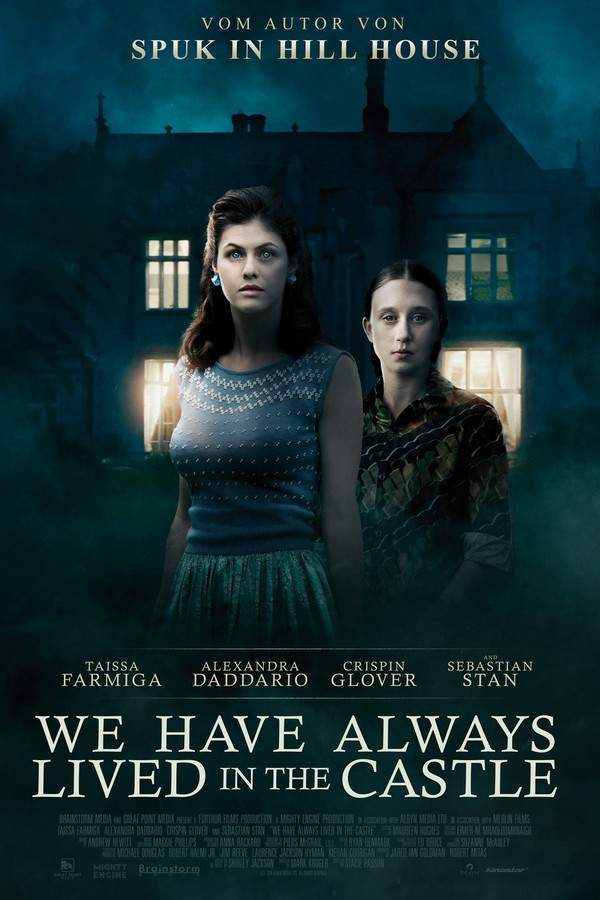
Two sisters and their uncle live a secluded life in a decaying mansion, haunted by a dark family history. Their isolated existence is threatened by the unexpected arrival of a distant relative. As he insinuates himself into their household, unsettling secrets emerge, jeopardizing the delicate balance of their unusual world and revealing a sinister plot.
Find where to stream, rent, or buy We Have Always Lived in the Castle (2019) in the US with current JustWatch availability, up-to-date pricing, and platform listings for subscription, rental, and digital purchase options.
Warning: spoilers below!
Haven’t seen We Have Always Lived in the Castle yet? This summary contains major spoilers. Bookmark the page, watch the movie, and come back for the full breakdown. If you're ready, scroll on and relive the story!
Read the complete plot breakdown of We Have Always Lived in the Castle (2019), including all key story events, major twists, and the ending explained in detail. Discover what really happened, and what it all means.
As 18-year-old Mary Katherine “Merricat” Blackwood grapples with life in her intricately woven family estate, her days are entwined with her older sister Constance Blackwood and their ailing uncle Julian. The air is thick with an unsettling tension stemming from Constance’s six-year estrangement from the outside world following her acquittal for the tragic poisoning of their parents, leaving an unspoken doom hanging ominously over their household. For Merricat, this isolation is compounded by her treks into the village, where unwelcome harassment and disdain await her at nearly every corner.
In her frantic quest to shield herself and her sister from the presumed malevolence lurking beyond their gates, Merricat embarks on an eccentric journey of mystical protection. She meticulously buries various talismans in the earth, infusing them with her unique magic, all with the intention of warding off harm and ensuring her sister’s safety.
Meanwhile, Constance has turned into a recluse, engaging solely with Helen Clarke, a family friend who visits weekly, bringing gifts and encouragement. Little does Helen know that her gentle nudging gradually stirs Constance from her monotonous existence, eventually leading her to entertain the thought of stepping back into the world beyond their secluded realm. Merricat, however, recoils at this idea, creating whirlwinds of magic to thwart it.
Fate takes a turn when Constance mistakenly sends Merricat on an errand into town during a critical moment, leaving her unprepared to face the consequences upon her return. She discovers to her horror that her carefully constructed magical defenses have been ruthlessly dismantled. This vulnerability opens the door for their estranged cousin Charles, whose abrupt visit disrupts their precarious balance and sets off a series of unnerving events that threaten to unravel their existence.
Over the ensuing days, Charles employs his charm to draw Constance out from her protective shell while secretly plotting to seize the family’s hidden wealth. Merricat, fiercely protective, responds to Charles’ condescending jabs with biting retorts derived from her knowledge of poisonous plants, confronting him with her mystical outlook on life.
As tensions boil over, Merricat resort to desperate measures, entering Charles’ private space to vandalize his possessions. When he threatens retaliation, she retaliates with a storm of chaos, leading to the notorious desk-clearing incident that sees destruction fueled by pipe smoke, leaving Charles seething with rage.
Just as Merricat seems to unleash her full fury, disaster unfolds as the fire department arrives, along with a hostile mob of villagers eager for revenge. In the pandemonium, Constance and Merricat abandon their home, seeking refuge in the woods amid the destruction left behind.
In the aftermath, the sisters find their once-childlike world drastically altered, facing the harsh realities hidden outside their sheltered existence. As they survey the desolate landscape, the weighty knowledge that life as they knew it is irrevocably lost weighs heavily upon them— a reality underscored by the news of Uncle Julian’s passing from smoke inhalation, a haunting reminder of life’s fragility and the uncertainties looming ahead.
As dawn breaks over the wrecked surroundings, the sisters cautiously return to their fortress-like dwelling, sealing themselves in to shield against the outside world. The once-majestic upper floors, now reduced to ruin, emerge as an ominous silhouette reminiscent of a medieval castle. In a chilling proclamation, Merricat (actor name) declares her desire to eradicate the entire village, evoking dark memories tied to their parents. Constance expresses gratitude that Merricat’s actions have preserved her from the clutches of their malevolent father.
The villagers, laden with offerings and apologies, try to make amends for the chaos they caused, but the sisters remain curt and unyielding in their silence.
As Charles (actor name) returns, his yearning to reconnect with Constance is palpable, his desperation pushing him to seek entry through force. When met with silence, he lashes out violently towards Constance, prompting Merricat to intervene and — in a raw moment of rage — bludgeon him to death with a snow globe. Together, they lay his lifeless body to rest in their garden, creating an eerie reprieve from their tumultuous reality.
In the present, as Merricat and Constance labor to clear the remnants of their home, two mischievous village children approach with the intent to torment them. Merricat steps outside, her presence instantly sending the children fleeing in terror. In this moment, Constance breaks through to Merricat’s frosty exterior, tenderly confessing her love for her sister. For the first time in the film, a faint glimmer of warmth and hope brightens Merricat’s face as she acknowledges this newfound affection.
Last updated: November 21, 2024 at 11:54
Explore frequently asked questions about We Have Always Lived in the Castle (2019) with spoiler-rich answers covering the full plot summary, major story beats, character motivations, hidden details, and ending meaning. This movie summary FAQ helps explain confusing scenes, plot twists, and narrative decisions in clear, searchable detail.
Constance has lived in seclusion for six years following her acquittal for poisoning their parents. Although found not guilty, she was blamed for the tragedy and became a recluse, rarely leaving the Blackwood estate. Her only connection to the outside world is Helen Clarke, who visits weekly.
Merricat buries talismans and enchanted objects around the estate to create protective barriers against perceived threats from the outside world. These rituals are her way of coping with anxiety and attempting to shield herself and Constance from harm, reflecting her disturbed psychological state.
Charles arrives claiming to want connection with his relatives, but his true intent is to access the family's hidden wealth. He charmingly ingratiates himself with Constance while secretly plotting to take control of the Blackwood fortune.
Charles uses his charm to draw Constance out of her reclusive state, encouraging her to consider leaving the estate and pursuing a relationship with him. This threatens Merricat's protective world and creates conflict between the sisters.
Merricat vandalizes Charles's private space in a desperate attempt to protect her sister and maintain control over their isolated world. When he threatens retaliation, she escalates into the chaotic desk-clearing incident that results in destruction.
The fire is triggered during Merricat's chaotic retaliation against Charles. The destruction is fueled by pipe smoke, leading to an out-of-control blaze. The fire department arrives along with a hostile mob of villagers who attack the house.
Merricat's earlier destruction of her magical barriers foreshadows this vulnerability.
The villagers form a hostile mob that arrives alongside the fire department. They seek revenge against the Blackwood family, likely motivated by long-standing resentment and superstitions about the family, especially regarding the poisoning tragedy and the sisters' isolation.
Uncle Julian dies from smoke inhalation during the fire at the Blackwood estate. His death occurs as Constance and Merricat flee to the woods, leaving him behind in the burning house.
Charles returns desperate to reconnect with Constance and attempts to force his way into the house. When he escalates to violence against Constance, Merricat intervenes in a raw moment of rage and bludgeons him to death with a snow globe to protect her sister.
The sisters return to their devastated home and seal themselves inside the ruined castle-like dwelling. They remain isolated from the villagers, who now bring offerings and apologies. Merricat and Constance work together to clear the debris, with Constance expressing love for Merricat for the first time.
As the sisters work to clear their ruined home, two village children approach intending to torment them. Merricat steps outside and her intimidating presence sends them fleeing in terror, marking a shift in how the outside world perceives her.
This refers to the dark family history, Constance expresses gratitude that Merricat's actions have freed her from the clutches of their abusive, malevolent father. The exact details of what happened to the father are left mysterious, but Constance views their current situation as preferable to living under his control.
Discover curated groups of movies connected by mood, themes, and story style. Browse collections built around emotion, atmosphere, and narrative focus to easily find films that match what you feel like watching right now.
Slow-burning stories of families trapped by their own dark histories.If you were captivated by the eerie, secret-laden atmosphere of We Have Always Lived in the Castle, you'll find similar films here. These movies explore families haunted by their pasts in isolated, atmospheric settings, perfect for fans of slow-burn gothic mysteries and psychological thrillers.
These narratives typically unfold within a single, oppressive location, often a family home. The central conflict arises from a hidden past crime or trauma that continues to manipulate the present. An outsider’s arrival or a gradual revelation of the truth threatens the fragile equilibrium, leading to a tense and often tragic confrontation with the past.
Movies are grouped here based on their shared focus on a dark family legacy, a strong sense of place that feels like a character itself, and a slow-building tension that stems from psychological suffocation rather than overt action.
Stories where a fragile psyche fractures under pressure in a limited setting.For viewers who appreciated the intense, claustrophobic psychological tension of We Have Always Lived in the Castle, this list features movies with similar themes. Discover stories of fragile minds unraveling under pressure in isolated settings, focusing on trauma and psychological disturbance.
The plot revolves around characters whose grip on reality is tenuous. The narrative thrust comes from an external threat or internal pressure that challenges their carefully constructed world. This leads to a breakdown of their mental defenses, often culminating in desperate acts to preserve their fractured sense of safety, resulting in a bleak resolution.
These films are united by a deep dive into psychological instability, a setting that amplifies feelings of entrapment, and a narrative that prioritizes internal dread over external action, leading to heavy, often bleak emotional conclusions.
Don't stop at just watching - explore We Have Always Lived in the Castle in full detail. From the complete plot summary and scene-by-scene timeline to character breakdowns, thematic analysis, and a deep dive into the ending - every page helps you truly understand what We Have Always Lived in the Castle is all about. Plus, discover what's next after the movie.
Track the full timeline of We Have Always Lived in the Castle with every major event arranged chronologically. Perfect for decoding non-linear storytelling, flashbacks, or parallel narratives with a clear scene-by-scene breakdown.
Discover the characters, locations, and core themes that shape We Have Always Lived in the Castle. Get insights into symbolic elements, setting significance, and deeper narrative meaning - ideal for thematic analysis and movie breakdowns.