

Plot Explained Spoilers guaranteed!
Plot Explained

Browse by genre

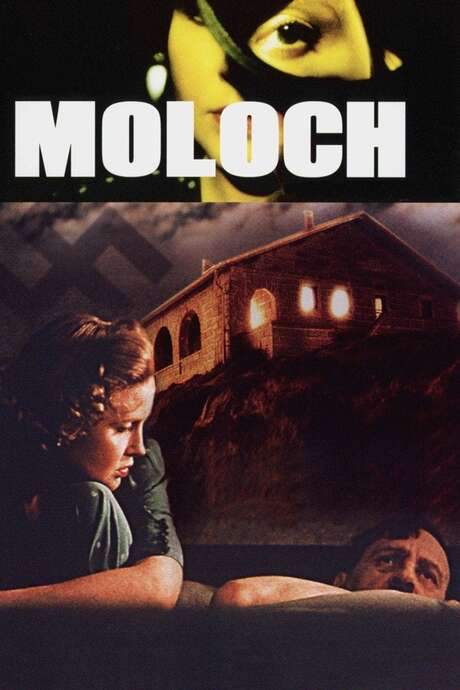
Moloch (1999) movie poster

Characters & Themes

Moloch (1999) Characters, Setting & Themes Explained

Release, runtime and language
1999 · 108 mins · German
Directed by
Aleksandr Sokurov
Starring
Aleksey Maklakov, Eva Mattes, Maxim Sergeev, Leonid Mozgovoy, Franco Moscon, Lev Eliseev

In 1942 Bavaria, Eva is alone, when Adolf arrives with Josef, his wife Magda, and Martin to spend a couple of days without politics.

On this page (8)
  1. 1 Where to watch
  2. 2 Characters explained (6)
  3. 3 Where & when it takes place
  4. 4 Themes & meaning (4)
  5. 5 Character & meaning questions
  6. 6 Movie threads
  7. 7 Movies like Moloch
  8. 8 Every angle

Where to watch

Where to Watch Moloch (1999)

Where can you watch Moloch? Stream, rent or buy it in the US, including on Kanopy: current JustWatch availability with up-to-date prices.

Streaming availability powered by JustWatch

6 main characters · contains spoilers

Moloch Characters Explained: Who Is Who

The main characters of Moloch (1999), heroes and villains: what drives them, how they change over the course of the story and what each of them reveals about the film's bigger ideas.

  • Adolf Hitler (Leonid Mozgovoy)

    A dictatorial figure who uses conversation as a weapon, performing control through flattery, triumphalism and taunts. His discourse ranges from trivial musings on food and health to grand claims of victory, revealing a volatile and self-justifying mindset. The portrayal highlights his vanity and the dangerous belief in his infallibility.

    • 🔥 Dictator
    • 🎭 Charisma
    • 🤬 Paranoia
  • Eva Braun (Yelena Rufanova)

    Braun is a companion who spends her time on trivial pursuits, dancing and rummaging through Hitler's belongings. Her excitement at his planned visit shows a personal, intimate bond that exists alongside the regime's machinery of power. Her presence sheds light on how private life intertwines with public power.

    • 💑 Companion
    • 🎭 Intimacy
    • 🪬 Loyalty
  • Joseph Goebbels (Irina Sokolova)

    Goebbels is the propaganda minister, present to flatter and assist in maintaining the cult of personality. He participates in the banter, wielding rhetoric as a tool to secure loyalty and influence. His role illustrates how propaganda operates within intimate circles of power.

    • 🎖️ Propaganda
    • 🤝 Ally
  • Magda Goebbels (Elena Kramer)

    Magda appears as a member of the inner circle, contributing to the conversation and social dynamic around Hitler. Her presence reflects the regime's domestic layer and the family dimension within the leadership circle. She participates in the intimate, political dialogue that unfolds at the retreat.

    • 👗 Social Power
    • 🧭 Domestic
  • Martin Bormann (Vladimir Bogdanov)

    Bormann stands as the quiet, ruthless bureaucrat who keeps the inner circle's machinery running. His presence emphasizes the backstage power of administration and control within the regime. He contributes to the atmosphere of calculated loyalty and hierarchical discipline.

    • 🗃️ Bureaucracy
    • 🗝️ Power
  • Priest (Anatoliy Shvederskiy)

    The priest offers a moral or ceremonial voice within the gathering, acting as a mediator and observer of the menacing banter. His role hints at the religious and ethical dimensions quietly present in the regime's private theater.

    • 🙏 Moral Authority
    • 🕊️ Ritual

Last updated: February 17, 2026 at 18:03

Was this helpful?

Setting

Where and When Does Moloch Take Place?

The setting of Moloch (1999): the year and time period, the places and locations, and how they shape the characters, the mood and the tension of the story.

Time period

Spring 1942

The events take place in spring 1942, a few months before the Battle of Stalingrad. It is a lull in the larger war, a private moment for banter and political talk among top Nazi leaders. The period underscores the gap between wartime rhetoric and the looming consequences of their decisions.

Location

Berghof Retreat, Bavarian Alps, near Berchtesgaden, Bavaria

The action unfolds at the Berghof Retreat, a secluded residence on a hilltop in the Bavarian Alps near Berchtesgaden. The alpine setting provides a private stage for Hitler, Eva Braun, and their guests to converse away from the front lines. The isolation amplifies the intimate, satirical dynamics of power and personality at play.

  • 🏔️ Bavarian Alps
  • 🎭 Satire
  • 📜 1940s

Last updated: February 17, 2026 at 18:03

Was this helpful?

4 major themes

Moloch Meaning: Themes & Message Explained

What is Moloch (1999) really about? The emotional, social and philosophical themes the film keeps returning to, its symbolism and the message beneath the surface.

  • Hubris

    Hitler's dialogue reveals a bloated sense of power and a belief in his own infallibility. The conversations turn on grandiose statements about victories, food, health, and climate, showing how authority is used to shape reality. The film skewers his charisma and the danger of a leader who treats reality as negotiable theater. This satirical lens exposes how vanity can mask tyranny.

  • Seclusion

    The Berghof's remote setting creates a private stage where power is performed for a select audience. Banter among Hitler, Braun, Goebbels, Bormann and the priest reveals loyalties, rivalries, and fragile alliances behind the regime's public image. The isolation magnifies how personal dynamics drive political decisions. The scene shows how a closed circle can distort accountability.

  • Mortality

    A moment where Braun reminds Hitler that no one can escape death punctures the illusion of invincibility. The film uses this reminder to hint at the fragility behind the regime's façade. It juxtaposes warmth and intimacy with the looming violence of the war. The idea that power is temporary undercuts the Führer's control.

  • Propaganda

    Hitler's rants about Auschwitz denial and wartime politics reveal how propaganda sustains a cult of personality. Goebbels's presence underscores the persuasive trick of rhetoric used to flatter power and manipulate perception. The scenes critique how speech can be charm and weapon at once. The private theater exposes the gap between displayed victory and brutal reality.

Last updated: February 17, 2026 at 18:03

Was this helpful?

Character & theme questions

Moloch Characters & Meaning: Your Questions Answered

The questions people ask about Moloch (1999): who the characters really are, their relationships, what the symbols mean, where it takes place and what the movie is really about. Each answer contains spoilers.

Q1

Where is the film set?

The story unfolds at the Berghof Retreat, a secluded mountain residence perched on a hilltop in the Bavarian Alps near Berchtesgaden, Bavaria. This isolated alpine setting creates a private stage away from the war frontlines, where Hitler and his inner circle can interact without political pretense.

  • berghof
  • berchtesgaden
  • bavarian alps
  • setting
  • location
Q2

When does the story take place?

The events occur in spring 1942, just months before the Battle of Stalingrad. This timing places the narrative during a brief lull in the larger war, highlighting the stark contrast between the轻松 banter at the retreat and the devastating consequences of the regime's decisions unfolding on the front.

  • 1942
  • spring 1942
  • time period
  • world war ii
  • historical setting
Q3

What does the film's setting represent thematically?

The Berghof's remote location creates a private theater where power is performed for a select audience. This seclusion amplifies how personal dynamics, loyalties, rivalries, and fragile alliances, drive political decisions within the regime, showing how a closed circle distorts accountability.

  • seclusion
  • isolation
  • berghof
  • power dynamics
  • private theater
Q4

How does the film explore hubris?

Through Hitler's dialogue, the film reveals a bloated sense of power and belief in his own infallibility. His conversations range from trivial musings about food and health to grandiose claims of victory, exposing how vanity can mask tyranny and how authority is used to shape reality itself.

  • hubris
  • hitler
  • vanity
  • power
  • infallibility
  • arrogance
Q5

What role does mortality play in the film?

A pivotal moment arrives when Eva Braun reminds Hitler that no one can escape death, puncturing the illusion of his invincibility. This reminder underscores the fragility behind the regime's façade, juxtaposing warmth and intimacy with the looming violence of the war and the temporary nature of power.

  • mortality
  • death
  • eva braun
  • fragility
  • impermanence
Q6

How does the film address propaganda?

Hitler's discussions about Auschwitz denial and wartime politics reveal how propaganda sustains a cult of personality. Goebbels's presence illustrates rhetoric as both charm and weapon, used to flatter power and manipulate perception, exposing the gap between the regime's displayed victory and its brutal reality.

  • propaganda
  • goebbels
  • cult of personality
  • rhetoric
  • manipulation
Q7

Who are the key characters in the film?

The cast centers on Adolf Hitler, Eva Braun (his companion), Joseph Goebbels (propaganda minister), Magda Goebbels (his wife), Martin Bormann (the bureaucratic power behind the scenes), and a priest who serves as moral observer. Each represents a different facet of the Nazi inner circle's dynamics.

  • characters
  • hitler
  • eva braun
  • goebbels
  • bormann
  • magda goebbels
Q8

Who is Eva Braun in the story?

Eva Braun is portrayed as Hitler's companion, spending her time on trivial pursuits like dancing and rummaging through his belongings. Her excitement over his visit reveals a personal, intimate bond that exists alongside the regime's machinery of power, showing how private life intertwines with public authority.

  • eva braun
  • character
  • companion
  • hitler's personal life
Q9

What is Martin Bormann's role in the film?

Martin Bormann appears as the quiet, ruthless bureaucrat who keeps the inner circle's machinery running smoothly. His presence emphasizes the backstage power of administration and control within the regime, contributing to an atmosphere of calculated loyalty and hierarchical discipline.

  • martin bormann
  • bureaucrat
  • administrative power
  • behind the scenes
Q10

What is the tone of the film?

The film balances a dark, grim portrayal of the Nazi regime with satirical moments, such as Hitler claiming ignorance about Auschwitz. This satirical lens exposes how vanity can mask tyranny, using dark humor to critique the dangerous charisma of a leader who treats reality as negotiable theater.

  • tone
  • satire
  • dark humor
  • satirical portrayal
  • critique

Movie threads

More Movies Like Moloch, by Mood & Story

Curated lists built around what makes Moloch tick: the same mood, the same kind of story or the same emotional payoff. Each list explains why these movies belong together.

Claustrophobic Dramas of Power like Moloch

Intimate dramas exposing the rot and delusion within powerful groups. For viewers who appreciated the tense, intimate setting of Moloch. This list features movies like Moloch that explore the inner workings of corrupt power structures through a slow-burn, claustrophobic lens, focusing on psychological decay over action.

  • claustrophobic
  • oppressive
  • tense
  • psychological
  • slow burn
  • satirical
  • Tone: dark, tense, oppressive
  • Pacing: slow burn, deliberate
Why these movies?

The story pattern: Narratives in this thread are often confined to a single location or a small group, exploring the dynamics of power, paranoia, and moral collapse from within. The plot is secondary to the atmospheric build-up of tension and the unveiling of character flaws.

Why they belong together: Movies are grouped here because they share a core focus on the psychological examination of power in isolated settings. They prioritize a heavy, oppressive mood, slow pacing, and a character-driven approach to storytelling that reveals the darkness behind authority.
Bleak Historical Satire Movies like Moloch

Satirical films that find grim humor in the darkest chapters of history. If you liked the satirical edge and bleak outlook of Moloch, explore these similar films. Discover movies like Moloch that blend historical drama with dark satire, creating a uniquely unsettling and thought-provoking viewing experience.

  • satirical
  • somber
  • melancholic
  • historical
  • dark humor
  • bleak
  • Tone: dark, satirical, bleak
  • Pacing: slow, deliberate
Why these movies?

The story pattern: Stories in this thread unfold by juxtaposing the mundane or absurd actions of characters against a backdrop of horrific historical reality. The narrative often leads to a bleak conclusion, emphasizing the inescapable gravity of the events being satirized.

Why they belong together: These movies are united by their unique blend of historical gravity and dark satire. They share a somber, melancholic mood where any humor is undercut by a pervasive sense of dread and a critical perspective on power and human nature.

If you liked this

Movies Like Moloch

Similar movies to Moloch: the same genre, themes or kind of story. Each one comes with its own plot summary, timeline and ending explained.

Browse all movie summaries

Every angle

Moloch (1999) Explained: Plot, Timeline & Characters

Everything about Moloch in one place: what happens in the plot summary, the timeline in chronological order, the characters and meaning and a spoiler-free summary. What's After the Movie adds the cast, box office and post-credit scenes.

Coming soon on iOS and Android

The Plot Explained Movie Summary App

Plot summaries, endings explained and timelines on your phone. Catch up on any movie in minutes, save your favorites and never miss a twist again.

Be the first to know when we launch. Your email stays private, always.

Learn more about the app