Plot Explained Spoilers guaranteed!
Plot Explained

Browse by genre

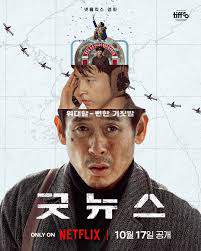
Good News (2024) movie poster

Plot Summary

Good News (2024) Plot Summary Explained

Release, runtime and language
2024 · 80 mins · German
Directed by
Hannes Schilling
Starring
Dennis Scheuermann, Ilja Nikolai Stahl, Sabree Matming

Journalist Leo goes to Thailand to report on rebel groups.

On this page (5)
  1. 1 What happens: full plot
  2. 2 Plot questions answered
  3. 3 Movie threads
  4. 4 Categories
  5. 5 Every angle

Full plot summary · contains spoilers

What Happens in Good News: Full Plot Summary

The whole story of Good News (2024) explained, from the opening scene to the final frame: every key event, every twist and what it all adds up to. Read it as a quick recap before the sequel, to check a scene you missed, or to finally understand what really happened.

In 1970, soon after leaving Tokyo's Haneda Airport for Itazuke, the passenger plane Japanese Ride 351 is hijacked by members of Japan's Red Army Faction who are armed with guns, bladed weapons, and a bomb vest. The young hijackers, who call themselves Ashita no Joe, demand to be flown to Pyongyang in North Korea, where they hope to recruit other Japanese leftists into a revolutionary army capable of toppling the Japanese government. Captain Takehiro Kubo is faced with a difficult situation: he and his copilot do not know Pyongyang's location or air traffic control frequency, and he misleads the hijackers about how much fuel remains, claiming the plane cannot reach the destination. To the hijackers’ surprise, they are allowed to land at Itazuke to refuel and pick up a map, a moment that reveals both the fragility of the situation and the careful restraint of the authorities.

On the ground, the crisis becomes a chess game between desperation and diplomacy. The Japanese authorities hesitate to take decisive action for fear of endangering the hostages, while a fighter jet stands by to stall for time. The hijackers eventually release the elderly, the infirm, and the children, yet they still prepare to depart for Pyongyang with 106 hostages aboard. The event triggers a rapid response from abroad as the Korean Central Intelligence Agency learns of the hijack. Director Park Sang-hyeon assigns Nobody, a seasoned but unofficial fixer and North Korea defector, to secure the hostages' release and secure South Korea’s strategic advantage on the international stage. Nobody enlists Lt. Seo Go-myung of the Republic of Korea Air Force, one of a handful of personnel trained in the RAPCON system, to pose as a North Korean air traffic controller and guide Japanese Ride 351 toward Seoul.

The plan hinges on deception: both Seo and a North Korean counterpart dial into an emergency frequency to reach the pilots and coax them onto a private line, where they can be steered away from Pyongyang and toward Gimpo International Airport in Seoul. On the ground, Nobody orchestrates a convincing Pyongyang illusion at Gimpo, recruiting actors to play soldiers and dancers for a North Korean welcoming party. When Japanese Ride 351 lands, the hijackers quickly spot anomalies—an American airliner on nearby tarmac, an African-American officer eating hamburgers, and Louis Armstrong playing on a radio—exposing the ruse and triggering a tense stand-off.

That night, Seo boards the plane to hear the hijackers’ demands. One hijacker wounds the lead aggressor to prove their resolve, and a grim ultimatum follows: if the plane does not resume its flight to Pyongyang by noon the next day, the hijackers will detonate their vest and blow up the aircraft. The South Korean authorities, reluctant to accept responsibility for the crisis, consider a negotiated exit for the hijackers, and Nobody pressures them to move forward with a hostage exchange that could spare the passengers. A public backlash arises when a false news report suggests a hostage of Korean descent, pouring pressure on officials to secure a quick resolution, and the president approves a deal to allow the hostages to be released.

In a dramatic turn of events, Nobody persuades Japanese Deputy Minister Shinichi Ishida, who is present as an observer, to offer himself as a hostage in exchange for the passengers’ freedom. The hijackers accept, the swap goes smoothly, and Japanese Ride 351 departs for North Korea. In a final twist, Nobody reveals to Seo that the hijackers’ guns and explosives were fake; their stated aim was never to harm the hostages, and the Red Army Faction effectively hoodwinked both the Japanese and Korean authorities. South Korea seeks to minimize the extent of government involvement and present the landing at Gimpo as a misstep, denying credit to anyone in the crisis management chain. Yet Seo receives no recognition, while Nobody receives a presidential watch and a new identity, giving him citizenship and a fresh name—Choi Go-myung.

The film layers a tense, procedural thriller with political intrigue, exploring how crises are managed, manipulated, and misrepresented on the world stage. It invites viewers to weigh the motives of a group seeking a dramatic political statement against the reflexes of governments eager to protect lives while preserving reputations. Through carefully staged maneuvers, shifting loyalties, and the stark realities of hostage negotiation, the story unfolds as a meditation on truth, power, and the cost of public perception.

Last updated: January 28, 2026 at 12:46

Was this helpful?

Plot questions answered

Good News Plot Explained: Your Questions Answered

The questions people ask most about Good News (2024): what happens in the confusing scenes, why the characters do what they do, the twists, hidden details and what the ending means. Each answer contains spoilers.

Q1

Why did the hijackers want to fly to North Korea?

The hijackers were members of Japan's Red Army Faction, a leftist militant group. They wanted to reach Pyongyang to recruit other Japanese leftists into a revolutionary army capable of overthrowing the Japanese government. North Korea was chosen because of its communist ideology and willingness to harbor radical leftists seeking to challenge the Japanese establishment.

  • red army faction
  • pyongyang
  • north korea
  • leftist hijackers
Q2

How did South Korea trick the hijackers into landing in Seoul?

South Korea devised a two-part deception. First, Lt. Seo Go-myung posed as a North Korean air traffic controller and used an emergency frequency to contact the plane, convincing the pilots they were being routed to Pyongyang. Second, Nobody staged an elaborate fake Pyongyang welcome at Gimpo Airport with actors playing soldiers and dancers, propaganda banners, and North Korean-style decorations to make the hijackers believe they had arrived in North Korea.

  • gimpo airport
  • deception
  • seo go-myung
  • north korean controller
Q3

Why didn't the authorities just storm the hijacked plane?

The authorities feared for the lives of the 106 hostages aboard. The hijackers had a bomb vest and threatened to detonate it if their demands weren't met. Additionally, the plane was in a sensitive diplomatic situation involving Japan and North Korea, making any reckless action politically dangerous. The Japanese and South Korean governments prioritized hostage safety over a quick military resolution.

  • hostages
  • bomb vest
  • military operation
  • negotiation
Q4

Why were the hijackers' weapons fake?

Nobody reveals at the end that the hijackers' guns and explosives were completely fake. Their stated aim was never to harm the hostages, they wanted to make a political statement and draw attention to their revolutionary cause. The fake weapons allowed them to successfully bluff both Japanese and South Korean authorities throughout the crisis, though they were ultimately hoodwinked by the South Korean deception as well.

  • fake weapons
  • bomb vest
  • bluff
  • red army faction
Q5

Why didn't Seo Go-myung receive recognition for his role?

South Korea sought to minimize the extent of government involvement in the crisis and present the Gimpo landing as a misstep rather than a deliberate operation. Seo, who had posed as a North Korean controller and boarded the plane to negotiate, received a presidential watch but was officially denied recognition. The government wanted to avoid admitting their covert role in the deception, leaving Seo uncredited for his crucial contribution.

  • seo go-myung
  • recognition
  • presidential watch
  • government cover-up
Q6

What was the RAPCON system and why was it important?

RAPCON stands for Radar Approach Control, a system used for managing aircraft approach and landing. Seo Go-myung was one of the few personnel trained in this system, which made him valuable for the operation. His technical expertise allowed him to pose as an air traffic controller and effectively communicate with the pilots, guiding the hijacked plane toward Seoul instead of Pyongyang.

  • rapcon system
  • air traffic control
  • seo go-myung
  • military technology
Q7

Why did Deputy Minister Ishida volunteer to be a hostage?

Nobody persuaded Japanese Deputy Minister Shinichi Ishida, who was present as an observer, to offer himself as a hostage in exchange for the passengers' freedom. With the hijackers' noon deadline approaching and the threat of detonation, Ishida's sacrifice became the key to resolving the crisis. The hijackers accepted the swap, allowing the remaining hostages to be released before the plane departed for North Korea.

  • shinichi ishida
  • deputy minister
  • hostage swap
  • japan
Q8

What was the purpose of the fake Pyongyang welcome at Gimpo?

Nobody orchestrated the elaborate disguise to make the hijackers believe they had successfully reached Pyongyang. By staging a North Korean welcoming party with actors playing soldiers and dancers, propaganda decorations, and even an American airliner and Louis Armstrong music on the radio as subtle touches, the South Koreans hoped the hijackers would disembark in confidence, allowing authorities to seize control of the situation without a violent confrontation.

  • gimpo
  • pyongyang disguise
  • actors
  • propaganda welcome
Q9

What happened to the hostages after the plane left for North Korea?

The 106 hostages were released through a hostage swap: Deputy Minister Ishida took their place as the hijackers' hostage. The plane then departed for North Korea with the hijackers and Ishida aboard. The passengers were freed, but the crisis resulted in a bitter diplomatic situation, and Ishida's fate remained uncertain as the film concluded.

  • hostages released
  • ishida
  • north korea departure
Q10

Why did South Korea want to hide its involvement in the crisis?

South Korea sought to minimize government involvement to present the landing at Gimpo as a misstep rather than a deliberate covert operation. By denying credit to anyone in the crisis management chain, they avoided admitting they had staged an elaborate deception involving impersonation of North Korean authorities. This protected South Korea from potential diplomatic fallout and allowed them to control the narrative around the incident.

  • diplomatic cover-up
  • government involvement
  • kcia
  • nobody

Movie threads

More Movies Like Good News, by Mood & Story

Curated lists built around what makes Good News tick: the same mood, the same kind of story or the same emotional payoff. Each list explains why these movies belong together.

High-stakes political deceptions like in Good News

Intelligent thrillers where lies and maneuvers drive the tension. If you liked the cunning diplomatic maneuvers and deceits in Good News, you'll enjoy these movies. This list features intelligent political thrillers and espionage stories where fast-paced plots turn on clever bluffs, secret agendas, and high-level mind games.

  • tense
  • cunning
  • deceptive
  • political
  • suspenseful
  • methodical
  • Tone: tense, cunning, anxious
  • Pacing: fast, methodical
Why these movies?

The story pattern: These narratives typically follow protagonists thrust into a crisis of trust, where they must navigate a web of lies orchestrated by powerful, unseen forces. The plot unfolds as a tense cat-and-mouse game, with escalating stakes that rely on outsmarting the opposition rather than direct confrontation, often leading to morally complex resolutions.

Why they belong together: These films are grouped together because they share a core focus on deception as a primary plot engine. They create a specific kind of suspense built on intellectual tension, diplomatic standoffs, and the psychological pressure of maintaining a fragile lie under extreme scrutiny.

Tense crisis confinement thrillers like Good News

Claustrophobic stories where characters are trapped by a looming threat. Fans of the hijacking standoff and claustrophobic tension in Good News will find similar movies here. These films focus on characters managing a volatile crisis in a confined space, where every decision carries life-or-death consequences and the atmosphere is thick with dread.

  • claustrophobic
  • tense
  • suspenseful
  • hijacking
  • hostage
  • crisis
  • Tone: tense, claustrophobic, suspenseful
  • Pacing: fast, relentless
Why these movies?

The story pattern: The narrative pattern involves a group or individual isolated with a direct, immediate danger, such as a hostage situation or a bomb threat. The story is driven by a race against time to negotiate, escape, or disarm the threat, with rising tension as deadlines approach and alliances shift under pressure.

Why they belong together: These movies share a potent combination of a confined setting and a relentless external threat, crafting an experience defined by claustrophobia and sustained anxiety. The similarity comes from the shared feeling of being trapped with a problem that must be solved intellectually under extreme duress.

Categories

Movie Lists Featuring Good News

Good News appears in these hand-built movie categories. Each one groups movies by a specific mood, theme or story type, with their plot summaries and endings explained.

View all movie categories

Every angle

Good News (2024) Explained: Plot, Timeline & Characters

Everything about Good News in one place: what happens in the plot summary, the timeline in chronological order, the characters and meaning and a spoiler-free summary. What's After the Movie adds the cast, box office and post-credit scenes.

Coming soon on iOS and Android

The Plot Explained Movie Summary App

Plot summaries, endings explained and timelines on your phone. Catch up on any movie in minutes, save your favorites and never miss a twist again.

Be the first to know when we launch. Your email stays private, always.

Learn more about the app