Plot Explained Spoilers guaranteed!
Plot Explained

Browse by genre

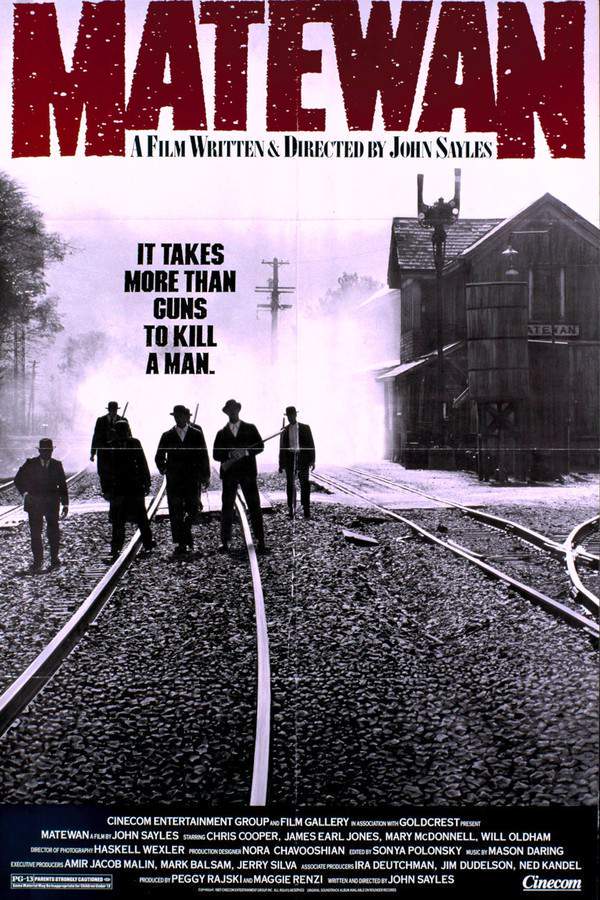
Matewan (1987) movie poster

Plot Summary

Matewan (1987) Plot Summary Explained

Release, runtime and language
1987 · 135 min · English
Loading streaming availability…
Directed by
John Sayles
Starring
David Strathairn, Chris Cooper, Bob Gunton, Gordon Clapp, Jace Alexander, Ken Jenkins

During the 1920s in West Virginia, tensions rise in the coal mining region as workers struggle against oppressive conditions and corporate greed. A determined labor organizer, Joe Kenehan, finds himself working alongside Few Clothes Johnson, a complex figure with his own motivations, and uniting with Matewan's supportive mayor and police chief. Together, they confront the powerful coal company and fight for justice and improved working rights, leading to a dramatic clash with significant consequences for the community.

On this page (6)
  1. 1 Where to watch
  2. 2 What happens: full plot
  3. 3 Plot questions answered
  4. 4 Movie threads
  5. 5 Movies like Matewan
  6. 6 Every angle
Loading streaming availability…

Full plot summary · contains spoilers

What Happens in Matewan: Full Plot Summary

The whole story of Matewan (1987) explained, from the opening scene to the final frame: every key event, every twist and what it all adds up to. Read it as a quick recap before the sequel, to check a scene you missed, or to finally understand what really happened.

This film delves into the lives of miners in Mingo County, West Virginia, specifically focusing on their struggles in the coal mine near the town of Matewan (pronounced MAY-TWAN). The narrative is introduced by a young boy named Danny, who reflects on a turbulent period in Matewan’s history. Central to the story is Joe Kenehan, a labor organizer known for his strong beliefs—he even labels himself a "Red." Kenehan arrives in the town just as black and Italian replacement workers, referred to as "scabs," are brought in to undermine the striking coal miners who are increasingly frustrated with the mining corporation’s unfair manipulation of coal prices—initially set at just 90 cents per ton.

As tensions rise, the scabs eventually stop their work and join Kenehan's efforts to unite the miners. Workers of different ethnic backgrounds—white, black, and Italian—put aside their prejudices and band together to confront the powerful mining corporation, which has enlisted seven armed agents from the Baldwin-Felts Detective Agency. Among these hired thugs is Hickey, who is particularly ruthless. He forcibly evicts destitute mining families, is implicated in bribery, and threatens both Mayor Cabell Testerman (played by Josh Mostel) and Sheriff Sid Hatfield of Matewan, thereby escalating the already volatile situation between the miners and those attempting to lead the unionization efforts.

The conflict intensifies when an agent provocateur, C. E. Lively, secretly infiltrates the miners’ ranks, inciting violence against corporate representatives. The culmination of these events leads to a horrific massacre, leaving no one untouched by the fallout.

This gripping drama is inspired by real historical events, notably known as the "Matewan Massacre" or the "Battle of Matewan." It effectively dramatizes the sacrifices made by American laborers in their fight for unionization and the right to collective bargaining, all while delivering powerful performances and rich character development. The film was penned and directed by John Sayles, who, in a twist of fate, also makes a cameo as an anti-union evangelical preacher in the community, further adding layers to this poignant tale of struggle and resilience.

Last updated: November 04, 2024 at 02:26

Was this helpful?

Plot questions answered

Matewan Plot Explained: Your Questions Answered

The questions people ask most about Matewan (1987): what happens in the confusing scenes, why the characters do what they do, the twists, hidden details and what the ending means. Each answer contains spoilers.

Q1

Why did the scabs stop working and join Kenehan's union effort?

The scabs, black and Italian replacement workers initially brought in by the mining company to break the strike, eventually stopped working and joined Kenehan because they recognized that the company was exploiting all workers regardless of race or ethnicity. Facing the same harsh conditions, low pay (initially only 90 cents per ton), and aggressive tactics from Baldwin-Felts agents, they realized their interests aligned with the striking miners. This moment of interracial solidarity became a turning point in the film, showing workers uniting across ethnic divides to challenge corporate oppression.

Foreshadowing: The film's early scenes establish the miners' shared grievances, planting the seeds for this unified response.

  • scabs
  • union
  • kenehan
  • workers solidarity
  • strike
Q2

What was the Baldwin-Felts Detective Agency's role in Matewan?

Baldwin-Felts was a private detective agency hired by the mining corporation to break the union movement through intimidation and force. Seven armed agents were sent to Matewan, led by the ruthless Hickey, who forcibly evicted destitute mining families, bribed local officials, and directly threatened Mayor Cabell Testerman and Sheriff Sid Hatfield. Their violent tactics were designed to escalate tensions and provoke a confrontation that would crush the workers' organizing efforts.

Foreshadowing: The arrival of armed agents early in the film signals that violence is inevitable.

  • baldwin-felts
  • agents
  • hickey
  • mining company
  • intimidation
Q3

Who was C. E. Lively and what did he do?

C. E. Lively was an agent provocateur secretly infiltrating the miners' ranks on behalf of the mining corporation. His mission was to incite violence against corporate representatives, creating a pretext for authorities to intervene forcefully against the union. Lively's undercover sabotage deepened internal tensions and complicated the miners' efforts to maintain peaceful organizing, ultimately contributing to the tragic escalation that led to the massacre.

Foreshadowing: Lively's suspicious actions appear subtle at first, but his presence creates unease among the miners.

  • c.e. lively
  • agent provocateur
  • infiltration
  • sabotage
  • provocation
Q4

Why was Joe Kenehan called a 'Red'?

Joe Kenehan called himself a 'Red' to openly identify with socialist and communist political beliefs, reflecting his strong commitment to workers' rights and class struggle. In the context of 1920s America, 'Red' was a term used to describe radicals and labor organizers who believed in collective ownership and were opposed to capitalist exploitation. Kenehan's self-identification signals his determination to challenge the mining corporation's power through unionization, even at great personal risk.

Foreshadowing: Kenehan's political stance is established early, showing he's willing to risk everything for the cause.

  • joe kenehan
  • red
  • socialist
  • union organizer
  • political beliefs
Q5

What triggered the Matewan Massacre?

The Matewan Massacre was triggered by the combination of escalating tensions between armed Baldwin-Felts agents and desperate miners, the provocations of agent C. E. Lively stirring up violence, and the mounting pressure on local authorities like Sheriff Sid Hatfield, who was being threatened by the company's hired thugs. When violence finally erupted, it resulted in a shootout that left many dead, marking the tragic culmination of months of conflict, evictions, bribery, and corporate oppression.

Foreshadowing: The film builds tension steadily from Hickey's violent evictions through Lively's infiltration, making the massacre feel inevitable.

  • matewan massacre
  • battle of matewan
  • violence
  • shootout
  • tragedy
Q6

What happened to Sheriff Sid Hatfield in the film?

Sheriff Sid Hatfield was a key ally of the miners in Matewan who actively supported the unionization efforts and stood up to the Baldwin-Felts agents. In the film, he is directly threatened by Hickey and the mining company's hired thugs for refusing to bend to their pressure. His defiance represents the conflict between local authorities and corporate interests, and his fate becomes intertwined with the tragic events of the massacre, highlighting the personal consequences faced by those who opposed the mining corporation.

Foreshadowing: Hickey's threats against Hatfield early in the film foreshadow the violent confrontation to come.

  • sheriff sid hatfield
  • mayor caball testerman
  • local authorities
  • threats
Q7

How did the miners of different backgrounds unite despite their prejudices?

The miners, white, black, and Italian, overcame their ethnic prejudices by recognizing their shared suffering under the mining corporation's exploitative conditions. Despite initial tensions and racism among some white miners, the arrival of the scabs who chose to join the strike demonstrated that the company treated all workers identically poorly. Kenehan's leadership emphasized solidarity across racial lines, and the forced evictions and violence from Baldwin-Felts agents affected everyone regardless of ethnicity, creating a common enemy that transcended racial divisions.

Foreshadowing: Early scenes show ethnic tensions, but the escalating crisis forces cooperation.

  • interracial solidarity
  • black miners
  • italian miners
  • unity
  • race relations
Q8

Why was Hickey so brutal in his methods against the miners?

Hickey was particularly ruthless because he was a hired thug whose job was to break the union by any means necessary, through intimidation, violence, and coercion. As a Baldwin-Felts agent, he forcibly evicted entire mining families from their homes (often in the middle of winter), engaged in bribery of local officials, and directly threatened community leaders. His brutality was intentional and calculated to terrorize the miners into submission and eliminate the union threat to the company's profits.

Foreshadowing: Hickey's violent eviction scenes early in the film establish his character as the primary antagonist.

  • hickey
  • baldwin-felts
  • brutality
  • evictions
  • thugs
Q9

What was the significance of the 90 cents per ton coal price?

The 90 cents per ton price set by the mining corporation represented the extreme exploitation of miners, who were paid starvation wages for their dangerous labor. This deliberately low rate, famously mentioned in the film, was a primary grievance that drove the strike. It symbolized the broader corporate greed and the desperate economic conditions that pushed miners to organize, making their demands for fair compensation and better working conditions understandable and justified.

Foreshadowing: The low pay is mentioned in the opening, establishing the economic injustice fueling the conflict.

  • 90 cents per ton
  • wages
  • exploitation
  • coal prices
  • pay dispute
Q10

What was the aftermath of the Matewan Massacre?

The aftermath of the Matewan Massacre left deep scars on the community, with no one untouched by the tragedy. The violent confrontation resulted in multiple deaths on both sides, crushing the immediate union organizing effort but also galvanizing broader public attention to the miners' cause. The massacre became a pivotal moment in American labor history, symbolizing the extreme violence corporations would use to suppress workers' rights and highlighting the sacrifices made by laborers fighting for fair treatment and collective bargaining.

Foreshadowing: The tragic ending reflects the film's steady build toward this devastating climax.

  • aftermath
  • deaths
  • labor history
  • consequences
  • union movement
Q11

Why did the mining company bring in replacement workers during the strike?

The mining company brought in black and Italian replacement workers, called 'scabs,' as a deliberate tactic to break the strike and undermine the union's leverage. By replacing striking workers with new labor, the company hoped to continue extracting coal without meeting the miners' demands for better pay and conditions. This strategy was a common corporate response to labor actions in the era, designed to create division among workers and weaken the collective bargaining power of the union.

Foreshadowing: The introduction of scabs early in the film creates immediate tension with the striking miners.

  • replacement workers
  • scabs
  • strike breaking
  • corporate tactics
  • union busting
Q12

What was Mayor Cabell Testerman's role in the conflict?

Mayor Cabell Testerman was a supportive figure in Matewan who aligned with the miners and resisted the mining corporation's attempts to control the town. Along with Sheriff Sid Hatfield, he represented local authority that opposed the Baldwin-Felts agents' violent tactics. Testerman's support for the miners made him a target of corporate intimidation, and his stance illustrated how the conflict extended beyond the mines into the broader community governance.

Foreshadowing: The mayor's supportive stance is established early, marking him as an ally against corporate pressure.

  • mayor caball testerman
  • local government
  • support
  • community leadership

Movie threads

More Movies Like Matewan, by Mood & Story

Curated lists built around what makes Matewan tick: the same mood, the same kind of story or the same emotional payoff. Each list explains why these movies belong together.

Gritty historical struggles like in Matewan

Sobering stories of collective action against systemic injustice and corporate power. If you liked the determined fight for workers' rights in Matewan, explore these other movies like it. This thread features similar historical drama stories focused on social injustice, community solidarity, and tense class conflict, often with a steady pace and tragic undertones.

  • gritty
  • tense
  • somber
  • determined
  • oppressive
  • tragic
  • Tone: dark, somber, determined
  • Pacing: steady, methodical
Why these movies?

The story pattern: These narratives typically follow a clear, linear path of organization and escalating conflict. They focus on a community or group, often led by an outsider or internal figure, as they build solidarity and confront a powerful, oppressive force. The journey is methodical, building toward a climactic and often costly confrontation.

Why they belong together: Movies in this thread share a dark, tense tone and a heavy emotional weight. They are united by their focus on historical social movements, the grim reality of conflict, and a somber, determined atmosphere. The pacing is usually steady, allowing the tension and stakes to build deliberately towards a significant, often sad, conclusion.


Tense slow burn stories like Matewan

Stories where methodically built tension erupts into inevitable, devastating violence. For viewers who appreciated the methodical tension and tragic climax of Matewan, this collection features movies with a similar vibe. These films share a steady, deliberate pace that builds towards a devastating conclusion, often involving gritty realism, high stakes, and a heavy emotional impact.

  • tense
  • slow burn
  • gritty
  • tragic
  • somber
  • inevitable
  • Tone: dark, tense, tragic
  • Pacing: steady, slow burn
Why these movies?

The story pattern: The narrative pattern involves a steady, often linear, escalation of conflict within a confined setting or community. External pressures or internal divisions create a powder keg atmosphere. The focus is on the gradual breakdown of peace, where dialogue and strategy give way to an inevitable, violent confrontation that leaves a profound impact.

Why they belong together: These films are grouped by their shared mood and structure: a gritty, oppressive atmosphere, a steady pacing that feels like a countdown to disaster, and a high-intensity, tragic payoff. The emotional journey is uniformly heavy, centered on themes of sacrifice and the high cost of principle, resulting in a somber viewing experience.

If you liked this

Movies Like Matewan

Similar movies to Matewan: the same genre, themes or kind of story. Each one comes with its own plot summary, timeline and ending explained.

Browse all movie summaries

Every angle

Matewan (1987) Explained: Plot, Timeline & Characters

Everything about Matewan in one place: what happens in the plot summary, the timeline in chronological order, the characters and meaning and a spoiler-free summary. What's After the Movie adds the cast, box office and post-credit scenes.

Coming soon on iOS and Android

The Plot Explained Movie Summary App

Plot summaries, endings explained and timelines on your phone. Catch up on any movie in minutes, save your favorites and never miss a twist again.

Be the first to know when we launch. Your email stays private, always.

Learn more about the app