Plot Explained Spoilers guaranteed!
Plot Explained

Browse by genre

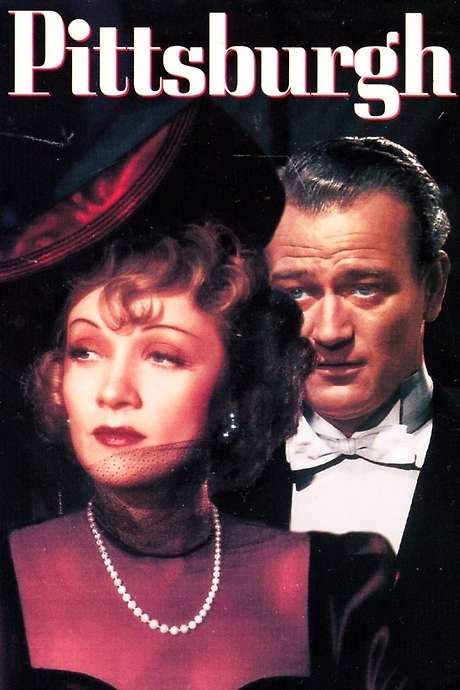
Pittsburgh (1942) movie poster

Plot Summary

Pittsburgh (1942) Plot Summary Explained

Release, runtime and language
1942 · 91 mins · English
Loading streaming availability…
Directed by
Lewis Seiler
Starring
John Wayne, Paul Fix, Thomas Gomez, Charles Coleman, Randolph Scott, Marlene Dietrich

Charles “Pittsburgh” Markham bulldozes through friendships, romances, and his own principles in a relentless pursuit of wealth within the steel industry. He reaches the summit only to discover isolation and abandonment. After his inevitable downfall, fate offers him an unexpected second chance.

On this page (6)
  1. 1 Where to watch
  2. 2 What happens: full plot
  3. 3 Plot questions answered
  4. 4 Movie threads
  5. 5 Movies like Pittsburgh
  6. 6 Every angle
Loading streaming availability…

Full plot summary · contains spoilers

What Happens in Pittsburgh: Full Plot Summary

The whole story of Pittsburgh (1942) explained, from the opening scene to the final frame: every key event, every twist and what it all adds up to. Read it as a quick recap before the sequel, to check a scene you missed, or to finally understand what really happened.

John Wayne stars as Charles 'Pittsburgh' Markham, a coal miner driven by big dreams and a swagger that borders on recklessness. He weaves everyday grit with a restless ambition, turning small opportunities into stepping stones for a much larger ascent. He plants seeds of leverage in every corner of his world—promoting a loan here, coaxing a tailor into a new suit there, and even nudging his best friend into a boxing ring to raise money. The mix of charm and calculation defines his early ascent, and the people around him become both fuel and obstacle on the climb.

When Josie Winters enters his orbit, portrayed with presence by Marlene Dietrich as Josie Winters, Pittsburgh’s smooth surface meets a heart shaped by the same rugged, humble beginnings he claims to outrun. He begins calling her “Countess” after the impression she makes, yet she remains wary of his oversized schemes. She challenges him to walk away from the mine, and he takes the dare—quitting his job and, with it, stepping away from Cash Evans’ side of the operation. The moment signals a pivot from personal bravado to a broader, riskier game.

A new opportunity follows as Markham courts a steel mill owner with a promise of cut-price coke. He fakes the owner’s signature on a contract to persuade the mine owner to supply it, a bold act that marks his first real plunge into the mechanics of big business. Flush with this early success, he speaks of lifting the lot of the men he once worked with, but the intoxicating rush of power soon overwhelms his better judgment. The marriage to the steel mill owner’s daughter—Shannon Prentiss Markham, Louise Allbritton—deepens his social standing, yet it leaves Josie uncomfortable and increasingly distant as he cabals through formal weddings and public appearances.

As his ambitions widen, Pittsburgh pushes his in-laws out of the family business and turns away from the miners he had promised to help. He also halts research into a promising coal-tar medicine meant to alleviate world suffering because it doesn’t offer immediate profit. The personal and professional fractures widen when Cash draws a line and asks to exit the partnership, a decision that foreshadows the erosion of Pittsburgh’s carefully built world.

The mine becomes a pressure cooker: the men revolt, and Pittsburgh heads down to face them alone, still trusting in his unstoppable self-assurance. Cash intervenes, turning the clash into a direct, personal confrontation that exposes the limits of Pittsburgh’s methods and the fragility of his empire. The fallout is brutal—Cash abandons him, his wife walks out, and Josie is badly hurt in a mine accident. Alone and confronted with the ruins of his former life, Pittsburgh confronts the consequences of his choices.

He seeks redemption the hard way, trying to repair the damage he caused and reclaim some measure of former idealism. Cash and Josie eventually marry, and Pittsburgh’s business folds under the strain of his earlier miscalculations. Yet a sliver of opportunity remains: as World War II drags America into a new kind of collective effort, he takes a subordinate role in Cash’s new company, entering under an assumed name and starting at the bottom. His new proposals for improving output catch Cash’s eye, while a careful, rising tension follows him as he re-enters the circle of trust.

As the war intensifies, a meeting with the boss nears, and only Josie can avert a bitter quarrel between old rivals. The film pivots on a clear wartime message—an insistence that devotion to country must come first. The moment is delivered with quiet force, and Pittsburgh earns a chance to redeem himself through service rather than self-importance.

In the end, the trio’s bond is reconstituted, and Pittsburgh is given another chance to prove himself—not by sheer dominance, but by steady, cooperative leadership. He rises from his lowly position to production manager, and eventually to partner, a quiet testament to the idea that even the most ardent ambitions can be tempered by duty, loyalty, and the shared goal of a common good.

- Supporting threads from the world around Markham include Thomas Gomez as Joe Malneck, the Miners Union President, who embodies the tension between labor and management; Nestor Paiva as Barney, the cafe proprietor who witnesses the town’s changes; Frank Craven as J.M. 'Doc' Powers, and Ludwig Stössel as Dr. Grazlich, Powers’ partner, who anchor the medical and moral questions that weave through the plot; Charles Coleman as Mike, Markham’s loyal butler; Paul Fix as Burnside, the mine operator caught up in the economic web; Shemp Howard as Shorty the Tailor, and Samuel S. Hinds as Morgan Prentiss, the Prentiss steel patriarch, all of whom populate a story that moves from grit to grandeur and back again.

> devotion to our country

The movie remains a portrait of ambition and its consequences, a saga of ambition tempered by the moral choices that sustain a community, and a reminder that leadership is most meaningful when it serves those it seeks to lead.
Last updated: October 09, 2025 at 11:21

Was this helpful?

Plot questions answered

Pittsburgh Plot Explained: Your Questions Answered

The questions people ask most about Pittsburgh (1942): what happens in the confusing scenes, why the characters do what they do, the twists, hidden details and what the ending means. Each answer contains spoilers.

Q1

Why did Pittsburgh forge the steel mill owner's signature on the contract?

Pittsburgh forged the signature to convince the mine owner to supply cut-price coke to the steel mill. He needed the contract to look legitimate before he could secure the deal, and forging the steel mill owner's signature was his way of jumpstarting his entry into big business. This act marked his first major moral compromise in pursuit of wealth.

Foreshadowing: The timeline shows this happens early in his ascent, right after he quits the mine.

  • forgery
  • contract
  • steel mill
  • business deal
  • coke
Q2

Why did Pittsburgh halt the coal-tar medicine research?

Pittsburgh stopped the research because it wouldn't show immediate profit. The coal-tar medicine was a promising development meant to alleviate suffering worldwide, but he rejected it purely on financial grounds, prioritizing quick returns over humanitarian benefit. This decision exemplified how his ambition had corrupted his earlier ideals.

Foreshadowing: This occurs during his rise when he begins pushing away former allies.

  • coal-tar medicine
  • research
  • profit
  • betrayal
  • humanitarian
Q3

Why did Pittsburgh push his father-in-law out of the family business?

Pittsburgh removed his father-in-law Morgan Prentiss from the business to gain complete control over the steel operations. As his ambition grew, he wanted full authority without any checks from his in-laws, viewing their involvement as an obstacle to maximizing his power and profits.

Foreshadowing: This betrayal happens after his marriage to Shannon, marking his complete shift toward ruthless entrepreneurship.

  • Morgan Prentiss
  • father-in-law
  • betrayal
  • business control
  • steel
Q4

Why did Pittsburgh confront the rebelling miners by himself?

Pittsburgh went alone into the mine to face the revolting miners because his extreme confidence made him believe he could sway them through sheer force of personality. He still trusted in his ability to control any situation, underestimating how deeply his betrayals had alienated the workers. Cash followed to intervene, turning the confrontation into a direct personal conflict.

Foreshadowing: This event was foreshadowed by his early pattern of using people and his dismissive attitude toward the men who worked for him.

  • miners
  • revolt
  • mine
  • confrontation
  • Cash Evans
Q5

What caused Pittsburgh to lose everything?

Pittsburgh's downfall came from a combination of betrayals that severed his key relationships. Cash abandoned him after their fistfight, his wife Shannon left because of his moral corruption, and Josie was seriously injured in a mine accident. His business then collapsed under the weight of his earlier miscalculations and the loss of everyone who once supported him.

Foreshadowing: The timeline shows the miners' revolt as the turning point that triggered the chain of personal losses.

  • downfall
  • loss
  • betrayal
  • mine accident
  • business collapse
Q6

Why did Pittsburgh work under an assumed name during World War II?

Pittsburgh took a subordinate position in Cash's wartime company under a false name because he wanted a fresh start after his public failure. By entering at the bottom under a different identity, he could prove himself through humble work without the baggage of his past reputation. The wartime context emphasized second chances and service over personal glory.

Foreshadowing: This follows directly from his business collapse and the loss of his former status.

  • assumed name
  • WWII
  • redemption
  • second chance
  • humble work
Q7

Why did Josie end up marrying Cash instead of Pittsburgh?

Josie married Cash after Pittsburgh's downfall because his actions had permanently damaged their relationship. Pittsburgh's betrayal of the miners, his pursuit of wealth over people, and the mine accident that injured Josie all drove a wedge between them. Cash, who had remained principled throughout, became the partner she could trust.

Foreshadowing: The timeline shows Cash drawing a line and asking to exit the partnership long before the final collapse.

  • Josie Winters
  • Cash Evans
  • marriage
  • relationship
  • betrayal
Q8

What made Pittsburgh abandon his promise to help the miners?

Pittsburgh abandoned his promise to help the miners once the intoxicating rush of power took over. Early in his ascent, he spoke of lifting the men who once worked alongside him, but as his wealth and influence grew, profit motive overridden his original idealism. He prioritized wealth accumulation over loyalty to his roots.

Foreshadowing: This is foreshadowed by his early pattern of using people for personal advancement.

  • miners
  • promise
  • betrayal
  • power
  • greed
  • idealism
Q9

Why does Pittsburgh call Josie the Countess?

Pittsburgh nicknames Josie 'Countess' because of the dignified impression she makes despite coming from the same humble coal-mining background as himself. He uses the ironic title to highlight her grace and poise, though it also reflects his tendency to see people in terms of the roles they play rather than who they truly are.

Foreshadowing: This nickname establishes early the dynamic between them and hints at his tendency to elevate people only to use them.

  • Countess
  • Josie Winters
  • nickname
  • first meeting
Q10

What is the significance of the wartime patriotic message at the end?

The wartime patriotic message emphasizes that devotion to country must come before personal ambition. The film uses Pittsburgh's redemption arc to deliver a clear World War II-era message: individual greed and self-interest lead to destruction, while humble service to the collective good brings redemption. This theme was deliberate propaganda for the wartime audience.

Foreshadowing: The entire redemption arc through WWII builds toward this message of selfless service.

  • WWII
  • patriotism
  • duty
  • country
  • redemption
  • propaganda
Q11

Why did Pittsburgh go back to work for Cash after his downfall?

Pittsburgh returned to work for Cash because he had no other options after his business collapsed and everyone abandoned him. He needed to rebuild his life from nothing, and Cash's wartime company offered him a legitimate path forward. Rather than Pride prevented him from accepting help, he swallowed his ego and started at the bottom.

Foreshadowing: This follows naturally from his complete isolation after losing everything.

  • Cash Evans
  • redemption
  • humility
  • second chance
  • partnership
Q12

How did Pittsburgh earn partnership status again after starting at the bottom?

Pittsburgh earned his way back to partnership by demonstrating genuine leadership skills in his subordinate role. His proposals for improving wartime production caught Cash's attention, and his humble, cooperative approach proved he had learned from his past mistakes. The film portrays this promotion as earned through steady, team-oriented work rather than ruthless ambition.

Foreshadowing: His earlier rise was through manipulation; this rise is through genuine contribution.

  • promotion
  • partnership
  • production manager
  • leadership
  • redemption

Movie threads

More Movies Like Pittsburgh, by Mood & Story

Curated lists built around what makes Pittsburgh tick: the same mood, the same kind of story or the same emotional payoff. Each list explains why these movies belong together.

Movies about industrial ambition and moral reckoning like Pittsburgh

Stories of relentless ambition in industrial worlds, leading to moral compromise and eventual reflection. Explore films similar to Pittsburgh that depict the gritty climb to the top and the moral cost of ambition. These movies are for viewers who like stories of wealth, power, betrayal, and the often-bittersweet reflections that follow a dramatic downfall in industrial worlds.

  • ambitious
  • gritty
  • determined
  • introspective
  • somber
  • redemptive
  • Tone: gritty, hopeful, somber
  • Pacing: steady, character-driven
Why these movies?

The story pattern: The narrative typically charts a clear upward trajectory of success, followed by a pivotal event causing a fall from grace. The story structure is often cause-and-effect, driven by the protagonist's choices, and concludes with a reflective phase where characters confront the consequences of their ambition.

Why they belong together: These movies are grouped together because they share a focus on the corrupting nature of ambition within specific, often gritty, industrial or business settings. They balance a steady pace with medium intensity, exploring themes of moral decline and redemption, and typically end on a bittersweet or reflective note.

Movies with bittersweet redemption arcs like Pittsburgh

Character-driven journeys of downfall followed by a hard-won, hopeful path to redemption. If you liked the journey of second chances in Pittsburgh, you'll appreciate these films about characters seeking redemption. These stories focus on the hopeful yet somber path to rebuilding a life after a downfall, often involving themes of duty, service, and personal sacrifice for a greater good.

  • redemptive
  • hopeful
  • somber
  • introspective
  • second chance
  • determined
  • Tone: hopeful, somber, introspective
  • Pacing: steady, reflective
Why these movies?

The story pattern: The narrative pattern involves a clear moral decline or disastrous mistake, leading to isolation and loss. A turning point, often an external event or internal realization, offers a chance for redemption. The climax is not about regaining past status but finding a new, more meaningful purpose, resulting in a bittersweet but hopeful conclusion.

Why they belong together: These films are united by their focus on the emotional journey of redemption. They share a medium emotional weight and a hopeful tone that emerges from somber circumstances. The pacing is steady, allowing for character reflection, and the endings are consistently bittersweet, balancing loss with newfound purpose.

If you liked this

Movies Like Pittsburgh

Similar movies to Pittsburgh: the same genre, themes or kind of story. Each one comes with its own plot summary, timeline and ending explained.

Browse all movie summaries

Every angle

Pittsburgh (1942) Explained: Plot, Timeline & Characters

Everything about Pittsburgh in one place: what happens in the plot summary, the timeline in chronological order, the characters and meaning and a spoiler-free summary. What's After the Movie adds the cast, box office and post-credit scenes.

Coming soon on iOS and Android

The Plot Explained Movie Summary App

Plot summaries, endings explained and timelines on your phone. Catch up on any movie in minutes, save your favorites and never miss a twist again.

Be the first to know when we launch. Your email stays private, always.

Learn more about the app