










Plot Explained Spoilers guaranteed!
Plot Explained

Browse by genre

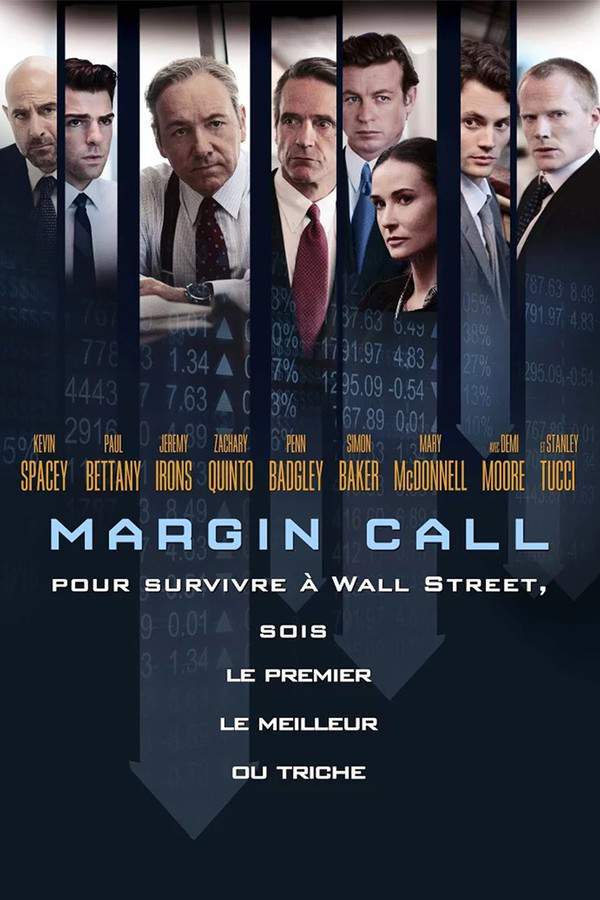
Margin Call (2011) movie poster

Timeline

Margin Call (2011) Timeline Explained – Every Event in Order

Release, runtime and language
2011 · 105 min · English
JustWatch #264 31
Directed by
J.C. Chandor
Budget
$3.5M

During the late hours of the 2008 financial crisis, a young analyst uncovers a potentially devastating risk. His discovery triggers a chain reaction among senior traders and executives at an investment bank. As the crisis escalates, they must grapple with the implications and make difficult decisions that will impact their careers, reputations, and the stability of the financial system. The night becomes a tense battle for survival and a glimpse into the ruthless world of high finance.

On this page (6)
  1. 1 Where to watch
  2. 2 Events in order (15)
  3. 3 Timeline questions answered
  4. 4 Movie threads
  5. 5 Movies like Margin Call
  6. 6 Every angle

Where to watch

Where to Watch Margin Call (2011)

Where can you watch Margin Call? Stream, rent or buy it in the US, including on Amazon Prime Video, Kanopy and Amazon MX Player: current JustWatch availability with up-to-date prices.

Streaming availability powered by JustWatch

15 events in order · contains spoilers

Margin Call Timeline: Events in Chronological Order

Every key event of Margin Call (2011) in order, scene by scene, with when and where it takes place. Use it to untangle flashbacks, time jumps and parallel storylines, to refresh your memory before the sequel or to find the exact scene you are thinking of.

  1. Mass Layoff Announcement

    On an ordinary business day, Junior risk analyst Seth Bregman witnesses a shocking mass layoff initiated by a temporary HR team. Among those laid off is their boss, Eric Dale, who holds a crucial role in risk management operations.

    Where
    Trading Floor
  2. Dale's Critical Warning

    During his exit interview, Eric Dale attempts to share vital information regarding an ongoing project with the HR staff. However, their focus is solely on expediting his departure, leaving Dale with no option but to discreetly hand a USB stick to Peter Sullivan.

    Where
    Office
  3. Uncovering Alarming Information

    Later that evening, Peter Sullivan examines the data on the USB stick. He discovers alarming information revealing that their mortgage-backed securities portfolio is poised for unprecedented volatility, raising significant alarm bells for the firm.

    When
    Evening
    Where
    Peter's Office
  4. Alerting Management

    Realizing the gravity of the findings, Peter alerts Will Emerson, who promptly escalates the situation to floor head Sam Rogers. The urgency escalates as they decide to hold a series of emergency meetings with senior executives.

    Where
    Office
  5. Executive Meetings

    During the urgent meetings with senior executives, including Jared Cohen and Sarah Robertson, the team deliberates on how to mitigate the impending crisis. Jared suggests a swift sale of all toxic assets, which garners support from CEO John Tuld despite Sam's fierce opposition.

    Where
    Conference Room
  6. Sam's Concerns

    Sam warns the executives that offloading the risky assets could wreak havoc in the financial sector and damage crucial relationships with stakeholders. His concerns highlight the potential fallout from their imminent actions.

    Where
    Office
  7. Finding Eric Dale

    Amidst the turmoil, the team manages to track down Eric Dale, who has been unreachable since being terminated. They negotiate with him, promising a generous payout, while also threatening to contest his severance.

    Where
    Outside the Firm
  8. Sarah's Resignation Plan

    As the situation intensifies, it becomes clear that Sarah, Jared, and John were aware of the risks leading up to this crisis. Tuld plans to paint Sarah’s resignation as a scapegoat for their failing strategies.

    Where
    Office
  9. Fire Sale Strategy

    As the market prepares to open, Sam calls upon his traders, promising them huge bonuses in return for a drastic reduction in toxic mortgage-backed securities through a 'fire sale.' He acknowledges the devastating impact this will have on their professional relationships.

    When
    Pre-Market Opening
    Where
    Trading Floor
  10. Sarah and Dale's Stalemate

    In an empty office, Sarah and Dale find themselves under immense pressure but earn significant salaries despite their inaction. Sarah defensively claims she had warned about the risks that led to this crisis, albeit not forcefully enough.

    Where
    Office
  11. Tensions Rise

    As trading proceeds, tensions build among counter-parties who grow increasingly frustrated. Sam's aggressive trading strategies begin to take a toll, heightening the sense of urgency across the trading floor.

    Where
    Trading Floor
  12. Another Round of Layoffs

    At the end of the trading day, Sam observes the same HR team initiating yet another round of layoffs within his department. This unsettling realization adds to the mounting pressures of the unfolding crisis.

    Where
    Trading Floor
  13. Sam's Decision to Resign

    Confronting John, Sam expresses his desire to resign, feeling overwhelmed by the situation. However, John downplays the crisis, comparing it to previous market downturns and persuading Sam to stay for the potential profits.

    Where
    Office
  14. Seth’s Future Uncertain

    Meanwhile, Peter discusses his projected promotion with Jared, indicating an upward trajectory amidst the chaos. Seth, on the other hand, faces an uncertain future at the firm as the implications of the crisis loom large.

    Where
    Office
  15. A Heartbreaking Farewell

    In a poignant concluding scene, Sam is shown burying his beloved dog on his ex-wife's lawn. This emotional moment serves as a stark reminder of the personal sacrifices amidst the relentless corporate turmoil.

    Where
    Ex-Wife's Lawn

Last updated: November 07, 2024 at 23:50

Was this helpful?

Timeline questions answered

Margin Call Timeline Explained: Your Questions Answered

When does it happen, and why in that order? The questions people ask about the chronology of Margin Call (2011): time jumps, flashbacks, cause and effect between scenes and the correct order of events, each answered with spoilers.

Q1

What did Peter discover on Eric Dale's USB stick?

Peter discovered that the firm's mortgage-backed securities portfolio was approaching unprecedented volatility levels. The data revealed that due to excessive leverage, a 25% drop in these assets would cause losses exceeding the firm's entire market capitalization. This discovery triggers the entire crisis narrative.

Foreshadowing: Earlier, Eric Dale tried to warn the HR staff about his project during his exit interview, but they dismissed him.

  • peter sullivan
  • usb stick
  • mortgage-backed securities
  • risk calculation
  • eric dale
Q2

What is the fire sale and why does it happen?

The fire sale is a rapid, aggressive dump of all toxic mortgage-backed securities before the market learns they are devalued. CEO John Tuld orders it because the firm faces catastrophic losses if they hold the assets until their true value is exposed. The sale will be at rock-bottom prices, but it prevents even larger collapse.

  • fire sale
  • toxic assets
  • mortgage-backed securities
  • john tuld
  • fire sale strategy
Q3

Why does Sam Rogers oppose the fire sale?

Sam warns that dumping all toxic assets at once will send shockwaves through the entire financial sector. He understands it will destroy relationships with clients and counterparties who will immediately recognize the firm is unloading worthless securities. He sees it as unnecessarily destructive to others.

Foreshadowing: Sam's concerns about stakeholder relationships appear during the executive meetings when he challenges Jared Cohen's proposal.

  • sam rogers
  • fire sale opposition
  • financial sector
  • client relationships
  • ethical concerns
Q4

Why is Sarah Robertson made a scapegoat?

CEO John Tuld plans to present Sarah's resignation as a scapegoat to the board and employees. Though Sarah, Jared, and John were all aware of the risks before the crisis, Tuld strategically sacrifices Sarah to deflect blame from the firm's leadership. Sarah defensively claims she did warn about the risks, just not forcefully enough.

Foreshadowing: The timeline reveals Sarah, Jared, and John knew about the looming risks prior to the crisis discovery.

  • sarah robertson
  • scapegoat
  • john tuld
  • resignation
  • executive blame
Q5

Why does Sam decide to stay at the firm after wanting to resign?

John Tuld persuades Sam to stay by downplaying the crisis as just another market downturn and promising significant profits from the impending crash. He offers Sam a two-year extension with the诱惑 of substantial earnings, effectively buying his compliance with the corrupt system.

  • sam rogers
  • resignation
  • john tuld
  • staying
  • corruption
  • profits
Q6

What does the 25% decrease in mortgage assets mean for the firm?

The 25% figure represents a projected decline in the value of their mortgage-backed securities portfolio. Because the firm used excessive leverage (borrowed money to amplify investments), this 25% drop would result in losses greater than the entire market capitalization of the company, in other words, total bankruptcy.

  • leverage
  • 25% decrease
  • mortgage-backed securities
  • market capitalization
  • bankruptcy risk
Q7

Did the senior executives know about the risks before the crisis?

Yes. The narrative reveals that Sarah Robertson, Jared Cohen, and CEO John Tuld were all aware of the mounting risks in their mortgage-backed securities portfolio long before Peter made his discovery. They chose not to act proactively, and John specifically planned to use Sarah as a scapegoat once the crisis became public.

Foreshadowing: Peter's discovery confirms what leadership already suspected but concealed.

  • jared cohen
  • sarah robertson
  • john tuld
  • knew risks
  • cover-up
Q8

Why does the HR team return for another round of layoffs?

At the end of the trading day, Sam watches the same temporary HR team that conducted the initial mass layoff now returning to his department. This signifies the ongoing cost-cutting and human cost of the crisis, showing that the firm's survival strategy involves continuous reduction of staff regardless of individual contributions.

Foreshadowing: The HR team was introduced during the opening mass layoff scene, establishing them as a recurring symbol of corporate ruthlessness.

  • hr team
  • layoffs
  • second round
  • trading floor
  • cost cutting
Q9

What is the significance of Sam burying his dog at the end?

The closing scene shows Sam burying his beloved dog on his ex-wife's lawn, serving as a poignant reminder of personal loss amid corporate chaos. It humanizes Sam and illustrates the emotional toll the crisis takes, not just on careers and finances, but on personal life and well-being. The dog represents something pure that Sam has lost.

  • sam rogers
  • dog burial
  • ending scene
  • personal loss
  • emotional toll
Q10

Why was Eric Dale terminated despite knowing critical information?

Eric Dale was laid off during the mass reduction because the temporary HR team lacked context about his ongoing project. During his exit interview, they focused only on expediting his departure rather than listening to his warnings. He discretly handed the USB stick to Peter because he had no other way to communicate the urgent information.

Foreshadowing: The mass layoff is the opening event that sets the entire plot in motion.

  • eric dale
  • termination
  • laid off
  • usb stick
  • risk management

Movie threads

More Movies Like Margin Call, by Mood & Story

Curated lists built around what makes Margin Call tick: the same mood, the same kind of story or the same emotional payoff. Each list explains why these movies belong together.

Corporate crisis thrillers like Margin Call

High-stakes suspense as powerful people face disaster behind closed doors. For viewers who enjoyed the high-pressure suspense of Margin Call, this thread features movies like it that explore institutional meltdowns. These tense thrillers depict powerful individuals grappling with ethical collapse and impending disaster in confined, high-stakes environments, similar to the 2008 financial crisis narrative.

  • suspenseful
  • claustrophobic
  • morally gray
  • anxious
  • grim
  • calculating
  • Tone: tense, bleak, coldly calculating
  • Pacing: fast, relentless
Why these movies?

The story pattern: Stories in this thread typically follow a linear, fast-paced escalation of a professional crisis. The narrative is driven by urgent meetings, escalating revelations, and characters grappling with moral compromise as they attempt to mitigate or survive a disaster that threatens their organization and personal standing.

Why they belong together: These films are grouped together because they share a core experience of tense, high-intensity corporate drama. They feature a claustrophobic atmosphere, a fast pace driven by imminent threat, and a heavy emotional weight centered on moral ambiguity and the cold calculus of survival within powerful institutions.


Compressed timeline moral dilemmas like Margin Call

A single night where characters must confront their own complicity in a broken system. If you liked how Margin Call unfolds over a single tense night, this thread collects movies with similar compressed timelines. These films focus on characters facing rapid ethical collapse and making heavy choices under extreme time pressure, creating a powerful and often bleak viewing experience reminiscent of high-finance survival stories.

  • anxious
  • morally gray
  • urgent
  • suspenseful
  • grim
  • ethically complex
  • Tone: tense, morally complex, grim
  • Pacing: fast, urgent
Why these movies?

The story pattern: The narrative pattern involves a rapid, domino-like sequence of events triggered by a discovery or crisis. Character arcs are compressed, showing a swift journey from initial shock to grim acceptance or moral compromise. The structure emphasizes the relentless pressure of time, leaving little room for reflection and forcing immediate, consequential action.

Why they belong together: This thread groups films that use a tight timeline to heighten tension and explore moral decay. The shared experience is one of relentless pacing, high intensity, and a heavy focus on the psychological and ethical unraveling of characters as they scramble to respond to an immediate, systemic threat.

If you liked this

Movies Like Margin Call

Similar movies to Margin Call: the same genre, themes or kind of story. Each one comes with its own plot summary, timeline and ending explained.

Browse all movie summaries

Every angle

Margin Call (2011) Explained: Plot, Timeline & Characters

Everything about Margin Call in one place: what happens in the plot summary, the timeline in chronological order, the characters and meaning and a spoiler-free summary. What's After the Movie adds the cast, box office and post-credit scenes.

Coming soon on iOS and Android

The Plot Explained Movie Summary App

Plot summaries, endings explained and timelines on your phone. Catch up on any movie in minutes, save your favorites and never miss a twist again.

Be the first to know when we launch. Your email stays private, always.

Learn more about the app