Plot Explained Spoilers guaranteed!
Plot Explained

Browse by genre

Mercy (2026) movie poster

Plot Summary

Mercy (2026) Plot Summary & Ending Explained

Release, runtime and language
2026 · 1 h 40 m · English
Echo score 50
JustWatch #844 208
Directed by
Timur Bekmambetov
Starring
Rebecca Ferguson, Chris Pratt, Kylie Rogers, Rafi Gavron, John Bubniak, Annabelle Wallis
Budget
$60M

In a near‑future legal system, a hardened detective (Chris Pratt) is charged with his wife's murder. With only 90 minutes left, he must convince the cold, precise A.I. Judge (Rebecca Ferguson)—the very technology he helped create—that he is innocent, before the machine renders a final verdict.

On this page (6)
  1. 1 Where to watch
  2. 2 What happens: full plot
  3. 3 Plot questions answered
  4. 4 How it ends
  5. 5 Movie threads
  6. 6 Every angle

Where to watch

Where to Watch Mercy (2026)

Where can you watch Mercy? Stream, rent or buy it in the US, including on Amazon Prime Video, fuboTV and MGM Plus: current JustWatch availability with up-to-date prices.

Streaming availability powered by JustWatch

Full plot summary · contains spoilers

What Happens in Mercy: Full Plot Summary

The whole story of Mercy (2026) explained, from the opening scene to the final frame: every key event, every twist and what it all adds up to. Read it as a quick recap before the sequel, to check a scene you missed, or to finally understand what really happened.

In a near-future Los Angeles where crime is on the rise, the Mercy Capital Court enforces a radical approach: AI judges preside over violent-crime cases, granting defendants every available resource to uncover evidence within a strict 90-minute window, or face execution via a sonic blast. At the center of this system is Judge Maddox, an AI arbiter who can pull in records, surveillance, and other data to weigh a defendant’s guilt with startling speed and precision.

LAPD Detective Chris Raven is brought into this high-stakes environment when he is accused of murdering his wife, Nicole. The case looks damning from the outset: Nicole’s blood is found on Chris’s clothing, and doorbell footage places him at their home shortly before the murder. The AI judge sets a guilt probability at 97.5%, a number Chris must drive down to 92% to avoid execution. The courtroom becomes a high-tech maze as Maddox unfolds layers of Nicole’s life and work, revealing that she had been seeing another man, Patrick Burke, and that Nicole’s job emails hint at stolen chemicals and hidden trouble.

As the investigation unfolds, Chris’ former sobriety journey and past losses come into focus. The narrative threads through his relapse, the consequences of a previous case where a suspect was acquitted, and Nicole’s growing fears about their relationship and a possible divorce. Maddox’s access to Nicole’s communications uncovers a disquieting pattern: a co-worker, Holt Charles, faced financial issues and had discussed the chemical disappearance with Robert Nelson, Chris’s sobriety sponsor. With Holt under suspicion, Chris attempts to contact Rob, only to discover that Rob has his own plan in motion.

Meanwhile, the investigation widens to Britt, Chris’s daughter, whose social posts and a neighbor’s security footage reveal a stranger lurking in the family home and a suspicious man exiting a neighbor’s trunk in a parking lot. The tension tightens as Chris sends Jaq to Rob’s house to warn that Rob could be armed, prompting a SWAT response that discovers stolen chemicals and a detailed bomb plan. Maddox uncovers that Rob’s brother, David Webb, was Mercy Court’s first execution, and Chris realizes Rob is orchestrating a personal vendetta against him and the court.

Against all odds, Chris is acquitted of the murder, and the family hopes for a fragile reconciliation. But the threat escalates when footage shows Rob kidnapping Britt and disappearing in a stolen semi-truck. A bomb goes off, destroying part of the SWAT operation and lovers’ hopes of a quiet ending. As Rob advances toward Mercy Court with explosives, Jaq fights to pull the team into action, persuading the task-force captain to use a bomb robot to target the truck. The plan nearly succeeds, but the robot fails to detonate, allowing Rob to reach Mercy Court.

The network resets, trapping Chris inside, but Maddox reboots in time to free him. In their confrontation, Chris and Rob clash while Britt is in danger. Jaq shoots Rob, who reveals that David was innocent of the murder for which he was executed; Rob had been on the phone with David at the critical moment. Maddox retrieves footage showing this dynamic, exposing Jaq’s manipulation—she had dumped David’s phone, which could have exonerated him, to prove Mercy’s efficacy. With the truth uncovered, Jaq and Rob are taken into custody. Britt’s reconciliation with Chris becomes bittersweet as the AI system is shut down and the case against Chris is dismissed, underscoring the fragile balance Mercy Court tries to maintain between justice, control, and human fallibility.

Last updated: February 03, 2026 at 07:41

Was this helpful?

Plot questions answered

Mercy Plot Explained: Your Questions Answered

The questions people ask most about Mercy (2026): what happens in the confusing scenes, why the characters do what they do, the twists, hidden details and what the ending means. Each answer contains spoilers.

Q1

Why was Chris Raven accused of killing his wife?

Chris Raven was accused because the evidence appeared overwhelming: Nicole's blood was found on Chris's clothing, and doorbell footage placed him at their home shortly before the murder occurred. The AI Judge Maddox calculated an initial guilt probability of 97.5%, leaving Chris with the desperate task of lowering it to 92% within 90 minutes to avoid execution.

Foreshadowing: Earlier scenes establish Chris's history of aggression and his relapse into alcoholism, which made him an easy suspect.

  • chris raven
  • nicole murder
  • false accusation
  • evidence
Q2

How does the Mercy Court AI trial system work?

Mercy Court uses AI judges to preside over violent crime cases in near-future Los Angeles. Defendants have exactly 90 minutes to gather evidence and present their defense. If they cannot lower their guilt probability below the threshold (92% in Chris's case), they are executed via sonic blast. The AI can instantly access surveillance, records, and communications to weigh guilt with extreme speed.

Foreshadowing: The opening establishes the system's reputation for efficiency and its controversial reputation from the start.

  • ai judge
  • mercy court
  • 90 minute trial
  • capital punishment
Q3

Why was Nicole's affair relevant to Chris's murder trial?

Maddox uncovered that Nicole was having an affair with Patrick Burke, which suggested possible motives beyond a random crime. The affair raised questions about whether Chris knew about the infidelity and whether emotional turmoil led to violence. However, this revelation also opened alternative theories about who else might have wanted Nicole dead.

Foreshadowing: Chris's admission of marital problems and his struggle with sobriety hinted at underlying relationship tensions.

  • nicole affair
  • patrick burke
  • motive
  • investigation
Q4

Why did Robert Nelson want revenge against Chris and Mercy Court?

Rob's brother David Webb was the first person executed by Mercy Court. Rob discovered that David was actually innocent of the murder he was convicted of, and he had been on the phone with David at the critical moment when the murder occurred. This personal loss drove Rob to orchestrate both Chris's frame-up for Nicole's murder and the larger terrorist attack on Mercy Court itself.

Foreshadowing: Chris's realization that his past case resulted in an acquitted suspect connects to the broader theme of wrongful convictions.

  • robert nelson
  • david webb
  • revenge
  • execution
  • mercy court
Q5

What happened to David Webb and why was his execution significant?

David Webb was Mercy Court's first execution, a test case that proved the AI system's capability. However, evidence later revealed David was actually innocent; he had been on the phone with his brother Rob at the time of the murder, which could have exonerated him. His execution became the catalyst for Rob's elaborate revenge plot.

Foreshadowing: The investigation into Rob's motives gradually revealed the connection to the court's first case.

  • david webb
  • execution
  • wrongful death
  • first mercy case
Q6

Why did Jaq dump David's phone during the investigation?

Jaq deliberately dumped David Webb's phone, which could have proven his innocence, to protect Mercy Court's reputation. She wanted to prove the system's efficacy by ensuring the first execution appeared justified, regardless of actual guilt. This act of manipulation was revealed during the final confrontation.

Foreshadowing: Jaq's intense loyalty to the Mercy system and her professional demeanor hinted at her willingness to make moral compromises.

  • jaq
  • david phone
  • cover-up
  • manipulation
Q7

How was Britt involved in Rob's kidnapping plan?

Britt, Chris's daughter, became Rob's leverage against Chris. After Chris was acquitted, Rob kidnapped Britt and escaped in a stolen semi-truck loaded with explosives. Rob used her as a human shield to force Chris to prevent the bomb robot from detonating, attempting to reach Mercy Court to destroy it.

Foreshadowing: Earlier clues about a stranger in the basement and suspicious activity near the home hinted at someone targeting the family.

  • britt
  • kidnapping
  • rob
  • hostage
  • explosives
Q8

How was Chris ultimately exonerated for Nicole's murder?

Chris was acquitted because Maddox retrieved crucial footage showing that Rob had been orchestrating the frame-up. The evidence proved Chris was innocent of Nicole's murder, allowing the case against him to be dismissed. However, this victory was overshadowed by the revelation of David's innocent execution and Jaq's manipulation.

Foreshadowing: Chris's desperate investigation throughout the 90 minutes built toward uncovering the truth behind the setup.

  • acquittal
  • exoneration
  • verdict
  • frame-up
Q9

What happened to the AI Judge Maddox at the end of the film?

After exposing Jaq's manipulation and confirming David's innocence through retrieved footage, the AI system experienced a hiccup and was shut down. Maddox's shutdown represented the collapse of the Mercy Court system itself, as its fundamental flaws, speed over accuracy and vulnerability to manipulation, were exposed.

Foreshadowing: Throughout the trial, Maddox's cold precision and ability to access all data hinted at both its power and potential vulnerabilities.

  • maddox
  • ai shutdown
  • mercy court system
  • resolution
Q10

Why did Chris Raven relapse into alcoholism during the case?

Chris's relapse stemmed from multiple factors: the guilt of his previous partner Ray Vale's murder, his regret over not shooting the suspect who was later acquitted, and the growing strain in his marriage. His alcoholism had caused aggression toward Nicole, and the stress of being accused of her murder compounded his personal demons.

Foreshadowing: Flashbacks and references to Chris's past as Ray's partner established his history of trauma and addiction.

  • chris relapse
  • alcoholism
  • ray vale
  • sobriety
  • addiction
Q11

Why did the bomb robot fail to stop Rob's truck?

The task force captain deployed a bomb robot to target Rob's explosives-laden truck, but the device failed to detonate. This failure allowed Rob to reach Mercy Court with his explosives, creating the final confrontation. The technical malfunction highlighted the fragility of technological solutions in high-stakes situations.

Foreshadowing: Earlier references to the court's reliance on technology set up the expectation that tech would play a critical role in the climax.

  • bomb robot
  • detonation failure
  • swat
  • explosives
  • truck
Q12

What was the connection between Holt Charles and the missing chemicals?

Holt Charles was a co-worker of Nicole's who faced financial troubles and had discussed the disappearance of chemicals with Robert Nelson, Chris's sobriety sponsor. This connection made Holt a suspect in the chemical theft and potentially related to the larger criminal plot, though Rob was ultimately revealed as the mastermind.

Foreshadowing: The missing chemicals subplot initially appeared to be a separate thread before connecting to Rob's broader scheme.

  • holt charles
  • chemicals
  • theft
  • robert nelson
  • suspect

Ending explained

What Happens at the End of Mercy?

How Mercy (2026) ends, in short: the final scene, the last twist and what it means for the characters. The full ending explained, with every spoiler, lives on its own page.

Read the full ending explained

The ending of Mercy reveals a tragic cycle of vengeance that stems from the very system protagonist Chris Raven created to dispense justice. After being accused of his wife Nicole's murder, Chris faces his own invention: the Mercy Court, an AI-driven tribunal that executes defendants within ninety minutes if they cannot prove their innocence. As the trial unfolds, Chris discovers that the killer is Rob Nelson, a man he knew as a friend and AA sponsor. Rob's true motive stems from the execution of his brother, David Webb—the first person condemned by Chris's AI system. David was innocent, a homeless man who happened to pick up a murder weapon, and was talking to Rob on the phone when the actual crime occurred. Yet the system failed him, in part because Chris's partner, Jaq Diallo, deliberately removed the phone evidence that would have cleared him.

The revelation forces Chris to confront the fatal flaw in his creation. He designed Mercy Court out of rage when his partner's killer walked free, believing that swift, automated justice would prevent dangerous criminals from escaping punishment. But in doing so, he stripped away the safeguards that protect the innocent—the right to counsel, thorough investigations, and the time needed to uncover the truth. Rob's revenge was methodical and cruel: he murdered Nicole, framed Chris, and plotted to destroy the Department of Justice building that housed the Mercy program's data center. He wanted Chris to experience the same helpless agony of watching an innocent life destroyed by a system that offers no recourse.

Continue reading the ending (1 more paragraphs)

In the final confrontation, Chris rescues his daughter Britt and apprehends Rob without killing him. The film attempts to frame this as a moment of growth, with Chris choosing not to continue the cycle of violence. Yet the ending carries a darker weight than a simple redemption arc. Rob was right when he called Chris the real monster—not because Chris pulled the trigger, but because he built a machine that could. The AI Judge Maddox repeatedly failed to access crucial evidence, from a neighbor's camera to Jaq's bodycam footage, proving that artificial intelligence cannot substitute for human judgment when the stakes are life and death. Jaq faces arrest for tampering with evidence, but the larger question remains unanswered: who is accountable when a machine designed to execute the guilty kills an innocent man? Mercy ultimately serves as a cautionary tale about the dangers of trading due process for efficiency, showing that the pursuit of perfect justice can become its own form of tyranny when we forget that the system's purpose is to protect the innocent, not merely to punish the guilty.

Mercy ending explained in full

Movie threads

More Movies Like Mercy, by Mood & Story

Curated lists built around what makes Mercy tick: the same mood, the same kind of story or the same emotional payoff. Each list explains why these movies belong together.

Race against the clock thrillers like Mercy

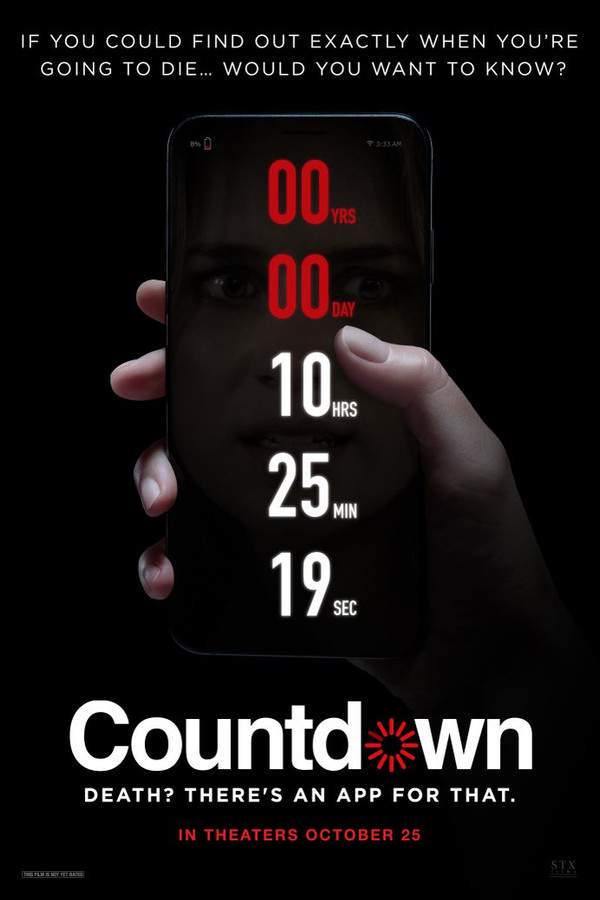
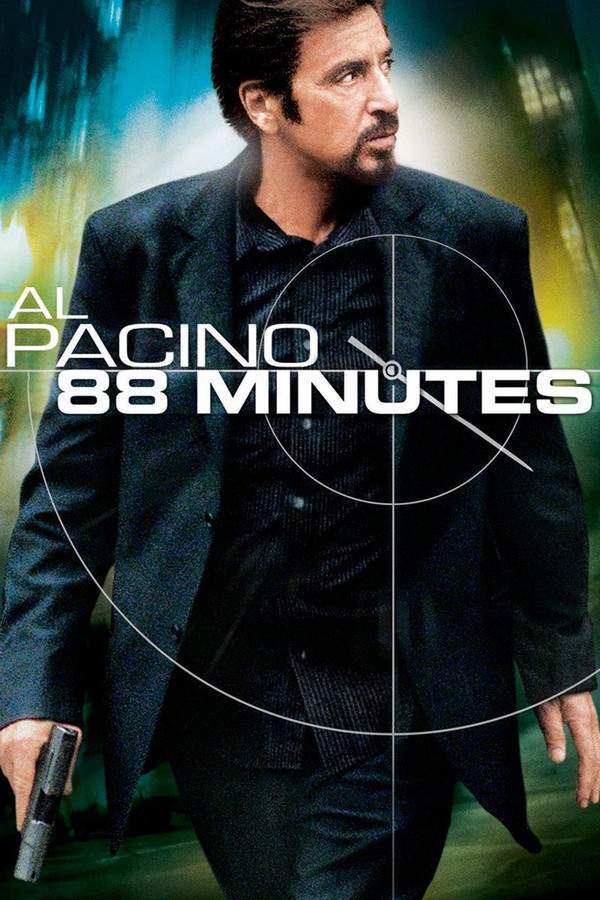
High-stakes stories where every second counts towards a final confrontation. If you loved the high-stakes countdown in Mercy, explore more movies where characters face a relentless deadline. These films deliver constant tension, fast pacing, and gripping suspense that will keep you on the edge of your seat.

  • urgent
  • high-stakes
  • suspenseful
  • ticking clock
  • gripping
  • anxious
  • Tone: tense, urgent
  • Pacing: fast, relentless
Why these movies?

The story pattern: Stories in this thread are defined by a ticking clock, a deadline that dictates the pace and raises the stakes exponentially. The plot follows a linear, escalating trajectory towards a final confrontation or resolution point, with tension building as time dwindles.

Why they belong together: Movies are grouped here because they share the core narrative engine of a time limit. This creates a highly specific viewing experience characterized by urgency, relentless pacing, and palpable suspense, making them feel immediately gripping.

Tech-noir thrillers with moral dilemmas like Mercy

Gritty stories set in high-tech worlds where justice is a flawed, complex calculation. Fans of Mercy's futuristic crime setting and complex themes will enjoy these similar movies. Discover more sci-fi thrillers that explore artificial intelligence, systemic injustice, and the grey areas of morality in high-tech worlds.

  • futuristic
  • noir
  • suspenseful
  • morally complex
  • melancholic
  • high-tech
  • Tone: tense, melancholic
  • Pacing: steady, with bursts of fast pacing
Why these movies?

The story pattern: The narrative follows an investigation or personal quest within a technologically advanced but ethically compromised society. The protagonist's journey often uncovers uncomfortable truths about the system and themselves, leading to a conclusion that is seldom purely victorious but instead is bittersweet or morally ambiguous.

Why they belong together: These movies are united by their specific blend of futuristic crime, high-tech settings, and heavy emotional themes centered on injustice and ethical grey areas. They share a tense, melancholic mood and a focus on systemic flaws.

Every angle

Mercy (2026) Explained: Plot, Ending, Timeline & Characters

Everything about Mercy in one place: what happens in the plot summary, the timeline in chronological order, the characters and meaning, the ending explained and a spoiler-free summary. What's After the Movie adds the cast, box office and post-credit scenes.

Coming soon on iOS and Android

The Plot Explained Movie Summary App

Plot summaries, endings explained and timelines on your phone. Catch up on any movie in minutes, save your favorites and never miss a twist again.

Be the first to know when we launch. Your email stays private, always.

Learn more about the app