Plot Explained Spoilers guaranteed!
Plot Explained

Browse by genre

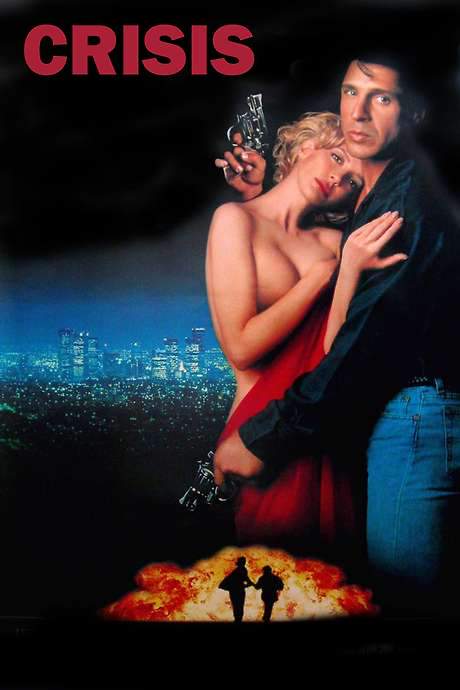
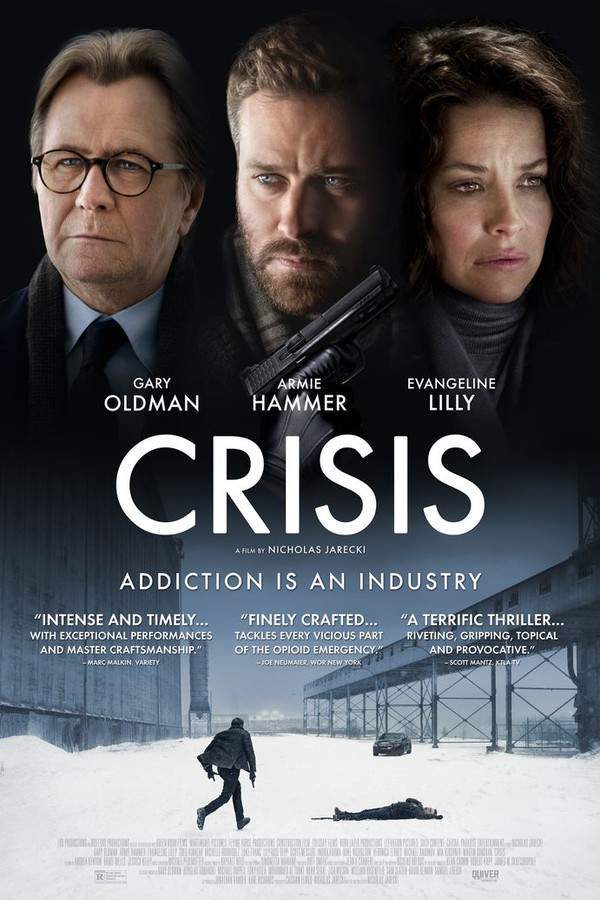
Crisis (2021) movie poster

Plot Summary

Crisis (2021) Plot Summary & Ending Explained

Release, runtime and language
2021 · 118 min · English
Echo score 68
Loading streaming availability…
Directed by
Nicholas Jarecki
Starring
Michelle Rodriguez, Evangeline Lilly, Luke Evans, Gary Oldman, Armie Hammer, Greg Kinnear

As the opioid crisis intensifies, the lives of three individuals become intertwined in a suspenseful narrative. A dangerous trafficker manages a network for distributing fentanyl, while an architect investigates her son's struggle with addiction and uncovers unsettling truths. Simultaneously, a professor’s vital research is exploited by a pharmaceutical company, exposing hidden agendas and difficult moral dilemmas with far-reaching consequences.

On this page (8)
  1. 1 Where to watch
  2. 2 What happens: full plot
  3. 3 Plot questions answered
  4. 4 How it ends
  5. 5 Movie threads
  6. 6 Movies like Crisis
  7. 7 Categories
  8. 8 Every angle
Loading streaming availability…

Full plot summary · contains spoilers

What Happens in Crisis: Full Plot Summary

The whole story of Crisis (2021) explained, from the opening scene to the final frame: every key event, every twist and what it all adds up to. Read it as a quick recap before the sequel, to check a scene you missed, or to finally understand what really happened.

Teenage drug runner Cedric Beauville finds himself in a perilous situation when he is caught by the Royal Canadian Mounted Police at the Canada-United States border while carrying a significant quantity of illicit Fentanyl pills. In a parallel narrative, Dr. Tyrone Brower (Gary Oldman), a research scientist from Everett University, is hired by Northlight Pharmaceuticals to conduct a study on their upcoming product, Klaralon. This new drug is being heralded as a revolutionary, non-addictive painkiller, meant to replace Oxycodone. However, Brower's research unveils troubling findings: while Klaralon may appear non-addictive during its initial week of use, it dramatically increases in addictiveness thereafter, nearly tripling its potential compared to Oxycodone.

Recognizing the serious risks this poses to public health, Brower advises Northlight to postpone the drug's release for extensive further testing. Unfortunately, the company is resistant, and Dr. Bill Simons (Luke Evans), a board member, attempts to sway Brower with a hefty research grant of $780,000, but Brower stands firm. Faced with mounting pressure from his department head, Geoff Talbot (Greg Kinnear), Brower continues to refuse, prompting Northlight to undermine his reputation publicly, and resulting in the revocation of his tenure at the university.

As Brower grapples with the moral dilemma, he takes the bold step of becoming a whistleblower, reaching out to the FDA and connecting with investigator Ben Walker (Scott Mescudi). Meanwhile, in a separate storyline, Detroit DEA agent Jake Kelly (Armie Hammer) is on the ground, infiltrating two significant Fentanyl drug cartels: one steered by the Armenian Mafia and the other run by the Montreal-based kingpin Claude 'Mother' Veroche (Guy Nadon). Intending to orchestrate a simultaneous bust, Kelly is fueled by personal stakes—his younger sister, Emmie (Lily-Rose Melody Depp), is ensnared in her own battle with heroin addiction.

Tensions build when Mother learns of Cedric's arrest, leading him to eliminate the young runner, fearing he might squeal. Amidst this chaos, Kelly reports that the American mafia exploits homeless individuals to funnel them into clinics where doctors freely prescribe Oxycodone—all of this while the cartels intensify their push for Fentanyl, a drug significantly more potent than heroin.

Under pressure to expedite cartel meetings, Supervisor Garrett (Michelle Rodriguez) decreases Kelly's timeline for the operation. As the plot thickens, Claire Reimann (Evangeline Lilly), an architect grappling with her own demons, becomes distraught when her son David fails to return from hockey practice, only to discover he died from an overdose of Oxycodone. Convinced he never faced drug issues, Claire hires a private investigator who reveals that her son was murdered—his death a tragic consequence of the drug underworld in which he was reluctantly entangled.

Determined to seek justice for her son, Claire embarks on a perilous journey into the heart of the drug trade. This quest leads her to Montreal, where she acquires information about Mother and secures an untraceable ghost gun, preparing to confront those responsible. Kelly, aware of Claire's dangerous path, intercepts her outside La Marina, aiming to protect her rather than arrest her.

The anticipated cartel meeting is set in motion, monitored by a meticulous joint task force; however, a minor blunder leads to a violent shootout, resulting in the death of Kelly's partner. In the aftermath, both U.S. and Canadian agencies decide to cease their pursuit of Mother and the Armenians, prompting Kelly to take matters into his own hands. Learning of Mother's intentions to flee, Kelly rushes to the port only to find Claire there, who confronts Mother in a tense showdown.

As both sides clash, the scenario spirals, leading to the apparent demise of Mother, with Kelly creatively covering up the incident to protect Claire. Back on the corporate front, Brower's dedication to the truth culminates in a public reveal of Northlight's deceptive practices, despite the company’s desperate last attempts to sway him. Energized by his integrity, he secures a new position at the University of Michigan, where he is seen sharing his insights with an eager audience, underscoring the power of truth against corporate malfeasance.
Last updated: November 03, 2024 at 20:26

Was this helpful?

Plot questions answered

Crisis Plot Explained: Your Questions Answered

The questions people ask most about Crisis (2021): what happens in the confusing scenes, why the characters do what they do, the twists, hidden details and what the ending means. Each answer contains spoilers.

Q1

Why does Dr. Brower refuse Northlight's $780,000 research grant?

Dr. Brower refuses the grant because his research on Klaralon revealed that the drug becomes highly addictive after the first week of use, nearly three times more addictive than Oxycodone. He recognizes that releasing such a drug would cause massive public harm and refuses to be complicit in deception, even when offered a substantial financial incentive.

Foreshadowing: Brower's ethical stance is established early when he advises Northlight to postpone the drug release for further testing.

  • dr brower
  • klaralon
  • northlight pharmaceuticals
  • whistleblower
  • addiction research
Q2

What makes Klaralon dangerous according to Dr. Brower's research?

Klaralon appears non-addictive during its first week of use, which is why it's marketed as a safe alternative to Oxycodone. However, Brower's research discovers that after the initial week, the drug's addictiveness nearly triples, making it more dangerous than existing opioids. Northlight conceals these findings to push the drug to market.

Foreshadowing: The deceptive nature of Klaralon's initial effects mirrors the film's theme of hidden dangers in the pharmaceutical industry.

  • klaralon
  • opioid
  • addiction
  • oxycodone
  • northlight
  • clinical trial
Q3

Why does Mother kill the teenage drug runner Cedric?

Mother kills Cedric Beauville because he was arrested at the Canada-United States border while carrying a large quantity of Fentanyl pills. Mother fears that Cedric, as a low-level runner, might cooperate with authorities and reveal information about the cartel's operations. To protect his network, Mother eliminates the potential liability.

Foreshadowing: Cedric's arrest early in the film sets in motion the chain of events that leads to his execution, demonstrating the cartel's ruthlessness.

  • cedric beauville
  • mother veroche
  • fentanyl
  • cartel
  • murder
  • montreal
Q4

How does Claire Reimann discover her son's death was murder?

Claire becomes suspicious when her son David dies from an Oxycodone overdose after hockey practice, since she believed he had no drug problems. She hires a private investigator who uncovers that David was murdered, his death connected to the drug underworld he was reluctantly pulled into, not a simple overdose.

Foreshadowing: The film hints at David's involvement through references to the broader drug network before the full truth emerges.

  • claire reimann
  • david
  • oxycodone
  • murder
  • architect
  • detective
Q5

Why does Jake Kelly intercept Claire at La Marina?

Kelly intercepts Claire because he learns she has traveled to Montreal, acquired a ghost gun, and plans to confront Mother directly. Despite being an undercover DEA agent, Kelly's priority is protecting Claire from the dangerous situation she's walking into. He intends to stop her from taking lethal revenge, not arrest her.

Foreshadowing: Kelly's interception foreshadows his later decision to protect Claire at all costs during the port confrontation.

  • jake kelly
  • claire reimann
  • la marina
  • dea
  • montreal
  • confrontation
Q6

What causes the cartel meeting to turn violent?

The cartel meeting descends into violence due to a minor blunder during the joint task force surveillance operation. While the specific error isn't detailed, the situation rapidly escalates into a shootout that results in the death of Kelly's DEA partner. This tragedy prompts Kelly to abandon the official operation and take unilateral action against Mother.

Foreshadowing: The chaotic breakdown of the operation was foreshadowed by the mounting pressure from Supervisor Garrett to speed up the timeline.

  • cartel meeting
  • shootout
  • dea
  • armenian mafia
  • mother veroche
  • operation
Q7

Why does Kelly cover up Mother's death at the port?

Kelly covers up Mother's death to protect Claire, who confronted Mother at the port and was involved in the shootout. Rather than arrest Claire or report the exact circumstances, Kelly manipulates the situation to shield her from legal consequences, knowing she acted out of grief for her murdered son.

Foreshadowing: Kelly's personal stake in protecting those affected by the drug trade, his sister Emmie, parallels his motivation to protect Claire.

  • jake kelly
  • mother veroche
  • cover up
  • port
  • dea
  • claire reimann
Q8

How does Dr. Brower ultimately expose Northlight Pharmaceuticals?

Brower becomes a whistleblower by contacting the FDA and investigator Ben Walker to reveal Northlight's deceptive practices regarding Klaralon. Despite losing his tenure at Everett University and facing corporate intimidation, he persists. His public revelation of the findings leads to Northlight's exposure, and he subsequently secures a new position at the University of Michigan.

Foreshadowing: Brower's decision to contact the FDA was foreshadowed by his repeated refusals to compromise his scientific integrity.

  • dr brower
  • northlight
  • whistleblower
  • fda
  • exposed
  • university of michigan
Q9

What is Jake Kelly's personal stake in the Fentanyl investigation?

Kelly's personal stake is his younger sister Emmie, who is battling heroin addiction. This personal connection to the opioid crisis motivates his undercover work infiltrating the Fentanyl cartels. His drive to dismantle the operations stems from witnessing his sister's struggle with addiction.

Foreshadowing: Kelly's personal motivation is established early, creating tension between his professional duty and emotional investment.

  • jake kelly
  • emmie
  • heroin
  • dea
  • sister
  • addiction
Q10

What connection does Claire's son David have to the drug trade?

Claire's son David died from an Oxycodone overdose, but the investigation reveals he was murdered by drug traffickers rather than succumbing to accidental addiction. David was reluctantly entangled in the drug underworld, likely through distribution or debt, leading to his execution-style death that was made to appear as an overdose.

Foreshadowing: The film establishes early that David's death is more complicated than it initially appears.

  • david reimann
  • oxycodone
  • murder
  • drug trade
  • claire
  • montreal
Q11

Why do U.S. and Canadian agencies stop pursuing Mother and the Armenians?

After the violent shootout at the cartel meeting results in the death of Kelly's partner, both U.S. and Canadian agencies decide to cease their pursuit of Mother and the Armenian Mafia. The operational failure and casualties lead them to withdraw resources from the joint task force, leaving Kelly to pursue his own justice.

Foreshadowing: Supervisor Garrett's pressure to expedite the operation contributed to the eventual breakdown.

  • dea
  • mother veroche
  • armenian mafia
  • operation cancelled
  • canada
  • us agencies
Q12

How does Northlight Pharmaceuticals undermine Dr. Brower's reputation?

After Brower refuses their grant and insists on further testing for Klaralon, Northlight publicly undermines his reputation. They work through his department head Geoff Talbot and ultimately succeed in having his tenure at Everett University revoked, attempting to discredit him professionally rather than address his legitimate safety concerns.

Foreshadowing: Northlight's corporate tactics foreshadow their willingness to prioritize profits over public safety.

  • northlight
  • geoff talbot
  • everett university
  • tenure
  • reputation
  • dr brower

Ending explained

What Happens at the End of Crisis?

How Crisis (2021) ends, in short: the final scene, the last twist and what it means for the characters. The full ending explained, with every spoiler, lives on its own page.

Read the full ending explained

In the climactic moments of Crisis, the intertwined stories come together as Claire, who has been seeking justice and answers about her son David’s overdose, takes revenge by confronting and shooting the drug lord known as Mother. She ends up at a transport warehouse, where she aims to kill him after discovering he was responsible for David’s death, thinking he’s a snitch and murderer. However, Jake Kelly arrives just in time and shoots Mother’s bodyguard, saving Claire and preventing her from taking revenge. To protect her from further danger, Jake then manipulates the scene to make it look like Mother was murdered in a way that implicates no one, allowing Claire to believe she has avenged her son without risking her life further.

Meanwhile, Jake reveals to Claire that he’s a moral agent with a personal connection—his sister Emmie, who died from a drug overdose. This confession underscores the deeply personal nature of his work. Claire is left alive, grateful but also haunted by the loss of her son. The film’s narrative emphasizes the tragic cycle of addiction, death, and the devastating consequences of the opioid epidemic, which continues to claim thousands of lives.

Continue reading the ending (2 more paragraphs)

In the subplot involving Dr. Tyrone Brower, a scientist fighting against the corporate interests, the story ends with the FDA approving the dangerous, highly addictive drug Klaralon, manufactured by the pharmaceutical giant Northlight. Tyrone refuses to back down, and despite being framed for harassment and losing his position, he departs with his pregnant wife to continue fighting the spread of deadly drugs. The final message delivered is a stark reminder of the ongoing crisis, with the film citing the staggering number of opioid overdose deaths as a call to awareness.

Overall, the ending of Crisis underscores the bleak reality of the opioid epidemic, showing that even with individual acts of bravery and justice, the larger systemic problem persists. The film leaves viewers with a sense of the ongoing struggle, hinting that the fight against these destructive substances is far from over. It’s a provocative conclusion that champions both accountability and the enduring need for awareness and change in society.

Crisis ending explained in full

Movie threads

More Movies Like Crisis, by Mood & Story

Curated lists built around what makes Crisis tick: the same mood, the same kind of story or the same emotional payoff. Each list explains why these movies belong together.

Complex Thrillers About Systemic Corruption Like Crisis

Suspenseful narratives where separate lives collide against a corrupt institution. If you liked the interwoven plotlines and high-stakes exposure of the pharmaceutical industry in Crisis, explore these movies. This collection features similar suspenseful stories that pit individuals against powerful, corrupt systems, delivering gripping and morally complex cinematic experiences.

  • tense
  • gripping
  • complex
  • urgent
  • suspenseful
  • corruption
  • Tone: tense, urgent, grim
  • Pacing: fast, driven by parallel plots
Why these movies?

The story pattern: Stories in this thread typically use a complex, multi-perspective structure to unravel a large-scale conspiracy or criminal enterprise. The narrative follows several characters—often a corporate insider, an enforcer, and an outsider seeking the truth—whose fates become intertwined as they challenge a powerful, unethical institution.

Why they belong together: Movies are grouped here for their shared focus on a complex plot structure that exposes systemic wrongs, a tense and urgent tone, and a theme of individuals risking everything against a powerful, corrupt entity. They deliver a similar feeling of suspenseful, morally gray investigation.

Grim Dramas of Personal Vengeance Like Crisis

Emotionally heavy journeys driven by grief and a desperate search for justice. For viewers who appreciated the emotionally heavy storyline of the grieving mother in Crisis, this list features movies with similar narratives. Discover other powerful dramas where a personal tragedy fuels a relentless and grim quest for truth or retribution against overwhelming odds.

  • grim
  • gripping
  • emotional
  • determined
  • vengeance
  • grief
  • Tone: grim, determined, suspenseful
  • Pacing: steady, character-driven intensity
Why these movies?

The story pattern: The narrative pattern follows a protagonist, typically an ordinary person, who is thrust into a dark world after a life-altering loss. Their journey is one of grim determination, often blurring moral lines as they seek vengeance or uncover the truth, leading to an ending that is impactful but rarely provides full closure.

Why they belong together: These movies share a heavy emotional weight, a central theme of grief-fueled determination, and a tense, grim tone. They focus on the visceral, personal cost of tragedy and the often-destructive path of seeking justice, creating a cohesive experience of somber suspense.

If you liked this

Movies Like Crisis

Similar movies to Crisis: the same genre, themes or kind of story. Each one comes with its own plot summary, timeline and ending explained.

Browse all movie summaries

Categories

Movie Lists Featuring Crisis

Crisis appears in these hand-built movie categories. Each one groups movies by a specific mood, theme or story type, with their plot summaries and endings explained.

View all movie categories

Every angle

Crisis (2021) Explained: Plot, Ending, Timeline & Characters

Everything about Crisis in one place: what happens in the plot summary, the timeline in chronological order, the characters and meaning, the ending explained and a spoiler-free summary. What's After the Movie adds the cast, box office and post-credit scenes.

Coming soon on iOS and Android

The Plot Explained Movie Summary App

Plot summaries, endings explained and timelines on your phone. Catch up on any movie in minutes, save your favorites and never miss a twist again.

Be the first to know when we launch. Your email stays private, always.

Learn more about the app