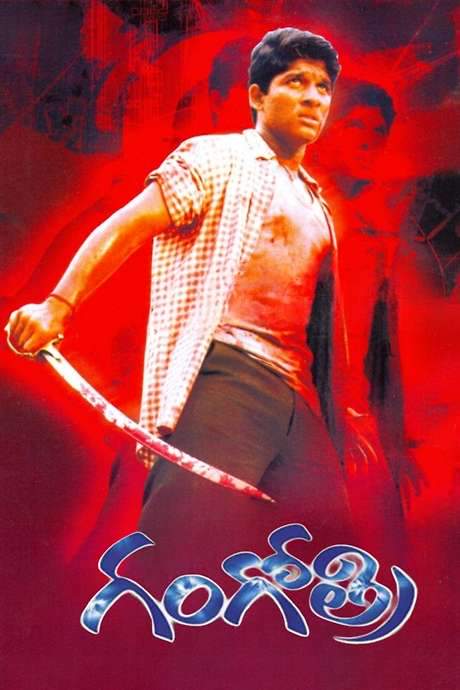
In a village haunted by a long-standing feud, Mangamma stands as a fierce matriarch who guards her household with unwavering resolve. Her valiant grandson, Veeranna Nandamuri Balakrishna, embodies the courage and sense of duty that the family cherishes, even as the community grapples with the menacing Basavaiah who drives the conflict from the front. The tension between Mangamma’s clan and Basavaiah’s faction is stoked by events around bullfights, where Chantabbai—the son-in-law of Mangamma—uses these clashes to provoke Basavaiah and inflame old wounds. The feud threads through every decision, every alliance, and every whispered plan, casting a long shadow over the village’s daily life.
Amid the turmoil, Veeranna’s heart finds a different rhythm in his love for his cousin Malli. Their bond offers a glimmer of hope that the families might put aside their enmity and unite through marriage. Yet the social currents pull in the opposite direction as Chantabbai and his circle become entangled with a web of deceit: a sly woman named Chintamani and her brother Chandarraju pursue Malli, tempting Basavaiah into schemes that threaten any budding peace. Their conspiracies reach a fever pitch on the eve of another bullfight festival, when Basavaiah presses Chantabbai into a dangerous bet about strength, cunning, and fate, and Chandarraju exploits a drug to tilt the outcome in his favor. The bet is ultimately nullified, leaving resentment to fester just beneath the village’s surface.
Basavaiah does not rest easy after that night. He pressures Chantabbai to force Malli’s surrender, but Mangamma’s fierce fearlessness roars back, scattering the would-be captors and leaving the village to dream again of Veeranna and Malli uniting in marriage. With the festival looming, Veeranna sets out to gather the necessary wedding items, carrying with him the weight of his family’s hopes. Tragedy strikes when Basavaiah stages a brutal ambush, and Veeranna is left for dead. Malli, overwhelmed by shock and grief, slips into a period of deep distress as she clings to the memories of Veeranna and to the letters written by his devoted, benevolent teacher, all in Veeranna’s name. Her heartbreak is a stark reminder of how love, loyalty, and duty can be consumed by violence.
A year passes, and Malli receives a letter reporting Veeranna’s imminent return. Her joy is uncontainable until the moment she witnesses his arrival not as the groom she hoped for, but accompanied by a Punjabi girl whom everyone assumes to be his betrothed. Veeranna himself returns amid danger, convinced he has survived only by slaying Basavaiah’s men. Fearing punishment for the past, he chooses to disappear into the army, where he forms a fragile bond with a fellow soldier, Azim Singh. Azim’s sacrifice in battle — protecting Veeranna at the cost of his own life — becomes a lasting memory, and he entrusts his sister’s future into Veeranna’s hands, intertwining their fates further.
Back home, Mangamma faces a painful dilemma about Veeranna’s marriage prospects. The Punjabi girl’s presence shakes the village, and a plan forms to arrange a union that could appease Basavaiah’s faction and stabilize the community. Yet Malli refuses to surrender to despair. She steps forward with quiet determination, outfits the Punjabi girl as a bride, and even contemplates drastic steps to safeguard their future. When Basavaiah and Chandarraju abduct the girl, Malli’s bold intervention culminates in a defiant act of selflessness: the Punjabi girl sacrifices her life to protect Mangamma, a gesture that shifts the balance of power and sentiment in the village.
In the end, truth, courage, and enduring love prevail. Mangamma and Veeranna, standing together with Malli, thwart the vendetta and the schemes that threatened their kin. The film closes on a hopeful note as Veeranna and Malli’s wedding signifies a new beginning—one built on reconciliation, mutual respect, and the rekindled trust of a community that had endured too much conflict for far too long.